FW

Bangladesh was the sixth largest importer of textiles across the world in 2016. During the year Bangladesh imported textiles worth $7.15 billion mostly from China and India. In the previous year, that is, 2015, textile imports reached $10 billion.
The decline in textile imports by Bangladesh is mainly due to a slowdown in demand from the industry. The import value of textiles was $6.8 billion in 2014 and $6.2 billion in 2013. The European Union was the largest importer of textiles last year followed by the United States and China. Vietnam and Japan ranked as fourth and fifth respectively.
China is the largest exporter of textiles followed by the EU and India. Bangladesh has set a target of earning $50 billion from readymade garment exports by 2021. The readymade garment sector is a vital industrial sector of Bangladesh which is immensely contributing to the country’s export earnings, employment generation and value addition. Contributing approximately 80 per cent of the country’s total export earnings, Bangladesh is the second largest apparel exporter in the world, next to China.
Efforts are being made to ensure a safe, sound, green, environment-friendly and a vibrant garment sector. Out of 10 eco-friendly factories of the world, seven are located in Bangladesh.
Asia Pacific is anticipated to remain at the forefront of global market for apparel accessories throughout 2017 to 2022. A steady rise of the region, an expanding base of working class population, availability of ample amount of raw materials and cost-friendly labor resources are factors that are playing an important role in driving the growth of apparel accessories market in the Asia Pacific.
The region is anticipated to command a considerable revenue share of global market as well as reflect a steady CAGR. On the basis of apparel accessory types, demand for handkerchiefs is expect to gain traction in future. In terms of revenue, sales of handkerchief currently command nearly 14 per cent share of the global market.
Demand for apparel accessories with economy pricing is expected to remain considerably high. Currently, the economy apparel accessories segment accounts for nearly 39 per cent of revenues of the market. The segment is expected to reflect a CAGR of over four per cent during the forecast period. Modern trade is expected to remain the largest sales channel for apparel accessories over 2022. Each year, a large bulk of apparel accessories are sold through modern trade.
US-based A&E has partnered CGS to improve productivity, quality and employee motivation within manufacturing operations in Sri Lanka. A&E is a global leader in premium quality industrial and consumer sewing thread, embroidery thread and technical textiles. CGS, also US-based, is a provider of business applications, enterprise learning and outsourcing services. It has offices across North America, South America, Europe, the Middle East and Asia.
Sri Lanka's apparel manufacturing facilities are among the most sophisticated in the world. These world class operators have the ability to further enhance production efficiency through the use of A&E’s premium sewing thread and CGS’ real time technology in Blue Cherry Shop Floor Control.
Sewn products manufacturers are challenged to improve productivity and efficiency in order to reduce throughput time and production costs and improve quality and reduce work in process inventory levels. CGS' Blue Cherry Shop Floor Control provides tools that automate the collection and reporting of production, enabling real-time shop floor visibility and control, improving factory operations and productivity while reducing costs.
A&E is committed to the marketplace in the advancement of improved manufacturing operations and productivity. CGS is looking forward to building a strong relationship with A&E in the Sri Lanka market.
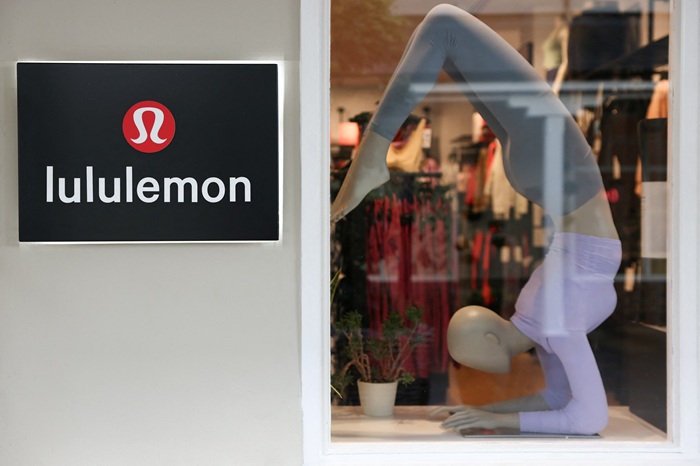
"Retail analysts closely following the US apparel trends feel the athleisure trend is going to end soon. The insight came as Dick’s Sporting Goods reported its same-store sales performance up by a weak 0.1 per cent in the second quarter. John Zolidis, President of Quo Vadis Capital, pointed out skidding athleisure sales contributed to lackluster revenues at Big Five Sporting Goods, Hibbett Sports, Lululemon, Under Armour and Nike."

Retail analysts closely following the US apparel trends feel the athleisure trend is going to end soon. The insight came as Dick’s Sporting Goods reported its same-store sales performance up by a weak 0.1 per cent in the second quarter. John Zolidis, President of Quo Vadis Capital, pointed out skidding athleisure sales contributed to lackluster revenues at Big Five Sporting Goods, Hibbett Sports, Lululemon, Under Armour and Nike. Some of these stores should be benefiting from the Sports Authority closing 450 stores across the nation last year after the large sporting-goods chain filed for bankruptcy. Southern California–based Sport Chalet also filed for bankruptcy last year, shuttering 47 stores.

As per The NPD Group, activewear sales for men, women and children added up to $45 billion for the 12 months ending in June, which is not even a marginal growth in the business. In comparison, non-activewear totaled $170 billion in sales for the 12 months ending in June, down slightly from a year ago. Athleisure is still growing but slowing. Part of the slowdown is the nature of the product, feels Marshal Cohen, Retail Analyst, The NPD Group. Cohen says, athleisure has entered that area where everyone is getting into the game and prices are coming down rapidly. Target is putting together a good sports bra for $19 and an athletic bottom for $39 compared to other brands that sell a bra for $79 and a bottom for $120. Then there is the fashion part of it, which doesn’t change much. Leggings are leggings with only a few things such as prints changing seasonally.
Counter views
Offering another perspective, Roseanne Morrison, Fashion Director, The Doneger Group, a trend forecasting and retail advisory company in New York, points out people are still working out. Girls are extremely competitive about what they are wearing, and they want to keep up with the trend, look their best and see what other people are wearing. This lifestyle trend to be fit and well is a shift in our culture.
Deborah Weinswig, a global retail analyst and MD, Fung Global, also feels the same way and believes it has enough energy to keep jogging. However, it does appear to be entering a new phase. Consumers still want to incorporate sport-styled designs into their everyday wardrobe. Athleisure for men is one area that continues to gain momentum. That was seen at athleisure retailer Lululemon Athleta, which now sees menswear making up 20 per cent of its total revenues.
Manik Aryapadi, Principal-retail practice, AT Kearney, is of the view athleisure has grown at a double-digit pace over the last three years but is hitting some headwinds. Retailers fear Amazon will be stepping into the arena with their own private athleisure label, adding to the fact that the field is already crowded as more companies enter the category. There are possibilities that Amazon could partner with a big athleisure brand, much like it did with Nike. By 2021, Amazon is expected to account for 16.2 per cent of apparel sales, or $62 billion, followed by TJ Maxx and Macy’s.
Innovation still driving athleisure
Innovation is going to draw the game here in a big way. Outdoor Voices, a relatively young athleisure retailer started in 2013, is attempting to bring in innovation in this space. Recently it collaborated with French cult retailer APC to develop a limited collection that had well-fitting and long-lasting pieces that could be worn every day. Currently, Outdoor Voices has three stores and three pop-ups, with one at The Grove in Los Angeles, but it is planning to expand its store footprint this year and next, giving athleisure a new look and a new voice.
In the first eight months of 2017, Vietnam’s textile and garment exports grew 9.9 per cent year on year. The US remained Vietnam’s leading market, accounting for 51 per cent of the market share.
However, Vietnam imports 60 per cent of its fiber as cotton farms in Vietnam have shrunk significantly and meet only 0.04 per cent of the domestic textile sector’s demand. The country is one of the world’s leading importers of fabrics and materials. The shortage of high-quality materials for production is the biggest barrier to Vietnam’s textile and garment industry, hindering the country from taking advantage of free trade agreements.
Vietnam’s textile and apparel sector has set a target of seven per cent growth over 2016. Currently, Vietnamese garment and textile products are available in 40 countries and territories around the world, with major markets including the United States, Japan, the Republic of Korea, China and the EU. Vietnam is one of the five largest textile and garment exporters in the world.
Vietnam's Ho Chi Minh City will build large centers for designing fashion, trading garments, textile material and accessories to become the country’s future garment, textile material and accessory hub. Ho Chi Minh City has set targets of meeting 80 to 90 per cent of Vietnam's demand for garments and textiles by 2020.
Maharashtra is encouraging tussar weavers, a handwoven fabric of Vidarbha. Weavers will be trained for making tussar fabric. Yarn is provided at the weavers' doorsteps who, in turn, make the garments which are marketed by the Maharashtra State Handlooms Corporation (MSHC).
Tussar weaving is a dying art. There are less than a 100 weavers living in the villages of Nagpur and Bhandara districts. Most of them are above 60 years. As their number is fast diminishing, MSHC has started the process to bring forth a new generation of tussar weavers.
Tussar silk is an exquisite thread obtained from a wide winged moth that is yellowish-brown in color. Produced mainly in India, tussar is highly valued for its natural gold colors. The cost difference between tussar silk and other forms of silk arises from the fact that the former is not fed on mulberry.
A lot more textured than mulberry silk, tussar silk is used in the creation of tussar silk saris and silk suits. Indian attire inspired from traditions and values easily take shape in tussar silk. The dull gold texture that it radiates works as a suitable base for embroideries as well as print motifs that have been inspired by nature. Floral patterns as well as those in the shape of trees, buds, leaves and leaflets serve as a source of inspiration for tussar silk.
American fashion retailer, Nordstrom’s net sales increased 2.7 per cent and comparable sales decreased 0.8 per cent, in the first quarter of 2017, compared to the same quarter last year. Founded in 1901 as a shoe store, Nordstrom operates 354 stores in 40 states including 122 full-line stores in the United States, Canada and Puerto Rico; 221 Nordstrom rack stores; two Jeffrey boutiques; and two clearance stores. In fact, a recent study by Market Force Information (Market Force) on 10,000 consumers, revealed Nordstrom continues to rank as the US’ favourite fashion retailer fifth year in a row on parameters of value, atmosphere and ease of finding items. The retailer has built an enviable reputation of having an incomparable customer service and has hence, earned a loyal fan base.
It is a preferred shopping destination for consumers. Every July the retailer has a sale and brings in new styles from highly sought-after brands for men, women and children. It’s the ultimate sale with something for everyone in every category: clothing, shoes, handbags, accessories, home and beauty.
Besides its huge vendor base, a small but growing portion of the overall product offering comes from Nordstrom Product Group (NPG), the retailer’s family of private label brands. In 2016, NPG included 54 brands manufactured in 484 factories across 30 countries. India has the second highest number of vendors in this category with 59 associated factories.
NPG is committed to working with agents, manufacturers, factories and mills to ensure that final consumers obtain compliant private label merchandise. The retailer is also working with two factories in northern India to train factory management and workers on effective communication strategies to increase worker satisfaction.
The union cabinet has given its approval for an ongoing collaborative research project with Japan for developing hybrid and better yielding varieties of silkworms, which would give a big push to the silk industry.
The cabinet approved a memorandum of understanding (MoU) signed between the Central Silk Board (CSB) and Japan's National Institute of Agrobiological Sciences (NIAS) for collaborative research in the field of silkworm and silk industries. The MoU, signed last November between CSB and NIAS provides for collaborative research for developing prolific bivoltine hybrids of silkworm suitable for the Indian tropical conditions.
The MoU is of scientific and technological nature. It would help in developing prolific hybrid silkworms, which would improve the manufacturing capacity and the quality standards of the Indian sericulture industry and thereby enhance exports of silk and silk products, an official release stated.
The release noted that the improvement of quality and productivity would enable the Indian textiles and apparel industry produce world class silk and silk products and ultimately increase the potential for export of silk products.
Cambodia’s exports of garments and footwear rose 7.2 per cent in 2016. The US market accounts for a quarter of the Cambodia’s exports however this share dropped from 29 per cent in 2015 to 25 per cent in 2016. Now there is an emerging sign of strong growth of the garments exports to markets outside the EU and US. Exports to other markets rose 35 per cent in 2016, up from 28 per cent in 2015, and from just 11 per cent ten years ago.
Japan and Canada have grown as important export destinations for Cambodia. Exports to Japan accounted for nine per cent of total garment and footwear exports in 2016, up from 7.7 per cent in 2015 and just 2.7 per cent in 2010, while exports to Canada were nearly eight per cent of market share, up from 7.5 per cent in 2015 and just 0.5 per cent in 2010.
At the same time, exports to China have also been well. The Chinese market accounted for 2.3 per cent of Cambodia’s garment and footwear exports in 2016, up from 1.8 per cent in 2015. Cambodia has free trade agreements with various countries, particularly under the Asean frameworks.
Baldwin Technology Company a world leader in process automation solutions, consumables, and services to the print, textile, and film industries, has reached an agreement to acquire Lauterbach-based Ahlbrandt System GmbH. The acquisition is pending German government approval.
Ahlbrandt’s 87 team members and top-quality corona treatment, spray coating, and hot air drying products complement the Baldwin team and their broad product and service portfolios. In addition, Baldwin plans to capitalise on Ahlbrandt’s expertise and industry leading technology to enhance solutions for the rapidly growing textile and film industries.
Holger Bätz, MD, Ahlbrandt says they are excited to join the Baldwin team. Not only is their expertise in developing and producing top-quality equipment and systems a nice complement to Baldwin’s broad product portfolio. Ahlbrandt’s talent and passion for innovation in surface finishing will rise to new levels within the Baldwin family. This partnership presents a great opportunity for the Ahlbrandt team to expand our business to new geographical markets and customers, this acquisition will have a very positive influence on Ahlbrandt’s new ‘Serviceplus’ growth strategy.
Brent Becker, CEO of Baldwin stated that by bringing Ahlbrandt into the Baldwin family will strengthen their ability to provide value to their customers through broader technology and service offerings. This exciting investment underscores their commitment to a strategy that blends organic and acquisition growth to enhance their global footprint and the technology they can deliver to their customers.
They expect both teams to realise many benefits from close cooperation between their Lauterbach and Friedberg production and assembly facilities and they are also eagerly looking forward to expanding their footprint in Germany.