FW

Archroma has entered into a collaboration with Kathmandu. Archroma is a global leader in color and specialty chemicals. Kathmandu is an outdoor brand from New Zealand. Kathmandu has chosen Archroma and its Earth Colors range of plant-based dyes to create a new capsule collection of the brand’s signature hoodies.
Archroma and Kathmandu have teamed up to create an exclusive vintage casual look. The colors available in the capsule collection are slate blue, burnt olive and burlwood rose made from the non-edible parts of nutshells, almond shells, rosemary, saw palmetto, bitter orange and beetroot, left over from agriculture industry or herbal extraction.
Archroma’s Earth Colors is an award winning range of patented plant-based dyes, sourced from up to 100 per cent renewable resources. Archroma developed Earth Colors using non-edible waste products, from agriculture and herbal industries, to replace petroleum derived raw materials, which are the conventional raw materials used to synthesize dyes currently. This gives brands an alternative when looking for more natural ways of dyeing garments.
Earth Colors is probably the first technology allowing colors to be synthesized from plants rather than petroleum while keeping similar performance. Kathmandu has been using recycled materials for over 20 years and is constantly looking for new technologies to develop more sustainable outdoor gear.
Ten established and emerging Russian designers united on the largest fashion platform in Eastern Europe – Mercedes-Benz Fashion Week Russia – for a mass media campaign against HIV/AIDS.
They are using their influence on fashion platforms with the view to draw attention to one of the most pressing health issues in Russia and worldwide.
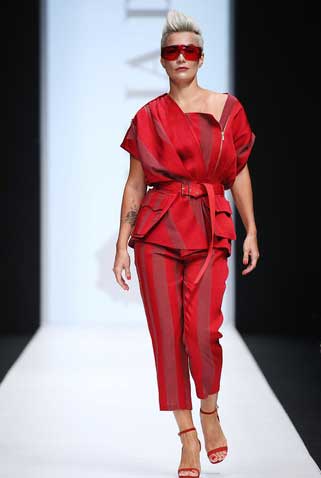
The key objective of this mass media campaign was to draw wide attention to the problem of the HIV/AIDS epidemic in Russia. Every hour ten people get infected with this virus across Russia.
Top Russian bloggers and celebrities joined their efforts with designers and took part in discussing the issue across social media. Designers of MBFW Russia presented a capsule collection of T-shirts, while bloggers posted their campaign messages wearing these T-shirts. International media partners also took part in this awareness raising campaign in the matter of early HIV testing and treatment seeking.
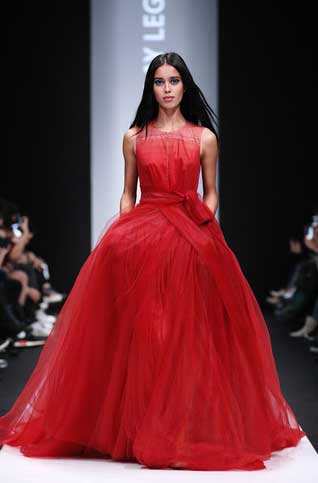
The aim of the campaign is to focus on every aspect: the state support of treatment programs, awareness campaigns for young people, protection means, advanced treatment methods, tolerance toward HIV-positive people, abandoning stereotypes associated with this problem.
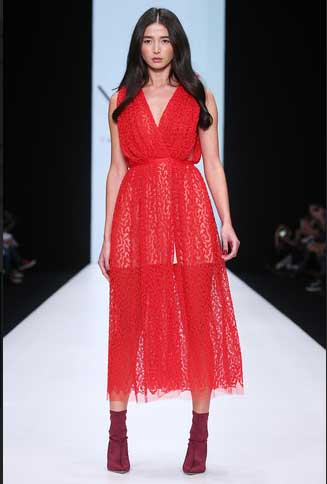
The population of Russia exceeds 146 million people. Nine lakh of them are currently HIV-positive.
Russian Fashion Council runs Mercedes-Benz Fashion Week Russia, the biggest and most widely media-covered fashion event in Russia and Eastern Europe.
"Major link-up between luxury and streetwear fashion companies have signaled a new era of growth in the world of apparels. The recent deal of claiming 50 per cent stake in Supreme by private equity firm The Carlyle Group is a testimony of this. Additionally, Supreme collaborated with Louis Vuitton on a limited-edition collection of accessories in January this year. Similarly, Jil Sander announced in April that Luke and Lucie Meier would be the new creative directors behind the brand, which further substantiates their foray into the streetwear."
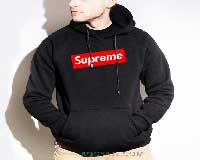
Major link-up between luxury and streetwear fashion companies have signaled a new era of growth in the world of apparels. The recent deal of claiming 50 per cent stake in Supreme by private equity firm The Carlyle Group is a testimony of this. Additionally, Supreme collaborated with Louis Vuitton on a limited-edition collection of accessories in January this year. Similarly, Jil Sander announced in April that Luke and Lucie Meier would be the new creative directors behind the brand, which further substantiates their foray into the streetwear. Last year, the global market for personal luxury goods failed to grow for the first time since the financial crisis, plateauing at $293 billion. This is the reason so many luxury brands are stepping into streetwear to expand markets.
The re-release phenomenon
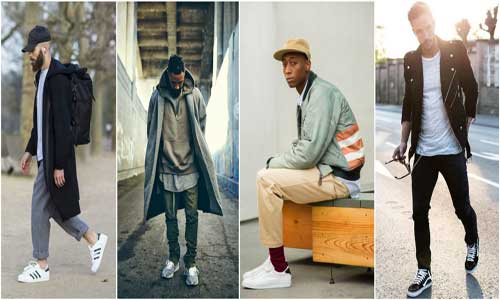
Last month, Ralph Lauren re-released its cult-loved Polo 1992 Stadium collection, which included hoodies and T-shirts with the famous ‘P-Wing’ logo. The recurring limited-product release system, which operates outside of the traditional sales seasons, was first brought and honed stateside by Supreme. These days everyone uses this system be it Nike or Kylie Jenner. Claire Waight Keller, the new creative director of Givenchy, also informed a media daily that she plans to release monthly capsule collection drops while at the helm.
Talking about this move, Ashwin Deshmukh, Co-founder, Hungry, Inc, explains there’s no really great creative coming out of any of the big houses, so they’re using the drop model to create artificial scarcity and regain excitement. Experts point out brands are elevating simple items like T-shirts to coveted status and using more of the playful, referential graphics that are typical of streetwear.
Newer luxury designers, like Demna Gvasalia of the buzzy Vetements, are coming up with an altogether new approach to runway fashion. They want to bring out apparels for the masses whatever is showcased on a luxury brand’s runway. Fashion experts feel by operating like this, brands can create more dynamic relationships with their customers. More specifically, streetwear now has a seat at the table.
On the contrary, some feel the problem with luxury brands tapping into streetwear is the they lack of authenticity. Authenticity and lifestyle are the core of streetwear. That’s why streetwear companies exist, and it can’t be borrowed. Deshmukh also agreed that luxury brands lack the organic, enthusiastic culture that many streetwear brands are built on.
The recent, Seoul Fashion Week sent winds of change through its emerging fashion industry as young designers such as Blindness, D-Antidote and Kiok added defiant glamour to a city at the cusp of the North Korean conflict. Seoul Fashion Week took place from October 16 to 21 and happens biannually in March and October for spring and fall collections.
One of the most impactful brands on the runway was Blindness, a brand that made it to the 2017 LVMH Prize short list. Creative directors KyuYong Shin and JiSun Park dressed models in pearls, nylon coats and black corset belts. Other trends included a small brim hat with decorative pearls, reminiscent of a matador’s hat, black matador-style pants, bell-sleeve tops and an earth-toned color scheme, including light pink, black, grey, army green and pops of blue and yellow. Additionally, inspired by pollution masks worn in Seoul, models also wore delicately embroidered veils with pearls.
Another notable runway show was the gender-fluid D-Antidote, who collaborated with Italian brand Fila. Designer, Park Hwan-sung has gained popularity since his runway debut earlier this year. The collaboration used influences from London and Seoul in its hoodies, track suits and backpacks. The backpack is a trendy street-style must have. D-Antidote Spring 2018 trends included track jogging pants, overalls, matching tops and jogging pants and fanny packs and fedora’s galore.
Seoul Fashion Week showcases new trends that people crave worldwide however, going global is difficult for Korean fashion brands. The internal market is so large that young designers may not need to expand worldwide.
Turkey's yearly textile and apparel exports are touching $30 billion, while $7.5 billion of this amount comes from Merter. Merter Industrialists' and Businessmen's Association (MESIAD) Chairman Yusuf Gecu recently announced the district exports textile and apparel products to 215 countries around the world.
Gecu said all medium and large textile and apparel manufacturers in Turkey have a store or showroom in Merter. There are 10,000 stores in the region and the number of people directly employed in these stores has reached 100,000. The chairman stressed it is important to reach this employment figure in a region where only the promotion and sales of a labor-intensive sector, such as textile, are conducted.
He also stated the number of employees in the production of these brands is much higher and 80 per cent of the textiles and apparel manufacturers in Merter produce outside the region. Gecu says, Turkey's average export value per kg is around $1.7 and this figure reached $15 in apparel and $5 in textile. He pointed out that they continue to work on further increasing these figures.
Turkish goods are perceived as cheaper than European and much better in quality than China’s. He stated this perception was placed in the minds of consumers particularly in Russia, Turkic Republics, African, European, Middle Eastern and Gulf countries. Gecu noted the Turkish textile industry, which closely follows all the fairs in the world and participates in events, closely monitors fashion and that this is how they can easily bring the latest trends to consumers. He emphasized that Turkey is among the few countries in the world in terms of producing quality denim jeans and knitted products.
India is encouraging silk production in the Northeast. Projects worth Rs 690 crores are being implemented in the Northeastern states. Out of these, six are in Assam, one in Sikkim, two each in Meghalaya and Manipur and the rest in other states. The scheme is aimed at a holistic development of sericulture in all its spheres from plantation development to production of fabrics with value addition at every stage of the production chain.
The scheme is being implemented under two broad categories: Integrated Sericulture Development Project; and the Intensive Bivoltine Sericulture Development Project covering mulberry, eri and muga.
All four commercially exploited varieties of silk — mulberry, muga, eri and tasar — are produced in the north east and this region contributes about 21 per cent of the total silk production in the country. The mulberry farms in Meghalaya are almost a 100 years old, first set up by the British in 1925. Three districts in Meghalaya have been identified and an intensive awareness campaign will be launched to help draw back silkworm farmers to the trade. The British had identified Shillong as a center for rearing silkworms. So a Rs 29 crore project in mulberry production will be implemented.
Maroc Sourcing took place in Morocco from October 26 and 27. This is Africa’s largest trade show for sourcing in the fast lane. The event served as a platform to present recent developments in the national fashion and textile sectors. It was divided into ecosystems in order to confirm the strategic choices of the sector and highlight its historical know-how and opportunities. The six ecosystems were fast fashion, denim, mesh, distribution of Moroccan brands, tailoring and leather and accessories. There were some 130 exhibitors from a dozen countries.
About 20 Portuguese exhibitors took part in the show. The Portuguese textile industry and the Spanish textile industry were target partners of this event. In 2016 the Moroccan textile and clothing sector realized the second best export performance on the European Union markets after Cambodia and had a growth of nine per cent. For 2017, forecasts expect a rise of four per cent.
The sector counts 1,600 companies, including 1,300 geared to the export market. The Moroccan textile and apparel industry ranks seventh among the most important sourcing countries and is determined to keep growing. Its advantages are obvious: quick deliveries via lorry, no customs duties to the EU and excellent price/performance ratio.
Japan is keen on reconstituting the Trans-Pacific Partnership without the US. Japan and 10 other nations hope to reach a broad agreement. But New Zealand, a leading proponent of the TPP 11 effort, suddenly seems to be wavering. New Zealand wants restrictions on foreign real estate investment.
The 11 nations have already agreed not to alter the original terms of the pact, and if exceptions are made for New Zealand alone, the whole thing can fall apart. Some advocate simply removing New Zealand from the group, a solution that would reduce the amount of milk Japan imports under the deal. But such a step would be difficult given that New Zealand is a founding member of the TPP.
Vietnam also could prove a source of discord. The Southeast Asian country has not relented on its request for changes to critical rules abolishing tariffs on textiles and banning restrictions on the international transfer of e-commerce data. Had TPP proceeded as planned, as a 12-nation trade agreement, including the US, Vietnam was expected to reap the biggest gains from being afforded greater access to the US market. The deal for Vietnam was essentially it would implement difficult reforms on state-owned enterprises and labor and other areas in exchange for greater access to the US market, particularly for textiles and footwear.
Invista is selling its apparel business to China’s Shandong Ruyi Investment Holding. The transaction includes Invista’s portfolio of apparel-focused fibers and brands including Lycra, Lycra HyFit, Coolmax, Thermolite, Elaspan, Supplex and Tactel.
Invista will retain ownership of its nylon, polyester, polyols and licensing businesses and related brands. This includes its nylon 6.6 intermediates business, its global nylon polymer and fiber portfolio, and widely recognized brands including Stainmaster and Antron carpet fibers and Cordura fabric. Invista will also retain its intellectual property rights for 1,4 butanediol, tetrahydrofuran and polytetramethylene ether glycol technologies and will continue to license these technologies on a global basis.
Shandong sees Invista’s world-class assets and consumer-recognised brands as a perfect fit for its growing portfolio of textile-related products. Shandong is committed to taking the business to the next level through continued investment in innovation and the portfolio of consumer-recognised brands. It also sees an opportunity to leverage its existing capabilities including its spandex manufacturing assets to further enhance its position in the global marketplace.
Shandong Ruyi is one of the largest textile manufacturers in China and ranks number one out of the top 500 textile and apparel companies in China. The group owns a fully-integrated value chain with operations spanning raw material cultivation, textile processing, and design and sale of brands and apparel.
Huntsman is planning to manufacture differentiated chemicals in India. These will be for the domestic as well as the export markets. The aim to manufacture here is to ensure the local industry does not have to wait for consignments to arrive from overseas. Huntsman is a subsidiary of the American multinational, one of the world’s largest petrochemical manufacturers. Huntsman caters to a broad and diverse range of consumer and industrial end markets.
The per capita use of the company’s products in India is low but the company sees significant headroom to grow. Huntsman is looking at manufacturing and exporting out of India to the Middle East, Africa and neighboring countries. Apart from India, it has a significant presence in Bangladesh as its textile effect products are exported in large volumes.
The company reported an Indian subcontinent turnover of Z$475 million, including $349 million from India, last year. Currently Huntsman operates three manufacturing facilities in western India and is evaluating expansion plans. Right now it is evaluating the required amount of investment to have in the near future. It is reaching full capacity utilisation at its plants and needs to expand capacity. It is looking at both brownfield and greenfield expansions.