FW

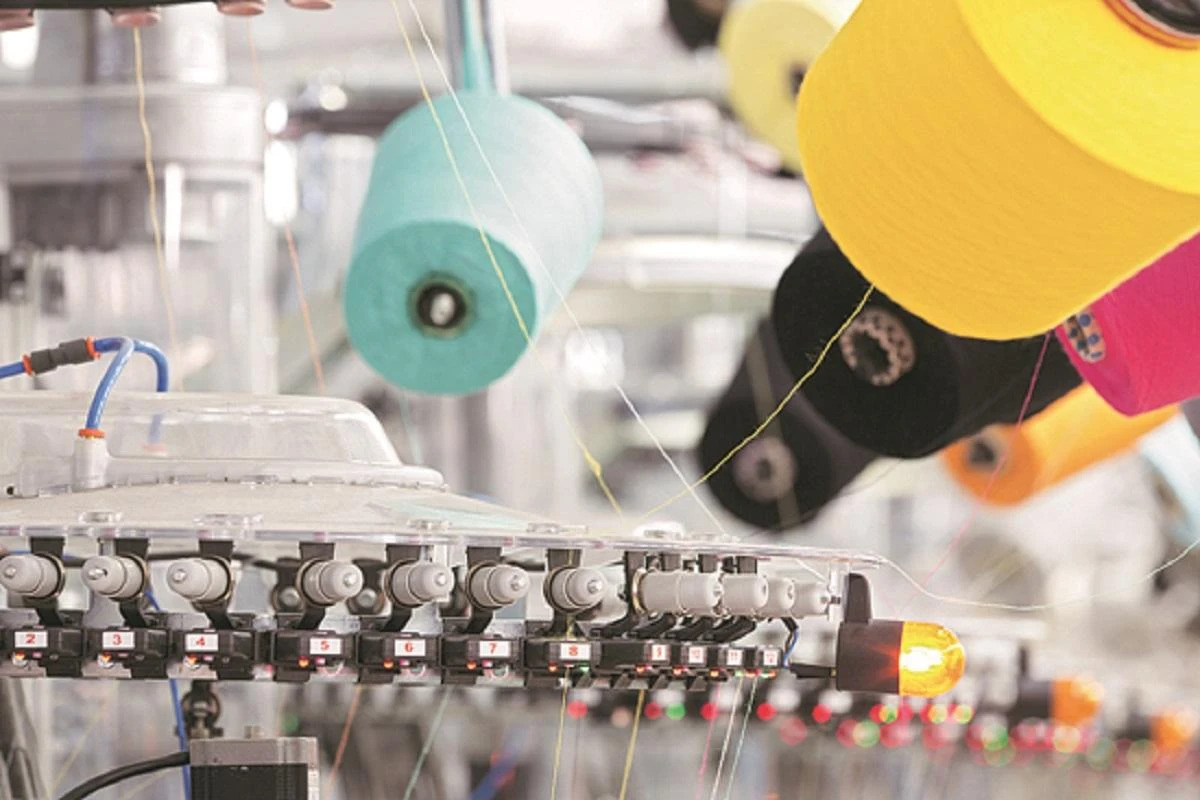
For the period from July to September, the order index for Italian textile machinery manufacturers rose by six per cent compared to the same period in 2016. The primary foreign markets for Italian textile machinery showed a constant demand while growth has been ongoing for Italy’s domestic market, even if at a lower overall rhythm compared to the quarter from April to June.
Creativity, sustainable technology, reliability and quality are the characteristics which have made Italy a global leader in the manufacturing of textile machinery. Exports amount to more than 85 per cent of total sales. About 30 per cent of Italy’s revenue from the sale of textile machinery derives from the production of technical and innovative textiles. Demand for such products has consequently also driven a demand for ad hoc machinery specifically designed for this sector. The offering promoted by Italy’s textile machinery industry is thus expanding to the new demands of customers operating in this specific sector.
Italy is the world’s second largest producer of machinery for the textiles industry. In the production of machinery for tanning, and for the footwear and leather goods industry, Italy accounts for over 50 per cent of world production. The dynamic trend for Italy’s domestic market originates from a renewed climate of enhanced trust that is currently perceived in the textile sector. This has been triggered by the government’s commitment to enact a range of significant incentives for the country’s manufacturing system.
Lenzing, Core Denim and Unifi have launched a new denim. This is Future Black, the industry’s first certified fade-resistant black denim made using Lenzing Modal black fibers and Repreve black recycled fibers.
As many as 17 recycled plastic bottles go into making Future Black jeans—which also happen to boast superior softness, color retention and stretch—all the while leaving a smaller footprint on the environment. To prevent denim from fading, Future Black with Lenzing Modal black fibers uses an innovating dope dyeing technique that adds pigment during production so that the entire body of the fiber gets colored instead of just the surface, and there’s no need for a dye bath down the line.
In testing, Future Black denim showed no signs of color loss after more than 20 washes. Adding a recycled element to further expand the product’s sustainability, Repreve yarns mean plastic bottles that would have landed in landfills make their way instead into a pair of jeans. The Lenzing Modal Black fibers has a 50 per cent to 60 per cent less harmful impact on the environment than conventionally dyed fabric does because the manufacturing process uses less chemicals, fewer energy inputs and uses 64 per cent less water during the dyeing process.
An enterprise from India is creating an ecosystem of thousands of self-employed women, who work where they are than in far-off traditional garment factories. Industree Foundation was founded in 2000. Some 30 million women in India rely on fashion for employment. Industree aims to tackle poverty in the garment manufacturing industry and enable the garment industry to grow sustainably, embracing new technologies and empowering women.
Industree goes to tribal artisans and works with them in mud huts. It helps organise them into production units and create a sustainable business at the lowest possible cost.
In a traditional Indian garment factory, women commute on an average four hours a day. They either have to pay rent if they live away from home, or pay high daily travel costs, and are then vulnerable to having their wages, which are sent home to support the family, taken by a man.
Industree’s goal is to decentralise manufacturing, with the micro-entrepreneurs required to commute no more than five kms. This means women can keep more of the money they earn, and put more into child nutrition, the household, and the local community. This is also linked to a fall in domestic violence. Educating women on ethical production practices could also have an impact on climate change.
Indonesia wants Mitsubishi to pour in more money in the garment sector and forge partnerships with local industries. The Japanese giant is seen as having the potential to boost competitiveness and productivity among Indonesia’s manufacturers. Indonesia is revitalizing its textile industry by boosting the production capacity of rayon fiber.
Rayon has become the new basic material for textiles and Indonesia looks forward to producing rayon fiber from forest pulp in large quantities. Mitsubishi may also invest heavily in the petrochemical sector as its subsidiary, Asahi Glass, which operates in Indonesia under the name Asahimas Flat Glass, has started to expand its caustic soda and glass factory.
Mitsubishi is looking to expand its business in infrastructure and the automotive sector as well as consumer goods, such as food products. Its investments in textiles and textile products have contributed 1.16 per cent to the country’s gross domestic product. Indonesian shipments of textile and textile products rose 8.2 per cent in 2016.
Indonesia is also inviting Chinese investors. China’s investment, especially in the automotive sector, is growing rapidly. There are two Chinese vehicle factories that are already showing good sales results. China sees Indonesia as a potential production and export base. In addition a very large domestic market already exists.
Cotton futures had their largest percentage gain in more than a year as forecasts call for near-freezing temperatures for Texas. Fears of an early freeze could cut into yields of cotton in Texas. Texas is the largest cotton growing state in the US. India’s decision to increase minimum support price for its cotton could push some business back to US exports. Price supports were above expectations.
About 30 per cent of the cotton was harvested in Texas as of the week ended October 15. If bolls are mature and ready to open, the freeze shouldn’t have much of an impact on yields. But if a green boll gets a freeze, it will never open and will rot.
Cotton for December was up 3.1 per cent, on track for its largest percentage gain since July 12, 2016. Monday’s bounce should lure index funds to sell out of long positions early as they roll out of positions in the December contract. Expectations of a record cotton yield this year in the US may be dashed. The main reason is the hurricane damage to crops. Another reason is strong competitor shipments. The downgrade reflected reductions to expectations for both harvested area and yield.
Julie Driscoll has been appointed the managing director of London trade show Pure London. She was previously the show’s portfolio director. Working with the Pure team, its partners, suppliers and exhibitors, Driscoll will drive the next step in Pure’s evolution as the event unveils the new We Are London campaign for its February show.
The next edition of Pure London will take place from February 11 to 13. The event will host 800 brands across eight sectors and is expected to attract over 17,000 UK and international visitors. The campaign centers on the show’s location in the heart of the British industry, and invites the public to celebrate the carefully curated global line-up, described as inspirational and diverse.
To help exhibitors and visitors prepare for the show, organisers have launched a brand new website featuring a host of new tools, including a brand wish list, a live chat function and instant messaging to make appointments at the show.
Visitors to the show can add brand profiles and will receive tailored recommendations based on their interests and behavior, while exhibitors can now enjoy a quicker and easier process for creating their profile and uploading imagery.
Brands can also benefit from unlimited product tagging, which should result in better search and filtering functions.
Australian Fashion Chamber is merging with the Council of Textile and Fashion. Australian Fashion Chamber is a key fashion industry body. The Council of Textile and Fashion is the peak body for Australia’s clothing, textile and footwear industries.
The new industry body will benefit from having established offices in the country’s two largest cities and a combined membership that spans the entire Australian fashion and textile industry value chain. Sydney-based AFC boasts of 90 designer members, while the Melbourne-based CTF has several hundred members, ranging from textile manufacturers to fashion tech startups through to large retailers.
AFC benefits from some federal backing for its Australian Designers Abroad pop-up multi brand showrooms staged in Paris and New York during the collections seasons. Both not-for-profits are privately funded through memberships.
The proposed union of the two organizations is an incredibly exciting opportunity for Australian fashion, with the prospect to really expand and build on both organizations’ achievements to a great future. It is also seen as representing a turning point for the Australian industry and comes at a timely moment to strategically shape its future across the whole spectrum of design and textiles.
A name for the merged group is yet to be decided on but the Australian Fashion Council could be one of the possibilities.
Global fashion brands are looking to source more clothing items from Africa to reduce their reliance on Asia-based manufacturers. Kenya and Ethiopia have emerged as favorite locations as multinationals diversify away from countries such as Bangladesh, one of the largest exporters of textiles.
The bulk of Kenya’s textiles are exported to the United States under the African Growth and Opportunity Act (Agoa) agreement that allows for duty-free imports of select items from low-income countries in the continent. Increased contract manufacturing in the country is expected to boost exports in the textile industry whose earnings and production have dropped significantly from a peak in the 1980s.
Over the past couple of years, serious interest in African countries as a major sourcing destination for apparel has grown. With the recent renewal of African Growth and Opportunity Act through 2025, which allows certain countries in sub-Saharan Africa duty-free access to the US market, the buzz around Africa has become even louder.
Major companies including PVH, VF Corp, H&M, Primark and Tesco began sourcing a portion of their garments from this region a few years ago and it quickly made its way to the forefront as a region of opportunity for many apparel brands.
On the second day of Mercedes Benz Fashion Week Russia, L'Erede, a children’s fashion brand, presented its collection. Outwear, sweaters, caps, hoodies with inscriptions highlighted the first part of the show. Next came summer blouses, jumpers and dress in shades of turquoise, pink and yellow. Flowers were the main decorative element of the second part of the runway show. At the event finale was a line of party dresses for children featuring embroidery, flounces, hoops, multilayer skirts and glittering embroidery shaped as swallows and flowers.

In the new season,Vadim Merlis went for an experiment. The foundation of his previous collections has always been clothing in a retro romantic style. Part of the current collection was designed in line with the sporty chic trend: hoodies and T-shirts were combined with silvery and golden eco leather skirts. Male tracksuits were made of red velvet while T-shirts had leather sleeves. Stripes and plaid came along with bright ribbon belts. The total look featured ultra short male shorts in fuchsia, which was the absolute major color of the collection. Dense multicolored tights, bright fancy flounces - all describe the new collection from Vadim Merlis.
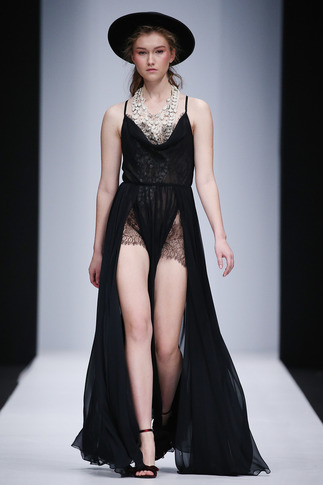
Designer Igor York created backpacks especially for the fashion week. Since 2011, he has been making hand-made exclusive male and female bags, brief cases, clutches, tablet bags, belts, and banknote holders.

Trident has successfully established its presence in the bath linen segment. Incorporated in 1990 and based in Ludhiana, the company has evolved from being a solitary yarn and paper manufacturer to one of the largest, state-of-the-art and integrated home textile manufacturers globally.
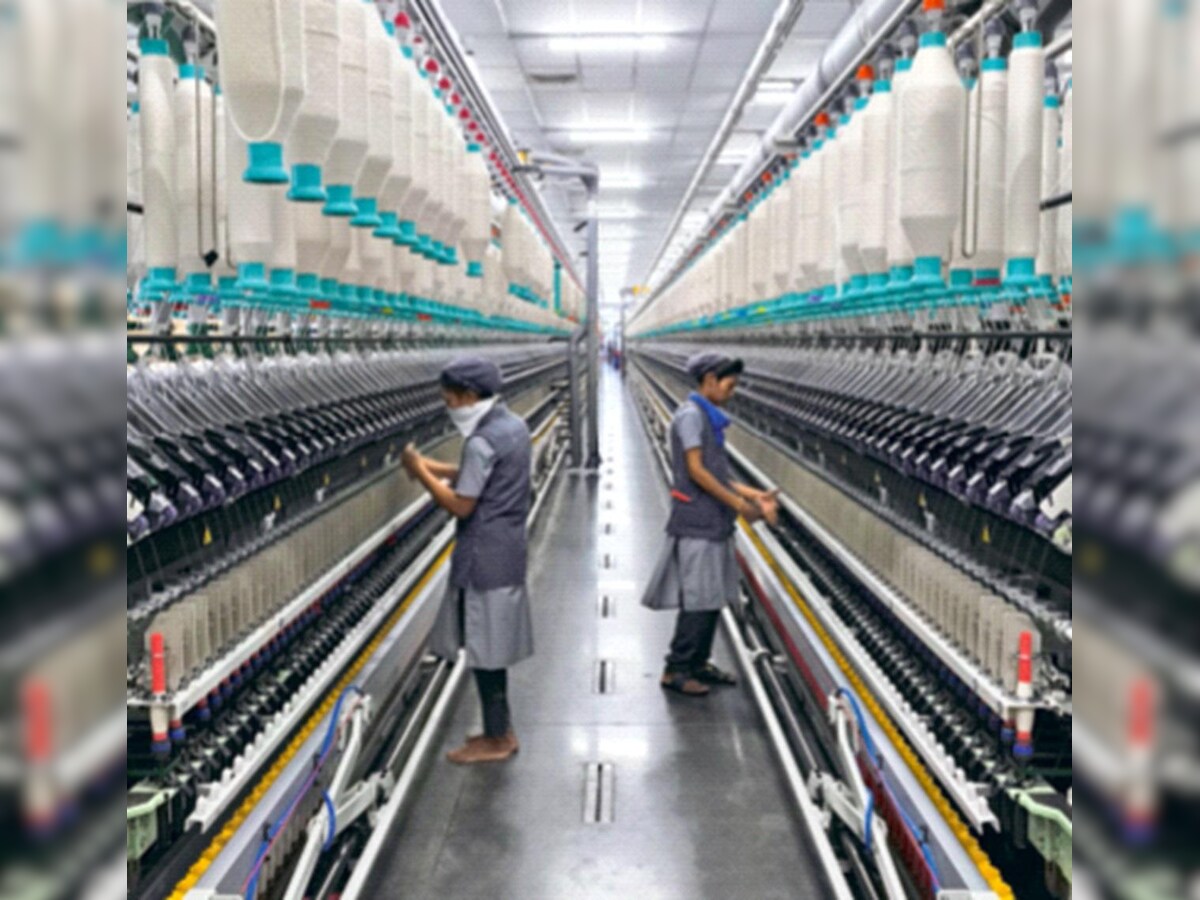
Trident’s spinning division produces cotton, compact and blended yarns. It has the largest spinning installation at single campus in India. Presently, Trident has an installed capacity of 5.5 lakh spindles and 6,464 rotors with a capacity to produce 90,000 tons a year of cotton, compact and blended yarn. The division also has a dyed yarn capacity of 6,825 tons a year. While nearly 35 per cent of the produce is consumed by the bath and bed linen units, the rest is sold in the domestic and international markets. The manufacturing units are equipped with state-of-the-art technology sourced from world class manufacturers.
The terry towel division accounts for a major part of the revenues in the home textile segment. The state-of-the-art production facilities include spinning, wide-width air jet and jacquard weaving, soft flow dyeing and fully-automated cutting and sewing of the towels. The division is equipped with machineries sourced globally, currently averaging a capacity utilisation of around 50 per cent.