FW

Seven APEC members -- the US, China, Japan, the Republic of Korea, Hong Kong, China, Malaysia, and Singapore -- are among Vietnam’s top 10 export markets. Vietnam’s footwear exports to the US in the first nine months were up 13.7 per cent compared to the same period last year and accounted for 12 per cent of the total value of Vietnamese goods to the US. Textile and garment exports were up 9.5 per cent compared to the same period last year and accounted for nearly 30 per cent of the total export value to the US.
The US is the largest market for Vietnamese textile and apparel imports. In 2016, the export turnover of this commodity group to the US was up 4.6 per cent against 2015, making up 48 per cent of the total textile and garment export turnover of the whole country. As Vietnam’s traditional seafood export markets are increasingly demanding, the Korean market appears to be more open to Vietnamese exporters.
Over the first eight months of this year, the export value of aquatic and fishery products to the Republic of Korea increased by 27 per cent compared to the same period last year. Trade liberalisation and trade facilitation in the APEC have opened up great opportunities for the business community in Vietnam, especially small- and medium-sized enterprises.
Bangladesh may give Accord a six month extension. The five-year time frame of the European buyers’ and retailers’ platform comes to an end on May 31, 2018. Two reviews of Accord’s progress – one in January 2018 and another in May 2018– will be conducted by a committee which will be constituted with representatives of the government, brands, International Labor Organisation and global trade union federations.
During the additional six-month period the name of the initiative would be Transitional Accord. During the extension period, Accord would work independently. After the Rana Plaza building collapse in April 24, 2013, that killed more than 1100 people, mostly garments workers, EU retailers formed the Accord on Fire and Building Safety in Bangladesh to improve factory safety in Bangladesh while North American retailers formed the Alliance, undertaking a five-year plan, which set timeframes and accountability for inspections and training and worker empowerment programs.
Both platforms conducted safety inspections in more than 2,300 readymade garment factories from where they procure products. The Alliance for Bangladesh Workers’ Safety does not plan to continue in Bangladesh beyond its tenure. If any factory seeks financial assistance for remediation, Accord facilitates negotiation over the issue between the lead buyers and manufacturers.
A textile park is coming up in Telangana. This fiber-to-fabric integrated textile cluster will be built on 1,200 acres. The Kakatiya mega textile park is the first industrial park project to reach the ground-breaking stage in three years after the formation of the state. The project also assumes significance due to its location in the cotton-rich Warangal region which was once a hotbed of Naxalite activities in Telangana.
A state-of-the-art infrastructure featuring common effluent treatment and zero-liquid discharge facilities besides ready-built factory sheds will be developed in this park at an investment of more than Rs 1000 crores. There is also a provision to expand the park to 2000 acres in future. Further, a slew of incentives and subsidies will target investments in the textile sector.
The plan is to make this one of the largest textile parks in the country. Over a dozen companies, including a big textile firm from South Korea, have come forward to set up their manufacturing operations in the park with a combined investment of over Rs 3,900 crores. Telangana is one of the largest producers of long staple cotton with a production of around six million bales per annum. The upcoming textile park will enhance the scope for value addition to the cotton crop within the state.

Prosperity Textile is known worldwide for its innovative denim fabrics. Prosperity started a new initiative where they select designers to work on Prosperity Denim fabrics. The designers prepare ‘Design Inspiration’ collection which is then presented to buyers/brands who can buy the ready to wear garments if they want or use these designs on Prosperity’s fabrics. “This designer collection explores the best possibility on our fabrics, highlighting the process involved in its offerings,” explains Andy Zhong, Managing Director, Prosperity Textiles and goes on to add, “We select 10 designers who work on our fabrics. Next time we can pick five or 50 designers to get various designs. This collection has different colour combinations and look of denim fabric and it is a detachable collection. Each collection represents a different idea.”

Giving insights into the company’s F/W ’18 collection, Zhong says, “We call it the Fabric Technology and for fall/winter ’18 we are offering a range of Hi-Lux coating, as a novelty, which is different from ordinary coating. Hi-Lux coating uses spray coating and is soft and long lasting. When you touch the fabric, it feels soft though it looks stiff. The fabric will be natural and subtle. We also have overdye range as: Indy Blue, Miller Blue and Sweet Indigo. Here the fabrics are overdyed and the colour can be seen through the washes. It can be black on black or blue on blue. Different blends can be done on overdye.” Zhong further adds, “As sustainability is always our focus, while dyeing, we try to reduce the impact on environment by using liquid indigo, whereas generally most indigo used is in the powder form while liquid indigo is cleaner. We use 15 per cent less indigo and save 70 per cent on hydro sulphur use.” He further explains, “We can save 70 per cent of the COD value of water, when we dye the yarn in the dry form, the colour doesn’t easily penetrate the core of the yarn. The indigo is always outside. It saves water and when you do the washing, you can achieve a different and unique colour. It gives a nice dyed effect. And the colour is nice and stylish.”

Focusing on eco-friendly aspects, the company uses recycled cotton, post consumer waste. The company has a product called ‘colour cotton’ where the cotton is originally in khaki colour and there is no need to dye or bleach it as its pure form of cotton.
Prosperity is also the largest Tencel based denim fabric maker in China. Tencel is derived from trees. However, the new tencel comes from the bark of tree that contains the cotton scrap that is leftover after wood cutting operations. This means they are closing the loop. You don’t actually cut the wood. The quality is the same as original Tencel. This is unique and one can’t get it elsewhere.

Global denim trends
Speaking on global trends in denims, Zhong says, globally the trend is towards basic denim. There will be less of stretch. But when people get used to stretch, they won’t return to non-stretch since stretch offers comfort, freedom of movement. Right now, it’s more about comfy stretch and not so much about super stretch or high stretch. Another trend is towards softer hand feel. The washed look is basic. People want clean washes with not much bleach and details. Both stretch and hand feel are important. People want to look good in denim. But they also want to feel fantastic and comfortable. The company’s future offerings include: C-Blend collection, which is blended with lyocell and cotton. There are various blends of lyocell and cotton starting from small lyocell to up to 100 per cent lyocell, as lyocell content increases the fabric becomes softer. Prosperity has a range with cotton blended with Invista and Tencel blended with cotton. Linen has been tried with denim but it’s more in shirting. “We have selvedge fabric which we blended cotton and wool. It looks good and is expensive. Talking about knit denim, it has hand-feel, comfort but its share is small as denim is still woven. Knit denim is too soft and ‘drapey’ and is not true denim look. Knit denim idea is good but has a long way to go. Denim should be soft and comfy like knit denim but the denim look needs to be maintained,” remarks Andy. On athleisure trend, Zhong opines, “People are wondering if athleisure will takeover denim. I think denim is denim and nothing can replace denim. It is the most versatile textile which everyone can wear. But we are learning from athleisure. We don’t want to fight trends.”

Market spread
Denim consumption in Bangladesh is increasing every year. Prosperity’s shipments to Bangladesh grew 100 per cent a year. The biggest share for the company comes from China, close to 60 to 70 per cent, while Bangladesh makes up 20 per cent. The rest goes to Vietnam and Cambodia. Prosperity Denim has a strategic partnership with Bangladesh-based denim mill Envoy Textile where the local buyers can buy Prosperity fabrics in Bangladesh. Every year close to one million yards are made in Bangladesh. In future, more of Prosperity’s shipments will be aimed at Bangladesh and Vietnam.
Future plans
Their new facility is coming up Vietnam and expected to be ready by the third quarter of next year. The capacity is 15 million a year. Soon Prosperity will have a capacity for making around 95-100 million yards a year. Andy claims, “We are among the top three in China. Though China is our biggest market, we look at Prosperity as a global player and try to be close to our clients that is: garment manufacturers in Vietnam. We want to invest in Vietnam regardless of TPP. They buy our fabric, make the garments in Vietnam and enjoy duty benefits with different countries like Japan, Korea, Europe and US. Vietnam has free trade agreements with Korea and many other countries and a future FTA with the European Union. The plant in Vietnam is no different from that in China. We can produce the same high range of products in China and Vietnam.”
Mercedes Benz Fashion Week is on in Russia.
There will be 70 shows and presentations, in which will take part 120 designers from Russia, Georgia and Kazakhstan, new names and traditional participants.
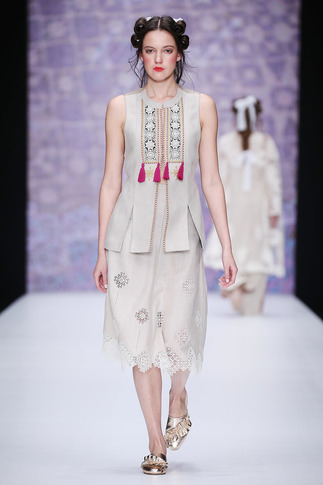
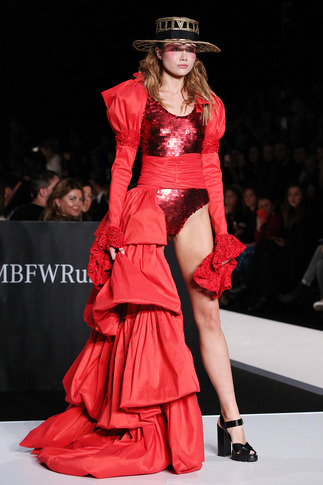
The new season of MBFW Russia was inaugurated by an artistic crafts show. Linen suits and maxi skirts were harmonically combined with long shirts embroidered in colorful ornaments; cotton tunics and dresses with sky blue inserts were enhanced by light elegant mantles, hand woven lacework collars as well as feather and red linen jackets.

Garments were manufactured using different embroidery techniques, appliqué and artistic crafts patterns. The models’ hair styles were decorated with white lacework ribbons.

Six Spanish brands presented their spring/summer 2018 kids’ collections. As part of the Blue Jasmine show more than 60 kids’ and teenage looks were presented. Abundance of colors from vibrant blue and yellow to light cream and powdery shades were neutralized by golden and neon paillette embroidered clothing, spacious dresses and intensive black sets. The looks were complemented with wreaths, elegant hats and ball-shaped handbags.
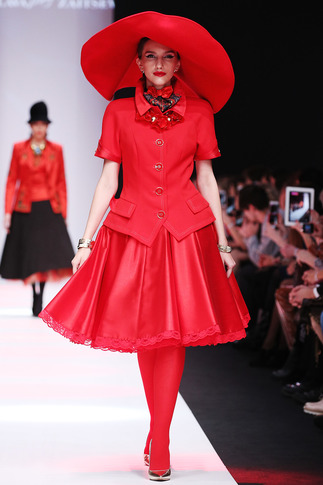
Runway models with flip flops and plaits performed a scene from the life in the Spanish region of Andalusia.
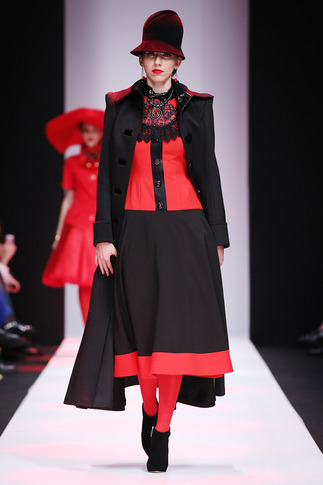
Julia Dilua’s fur fashion house presented the Hollywood Temptation collection. There were fur coats, jackets, muffs, cloaks of bobcat, fox and stoat fur, dresses decorated with precious stones and diamonds, as well as curls and bright lipstick.
"Textile Exchange recently released its largest Preferred Fibers & Materials Market Report. Among the participating companies, organic and other preferred cotton represent 47 per cent of total cotton usage, recycled polyester usage grew 58 per cent and lyocell usage jumped 128 per cent. In addition, preferred down, the majority of which is certified to TE’s Responsible Down Standard, increased by 54 per cent."
Textile Exchange recently released its largest Preferred Fibers & Materials Market Report. Among the participating companies, organic and other preferred cotton represent 47 per cent of total cotton usage, recycled polyester usage grew 58 per cent and lyocell usage jumped 128 per cent. In addition, preferred down, the majority of which is certified to TE’s Responsible Down Standard, increased by 54 per cent.
The report highlighted the early-adopters of organic cotton are broadening their horizons, setting and publicly disclosing ambitious targets for preferred cotton and recycled polyester, and committing to forest policies. They are also exploring new areas of innovation such as biosynthetic fibers. The bio-economy encompasses the production of renewable biological resources and the conversion of these resources and waste streams into value-added products, such as food, feed, bio-based products and bioenergy. For the textile industry, the shift from petrochemical-based synthetic fibers to bio-based is in its infancy, with bio-based polyester being the most well developed. Scaling production is underway with brands such as Adidas, The North Face and Tierra supporting pilots with suppliers such as Toray, Far Eastern New Century, Spiber, SM Silk and Bolt Threads, the report noted.

More companies are managing a portfolio mix of fibers rather than focussing on an individual one and they are beginning to mobilise and gear up for circularity. About 24 per cent of companies have already developed a circular textiles strategy and 57 per cent have a circularity strategy under development.
Sustainable development goals
The impact data reflects that adoption of preferred fibers and materials can advance many of the Sustainable Development Goals, particularly SDG 12, which focusses on responsible consumption and production. Nearly 30 per cent of the reporting companies are aligning corporate strategy to the SDGs. Felipe Arango, partner, BSD Consulting, said that textiles tie directly to several of the SDGs and responsible practices by the textile industry can contribute significantly to achieving these goals. In addition to a new Circular Textiles component in TE’s PFM Benchmark Program, the recycled polyester (rPET) Working Group is aiming to facilitate the transition toward circularity in the use of polyester.
Karla Magruder, Founder, Fabrikology and rPet Working Group lead, highlighted that Textile Exchange’s Working Groups are focused on leading the industry toward a portfolio of preferred fibers. This includes pulling waste out of the environment for recycled synthetics, using more sustainable growing methods for cotton, deriving feedstocks from bio-based materials and processing cellulosics in an environmentally safe way. This work combined with support for new technologies that enhance the ability to deliver these feedstocks and manufacturing systems effectively will drive the industry towards the circular economy and a future we can all enjoy.
Who leads the bandwagon
Nike tops the list in the use of Recycled Polyester, followed by The North Face, Decathlon, H&M, Target, Patagonia, Williams-Sonoma, Timberland, M&S and Woolworths. The North Face has increased its usage the most, while Under the Canopy is top in closing the gap between the share of recycled and virgin polyester consumption. In terms of volume, H&M tops the list, followed by Ikea, C&A, Nike, Adidas, Levi Strauss & Co., M&S, Tchibo, Jack Jones and Woolwoorths. Asos has registered the largest growth, while Green Fibers tops in closing the gap between the share of preferred and conventional cotton.
C&A tops the board for the use of organic cotton, with H&M, Tchibo, Nike and Inditex rounding out the top five, while Boll & Branch has increased its usage the most and Green Fibers also tops the ‘Race to the Top’ list for closing the gap between its usage of organic and conventional cotton. In the Leaderboard for Preferred Man Made Cellulosics, C&A, Inditex, H&M, M&S and Tchibo are in gthe top five, followed by Aldi, Asos, Woolworths, Lindex and Eileen Fisher. The Race to the Top also has Eileen Fisher on top, followed by Stella McCartney and REI.
The Lyocell Leaderboard is led by Inditex, followed by H&M, M&S, C&A, Lindex, Eileen Fisher, Tchibo, Aldi, Armedangels and Toad & Co. C&A has shown the most growth in usage and Toad & Co. has increased its usage of lyocell versus conventional viscose or rayon. The Certified Down Leaderboard is led by H&M, The North Face, Columbia Sportswear, Target and C&A, with Kathmandu, Patagonia, REI, Helly Hansen and Timberland rounding out the top 10.C&A has shown the most growth in its usage, while Columbia leads the ‘Race to the Top’.
Gucci’s president and CEO Marco Bizzarri recently disclosed details of the company’s new ten-year ‘Culture of Purpose’ sustainability plan along with its commitment to join the Fur Free Alliance eliminating animal fur from its products, beginning early next year. They will contribute Euro 1 million as a founding partner of UNICEFs Girls’ Empowerment Initiative.
This announcement came on the occasion of the International Day of the Girl on October 11, on which the 2017 Kering Talk was organised at the London College of Fashion.
The plan hinges on three pillars: environment, humanity and new models.
Gucci is committed to reducing its environmental impact and guarantees traceability of 95 per cent of its raw materials. It recognises the value of its employees and is dedicated to responsible and innovative management of the supply chain, gender equality, diversity and inclusion. It is also developing new solutions by applying technical innovation to improve efficiency in its production and logistics.
Latest figures released by the Pakistan Cotton Ginners Association (PCGA) disclose that it is estimated that Pakistan would achieve their cotton production target of 13 million bales this season.
Pakistan produced 5.984m cotton bales by Oct 15, up 36.79 per cent as against the output recorded in the corresponding period last year. Following a crop failure in the last two consecutive seasons their cotton production is likely to be 3m bales higher this year.
Sindh and Punjab recorded higher year-on-year cotton production with Sindh province producing 5,34,687 more bales while for Punjab it was 1.07m more bales up to Oct 15. Punjab’s cotton production grew 54.89pc to 3.032m bales this year. Sindh produced 2.951m bales, recording a growth of 22.12 per cent year-on-year.
The fortnightly flow of phutti from cotton fields to ginneries remained at 1.993m bales as against 1.729m bales last year.
As for consumption, spinners purchased 4.232m bales when compared to 3.144m bales that they lifted in the same period last year.
Exporters purchased 1,80,602 bales as against 95,490 bales a year ago while ginners are also holding unsold cotton stocks of 1.571m bales as against 1.135m bales last year. About 979 ginning factories are currently operating from Sindh and Punjab.
Ahmedabad based textile company Arvind Ltd. signed a memorandum of Understanding (MoU) with the Gujarat Government to set up a mega apparel factory that will employ over 10,000 people — a majority of which will be women.
The proposed Rs. 300 crores (US$46 mn) project will be set up at Dahegam in Ahmedabad District and produce over 24 million garments once fully operational.
The move to sign the MoU with the Gujarat government followed close on heels the Gujarat government’s announcement of its new Garment and Apparel Policy, 2017.
The MoU was signed on October 17, 2017 by the Gujarat Chief Minister, Vijay Rupani and Arvind Limited’s Executive Directors, Kulin Lalbhai and Punit Lalbhai.
The policy envisages achieving textile-to-garment value chain of 5 Fs: Farm, fibre, fabric, fashion and foreign markets, a company spokesperson announced.
Arvind Limited’s Executive Director Punit Lalbhai discussing the MoU said, “Gujarat has always been a leader in textile manufacturing. The Gujarat apparel policy will have a far reaching impact on helping the state forward integrate into apparel manufacturing and develop vertical solutions for global brands. This progressive policy from the Gujarat government will go a long way in making Gujarat a hub for the end-to-end textile and apparel value chain.”
Arvind Limited’s Executive Director Kulin Lalbhai announced, “We plan to commence commercial production in the 4th quarter of 2018 and we plan to create 10,000 jobs, a majority of which will be women. We are excited to support the Gujarat Apparel policy whose aim is to create 1,00,000 jobs in Gujarat. We are confident that with such a conducive policy Gujarat will emerge as a major destination for garmenting.”
Starting from 2018 Denim Première Vision, the Paris-based denim trade show will move to a new location, Le Parc Floral in the South East area of the French capital near Porte de Vincennes.
Chantal Malingrey, director of the show announced, “We are delighted to announce a new venue in Paris for the next edition of Denim Première Vision, a sublime match between nature and urban: Le Parc Floral.”
The show, geared to celebrate its 10th anniversary for its upcoming November 14-15, 2017 edition, will take place for the last time at PEC-Paris Event Centre, near Parc De la Villette. It has previously changed locations. Since November 2016, when it returned to Paris, at PEC, exhibitors and visitors were unhappy about the new venue but still welcomed the homecoming to France.
By choosing to move to Parc Floral, in the 12th arrondisment, in an area that is part of Paris’ botanical garden where various other parks are located, the organisation was looking at an overall renovation of the show’s concept by starting to move to more inspiring surroundings for exhibitors and visitors, who are always looking for fresh ideas for their work.
The new dates fixed for Denim PV for 2018 will be May 23-24 and November 15-16.