FW

Bangladesh imports more than 60 per cent of its required cotton from India, the single largest source of the raw material for the country. Bangladeshi spinners import cotton from India because of the shorter lead-time, which is necessary for the garment business in the present context of fierce global competition.
Demand for the natural fiber is on the rise in Bangladesh as it is the only country that is still dependent on raw cotton for making yarns and fabrics. Other countries have shifted to manmade fibers like filament, polyester and viscose, causing global consumption of cotton to decline in recent years.
Currently, the ratio of cotton and manmade fiber use is 28:72 worldwide, with a pronounced tilt towards artificial fibers, due to their lower price, improved functionality and ease of use. In Bangladesh, more than 90 per cent yarns and fabrics are made from cotton.
Bangladesh is the largest cotton importer and consumer worldwide. In 2016-17, some seven million bales are expected to be imported. Bangladesh's cotton import will creep up to 7.1 million bales in 2017-18. Local growers can supply less than three per cent of the annual demand. The country is also looking to source cotton from the US, Australia and Africa.
An apparel park is coming up in Iran. The aim is to limit imports, boost domestic production and make the price of Iranian clothing more competitive. The park will be open to business units to produce goods worth 20 per cent of their import value inside Iran and to export at least 50 per cent of this domestic production.
Currently, 9,818 industrial units are active in Iran’s textile and apparel industries. These units have created more than 2,90,000 direct jobs, accounting for 13 per cent of all industrial jobs in Iran. Iran’s apparel exports during the first half of the current year grew 24 per cent in value compared with the corresponding period of last year. In the last fiscal year exports were up 3.9 per cent in value year-on-year.
Imports of apparel fell 2.24 per cent in terms of value. Import tariffs on apparel are set at 55 per cent. On top of that, importers are made to pay a nine per cent value-added as well as an additional four per cent tax.
However, a vast amount of apparel is smuggled into Iran. In fact, clothing tops the list of goods smuggled into Iran. Iranian apparel production meets 40 per cent of domestic demand. Iran’s annual apparel demand stands at around 5,10,000 tons a year while the country’s production capacity is about 3,20,000 tons.
Amazon the world’s largest e-commerce firm, is making its presence felt in India’s $60 billion organized retail market, much like it has been doing in the US. Through a series of acquisitions and tie-ups, Amazon has started making inroads into well-known consumer goods and retail brands in India to bring its brands to people who are not yet part of the e-commerce market. At present e-commerce penetration is at 2 per cent of all retail sales.
In September, Amazon announced it was buying a 5 per cent stake in departmental store chain Shoppers Stop for Rs 179.25 crore,. Amazon plans to use this partnership to set up “Amazon Experience Centres” where it can showcase its brands—mostly in fashion and accessories.
Amazon now has access to this network. The company’s private-labels include AmazonBasics, under which it sells electronic and mobile accessories, luggage, stationery and dining and kitchen products. This fits with Shoppers Stop’s merchandise mix—35.3 per cent of its sales for the quarter ended 30 June came from the non-apparel segment which largely consists of home and electronic items, and personal accessories.
Meanwhile, the company has partnered consumer goods firm Dabur India to set up an e-commerce portal to sell Ayurvedic products and medicines in India. Amazon India declined to comment on its plans for the partnership with Dabur. While Amazon manages the logistics of e-commerce in Ayurveda, it also gains access to brands and consumers in a fast-growing space. Market research firm Nielsen India. Amazon’s strategy to penetrate India’s retail market also comes under a regulatory regime that does not allow foreign direct investment in multi-brand physical retail or in inventory-led e-commerce firms.
Germany-based Amsilk, is the world's first industrial supplier of synthetic silk biopolymers. Its bioengineered spider silk is a new material which opens completely new possibilities for applications throughout the medical, cosmetic and textile industries.
Amsilk’s synthetic silk is not only a highly innovative product, but has the potential to disrupt industries and provide substantial added value for its partners.
Sustainably produced using a patented biotechnological process, Amsilk high-performance biopolymers have the unique functional properties of the natural product they are based on. The organic high-performance material can be used in multiple ways, including in medical or technical products as well as cosmetic ingredients. Amsilk high-performance biopolymers give everyday products unique properties. Among other things, the polymers are biocompatible, breathable and especially robust.
Amsilk high-performance biopolymers are distributed in the form of Silkbeads (microparticles), Silkgel (hydrogel) or Biosteel fibers. They are currently used in coatings for medical technology products, in the textile industry and as an ingredient in cosmetic products.
The company has been chosen by the German edition of MIT Technology Review as one of the 50 most innovative companies in the world. Others in the list are the Chinese online retail giant Alibaba, Amazon, Continental, Daimler, Microsoft and Tesla.
A total of 43 companies from Pakistan participated at Intertextile Shanghai Apparel Fabrics and Yarn Expo, China, October 11 to 13, 2017.
Out of these, 22 companies participated directly in Yarn Expo and 16 participated directly in Intertextile Shanghai Apparel Fabrics whereas five companies participated through TDAP in ITSA 2017.
The Pakistan pavilion was run by Trade Development Authority of Pakistan (TDAP).
The Pakistani companies participating in the expo included Abtex International, Fazal Cloth Mills, Fabcot International, Global Textile Networks, Indus Dyeing, Masood Textile, Mustaqim Dyeing and Printing Industries, Nagina Cotton, Naveena Group, Nisar Spinning, Noor Enterprise, Opulent International, Salman Agencies, Tata Textile, World Textile Trading, Zanbeel, Vigour Impex, Xiamen Naseem Trade, Blinks International, Ever Green Textiles, Idrees Textile & Hantex. Azgard Nine, Indigo Textile, Master Textile, Sapphire Diamond, Soorty Enterprises, US Denim Mills, Naveena Denim and SM Traders.
Intertextile Shanghai Apparel Fabrics is a comprehensive platform to showcase apparel fabrics and accessories. Yarn Expo Autumn showcases a wide range of fibers and yarns for trade buyers and acts as a gateway for exhibitors and visitors to exchange market information via product presentation sessions and trend forums.
In 2016, ITSA recorded 4,553 exhibitors from 29 countries and 73,927 visitors from 90 countries and regions, while Yarn Expo attracted 319 exhibitors from 12 countries and 11,832 visitors from 77 countries and regions. Specifically from Pakistan, there were 23 exhibitors who participated in Yarn Expo 2016 show.
Kewal Kiran Clothing’s standalone revenue for the Q2 rose by 9.9 per cent. This was primarily driven by a 9.9 per cent year on year increase in revenue from apparel and lifestyle accessories.
Ebitda for the quarter rose by 30.7 per cent year on year with a corresponding margin expansion of 463 bps. Ebitda margin for the quarter stood at 29.2 per cent. This margin expansion was aided by a decline in selling and distribution expenses and manufacturing expenses by 26 per cent year on year and 15 per cent year on year.
PAT for the quarter showed a year on year increase of 30.3 per cent. This was partly due to an increase in other income by 8.8 per cent year on year. Kewal Kiran Clothing is a branded apparel manufacturer in India. The company designs, manufactures and markets branded jeans, semi-formal and casual wear for men and women.
Kewal Kiran’s brands are: Killer, Easies, LawmanPg3, Integriti. The cater to the middle and upper middle segments. The company was incorporated in 1981 and is based in Mumbai with consumers in Asia, the Middle East and CIS. The company’s own manufacturing and processing set up enables it to have a speedy go-to-the market production - from design to stores.
In a bid to boost the khadi industry, Kerala is planning to modernise and mechanise the sector with an aim to generate employment for people, particularly in village areas. The introduction of modern charka has helped enhance the working conditions of workers in the khadi sector. It has been estimated that there are about 12,800 workers in the field of spinning and weaving of khadi clothes.
The accent is on comprehensive development of the sector, with an accent on building the Kerala brand. Compared to other industries, textile has the potential for engaging legions of workers, mainly women, and providing jobs consistently, with minimum investment. Efforts have been made to boost the production and sale of khadi clothes. Kerala is known for khadi shirts.
Meanwhile textile majors are willing to buy the products of khadi and handloom units in Kerala. They have made lucrative offers for outright procurement. The offer sounds rosy for the units as it ensures regular employment to scores of workers and also higher prices for the products. But it is fraught with the danger of the industry’s losing its identity and clout in the market. Also, in time, the companies may dictate prices and even working conditions in the units.
Invista has a collaboration with Who What Wear. This addresses common denim dilemmas and shows how jeans with Lycra dual FX technology can solve them.
Last year Invista conducted an extensive consumer research project across five countries and found the main issue with stretch jeans was how they lost their shape as people moved throughout their daily activities. Invista needed to educate consumers on what’s inside their jeans matters and encourage them to look for styles with Lycra dual FX technology. The challenge was to do this in an engaging way.
Invista found the answer by teaming up with Who What Wear, a leading online destination for fashion, editorial content, and shopping. A key element of the collaboration is a curated shop where consumers can purchase jeans with Lycra dual FX technology from 19 featured brands.
At the upcoming Kingpins shows in Amsterdam and New York, Invista will showcase will showcase its latest denim fabric innovations. Invista will also share results from a study on bi-stretch that can help brands and retailers choose the best bi-stretch fabrics for their particular needs. This new tool can help guide fabric selection by illustrating the relative merits of different ways of achieving bi-stretch denim.
Invista showcased innovations at October’s Intertextile Shanghai Apparel Fabrics. The rich and vivid content delivered at the show focused on Invista’s innovative attitude to consumers, partners as well as the whole industry. To build a healthy and sustainable marketing environment, Invista cooperated with a number of media organisations to conduct a survey on IP protection in the textile industry. The results were revealed at the show.
Visitors experienced the latest possibilities offered by Lycra Moves bra, Lycra Moves leggings and Lycra Moves hosiery. Invista launched Lycra lasting fit technology for bra wings. Invista is one of the world’s largest integrated producers of polymers and fibers.
At its stand at Intertextile Shanghai, Invista highlighted some of the branded technologies it tested with consumers during the study. Arranged under three key pillars (fit, shaping, and climatic comfort), each pillar featured key insights in the form of consumer quotes from the research, along with garments from key mill partners that showcased Invista technologies that addressed those consumer needs.
Invista designed the stand to be consumer centric, highlighting consumer needs and solutions. Intertextile Shanghai Apparel Fabrics has been a platform for Invista to communicate with players across the value chain for 23 years.
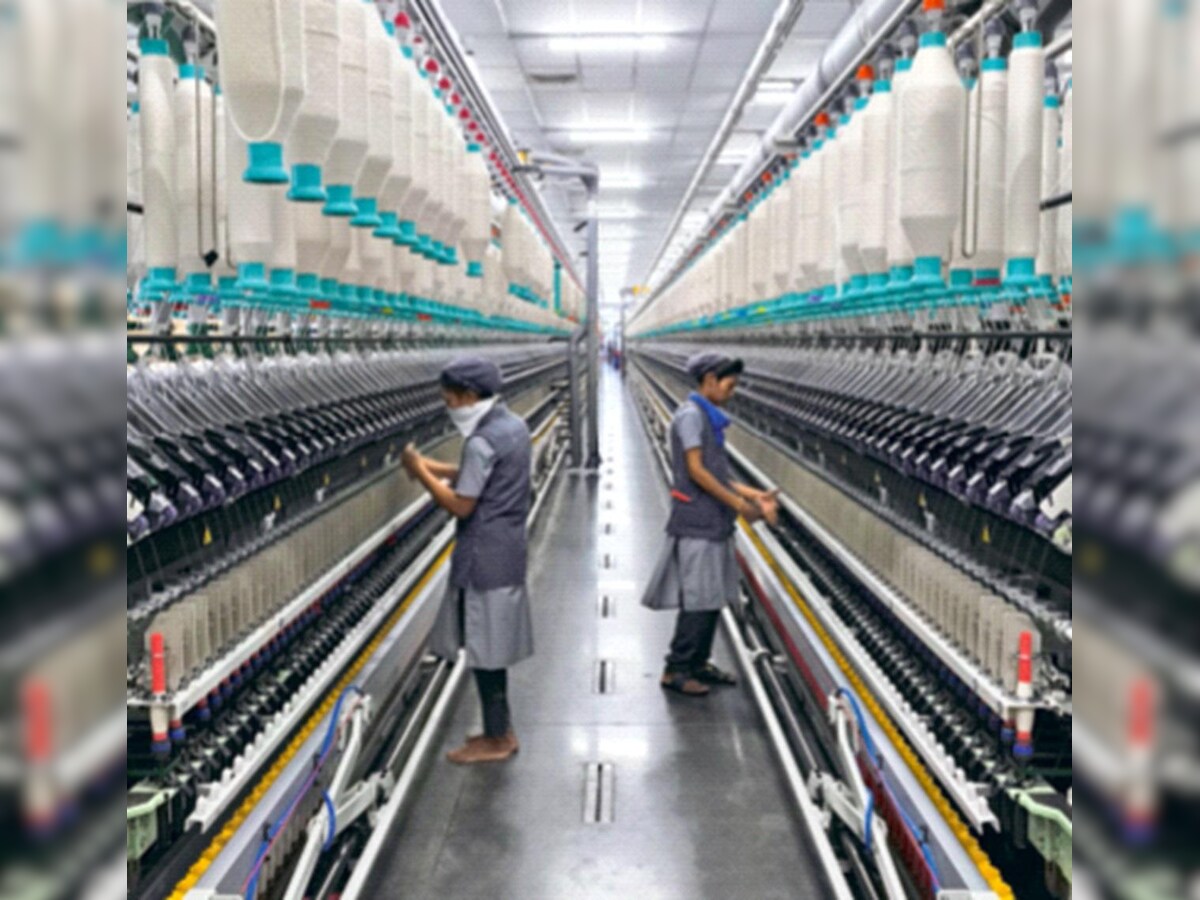
India’s cotton yarn exports make up more than a tenth of its total textile exports and are one of the few segments in which the country had historically enjoyed an advantage until. However, in 2016-17, exports of cotton yarn fell 7.7 per cent. Apart from trade reasons, GST on both yarn and fabric has hit the hitherto untaxed industry hard. The rupee's rise over the past year, with high raw material prices in the past six to nine months, has affected the industry.
Also, with domestic demand not growing, investment in spinning mills has dropped, pushing up manufacturing prices. India’s cotton yarn industry wants benefits under the Merchandise Exports from India Scheme and the Interest Equalisation Scheme, something manmade yarn already gets.
It has raised the issue of drawback rates. Exporters have called for policy interventions with major buyers of Indian cotton yarn, such as China. India is disproportionately dependent on China for exports. But export orders have continued to decrease over the past couple of years. Vietnam and Bangladesh have advanced on the Chinese market with more than a four per cent tariff advantage due to trade agreements and cheaper labor costs. Cotton yarn is also exported to Bangladesh, Pakistan, Egypt and Korea.