FW

Invista held it 2016 Lycra fiber legwear seminar in China on May 31. Over 100 representatives of mills, brands and retailers with a stake in the leg wear segment of the Chinese marketplace attended. Invista is the owner of the Lycra fiber brand and one of the largest integrated producers of fibers and polymers.
The event was a one-stop opportunity to get up-to-date on global leg wear trends and the increasingly wide range of consumer benefits delivered by Lycra fiber technologies. Attendees were briefed on growing demand for color creativity and how Invista’s Living Lights technology can help improve dyeing and finishing processes to help meet it. The natural appearance of existing styles can be heightened or readily enhanced with deeper, more saturated fashion effects.
Lycra fiber variants are also designed to deliver maximum freedom of movement and gentle shaping benefits. The high recovery-low hysteresis characteristics of Invista’s Shaping technology, in particular, aims to enable optimal combinations of comfort, perfect contours and stylish good looks.
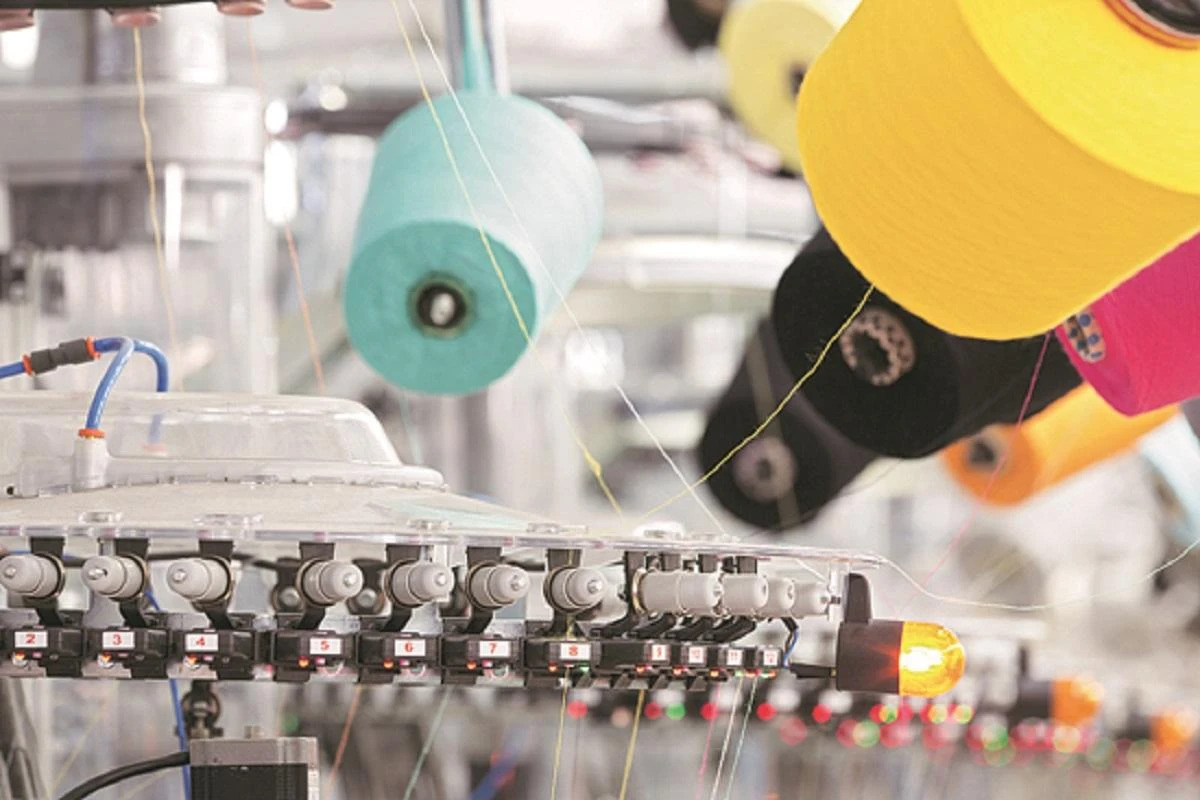
The latest Invista leg wear innovation combines the better-than-bare aesthetics and silky touch of ultra-fine fibers, such as Lycra T777F, with the patented Lycra fusion anti-laddering technology. Super Summer Sheer hosiery can be produced on standard knitting machines using complementary Invista technologies.
"Other than the increasing labour costs in Asia, international textile firms are looking at Africa to take advantage of the growing African consumer market. This is an opportunity for African countries to find their place in these value chains, from the producers of raw materials on up."

Other than the increasing labour costs in Asia, international textile firms are looking at Africa to take advantage of the growing African consumer market. This is an opportunity for African countries to find their place in these value chains, from the producers of raw materials on up.
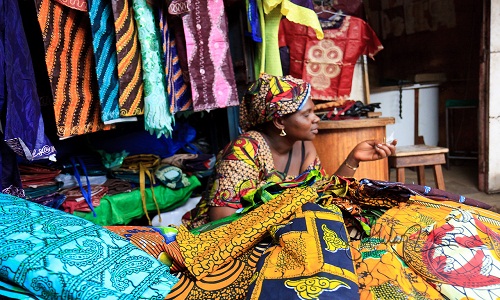
Africa-inspired designs are now regularly shown on catwalks in Paris, London and Milan. Michelle Obama, the First Lady of the US, wears African-influenced clothing from Nigerian designer Duro Olowu. According to Data from Euromonitor International, fashion is big business: the combined apparel and footwear market in Sub-Saharan Africa is estimated to be worth $31 billion.
Africa’s role in fashion industry
The textile industry value chain begins with the production of cotton, spinning and twisting of the fiber into yarn, the weaving and knitting of the yearn into fabric, and the bleaching, dying and printing of the fabric to obtain the fashionable garments that we all wear today.
Targeting the fashion industry means targeting the whole value chain, from the smallholder farmers to the fashion designers. The fashion industry in particular holds considerable potential to motivate and bring change to some of the most disadvantaged people, especially women and youth, while advancing structural transformation.
Recently, the African Development Bank looked at these global value chains to see how each country can join in at a particular stage based on its comparative advantage. Today, international textile firms are looking at Africa not only for the purpose of production in view of increasing labour costs in Asia. They are also looking at Africa to take advantage of the growing African consumer market. This presents an opportunity for African countries to find their place in these value chains, from the producers of raw materials on up.
The government of Rwanda is a good example for creating the right policy environment for businesses to thrive and attract investments. It is one of Africa’s most competitive economies and a top reformer in improving the business environment. It has created the foundation to attract foreign investors to work with local designers, establish garment factories and boost the textile and fashion industries. H&M is building a factory in Ethiopia and PVH is looking at Kenya for the production of its brands, including Calvin Klein and Tommy Hilfiger.
Challenges in Africa
But the cost of doing business is still too high. Energy shortages, high costs and poor access to energy, combined with high costs incurred by transport, logistics and custom facilities, can erode the advantages of lower labour costs and impede a country’s ambitions to industrialise. Sub-Saharan Africa consumes a mere 181 kWh in power. Compare this with 13,000 kWh in the US and 6,500 kWh in Europe and it is obvious how little this is – 1.4 per cent of what the US consumes and 2.8 per cent of what Europe consumes. About half of all firms across Africa have their own generator to complement or replace electricity supplies as needed. This represents a big disadvantage for firms trying to grow their business.
As governments become increasingly aware that apparel production offers large-scale employment opportunities, they need translate this awareness into investments in their people. Lesotho, Ethiopia and Kenya, for instance, have recognised this and are establishing training centres and tertiary institutions to promote the technical qualifications for people in the textile and apparel industries.
Africa currently accounts for just 1.9 per cent of global manufacturing. There is an urgent need for Africa to rapidly industrialise and add value to everything that it produces, instead of exporting raw materials that make it susceptible to global price volatilities. The fashion industry is a case in point. Instead of exporting raw cotton, Africa needs to move to the top of the global value chain and produce garments targeted at the growing African and global consumer class.
The Southern India Mills’ Association’ (SIMA’s) Texfair is a unique event for the mutual benefit of the manufacturers/suppliers of textile machinery, spares, accessories, equipments, etc., and the textile mills. The 10the edition of Texfair was organised recently by SIMA at CODISSIA Trade Fair Complex, Coimbatore. Though the industry has been reeling under continuous recession, 200 exhibitors participated with full enthusiasm and interest and made the event a grand success. The event attracted around a lakh visitors.
Exhibitors from Gujarat, Delhi, Goa, Maharashtra, Punjab, besides Tamil Nadu and also overseas exhibitors from China, Japan and EU countries participated in the event. Coinciding Texfair 2016, national seminars on topics like Value addition opportunities in weaving, diversification in technical textiles, improving energy efficiency & productivity in textile mills, condition monitoring applied in textile mills, among others were also organized which attracted over 150 participants
All Pakistan Textile Mills Association (APTMA) rejected the recommendation of Pakistan government’s Senate Standing Committee on National Food Security and Research to impose Regulatory Duty on import of Cotton from India through Wagha Border. Chairman APTMA, Tariq Saud said that the recommendation of Senate Committee on National Food Security and Research is based on the false data provided to them which has no basis. He said that the Ginners have not more than 100,000 bales of cotton which they will trade off before the arrival of new crop. Furthermore, the stock available with the ginners and TCP are of very low quality which can only be used in the Open End Processing or producing Lower Count of Yarn.
Tariq Saud further said that the Federal Minister for Finance, Ishaq Dar in his Budget Speech has accepted that due to the failure of cotton crop by about 35 per cent this year the growth rate has declined by about 0.5 per cent. The failure of local cotton crop by about 35 per cent has placed extra burden on the industry to import more than 5 million bales of cotton to meet the consumption requirement of the spinning industry, he added.
He said that this decline in production of cotton in the country has not only effected the operations of basic textile industry, which is already suffering due to high cost of doing business and shortage of energy in the country but also resulted in surge in import of cotton yarn and Fabrics.
This year, the main cotton growing districts of Punjab, Haryana and Rajasthan are likely to face a prolonged dry period after June. Cotton area fell short by 30 per cent this year in north India. Rains are likely to start by June 19-20 in MP, Maharashtra and Telangana. Rainfall distribution is predicted to be very good all through the season until mid-September, except for a 10-day dry period in mid-July in Madhya Pradesh and Maharashtra, and intermittent dry weeks in Telangana. Cotton production in the three states is expected to be good, if sowed before June 25, or at least before the end of June.
In Gujarat, rains are expected to start from June 20 to 21. For most of the period in July, the state is unlikely to receive rains. If the prediction turns out to be correct, rain-fed cotton in Gujarat, especially late sowed crop, will be under stress during July and after the third week of August if the monsoon recedes as predicted for many districts, resulting in decline in yields in rain-fed regions.
Rainfall distribution in AP is predicted to be erratic throughout the season. Rain-fed cotton may come under severe stress in the main cotton growing district of Guntur. Good rains are predicted in Karnataka in the last week of June and early July.
During the first three quarters of this year, Pakistan’s readymade garment exports showed an increase of 4.2 per cent in terms of value and 1.56 per cent in term of quantity. During July-March 2016 knitwear production showed a growth of 9.70 per cent. There are about 13,372 circular knitting machines, 10,646 flat knitting machines and 23,241 socks knitting machines spread all over the country. The capacity utilization is around 70 per cent.
There is greater reliance on development of the hosiery industry as there is substantial value addition in the form of knitwear. Besides locally manufactured machinery, liberal imports of machinery under different modes are also being made and capacity based on exports is being developed. Earnings as compared to last year were due to lower commodity prices globally.
The readymade garment industry has emerged as one of the important small scale industries in Pakistan as its products have a higher demand both domestically and globally. The local requirements of readymade garments are almost fully met by this industry. The garment industry is also a good source of providing employment opportunities to a large number of people at a very low capital investment. Export earnings from garments have increased significantly.
The ILC (International Labor Conference) is addressing labor rights deficits in the supply chains of multinational companies. The expansion of global supply chains has been driven by a business model expressly designed to take advantage of low wages and inadequate regulation and enforcement. While more than one fifth of the global workforce has a job in a global supply chain, respect for workers’ rights in supply chains is declining. In the garment industry, there was a 73 per cent drop in the workers’ rights score of the top 20 apparel exporters to the US between 1989 and 2010. At the same time there was a 42 per cent reduction in the price paid for the clothes they produced.
Voluntary corporate social responsibility initiatives have failed. They have not been able to meaningfully improve wages and shorten working hours or to ensure respect for workers’ right to join a union – or their right to a safe workplace.
ILC discussions include working toward a convention on global supply chains to address these deficits. A convention would establish greater accountability for wages and working conditions and clarify the roles and responsibilities of both suppliers and buyers for ensuring labor rights.
"China came out with the 2016 Q1 report of listed printing and dyeing companies recently. The weighted average operating revenue of five representative listed companies reached 362 million Yuan, up 14.89 per cent year on year and net profits scored at 21 million Yuan, up 4.76 per cent year on year. For 6 representative listed dyestuff auxiliary companies, the weighted average operating revenue was 1.034 billion Yuan, down 4.48 per cent on an annual basis and net profits were 101 million Yuan, a fall of 42.77 per cent year on year."

China came out with the 2016 Q1 report of listed printing and dyeing companies recently. The weighted average operating revenue of five representative listed companies reached 362 million Yuan, up 14.89 per cent year on year and net profits scored at 21 million Yuan, up 4.76 per cent year on year. For 6 representative listed dyestuff auxiliary companies, the weighted average operating revenue was 1.034 billion Yuan, down 4.48 per cent on an annual basis and net profits were 101 million Yuan, a fall of 42.77 per cent year on year.
The observation is that the dyestuff auxiliary companies were less prosperous than printing and dyeing companies in Q1 and the growth rate is lower than the latter part.
Performance of printing and dyeing companies
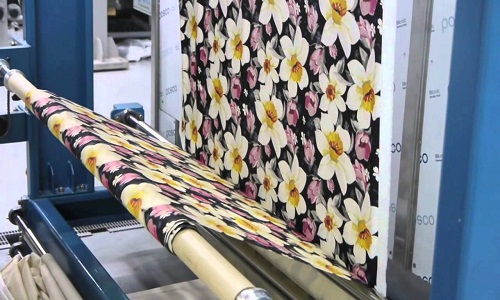
Two among the five listed companies, witnessed operating revenue decrease year on year, while three increased. In Q1, Hangmin remained on top, to increase by 12.51 per cent from last year to reach 675.77 million Yuan. Amid the tight environment policy, capacity of small and medium dyeing plants shrank due to higher dyestuff prices and coming G20 Summit, which was good for the improvement of shares of leading companies. Currently, Hangmin Stock has a capacity of 1 billion meters of printed and dyed fabric and sales ratio is quite good.
MIZUDA and Zhonghe witnessed losses in Q 1, while Hangmin Stock continued to be the top with the net profits of 91.86 million Yuan, up 17.91 per cent. Benefited from higher dyeing fee and good control on cost, net profits increased sharply and the gross profit rate approached 29.44 per cent, up 0.65 per cent from last year.
Dyestuff auxiliary companies dip in turnover Out of the six dyestuff auxiliary companies, three’s operating revenue declined year on year. The leading company, Zhejiang Lonsen witnessed a yearly decrease of 22.58 per cent to reach 2.981 billion Yuan in Q1, as the dyestuff prices began to tumble in Q2, 2015 and rebound after March, 2016. Therefore, the dyestuff prices maintained at a historical low level in Q1, 2016.
At present, Zhejiang Lonsen has the largest dyestuff capacity in China, with 140kt of disperse dyestuff and 70kt of reactive dyestuff per year. In 2015, operating revenue of dyestuff and intermediate accounted for about 70 per cent in total. In 2017, the annual capacity of disperse dyestuff will increase from 140kt to 250kt and in the next 5 years, the capacity of intermediate will rise from 50kt to 150kt.
Net profits move south
A look at the net profits reveal, only one company saw net profits increase year on year and other five companies all decreased sharply. In Q1, net profits of Zhejiang Lonsen reached 304 million Yuan, down 73.95 per cent year on year, as dyestuff prices remained low in the first quarter after the sharp decrease in the second quarter of 2015.
With the tightening of environment policy, high-polluting printing and dyeing and dyestuff companies will be under stringent regulation in general. In printing and dyeing industry, the shutdowns of small and medium plants lead to capacity reduction, so the shares of leading companies are expected to increase further.
Moreover, with the coming G20 Summit, printing and dyeing and dyestuff companies are predicted to be shut down for about 15-20 days. Supply of dyestuff auxiliary is likely to decrease. Though the price increase of dyestuff does not pose positive impact on the Q1 report, the report in Q2 may be better amid the traditional buoyant season.
After hitting lows last year not seen since the Great Depression, California’s 2016 cotton acreage is up at least 26 per cent. Roger Isom, president of the California Cotton Ginners and Growers Association, called the news ‘better than expected.’ Total cotton acreage in the San Joaquin Valley is a little more than 209,000 acres. Kings County continues its top spot at 83,260 acres of cotton planted, an 38 percent increase from last year.
Total cotton planting estimates for the United States range from 9.1 million acres by the National Cotton Council and 9.5 million acres based on U.S. Department of Agriculture (USDA). The higher USDA estimate puts the 2016 U.S. crop 11.4 per cent higher than last year’s cotton crop.
Based on the USDA and NCC projections, national figures show upland cotton acreage projected to be between 17 and 24 per cent higher. Western ELS cotton plantings could range from 5.7 per cent to 11 percent higher, depending on the source of the estimate.
Arizona planting intentions suggest a crop size between 115,000 and 137,000 acres, up from 29-54 per cent. Upland plantings in the Southeast are projected down 5.1 per cent based on estimates by both organisations. The Mid-South could plant anywhere from 25 to 45 per cent more cotton this year. The Southwest could plant anywhere from 6.1 to 11.2 per cent.
Facing an onslaught of imported undervalued Chinese fabrics, there is some good news for textile manufacturers in the country's largest man-made fabric (MMF) hub in Surat. The government is in the process of imposing anti-subsidy duty on import of fabrics from China, which is intended to make the prices of domestic fabric manufactured by the MMF sector competitive. Synthetic & Rayon Textile Export Promotion Council (SRTEPC) chairman Anil Rajvanshi said this during his visit to Surat for exhibitors' road show for the upcoming global buyer-sellers meet for man-made fibers and textile on Saturday.
Also known as a countervailing duty, this country specific duty, on imports is imposed to nullify subsidies provided by other nations and is intended to make prices of domestic products competitive. Importing countries also have other options, such as introducing an anti-dumping duty, to make domestic prices at par. The inquiry by India has been initiated under the supervision of director general of Anti-Dumping and Allied Duties, an arm of the ministry of commerce and industry.
The import of undervalued fabrics from China has paralysed the MMF sector in the city. Around 50 per cent of power loom weaving machines have shut down in the last two months, rendering over two lakh workers jobless. The production of polyester fabric has reduced from 4 crore metre per day to around 1.80 crore metre per day.