FW

Premium consumer brand investor, Scope Capital has acquired a majority stake in the Dutch outwear apparel company, Stone Fashion Group. This deal kicks off a new growth phase for the Stone Fashion Group and its portfolio of brands.
Scope Capital partnered with the Stone Fashion Group's management team to buy a 60 per cent stake in the company. The founders will keep a significant minority share and will remain involved in the business.
The Stone Fashion Group is the parent company of several brands, including the popular ski and activewear brand Goldbergh, and outerwear brands like Beaumont, Reset, District, and Creenstone.
The new partnership involves accelerating Stone Fashion Group's growth by focusing on digital and geographic expansion, especially in the Asian and US markets. Scope Capital plans to use its expertise in digitalization and brand building to strengthen relationships with customers and expand the company's global presence.
The acquisition comes at a great time for the Stone Fashion Group, which is projecting a turnover of €90 million and an EBITDA of €19 million, showing a solid base for future growth.
Scope Capital has a strong track record of investing in and growing premium consumer brands, with past investments in companies like Happy Socks and Klattermusen. The firm’s strategy is to actively team up with entrepreneurs to help them fully realize their brand's potential.
This deal is a smart move for both companies, allowing the Stone Fashion Group to break into new markets with the support of a specialized investor, while Scope Capital adds another successful brand to its collection.
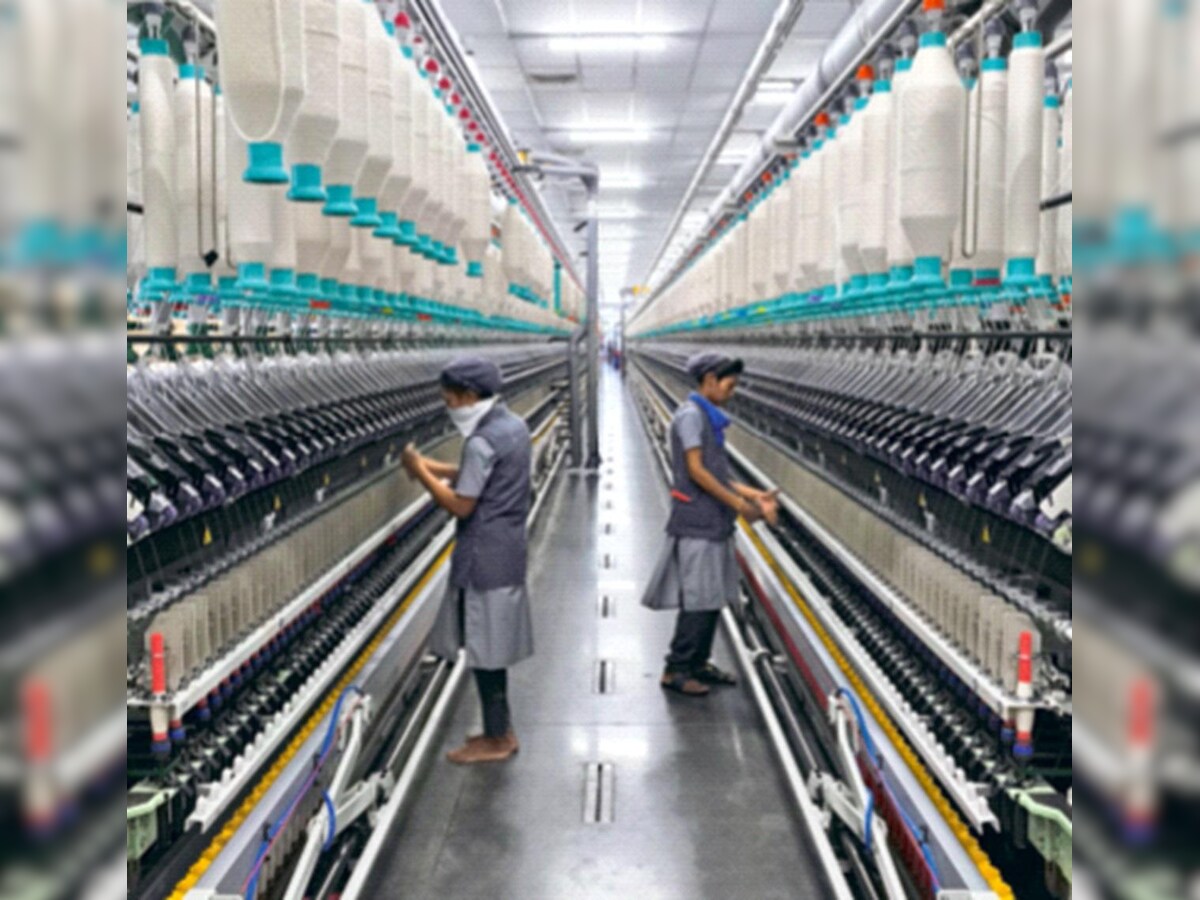
In a move to strengthen its ready-made garment (RMG) sector under the One District One Product (ODOP) initiative, the Uttar Pradesh government is constructing a new ‘flatted factory’ in the Gorakhpur Industrial Development Authority (GIDA) area. Designed as a ground-plus-three-floor facility, this multi-story building will house 80 fully equipped units for garment manufacturers.
The plug-and-play design of the factory allows entrepreneurs to start operations immediately with just their machinery and raw materials. The 30,000-sq m complex will also include an exhibition hall for showcasing products, a marketing outlet, a daycare for employees' children, fire-fighting systems, and dedicated elevators.
Valued at $4.79 million (Rs. 42.36 crore), the project is expected to create around 2,000 jobs, both directly and indirectly. According to RN Singh, President, Chamber of Industries, 80 per cent of the units will be reserved for garment businesses, while the remaining 20 per cent will be available to other entrepOne District One Product (ODOP) reneurs.
Approved by the Ministry of MSME two years ago, this initiative complements the development of a garment park that is also underway in Gorakhpur. Together, these two projects are expected to position the city as a major hub for India’s ready-made garment industry.
In a move to strengthen its ready-made garment (RMG) sector under the One District One Product (ODOP) initiative, the Uttar Pradesh government is constructing a new ‘flatted factory’ in the Gorakhpur Industrial Development Authority (GIDA) area. Designed as a ground-plus-three-floor facility, this multi-story building will house 80 fully equipped units for garment manufacturers.
The plug-and-play design of the factory allows entrepreneurs to start operations immediately with just their machinery and raw materials. The 30,000-sq m complex will also include an exhibition hall for showcasing products, a marketing outlet, a daycare for employees' children, fire-fighting systems, and dedicated elevators.
Valued at $4.79 million (Rs. 42.36 crore), the project is expected to create around 2,000 jobs, both directly and indirectly. According to RN Singh, President, Chamber of Industries, 80 per cent of the units will be reserved for garment businesses, while the remaining 20 per cent will be available to other entrepOne District One Product (ODOP) reneurs.
Approved by the Ministry of MSME two years ago, this initiative complements the development of a garment park that is also underway in Gorakhpur. Together, these two projects are expected to position the city as a major hub for India’s ready-made garment industry.
Kenya faces a major threat with the expiry of AGOA this September, and buyers taking advantage of the duty-free access before it ends. The looming expiration could lead to business disruptions and job losses for the over 66,000 workers directly tied to AGOA.
Adding to the problem is a new 10 per cent flat reciprocal tariff on Kenyan imports from the US, which undermines the years of preferential treatment and adds costs for exporters. This change in market access terms puts years of investment in skills and logistics at risk. In response, Kenya has reportedly stepped up its lobbying efforts in Washington to secure a favorable trade deal that could extend or replace AGOA. Without a clear path forward, Kenya’s textile industry and the thousands of livelihoods it supports are at a critical crossroads.
For centuries, Kenyan communities have been making textiles, but in recent decades, the country has transformed into a major force in global apparel manufacturing. This shift was largely driven by the Export Processing Zones Authority (EPZA), which attracted manufacturers with tax breaks and business-friendly policies. As a result, Kenya has seen a significant rise in foreign investment and exports, establishing itself as a key player in the textile industry.
A major reason for this growth was the African Growth and Opportunity Act (AGOA), a US law from 2000 that gave eligible African nations duty-free access to the American market. Kenya became the second-largest exporter of textiles and apparel to the US among all AGOA participants, fueling explosive export growth and job creation, especially for women and young workers.
According to the 2025 Economic Survey by the Kenya National Bureau of Statistics (KNBS), employment in AGOA-accredited firms increased by 15.18 per cent in 2024, reaching 66,804 workers, up from 58,002 the previous year. Over 70 per cent of Kenya’s textile and apparel exports go to the US market, highlighting the direct link between trade preferences and job creation.
From April 21–24, 2026, the Techtextil and Texprocess trade fairs will be held together at Messe Frankfurt, offering an integrated event for technical textiles and flexible material processing. The schedule for the fairs was announced at a press conference in Istanbul, The conference was attended by Sabine Scharrer, Trade Fair Director, Techtextil and Texprocess; Elgar Straub, Managing Director, VDMA and TFL; Murat Şahinler, Board Member, İTHİB; and M Can Yümer, Sales and Marketing Director, Messe Frankfurt Istanbul.
Speaking about Messe Frankfurt’s Texpertise network, Scharrer highlighted, it serves as a global meeting point for the textile industry, organizing over 60 fairs in 13 countries. She noted, Turkey is one of the top countries for both visitors and exhibitors at Techtextil and Texprocess. The Turkish textile industry needs to invest more in new processes and technologies to meet necessary standards, said Scharrer. While this might increase product costs, it will also create new market advantages, she added,
Scharrer mentioned, visitors can attend both fairs with a single ticket, allowing them to see the entire textile value chain, from fiber to a finished product. This setup encourages high cross-visitation and maximizes business potential. She expects exhibitors from more than 100 countries to present their new products.
Shairing more details about the fairs, Scharrer informed, Techtextil is transforming the industry with innovations across 12 application areas. Performance Apparel Textiles will be a major focus in Hall 9.0, featuring functional materials for everything from aviation safety gear to sportswear. The Nauter Performance area in Hall 9.1 will showcase solutions for the automotive and construction sectors, with a growing demand for natural materials. For the first time, textile chemicals and dyes are also being included in the product portfolio.
Regarding Texprocess, Scharrer reported, 30 new exhibitors had already signed up as of September, and the fair is expected to attract over 200 participants from 24 countries. She emphasized that Texprocess is important not just for its size, but for bringing together key decision-makers. Seventy-six percent of exhibitors have a say in purchasing decisions, she explained.
Renewed optimism for a stronger trade relationship between the United States and Indiaa is growing as two leading textile organizations, the American Association of Textile Chemists and Colorists (AATCC) and The Textile Association-South India Unit (TAI-SIU), are co-hosting the International Textile Conference from November 21-22, 2025, in Coimbatore, India.
The conference aims to address both the opportunities and challenges in the textile sector's technical and trade aspects. It will focus on topics such as cotton, synthetic textiles, supply chain developments, and new marketing opportunities.
This event comes at a crucial time. With ongoing tariff tensions between the two nations, recent social media posts by President Donald Trump and Prime Minister Narendra Modi have expressed hope for a ‘win-win’ bilateral trade agreement to be reached soon. This potential deal is expected to foster renewed cooperation and boost trade.
Stakeholders are being encouraged to engage positively to create new opportunities. As India's textile sector holds a leading position in global exports and provides widespread employment, the Indian government views it as a critical part of the country's economic growth.
Gregg Woodcock, Executive Director, AATCC, says, AATCC is proud to partner with The Textile Association (India) in support of the international conference in Coimbatore. With members including global brands like Under Armour, Nike, and Patagonia, AATCC hopes to assist the Indian textile industry with standards, testing, and educational resources to support sustainable manufacturing.
Leaders from TAI also see the event as a timely opportunity to rebuild confidence in the industry and create new opportunities in textile trade, notes R Seenivasahan, Vice President, TAI-SIU.
The conference is the first of its kind to bring together key stakeholders from both nations to a major textile region. It will be attended by participants from Europe and other countries, providing a global platform to strengthen friendships and explore business opportunities. This event is seen as a vital step to rebuild confidence and engage with India, a central hub in the global textile industry.
Syed Fasihuddin Bukhari, Representative, Interloop Group has signed an agreement with Walid Gamal El-Din, Chairman, Suez Canal Economic Zone (SCZONE) to set up a ready-made garment manufacturing facility in the Qantara West Industrial Zone.
The deal covers a 60,000-sq-m plot with an investment of $35.2 million (EGP 1.67 billion). The new plant will create more than 1,000 direct jobs and will export its entire production to foreign markets - highlighting the SCZONE’s growing importance as a hub for apparel manufacturing and international trade.
Gamal El-Din says, the Interloop project is the first industrial investment from Pakistan in the SCZONE, marking a major step in strengthening industrial cooperation between the two countries.
He emphasizes, the project reinforces Qantara West's standing as one of the most promising global destinations for apparel and accessories manufacturing, thanks to its strong appeal to investors and a fully integrated industrial ecosystem.
Interloop’s decision to dedicate all production for export shows foreign investors’ confidence in the competitive environment of the SCZONE, notes Gamal El-Din. The project will not only support Egypt’s export growth but also boost the zone’s contribution to global supply chains in the ready-made garment industry, he adds.
With this agreement, the total number of projects in the Qantara West Industrial Zone has now reached 39, with total investments of about $1.0435 billion. These projects collectively provide almost 55,700 direct jobs across a total area of 2.44 million square meters.
Founded in Pakistan in 1992, Interloop Group has become one of the world’s top textile and apparel manufacturers, producing socks for global brands as well as denim and sportswear. The company currently operates in six countries including Pakistan, the United States, the Netherlands, Sri Lanka, China, and Japan.
Currently valued at $179 billion with exports of $37.75 billion, India’s textile sector aims to increase the value of the domestic market to $250 billion and boost exports to $100 billion by 2030.
Highlighting the sector’s importance in the country during a meeting with micro, small, and medium (MSME) exporters, Giriraj Singh, Textile Minister, called it a symbol of India's economic strength and cultural heritage. The industry contributes nearly 2 per cent to India's GDP and ranks as the sixth-largest global exporter with a 4.1 per cent share of world trade, he added.
With exports reaching over 220 countries and activity spanning more than 520 districts, Indian textiles truly embody the vision of ‘Atmanirbhar Bharat’ (self-reliant India) and the spirit of ‘Swadeshi; (self-sufficiency), Singh noted.
Despite facing global instability and steep tariffs from some trading partners, India’s textile exports have shown resilience. In July 2025, India’s textile exports grew by 5.37 per cent to reach $3.10 billion. For the April-July 2025 period, exports increased by 3.87 per cent Y-o-Y to $12.18 billion.
Certain segments are performing particularly well, with ready-made garments increasing by 7.87per cent, carpets growing by 3.57 per cent, and jute products rising by 15.78 per cent. Handicrafts and man-made fiber (MMF) textiles are also maintaining steady performance.
Singh emphasized, positive trends in countries with which India has free trade agreements (FTAs) prove the country's ability to capture a larger share of the $590 billion global textile market. To achieve this, he stressed the urgent need for strategic diversification into 40 new global markets while simultaneously strengthening domestic demand.
A pioneering apparel automation company, CreateMe Technologies has unveiled two groundbreaking innovations aimed at revolutionizing the clothing manufacturing industry. Known as MeRA(Modular-engineering Robotic Assembly) and Pixel, these new technologies work together to create a scalable, high-precision platform that replaces traditional sewing. This new system promises to shorten production timelines, improve sustainability, and enable on-demand manufacturing right here in the U.S.
MeRA is a modular, autonomous manufacturing platform designed to streamline production. The company's first commercial product built on MeRA is a line of women’s intimates, which will be the industry's first fully autonomous bonded intimate apparel. With MeRA's flexible design, CreateMe plans to expand into everyday apparel, starting with T-shirts. This push for nearshoring is a direct response to the increasing demand for U.S.-based manufacturing.
The technology is built on a portfolio of over 95 patents, making it the largest apparel automation IP portfolio globally. It integrates robotics, digital adhesives, and a modular design to meet the demands of today’s fashion market: fast, local, and highly customizable.x``
According to Nick Chope, Vice President-R&D, CreateMe, MeRA and Pixel are automation built for how clothes should be made: customized, precise, and close to the consumer.
The MeRA platform offers end-to-end, software-defined garment construction powered by advanced robotics. It's incredibly fast, boasting 20x faster production speeds and 2x greater precision than manual sewing, and can produce up to 250 garments per hour. This system is also cost-competitive with offshore manufacturing and supports a wide range of garment types. By enabling on-demand production, MeRA helps brands reduce waste and shorten supply chains, meeting consumer demand in real-time.
At the heart of this innovation is Pixel, a proprietary microadhesive technology that replaces stitching with precision-bonded seams. These seams are less than 1mm wide and improve a garment's stretch, durability, and comfort. Pixel also enhances recyclability by allowing materials to separate cleanly, unlike traditional stitches or permanent adhesives.
According to Cam Myers, CEO, CreateMe Technologies, bonded apparel is the new paradigm for the fashion industry. He sees these innovations as a new standard for a future where clothing is local, sustainable, and made on-demand.
The global streetwear market is projected to grow from $193.88 billion in 2023 to $273.15 billion by 2033, with a compound annual growth rate (CAGR) of 3.49 per cent, as per a report by Spherical Insights & Consulting,
The sneakers segment is expected to hold the largest market share throughout the forecast period. This is largely because sneakers are closely tied to street culture, sports, and music, which heavily influence consumer trends and behavior. Owing to its rising popularity, the online segment is anticipated to grab the biggest market share.
Several factors are fueling the growth of the streetwear market. These including growing consumer base, higher disposable income with young consumers and the rise of social media and e-commerce which has accelerated trend cycles and allowed brands to reach consumers directly.
However, this growth is not without challenges. Rising production costs, especially for sustainable materials, are making it difficult for smaller businesses to remain profitable.
North America is expected to hold the largest share of the streetwear market. The region's appeal to companies is driven by consumers who are increasingly opting for stylish clothing, which is now widely used across various industries.
Meanwhile, the Asia-Pacific region is predicted to see the highest CAGR growth. India's streetwear market is a major contributor to this trend, fueled by its expanding middle class, rising living standards, and evolving fashion tastes. As a significant textile supplier, India's growing garment industry further supports the streetwear boom.