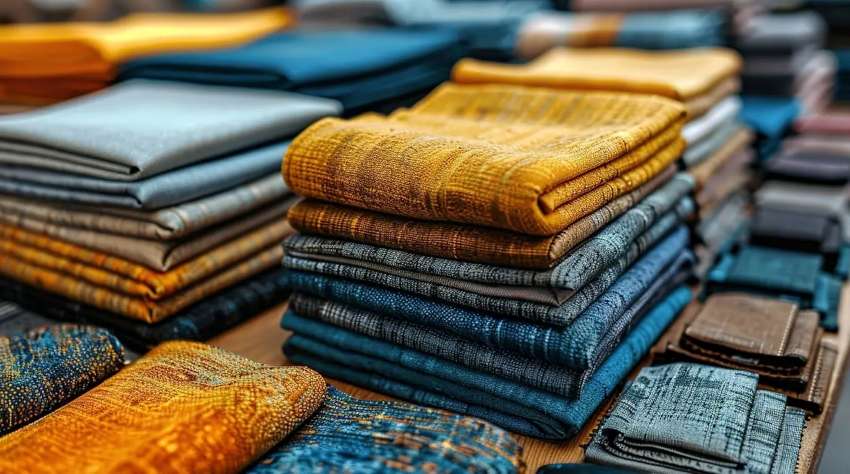
India is looking at developing trade relations with Colombia. The color of Colombian products is a potential exchange element. India has a wide range of natural dyes, which Colombia imports. Colombia uses indigo for denim and India is a leading producer of this product. So there is a possibility for collaboration in terms of design, color and fashion.
India also sees potential for increased trade in denim, specifically, by strengthening business relations with Colombian companies in dyeing and printing. Both countries make denim but that made in Colombia is much more sophisticated, particularly its design and good quality finish.
India needs technology and refinement for its clothing industry and both countries could learn from each other because they are not competitors and they make different products for different markets. India exports clothing and textiles to the United States, Europe and Asia, while Colombia sells its products on their domestic market and, on a larger scale, to South America. Colombia is one of the important countries of Latin America. In addition to cotton, synthetic fabrics and fibers, the industry also makes readymade garments.
In general India with an integrated value chain would like to develop trade relations with Latin America through cotton, silk, yarn or mats.
- 1
- 2
- 3
- 4
- 5
- 6
- 7
- 8
- 9
- 10
Yarn Expo Shenzhen 2026: GBA connectivity and AI innovation drive mid-year sourc…
The global textile industry is preparing for a strategic return to the South China manufacturing heartland as Yarn Expo Shenzhen... Read more
Fiber Rebalance: Why cotton is gaining ground in a volatile synthetic market
Into the 2026/27 season global cotton economy is entering a decisive phase. Fresh projections from the International Cotton Advisory Committee... Read more
PM MITRA parks face execution test as India’s textile exports recalibrate
India’s textile and apparel sector closed FY 2025-26 with exports worth Rs 3,16,334.9 crore, a 2.1 per cent increase that,... Read more
Dominance of Pure Play: Apparel is rewiring growth around precision, AI and trac…
The global fashion industry is entering a structural reset, and it’s not just because of cyclical demand decline or tariff... Read more
New Australian Wardrobe Economy: Where AI, sustainability, e-commerce converge
Australia’s fashion and apparel industry is no longer defined by post-pandemic recovery; it has entered a transformative phase. According to... Read more
Intertextile Shenzhen 2026- Pioneering the AI-driven future of fashion technolog…
The global textile industry is descending upon the Shenzhen Convention & Exhibition Center from June 9–11, 2026, for the highly... Read more
Yarn Expo Shenzhen 2026: GBA connectivity and AI innovation drive mid-year sourc…
The global textile industry is preparing for a strategic return to the South China manufacturing heartland as Yarn Expo Shenzhen... Read more
Indo-Dutch alliance targets textile circularity as global green jobs hit 142 mn
Netherlands and India formalized a roadmap to scale circular design and textile recycling. At the FICCI RECEIC Global Symposium 2026... Read more
Redefining what responsible production looks like
India's textile and apparel sector has set the global benchmark for sustainability at scale, and two clusters are leading the... Read more
China’s duty-free revival meets a reality check as Hainan shifts from VICs to va…
Hainan’s retail recovery is beginning to look less like a cyclical rebound and more like a rewiring of China’s domestic... Read more