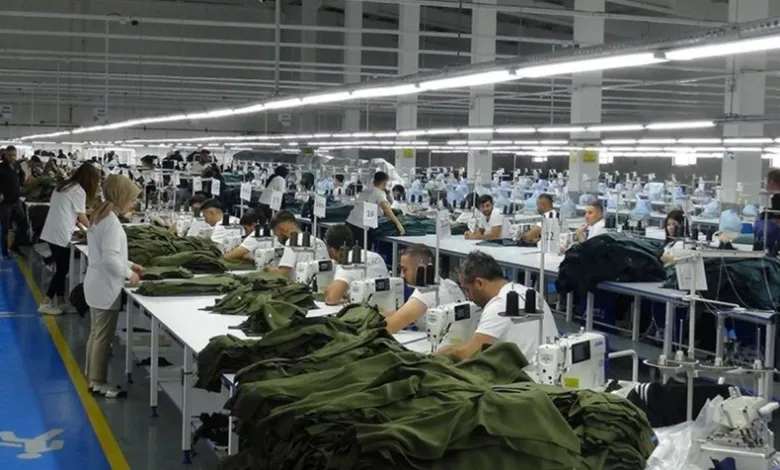
Pakistan and Turkey are working toward a free trade agreement. Currently, Turkey levies heavy duties on Pakistani textile products. The introduction of FTA would help Pakistan earn foreign exchange from the export of textiles as well as other products such as fruits and vegetables. It will also facilitate the provision of comparatively cheaper products to Turkish consumers. Pakistan views the free trade agreement with Turkey as the key to revive the textile economy.
The FTA between the two countries is expected to be signed before the end of 2016. Turkey mainly exports telecommunication equipment, televisions, textiles and machinery while imports from Pakistan include textile yarn, cotton fabrics, plastics and organic chemicals.
The two countries already have very close cooperation in diverse fields including defense and fighting war against terrorism and extremism. It’s hoped the FTA would spur joint ventures, besides increasing trade, as it would help lower the current high customs duties between the two sides.
Negotiations are being held in fields such as trade in goods, trade in services, intellectual property rights, competition policies and dispute settlement mechanisms. The two countries are embarking on new trade liberalisation initiatives.
- 1
- 2
- 3
- 4
- 5
- 6
- 7
- 8
- 9
- 10
India’s National Fibre Scheme decouples textiles from global supply risks
For decades the Indian dominated spinning, weaving, and garment exports while remaining paradoxically dependent on imported man-made fibres and specialty... Read more
From London to Tokyo, premiumization redefines retail and office markets
Global real estate landscape has changed. Gone are the cautious narratives of recovery that defined the post-pandemic years. Today, flight... Read more
Compliance drives India’s $176 bn textile shift
India’s textile economy is no longer selling fabric alone; it is selling proof. As compliance rules harden across export markets,... Read more
The second life economy gets a boost as resale outgrows traditional apparel reta…
For decades, resale existed in the margins of the apparel economy, thrift stores, peer-to-peer marketplaces, and charity bins quietly absorbing... Read more
Rising polyester costs shake India’s textile manufacturing hubs
India’s synthetic textile industry is confronting a sudden and destabilizing price shock that is reverberating across its vast manufacturing ecosystem.... Read more
Cotton markets hold firm as tariffs, higher supply reshape global fiber economic…
In a year marked by tariff escalations, geopolitical brinkmanship and a recalibration of global trade flows, the international cotton market... Read more
Beyond Cotton How Kapok could redefine sustainable insulation in textiles
In the lush, humid heart of Southeast Asian rainforests stands a giant, a silent sentinel of the forest canopy. Growing... Read more
Bharat Tex 2026: Redefining the global textile value chain
Union Minister of Textiles, Giriraj Singh, has officially unveiled Bharat Tex 2026, signaling a significant leap in India’s influence over... Read more
Intertextile Shanghai Spring 2026: A hub for global textile innovation
The textile industry’s pulse is quickening as Intertextile Shanghai Apparel Fabrics – Spring Edition prepares to open its doors from... Read more
Moscow Fashion Week 2026: Blending sustainable innovation with timeless glamour
Scheduled to run from March 14-19, 2026 in Moscow, Russia, the Moscow Fashion Week (MFW) is cementing its status as... Read more