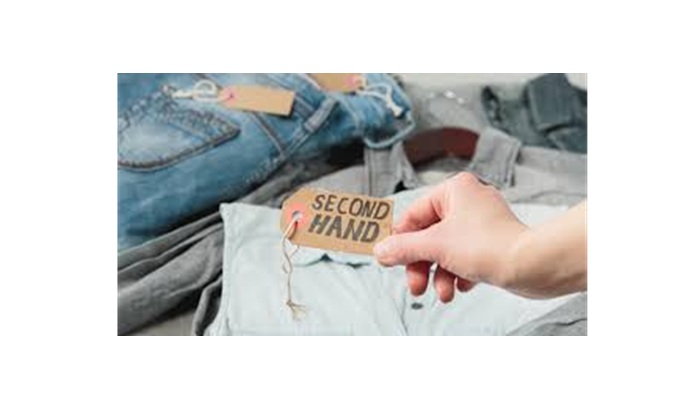
Clothing is increasingly being treated not as a depreciating consumer good but as a tradable financial-like asset. As per ThredUp 2026 Resale Report, the secondhand apparel sector is projected to reach $393 billion by 2030, growing at over twice the pace of traditional retail fashion. What was once positioned as a sustainability-led adjunct is now functioning as a parallel market system with its own liquidity logic, pricing signals, and behavioural incentives.
This is not merely cyclical demand growth but a redefinition of value formation in fashion. In 2025 alone, the global secondhand market increased 13 per cent year-over-year, accounting for roughly 10 per cent of total apparel spend. The implication is clear: resale is no longer peripheral; it is embedded into the global fashion consumption base.
Rise of cautious apparel consumption
Macroeconomic stress has boosted the adoption curve for resale across both developed and emerging markets. A growing 72 per cent of consumers report that rising apparel prices are directly influencing their purchasing decisions, while 36 per cent have actively increased secondhand purchases as a hedge against future inflationary pressure. This behavioural shift is redefining how households allocate discretionary fashion spending.
As a result, 59 per cent of global consumers now buy from secondhand apparel markets, a notable seven-point increase within three years. This signals that resale is no longer a niche behavioural layer but a mainstream consumption channel competing directly with primary retail. The traditional apparel value chain is increasingly bifurcated between full-price consumption and value-optimised circular sourcing.
Retailers, however, remain uneven in response. While 58 per cent acknowledge that absence in resale channels creates long-term competitive disadvantage, 52 per cent admit they lack scalable infrastructure to operationalise resale under demand surges or regulatory pressure. This gap is emerging as a vulnerability across global fashion supply chains.
Clothing as a liquidity-driven asset
A defining feature of the modern resale economy is the emergence of what industry analysts describe as a ‘resale flywheel’, where purchase decisions are shaped by anticipated future liquidity. In 2025, 60 per cent of consumers reported that resale value now influences their initial purchase decision, marking a 13 per cent year-over-year increase.
This behavioural shift is most pronounced among younger cohorts, who are now attempting to resell more than half of their wardrobes. Importantly, resale participation is no longer driven purely by profit maximisation. Around 23 per cent of sellers now prioritise speed of transaction over price optimisation, signalling a preference for liquidity efficiency rather than maximum extraction value. The result is a fashion ecosystem that mirrors asset markets, where garments carry residual value expectations, and purchase decisions incorporate downstream monetisation potential.
Table: US market segment growth (2025)
|
Online Resale |
19% |
|
Total Secondhand |
13% |
|
Traditional Retail Apparel |
3.60% |
This difference highlights a widening gap between digital resale growth and legacy retail stagnation. Online resale, in particular, is functioning as the primary growth engine of the apparel ecosystem, outpacing conventional retail by more than five times.
Removing friction from circular commerce
The next phase of resale expansion is being shaped by automation and AI, particularly through the emergence of agentic commerce systems that reduce transaction friction on both supply and demand sides. Approximately 63 per cent of consumers now express comfort with AI-driven purchasing agents, signalling a major behavioural openness to algorithmic retail mediation.
Nearly 60 per cent are willing to allow AI tools to independently negotiate prices, while 69 per cent are open to continuous monitoring systems that track high-demand or rare items across platforms. On the supply side, 66 per cent of consumers are receptive to AI managing their digital closets, identifying optimal resale timing and pricing based on market demand signals.
This automation trend directly addresses a bottleneck: listing friction. Around 33 per cent of non-resellers indicate they would enter the market if AI eliminated manual listing and pricing complexity. In effect, AI is becoming the infrastructure layer that transforms resale from active participation into passive monetisation.
Brand hierarchies in circular demand networks
Within resale market, value is increasingly concentrated among brands that show strong cross-generational demand and consistent liquidity. Data reveals a circular handoff dynamic, where older cohorts supply inventory while younger consumers drive demand, particularly for nostalgic and accessible fashion labels.
Brands such as Zara, Lululemon Athletica, and Gap are among the highest-volume performers, reflecting mass-market liquidity and strong turnover velocity. Meanwhile, premium positioning emerges through brands like Veronica Beard, St. John, and Farm Rio, which command higher Gross Revenue Net Discounts (GRND) per item due to scarcity and perceived enduring value.
The table below captures the dual structure of resale value creation.
Table: Top brands in resale
|
Category |
Brands |
|
High Volume Demand |
J.Crew, Zara, Ann Taylor Loft, Old Navy, Gap, Madewell, Banana Republic, Athleta, Lululemon Athletica, Ann Taylor |
|
High Value Per Item (GRND) |
Veronica Beard, Farm Rio, St. John, Johnny Was, Frye |
The difference between volume leaders and value leaders indicates a layered resale economy where liquidity and margin are driven by distinct brand archetypes rather than uniform demand.
Fragmentation of discovery and regulatory alignment
Discovery channels within resale are undergoing rapid decentralisation. Nearly 46 per cent of resale discovery now occurs through social media feeds, influencer ecosystems, and creator-driven platforms rather than traditional marketplaces. This fragmentation is reshaping how inventory visibility is generated and how demand is concentrated.
Simultaneously, regulatory frameworks are beginning to position resale as a compliance mechanism within broader sustainability mandates. Almost 66 per cent of retailers now recognise resale as a regulatory solution, particularly in relation to circular economy requirements. However, readiness remains low, with only 16 per cent of firms able to scale resale operations immediately under compliance pressures.
To address this gap, 32 per cent of organisations are adopting Resale-as-a-Service (RaaS) models, outsourcing logistics, authentication, and marketplace integration to specialised providers. This shift is effectively creating a circular infrastructure layer within fashion retail.
Platforms such as ThredUp are increasingly functioning as infrastructure providers for the circular economy rather than simple resale marketplaces. Founded in 2009, the company operates a managed marketplace model supported by proprietary technology and Resale-as-a-Service solutions that enable global brands to participate in secondary markets without building independent systems.
Its 2026 direction is anchored in AI-driven automation and supply optimisation, positioning itself to capture a larger share of the projected $393 billion global resale opportunity. In this evolving landscape, resale is no longer an adjacent channel but a parallel operating system for global apparel commerce.
Fashion’s shift from consumption to capital logic
The maturing of the secondhand apparel market reflects a deeper change in global retail logic. Clothing is increasingly embedded within a liquidity framework where value is not exhausted at the point of purchase but continuously recycled through secondary markets.
What emerges is a hybrid system where fashion behaves simultaneously as consumption and capital, driven by inflation hedging, AI-enabled liquidity, and cross-generational demand loops. As the industry moves toward the $393 billion threshold, the defining question is no longer whether resale will scale, but how deeply it will redefine the economics of global fashion itself.