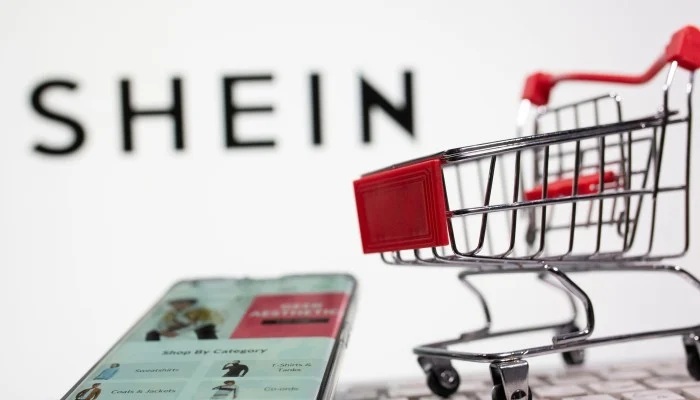
The era of the corporate ghost is ending. For years, the world’s most aggressive retail disruptors operated under ambiguity, relocating headquarters and sanitizing websites to downplay their origins. This defensive manoeuvre, known as China shedding, was designed to bypass Western geopolitical friction and regulatory heat. However, in 2026 the strategy has hit a wall of diminishing returns. From Shein’s stalled London IPO to the relentless congressional scrutiny of TikTok, it has become clear that changing a mailing address to Singapore or Dublin does not change a supply chain’s DNA.
In its place, a more assertive and transparent phenomenon is taking hold that is China maxxing. Rather than hiding, major players are beginning to lean into their Chinese heritage as a badge of operational superiority and a direct link to the world's most sophisticated manufacturing ecosystem. This is not just a PR shift; it is a commercial necessity driven by a new generation of Western consumers who prioritize price and vibe over geopolitical origin.
The end of geographic masking
The definitive signal of this transition came during a recent high-profile gathering in Guangdong. Xu Yangtian, the elusive founder of Shein Group, made a rare public appearance to explicitly credit Chinese local governance and the regional supply network for the company’s meteoric rise. For a firm that spent years positioning itself as a Singapore-based entity, this homecoming was a massive shift.
The rationale for this openness is increasingly data-backed. Despite the 2025 rollback of the US de minimis exemption, which removed duty-free status for packages under $800, Shein’s financial engine has proven remarkably resilient. According to recent market intelligence, Shein’s net income for 2025 is projected to at $2.6 billion, nearly double of its previous year’s performance. This growth occurred even as the company raised prices to offset new tariffs, suggesting that its Made in China value proposition is strong enough to absorb significant trade costs.
Table: Comparative market valuation & Performance: 2025 Projections
|
Company |
Estimated revenue 2025 |
Primary logistics hub |
Market dominance factor |
|
Shein |
$60 bn |
Guangdong, China |
50% US Fast-Fashion Share |
|
Inditex (Zara) |
$39 bn |
Arteixo, Spain |
High-Street Retail King |
|
H&M Group |
$24 bn |
Stockholm, Sweden |
Circular Fashion Pioneer |
|
Temu (PDD) |
$54 bn |
Guangzhou/Global |
Lowest Acquisition Cost |
The table illustrates Shein’s dominance in both revenue growth and supply chain sophistication. Its integration score of 9.8 out of 10 reflects the company’s ability to synchronize Chinese manufacturing prowess with global e-commerce distribution, a key differentiator that competitors with less vertically integrated networks struggle to match. Even rivals posting double-digit revenue growth cannot replicate the operational leverage embedded in Shein’s Chinese supply chain.
Commercial imperative behind China Maxxing
What was once a defensive strategy is now a market opportunity. Western consumers increasingly respond to brands that can deliver speed, affordability, and cultural resonance, traits that Chinese supply chains excel at offering. The Made in China label, far from being a liability, is repositioned as a quality signal of efficiency, scale, and innovation. Analysts suggest this transparency may also pre-empt regulatory risk. By openly acknowledging operational origins, companies like Shein can better manage international scrutiny, align compliance processes, and frame global expansion around capability rather than geography.
As global retail evolves, the era of geographic masking is giving way to an era of strategic embrace. China maxxing is more than a branding exercise; it is a deliberate, data-driven repositioning that leverages operational depth, supply chain mastery, and consumer perception. In doing so, Chinese-rooted retailers are redefining competitive advantage not by hiding their origins, but by making them central to their commercial identity. The lesson for global retail: in the age of transparency and fast-moving consumer demand, supply chain authenticity can be a stronger asset than geographic ambiguity.
Founded in 2008 in Nanjing and now headquartered in Singapore, Shein is the global leader in ultra-fast fashion, commanding nearly 50 per cent of the US fast-fashion market. Specializing in high-volume low-cost apparel and lifestyle products, Shein is expanding into a marketplace model and localized manufacturing in Brazil and Turkey. With 2025 revenue projected at $60 billion and a pending Hong Kong IPO, Shein continues to outpace traditional rivals through real-time data integration and a small-batch supply chain model.