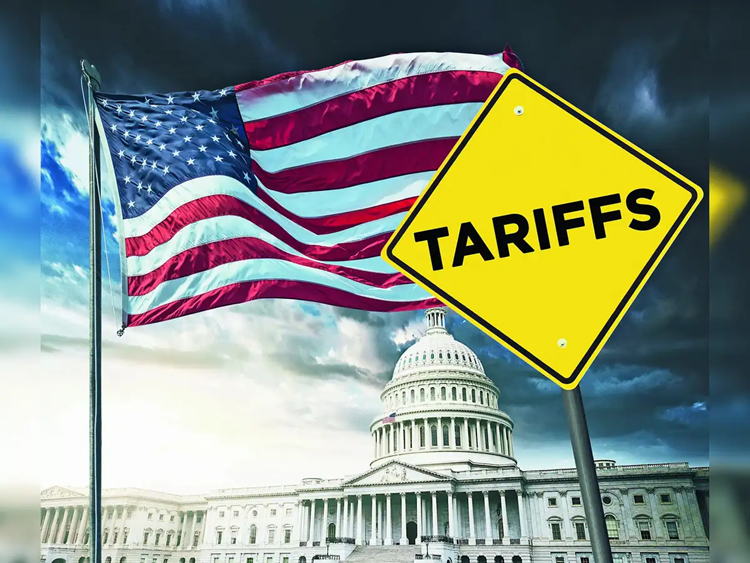
When Washington set out to ‘reclaim manufacturing’ through punitive tariffs, it was envisioned as a patriotic reset one that would bring back the hum of American sewing machines and the pride of Made in USA labels. But the reality unfolding across global apparel boardrooms tells a very different story. The US administration’s tariff regime especially on imports from major suppliers like China, India, and Brazil has done little to trigger domestic production. Instead, it has ignited a global supply chain exodus, with American brands quietly redrawing their sourcing maps toward tariff-resilient countries.
In effect, tariffs have become a ‘fixed cost of doing business’, not a tool for reshoring. And the only sustainable corporate response has been diversification, innovation, and scientific compliance not domestic revival.
The diversification imperative: Flexibility as the new efficiency
The modern sourcing map for US-facing apparel brands resembles a patchwork quilt no longer dominated by China, but distributed across a constellation of smaller, nimble suppliers in Vietnam, Jordan, India, and Eastern Europe. For sourcing executives, diversification is no longer optional; it’s a risk strategy. Facing tariffs as high as 50 per cent on India and Brazil, and higher rates on China, companies are building multi-country manufacturing footprints to avoid single-point failures. “You don’t beat tariffs by making everything in America you beat them by never depending on one country again,” says a sourcing head at a leading US activewear brand.
Table: Shifts in US apparel import share (2020–2025)
|
Country |
Import share (%) 2020 |
Import share (%)2025 |
Change (bps) |
Comment |
|
China |
36.8 |
22.5 |
-1,430 |
Sharp decline due to cumulative tariffs |
|
Vietnam |
13.4 |
18.9 |
+550 |
Key beneficiary of relocation |
|
India |
6.7 |
9.8 |
+310 |
Gains from preferential sourcing deals |
|
Jordan |
2.9 |
5.2 |
+230 |
Expanding under QIZ and FTA frameworks |
|
USA (domestic) |
2.1 |
2.4 |
+30 |
Negligible movement despite policy intent |
The data illustrates that while Asia remains dominant, the geography within Asia is shifting. Vietnam and India have capitalized on the tariff turbulence, while domestic US manufacturing has failed to capture any meaningful uplift.
Treating tariffs as a permanent variable
Rather than lobbying for exemptions, most firms are institutionalizing tariff costs. Internal documents from several US importers describe these duties as fixed variables, which is costs to be managed, not avoided. This has given rise to supplier-partnering models, where brands and vendors share the burden across logistics, packaging, and material margins. For example, bulk order consolidation to reduce freight costs or lightweight packaging to minimize shipping weight and early-payment incentives to offset cash flow constraints. The focus is now on absorbing, not escaping, tariffs with operational efficiency serving as the real currency of resilience.
The Made in USA mirage
Despite the policy rhetoric, the hard truth is that us apparel production continues to shrink. tariffs on imported inputs fibers, yarns, and trims have created a tariff-on-tariff trap. “Even if you cut and sew in the us, your yarns, dyes, and zippers still cross borders and still attract tariffs,” notes a textile economist at the American Apparel & Footwear Association.
Table: US textile and apparel manufacturing output index (base year: 2015 = 100)
|
Year |
Output Index |
YoY Change (%) |
|
2018 |
94 |
-1.2 |
|
2020 |
90 |
-4.3 |
|
2022 |
86 |
-4.4 |
|
2025 |
83 |
−3.5 (est.) |
Even after years of tariffs intended to protect domestic industry, production continues to decline, suggesting that import barriers alone cannot rebuild an industrial base that depends on global raw material inputs.
The innovation shield, science, sustainability, and circular design
As trade unpredictability grows, innovation is emerging as the ultimate tariff shield. Forward-looking firms are now investing in materials and models that make their supply chains both circular and classification-proof.
Tariff-resilient materials: Firms are developing modular, decentralized materials that can be produced closer to end markets. This includes sustainable hemp blends, bio-based fibers, and lab-grown alternatives that qualify for lower tariff classifications under the Harmonized Tariff Schedule (HTSUS).
Circular value chains: Companies are shifting toward textile-to-textile recycling starting production with waste rather than virgin fiber. This not only cuts raw material dependency but also isolates the value chain from tariff volatility.
Compliance through science: The intersection of trade regulation and ethics is pushing brands toward scientific verification tools like stable isotope and DNA traceability to prove raw material origin. This converts compliance from a bureaucratic headache into a strategic advantage, reducing detention risks and misclassification penalties.
Table: Innovation pathways in US apparel sourcing (2023–25)
|
Strategy |
Adoption Rate (%) |
Primary Impact |
|
Sustainable / Hemp Blends |
42 |
Tariff rate reduction & HTS reclassification |
|
Textile Recycling Integration |
35 |
Raw material insulation |
|
Stable Isotope Verification |
18 |
Compliance proof, reduced detention risk |
|
Onshore Digital Sampling |
27 |
Faster, low-volume prototyping near H |
The data underscores a clear shift from tariff avoidance through geography to tariff resilience through innovation. Science and sustainability are now supply chain instruments, not marketing slogans.
The 2025 sourcing scenario highlights: tariffs have succeeded in changing trade routes, not in reshoring production. The result is a more fragmented but agile global ecosystem where sourcing decisions are driven less by patriotism and more by precision. American brands are building flexible, tariff-resilient networks that stretch from Vietnam’s industrial parks to India’s cotton hubs, from Jordan’s QIZ zones to Romania’s nearshoring corridors. In short, the world has adapted faster than the policy. The Made in USA ideal remains powerful in rhetoric but in practice, it’s Made for the USA that now defines the global supply chain of 2025.