The global fast-fashion sector has reached a inflection point in 2026 where the battleground is no longer only store shelves but screens. Digital traffic is shaping market leadership, and recent analytics from February 2026 reveal a widening chasm between industry titans Zara and H&M. Zara commands 112 million monthly global visits, well ahead of H&M’s 83.3 million, underscoring the influence of strong digital engagement on revenue potential. Yet, the race is far from static. The sector’s Big Five viz, Zara, H&M, Shein, Uniqlo, and Mango operate in an environment of rising logistics costs and the relentless rise of algorithm-driven fast-fashion insurgents.
US resilience meets European strongholds
While Zara dominates global traffic, the US remains a fiercely contested space. H&M currently leads in the US digital space with 16.8 million monthly visits versus Zara’s 15.9 million. Analysts attribute this to H&M’s ‘Member Days’ loyalty initiatives and tiered pricing structure that appeals to the inflation-conscious American consumer.
Spain, however, gives a different picture. Zara’s 12 million visits dwarf H&M’s 2.5 million, highlighting the brand’s premium-mass positioning and strong local brand affinity. Similarly, in Poland, Zara edges H&M with 6.4 million versus 5.4 million visits, while the UK remains a narrow H&M lead. Turkey reflects Zara’s decisive regional dominance, achieving 5.5 million visits compared to H&M’s 1.7 million.
Table: Market traffic overview (monthly visits)
|
Market |
Zara (monthly visits) |
H&M (monthly visits) |
Leading brand |
|
US |
15.9M |
16.8M |
H&M |
|
Spain |
12.0M |
2.5M |
Zara |
|
UK |
5.7M |
6.2M |
H&M |
|
Poland |
6.4M |
5.4M |
Zara |
|
Germany |
5.0M |
5.0M |
Tie |
|
Turkey |
5.5M |
1.7M |
Zara |
|
India |
2.2M |
4.4M |
H&M |
The table reveals a clear difference in strategy: Zara relies on regional strength in Southern Europe and Eastern Europe, while H&M maximizes penetration in the US and emerging markets like India.
The India opportunity vs. the luxury shift
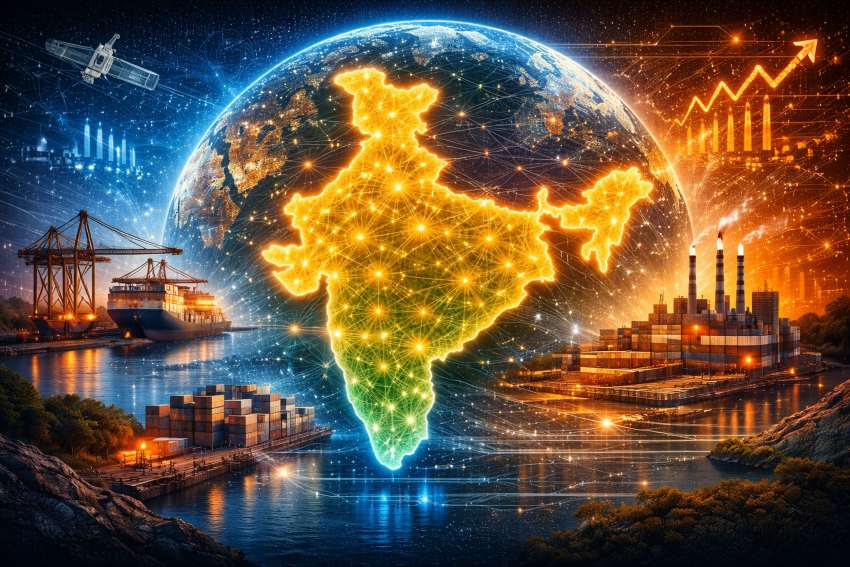
Emerging markets are shaping the next phase of global competition. In India, H&M outperforms Zara with 4.4 million visits, demonstrating the impact of localized sourcing and entry-level pricing. Zara’s lower traffic of 2.2 million reflects its aspirational positioning, focusing on high-street flagships and a scarcity-driven online strategy.
Meanwhile, digital brands like Shein and Uniqlo are rewriting the rules. Shein thrives on algorithmic speed and volume, while Uniqlo consolidates its LifeWear niche by prioritizing quality over fleeting trends. In response, Zara has invested $1.9 billion in logistics automation and ‘Store Mode’ digital features to synchronize physical and online experiences, whereas H&M emphasizes circularity through integrated resale platforms in the UK and Germany, addressing environmental criticisms and expanding sustainability credentials.
Meanwhile Zara’s strength in Poland and Turkey is not coincidental. Through a near-shoring model, approximately 50 per cent of Inditex production occurs close to its Spanish headquarters. This allows Zara to respond to digital traffic spikes in Eastern Europe within three weeks, compared to six-week cycles faced by competitors dependent on Asian shipping. This agility translates to higher full-price sell-through rates, a critical metric as H&M and Mango frequently rely on markdown-heavy strategies.
Inventory management and the AI frontier
The broader fast-fashion sector is grappling with a returns crisis, with US and UK return rates approaching 30 per cent. To protect margins, the Top five retailers are introducing AI-driven sizing tools and, in some cases, return fees. Helena Helmersson, a veteran retail strategist, notes, “Profitability in 2026 is determined by data precision, predicting what the customer wants before they even click 'add to cart.’”
Inditex Group, the fast-fashion vanguard
Inditex, the parent company of Zara, Massimo Dutti, and Bershka, operates across 200+ markets. Leaning on a vertically integrated supply chain, the group remains the benchmark for just-in-time retail, focusing on premium-mass positioning and US expansion. Following record 2025 earnings, Inditex demonstrates how digital sophistication and logistics excellence can define global fast-fashion dominance.