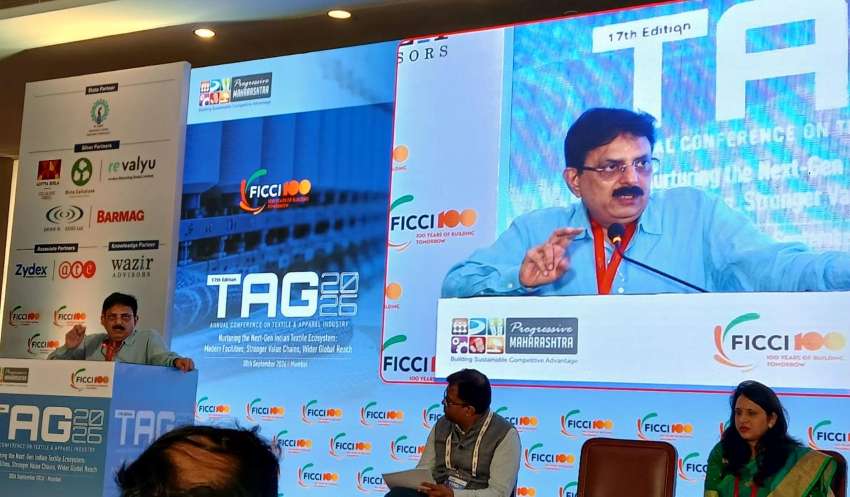
In an address at the 17th annual FICCI TAG 2026 conference, Sanjay Savkare, Minister of Textiles, Government of Maharashtra, called on the Indian textile and garment industry to end geographic fragmentation across value chains and tackle its acute wet processing bottleneck. Pledging dedicated policy support from the state, Savkare announced that Maharashtra is formulating a revamped solar energy policy in coordination with non-conventional energy departments to slash steep industrial electricity tariffs, while pushing for integrated worker housing and schools directly inside PM MITRA mega parks to solve systemic labor shortages.
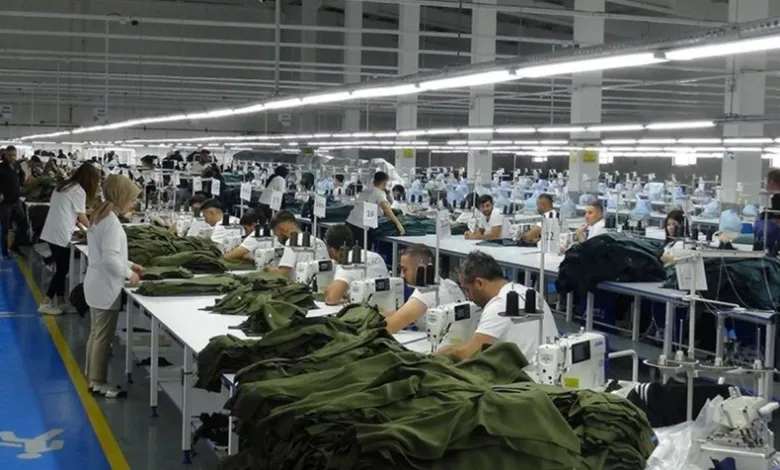
Addressing industrialists, mill owners, and policymakers in Mumbai, Savkare urged the sector to transition from scattered, uncoordinated cluster manufacturing into unified, full-value-chain operations, “We are ginning and pressing at one place, weaving somewhere else, processing in another, and garmenting elsewhere. In doing this, we are killing our time and our money,” Savkare said. “International manufacturers operate on a real Just-in-Time (JIT) system measured in minutes and hours, whereas our timelines run into days. If we want higher productivity, we have to combine all these activities in the same premises.”
Overcoming the processing bottleneck without compromising compliance
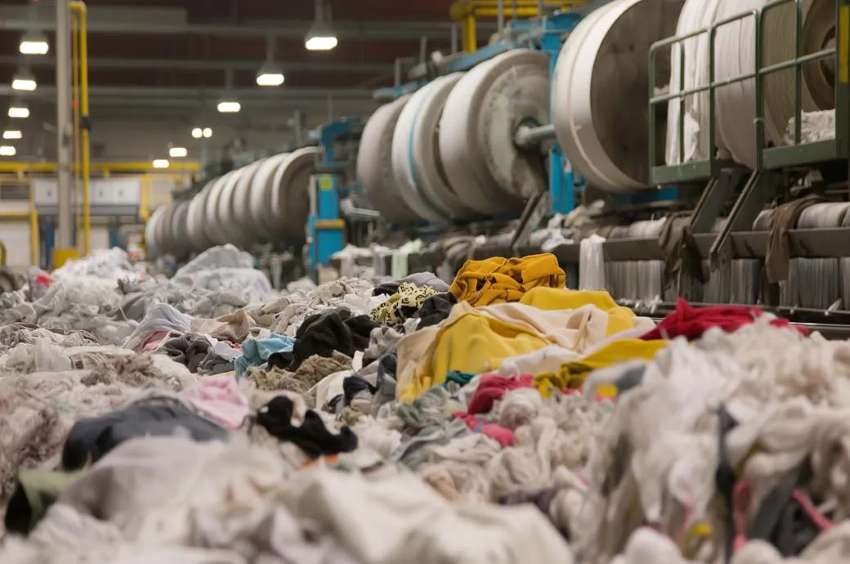
Pinpointing the industry's structural vulnerability, Savkare noted that domestic manufacturers frequently avoid investing in wet processing due to stringent environmental regulations and high capital overheads. While competitors like Bangladesh expanded garmenting on the back of low processing costs and relaxed local enforcement, Savkare cautioned that bypassing environmental norms is self-defeating for India's future. To bridge this gap cleanly and economically, Savkare urged mill owners to form joint enterprise models within common integrated parks, arguing that rather than individual units taking on unsustainable effluent handling costs, clusters must co-develop shared, compliant processing infrastructure. He emphasized that sustainable industrial survival requires balancing strict pollution enforcement with cost-effective, centralized processing facilities.
Revamped solar policy to ease industrial power tariffs
Identifying power and labor as the two make-or-break operating expenses for textile mills, the Minister revealed that the Maharashtra government is overhauling its existing renewable energy incentives. Acknowledging that past solar incentive provisions under earlier state textile schemes were unworkable on the ground, the state is coordinating with power distribution and non-conventional energy authorities to roll out an industry-friendly solar policy. The upcoming policy aims to help spinning, weaving, and processing mills transition seamlessly to captive and open-access solar power, drastically reducing electricity overheads and enhancing export price competitiveness.
Social Infrastructure: Worker housing and schools inside PM MITRA Parks
Turning to the chronic shortage of skilled and stable labor, Savkare proposed a shift in how industrial hubs are planned, pointing to regional mismatches such as Solapur, where industrial density and labor availability failed to align synergistically. To create a permanent, trained workforce, Savkare urged developers and mills to embed social infrastructure within mega textile parks by allocating dedicated land parcels inside PM MITRA parks to build residential housing for workers' families under the Pradhan Mantri Awas Yojana (PMAY). Furthermore, he proposed establishing schools for workers' children and integrated technical training institutes on-site so that by embedding training directly in the factory ecosystem, enterprises can access skilling subsidies under the Samarth scheme while cultivating an intergenerational workforce.
Targeting technical textiles and defending against global tariffs
Reflecting on state-level industrial promotion, Savkare acknowledged that while Maharashtra designated six technical textile zones across the state, actual park ground-breaking has lagged. He urged private enterprise to capitalize on the massive domestic deficit in medical textiles, surgical dressings, and hospital supplies, which continue to be imported at high volumes. Recalling earlier industry anxiety over punitive overseas tariffs; including the 50% tariff threats from the United States—Savkare commended the industry's resilience and patience. By staying calm and diversifying channels, Indian enterprise demonstrated that global buyers face acute domestic inflation and supply crunches if they abandon Indian suppliers, affirming that Indian manufacturing will not capitulate under foreign trade pressures.
Industry convergence at FICCI TAG 2026
The Minister’s address served as the inaugural anchor for the 17th edition of FICCI’s annual Textile, Apparel & Garment conference (FICCI TAG 2026), held in Mumbai on September 30 under the theme “Nurturing the Next-Gen Indian Textile Ecosystem: Modern Facilities, Stronger Value Chains, Wider Global Reach”. Jointly addressing the conference with Textile Commissioner Smt. Vrunda Manohar Desai, Savkare unveiled the FICCI-Wazir Annual Textile Industry Report 2026, which highlighted scale, automation, and infrastructure consolidation as vital levers to boost Maharashtra’s and India’s global market footprint. Affirming his alignment with the Viksit Bharat 2047 and Viksit Maharashtra roadmaps, Savkare assured delegates that actionable industry recommendations from the summit will be escalated directly to Chief Minister Devendra Fadnavis and the Union Textiles Ministry to fast-track regulatory clearances and drive capital into modern manufacturing infrastructure.