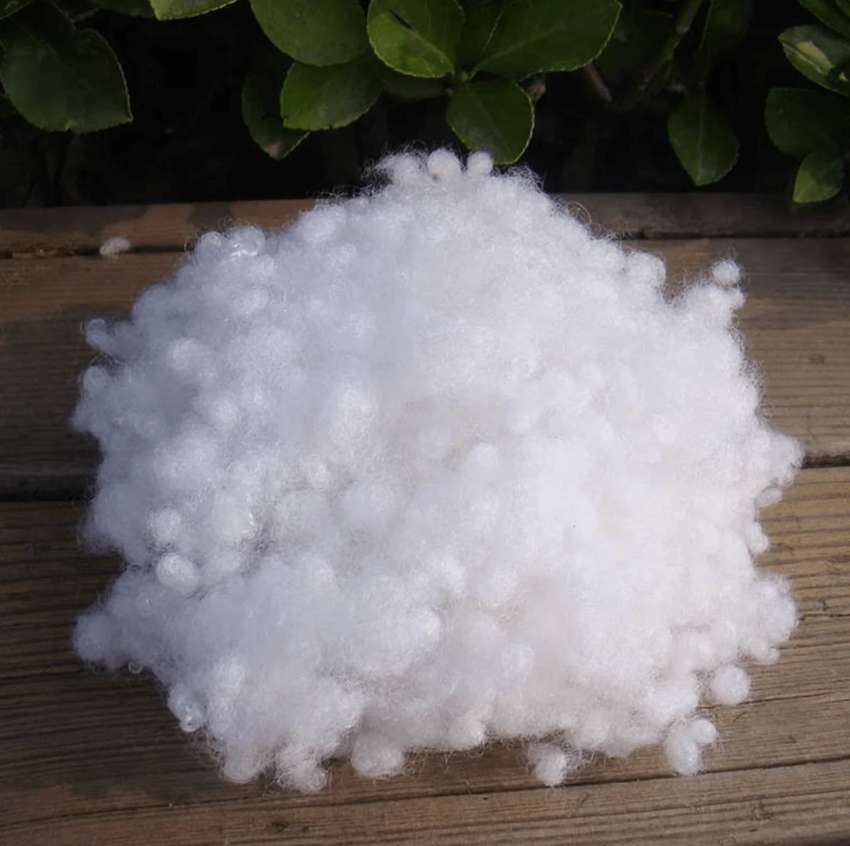
Polyester is posing a threat to all natural fibers. World production of polyester went from five million tons in 1990 to more than 50 million tons today. Most of that growth occurred in China alone.
Cotton’s share in fiber use has dropped from 50 per cent to just over 30 per cent. Pressure from polyester production will continue and that is just a reality all natural fibers, including cotton, have to face.
However all is not lost. There is evidence China is shifting away from polyester production due to its negative environmental impact: converting crude oil, natural gas and coal into fiber is damaging to the environment. China has in recent years introduced several new acts of environmental legislation which impact on polyester production and, by association, commodity prices.
Cotton could potentially capitalise on such issues, as well as concerns about microfiber pollution.
While organic cotton undoubtedly has positive connotations with consumers, it is more expensive to grow with more variable yields, making it much more difficult to get to market at a profitable price point. Organic cotton is not necessarily economically viable.
While proponents of organic cotton will undoubtedly take issue with such sentiments there is no disputing the fact that the organic cotton market has struggled to maintain any significant momentum in recent years. Indeed, it often feels like a case of two steps forward, three steps back.
- 1
- 2
- 3
- 4
- 5
- 6
- 7
- 8
- 9
- 10
Luxury resale’s next big battle is no longer digital, it is about who controls s…
For nearly a decade, the luxury resale story was written in the language of platforms. Market leadership was measured by... Read more
Digital Arms Race: Indian apparel giants deploy AI to neutralize tariff crisis
The Indian textile and apparel sector is in a digital survival phase in 2026, shifting from traditional labor-intensive models to... Read more
Europe’s Textile Endgame: Why Project FAE is becoming fashion’s most critical in…
Europe’s apparel majors are no longer treating circularity as a branding layer. With Project FAE or Feedstock Activation Europe, the... Read more
Engineering color at source, dye-free production is cutting cost, water, and tim…
For over a century, coloring has been anchored in wet processing, an energy-intensive, chemically saturated stage that happen post spinning.... Read more
The €11 bn deadlock, can Europe’s textile recycling catch up?
Europe is at a tipping point. Fast fashion consumption, led by rising incomes and a growing global middle class, has... Read more
From field to fiber, Bharat CottonNet is closing India’s cotton value gap
India’s cotton economy is entering a decisive phase of reform with the rollout of Bharat CottonNet 2026 along with the... Read more
US apparel imports drop 13.5% as Vietnam gains and China’s grip breaks
The US apparel sourcing market has entered 2026 with a sharp demand decline but an equally important shift in supplier... Read more
H&M finds growth below revenue line as margin discipline pays off
H&M Group’s latest quarter signals a decisive shift in global fast fashion: scale is no longer the primary reason for... Read more
As Europe cuts orders, India sees a rare export window post-FTA
The sharp dip in EU apparel imports is not, at first glance, the kind of headline exporters celebrate. January’s 15.48... Read more
The Death of the "Stockpile" Model: Inside the Digital Textile disrupt…
For decades, the global textile industry has been a game of high-stakes gambling: manufacture thousands of identical garments, ship them... Read more