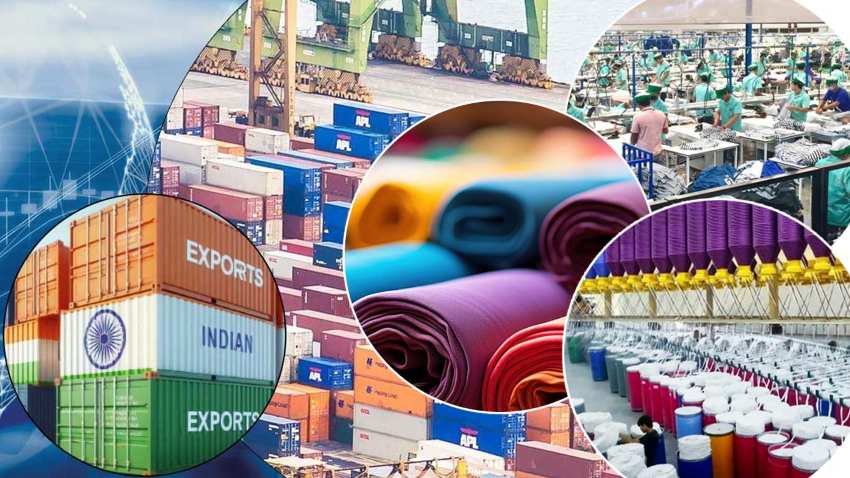
The textile industry says it’s entitled to dues worth Rs 3,000 crores under the Technology Upgradation Fund Scheme. But it is unlikely these dues will be released. That means, liabilities related to the blackout or left out period cases will be given a silent burial.
The blackout period (June 20, 2010 to April 27, 2011) refers to a time when subsidy payments under the Technology Upgradation Fund Scheme were halted temporarily. The aim was to change the contours of the scheme from an open-ended scheme to a closed-ended one. The revised scheme came in April 2011.
Those who had invested during those 10 months of the blackout period, and were awaiting a decision on the eligibility of TUFS on the blackout period, have now got their answer. They are disappointed the funds are not going to be released. And the reason given is that there is a paucity of funds.
These textile units say they have continuously been under severe stress since April 2014 due to the non disbursal of committed liabilities under the TUFS scheme. Several hundreds of spinning mills are facing closure as they are likely to become non-performing assets.
So the textile industry has made a representation that the committed liabilities under TUFS scheme be disbursed and that cotton yarn be extended export benefits like Merchandise Exports from India Scheme on par with other textile products.

- 1
- 2
- 3
- 4
- 5
- 6
- 7
- 8
- 9
- 10
The New Green Silk Road: Lyocell could transform India’s textile trade
The European Union's Ecodesign for Sustainable Products Regulation (ESPR) is forcing apparel companies to rethink raw material sourcing, reducing dependence... Read more
End of De Minimis: How tariffs are reshaping cross-border fashion commerce
Today, competitive advantage is no longer determined solely by production speed or low-cost manufacturing in global fashion industry. Instead, regulatory... Read more
Bharat Tex 2026 ends on historic high as India strengthens global apparel leader…
Bharat Tex 2026 has officially wrapped up, marking the most successful chapter in the event’s history. The four-day textile extravaganza... Read more
Home textile exports under pressure as retailers shift to leaner buying models: …
The global home textile industry has entered a prolonged demand readjustment phase as consumer caution, persistent inflation and conservative retail... Read more
Inventory intelligence replaces discounts in new secondhand wholesale trade
The global secondhand apparel industry has entered a new phase of commercial maturity. Once defined by bulk liquidation, aggressive discounting... Read more
Collection, sorting, cost replace technology as the bottleneck in circular fashi…
For years, the global fashion industry treated fibre-to-fibre recycling as a scientific challenge. Chemical recycling technologies, enzyme-based processes and advanced... Read more
Beyond Blue Jeans: How brand identity is reshaping a $103 bn market
The global denim industry is entering a new phase of competition, one in which branding psychology is becoming as valuable... Read more
Beyond Tariffs: How a unified US apparel industry wants to rebuild regional manu…
In a rare show of consensus, some of the US' most influential apparel, footwear and textile organisations have come together... Read more
India-UK CETA: Tariff-free UK access puts India's textile sector on growth track
India's textile and apparel industry is ready for one of its biggest export opportunities in decades as the India-UK Comprehensive... Read more
AI tailoring gains momentum as custom suits transforms premium apparel retail
Technology is reshaping one of fashion's oldest categories menswear. AI, digital body scanning and automated manufacturing are replacing conventional tailoring... Read more