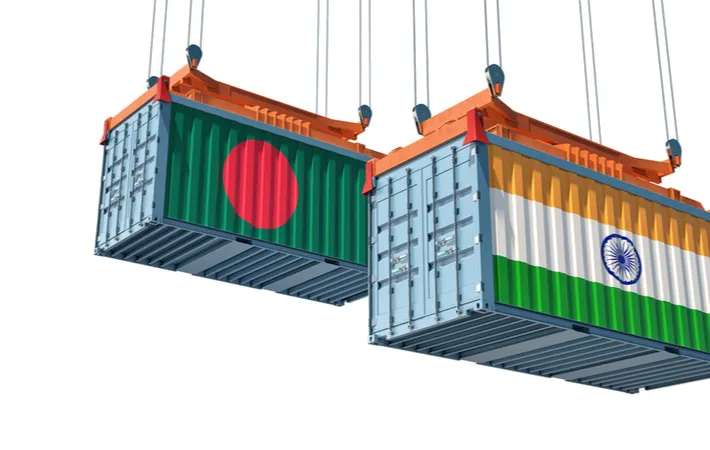
Eight textile industry associations in India are demanding a relaxation of cabotage to help cut costs in transporting cotton from Gujarat to Tamil Nadu. This would help save hundreds of crores of rupees. Almost 50 per cent of the cotton used for textile manufacturing in Tamil Nadu is purchased from Gujarat. And the transit of cotton is done through three modes: rail, road and water.
Transit by seas is difficult because there are not enough Indian containers that carry the goods in the ship. By ship it takes 25 days for the cotton to reach mills, while mills have to pay ginners within 21 days. This forces them to transport cotton by road most often.
According to law, an Indian vessel will be given first preference for transport of goods from one port to another within the country. Only if an Indian vessel is unavailable, will a foreign vessel be allowed to transport the goods after receiving the license from India’s maritime regulator.
If the cabotage laws are relaxed, the industry would save almost Rs 250 a bale. Tamil Nadu purchases 70,00,000 bales from Gujarat every year. Relaxation would help the industry save about Rs 175 crores.

- 1
- 2
- 3
- 4
- 5
- 6
- 7
- 8
- 9
- 10
The "Total Look" Retail Revolution: The integration of jewellery, acce…
The conventional boundaries separating fashion jewellery, ready-to-wear and leather goods, have collapsed on the international retail floor. At the September... Read more
Why Rules of Origin could limit India’s FTA gains
India’s growing network of trade agreements promises lower tariffs and wider market access for its textile and apparel exporters. But... Read more
India-New Zealand FTA opens tariff-free route for textile exporters
The India-New Zealand Free Trade Agreement (FTA), which comes into force on October 20, 2026, creates a new tariff-free corridor... Read more
Virgin polyester drives global fibre output to record 139 mn tonnes
Global textile fibre production reached a record 139 million tonnes in 2025, up 5.3 per cent from 132 million tonnes... Read more
Turkish apparel bets on ‘High-End Value’ at Ready to Show Milano
At the autumn session ( September 12-14, 2026) of Ready to Show inside Hall 10 of Fiera Milano-Rho, the Mediterranean... Read more
Technical Knits and Athleisure drive sourcing at Ready to Show Milano
On the trade floor of Ready to Show inside Hall 10 at Fiera Milano-Rho, European apparel sourcing encountered its fastest-growing... Read more
From Dhaka to Milan: Mascom Composite backs Southern Europe’s sports and lifesty…
While the trade floor of Ready to Show Milano inside Hall 10 at Fiera Milano-Rho placed a heavy spotlight on... Read more
Armenia at Ready to Show Milano, bridges agility, circularity, and ‘Low-MOQs’ fo…
As European fashion brands and private labels navigate persistent supply chain bottlenecks, rising transport overheads, and tightening environmental mandates, an... Read more
India-Bangladesh textile corridor shifts from trade to co-production
The Petrapole-Benapole corridor is evolving from a conventional trading route into an integrated production network, linking India’s upstream textile capacity... Read more
Gen Z’s anti-polyester push forces apparel brands to rethink margins
The apparel industry is facing an unusual reputational challenge: the growing association of polyester with low quality and excessive cost-cutting... Read more