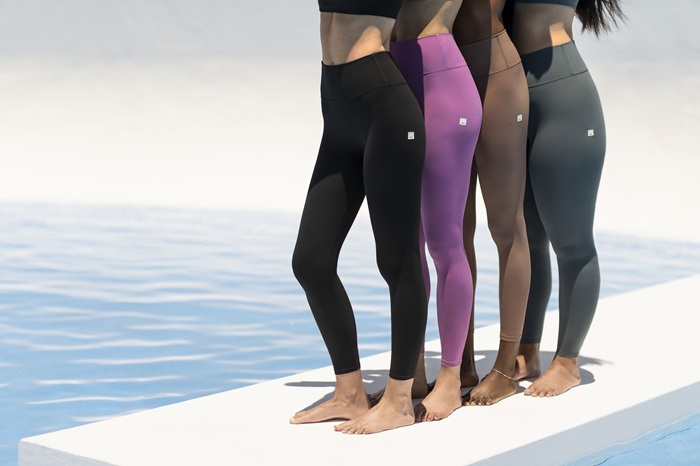
The global leggings makers are racing to solve one of the apparel industry’s most expensive hidden problems: discomfort that appears after prolonged wear. With the sector projected to reach $63.8 billion by 2032, 2026 is emerging as a turning point where garment engineering is becoming as commercially important as fashion design itself.
For years, activewear brands competed largely on color palettes, silhouettes, celebrity collaborations and digital marketing. Yet a growing body of industry data suggests that the biggest threat to profit begins after purchase, when consumers actually wear the product for extended periods. In mature e-commerce markets, women’s fashion return rates have climbed as high as 28 per cent, with high-performance leggings among the most affected categories.
The underlying issue is no longer aesthetic dissatisfaction. Instead, consumers are increasingly rejecting garments because of what industry analysts describe as latent discomfort irritation, tightness and friction that develops roughly 20 to 40 minutes into movement. This delayed failure point has created what many manufacturers now call the ‘30-minute friction problem’, a challenge that is reshaping sourcing, manufacturing and textile innovation strategies across the global activewear market.
The shift to seamless
And what is helping this transformation is seamless circular knitting technology. Unlike traditional cut-and-sew construction, where flat fabric panels are stitched together, seamless garments are produced as continuous knit tubes. This eliminates abrasive seam intersections around high-friction areas such as the inner thigh, waistband and glute zones.
The commercial implications are proving significant. Traditional leggings often create discomfort through repetitive motion, especially during workouts or extended wear. By contrast, seamless engineering allows manufacturers to program compression, ventilation and stretch directly into specific zones of the garment without additional stitching.
For retailers, the technology is becoming less of a premium innovation and more of a defensive business strategy. European startups that shifted core collections to seamless construction reported return rates falling from 12.8 per cent to 4.6 per cent. At the same time, repeat purchase rates increased by 22 per cent within 90 days, highlighting how comfort is directly influencing customer retention and lifetime value.
Performance economics
The appeal of seamless garments extends beyond immediate comfort. Durability has become another critical battleground as consumers increasingly scrutinise garment longevity amid rising apparel prices and sustainability concerns.
Traditional stitched leggings frequently lose elasticity after repeated laundering because seams pull unevenly against synthetic fibres. Over time, this weakens recovery performance and creates sagging around the knees and waistband. Seamless construction distributes stress more evenly across the fabric structure, significantly improving shape retention.
Table: The difference technology makes
|
Metric |
Traditional cut-and-sew |
Seamless circular knit |
|
Shape Recovery (8 Washes) |
82% |
96% |
|
Average Return Rate |
12.80% |
4.60% |
|
Production Waste |
20% (Fabric Offcuts) |
<5% (Knit-to-Shape) |
|
Consumer Review Score |
4.1 / 5.0 |
4.6 / 5.0 |
|
Friction Trigger Point |
20-30 Minutes |
60+ Minutes |
The durability advantage is becoming commercially vital. Industry surveys show that nearly half of consumers are willing to switch brands for products that offer better performance and longevity. In a highly saturated activewear market, shape recovery and wash resilience are increasingly functioning as differentiators rather than secondary features.
Sustainability gains
The seamless movement is also aligning with the apparel sector’s broader sustainability agenda. Traditional cut-and-sew manufacturing generates substantial fabric waste through offcuts and pattern trimming, with wastage levels often reaching 20 per cent during production.
Seamless knit-to-shape systems reduce this excess by producing garments closer to final form directly from yarn. Waste levels can fall below 5 per cent, making the technology particularly attractive as North American and European regulators tighten sustainability compliance requirements.
This efficiency is especially relevant in the booming athleisure sector, now valued at approximately $373 billion globally in 2026 and expanding at a CAGR of 7.2 per cent. Female consumers account for more than 60 per cent of the market, with nylon-spandex blends dominating due to their abrasion resistance and stretch performance.
The growing overlap between performance wear, casualwear and sustainability expectations is forcing brands to rethink manufacturing at a structural level. Companies that once outsourced commodity leggings are now investing in proprietary knitting systems and engineered fabric architectures to gain competitive insulation.
Smart utility
The next phase of innovation is already emerging through smart textiles. Analysts expect smart leggings incorporating biometric monitoring capabilities to generate nearly $1.5 billion in sales by late 2026. Seamless construction provides the stable, body-contoured platform required for conductive fibres such as silver yarns and graphene-based materials. These next-generation garments can track heart rate, muscle fatigue and movement efficiency while maintaining close skin contact.
This intermingling of apparel and wearable technology signals a broader shift in consumer expectations. Buyers want garments that deliver measurable utility rather than purely aesthetic appeal. As a result, the market’s strongest performers are likely to be brands that treat leggings not simply as fashion products, but as engineered performance systems.
The evolution of activewear is no longer being driven solely by style cycles. Instead, the industry’s future is being shaped by how effectively brands solve invisible comfort failures that occur long after the purchase decision. In the race for consumer loyalty, the decisive factor may ultimately be whether a garment still feels invisible after the first 30 minutes of wear.