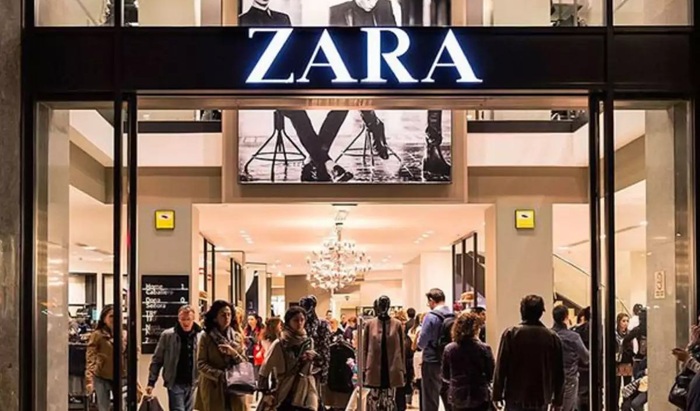
The global apparel sector is currently grappling with a punishing inventory overhang, yet Inditex, the parent company of Zara, has effectively decoupled its financial performance from the industry’s greatest liability. While mid-market competitors struggle with bloated warehouses and aggressive discounting cycles, Zara has refined a closed-loop ecosystem that keeps unsold inventory at a mere 0.6 per cent. This performance gap is not merely a statistical anomaly; it represents a fundamental shift in how consumer demand is harvested. As rivals navigate a 15 per cent average residue rate, the Spanish powerhouse is leveraging a multi-billion-euro infrastructure to ensure that production never outpaces the pulse of the shop floor.
Capital intensity of real-time demand response
The disparity between Zara and the broader retail scenario stems from a massive capital expenditure strategy that prioritizes speed over cost-savings of traditional outsourcing. Most global retailers remain tethered to a ‘push’ model, committing to high-volume manufacturing orders in Southeast Asia up to six months in advance to capture economies of scale. In contrast, Zara utilizes a ‘pull’ model, initiating small-batch runs of roughly 1,000 units. This allows the brand to test market appetite before committing resources.
This agility is led by a €2.7 billion investment in proprietary technology, specifically a sophisticated RFID system that tracks every garment from the factory to the fitting room. This data provides immediate signals on conversion rates, if a dress is tried on 50 times in London but never purchased, the supply chain halts production in hours, not months. For the 2025-26 period, Inditex has earmarked an additional €1.8 billion in capital expenditure to further automate distribution centers and scale AI-powered virtual fitting tools, which have already seen over seven million sessions across 43 markets.
Vertical integration as a competitive factor
Unlike traditional competitors who rent their supply chains through third-party vendors, Inditex owns the core of its industrial engine. This vertical integration allows for a twice-weekly delivery schedule to over 5,500 stores worldwide, a feat facilitated by a network of ten high-tech logistics hubs in Spain. By maintaining proximity between design teams and manufacturing centers primarily in nearshore locations like Portugal, Morocco, and Turkey, Zara can move a concept to the sales floor in under three weeks.
This internal control mitigates the risks of stockouts where popular items are unavailable while simultaneously eliminating the need for the clearance-rack culture that erodes brand equity and margins. The financial impact is stark: Inditex recently reported an industry-leading EBIT margin of 20.2 per cent, far outpacing H&M’s 8.1 per cent and Gap Inc.’s 7.3 per cent.
Table: Comparative Sector Performance (FY 2025)
|
Metric |
Inditex (Zara) |
H&M Group |
Fast Retailing (Uniqlo) |
Gap Inc. |
|
Revenue Growth |
+3.2% |
-2.60% |
+10.8% |
+1.9% |
|
EBIT Margin |
20.20% |
8.10% |
17.20% |
7.30% |
|
Inventory Delta |
-2.20% |
-12.00% |
+7.7% |
+6.8% |
|
Gross Margin |
58.20% |
53.40% |
54.00% |
40.80% |
The high cost of the push model vs. modern precision
A critical analysis of the broader retail market reveals that Zara’s 0.6 per cent unsold stock is the direct antithesis of the industry’s reliance on hope-based inventory. According to the Strategy& Fashion Retail Outlook 2026, while Inditex has reduced its inventory levels by 2 per cent year-on-year, many specialty retailers remain trapped in a cycle of over-ordering to mitigate supply chain volatility.
For instance, Gap Inc. and Fast Retailing (Uniqlo) saw inventory increases of 6.8 per cent and 7.7 per cent respectively in late 2025 as they buffered against shipping delays, leading to higher markdowns that reduced gross margins. The 2025 Unified Commerce Benchmark highlights that only 5 per cent of retail leaders currently maintain the real-time inventory visibility that Inditex has made standard. Retail experts at Manhattan Associates suggest that for every 1 per cent of excess inventory held, retailers lose approximately 2-3 per cent in potential net profit due to warehousing costs and price slashing. "The industry is at an inflection point where logistics is no longer a back-office function but the primary driver of brand equity," notes an analyst at VusionGroup. "Retailers like H&M are aggressively moving toward nearshoring to close this gap, but they are playing catch-up to a Zara system that was architected decades ago."
The ‘Munich Signal’ protocol
In a recent operational cycle, real-time RFID data from a flagship in Munich indicated that a specific linen blazer had high fitting-room engagement but zero sales. Within 24 hours, the AI-driven demand forecasting system identified a consistent fit issue across the DACH region (Germany, Austria, Switzerland). Production was immediately halted at the Spanish factory, and a revised pattern was cut and shipped to stores within 10 days. This "micro-adjustment" capability saved an estimated €1.2 million in potential markdowns for that single SKU—a level of granularity impossible for retailers relying on long-lead offshore manufacturing.
Agility amidst macroeconomic headwinds
The broader implications for the consumer sector are profound. As inflationary pressures squeeze household budgets, the cost of holding unsold goods has become a primary threat to retail solvency. Inditex’s model serves as a case study in risk mitigation. By operating with near-zero waste, the company generates superior cash flow, ending 2025 with a net cash position of €11.0 billion.
Industry analysts note that while competitors are forced into fire sales to clear seasonal lines, Zara’s scarcity-based model drives full-price sell-through rates. This structural advantage has allowed Inditex to post record-breaking net profits even as the wider apparel market faces stagnant growth. Furthermore, the company is doubling down on its fewer, bigger, better store strategy, increasing retail floor space by 5.3 per cent in 2025 despite a slightly reduced overall store count, focusing on high-productivity flagship locations in the US and key European capitals.
Dominance through circular fast fashion
Inditex is the world’s largest fashion group, operating brands like Zara, Massimo Dutti, and Bershka across 200 markets. Founded in Spain in 1975, the firm pioneered the fast fashion concept. Currently, it is expanding its US presence and scaling sustainable textile initiatives. With record net income of €6.2 billion for FY 2025 and a robust 58.3 per cent gross margin, Inditex remains the industry’s most resilient financial performer.