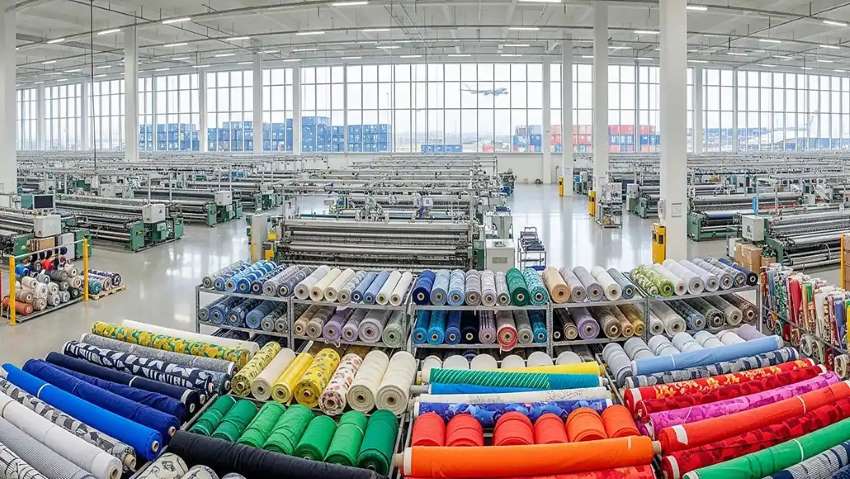
The garment sector in Bangladesh is rapidly transforming its manufacturing units into green factories. Manufacturers have been focusing on building green factories to meet the growing demand for environment-friendly products in the international market. The process will preserve the environment from pollution and encourage international retailers to place more work orders, thus helping the country to achieve its vision of $50 billion of readymade garment exports by 2021.
Green buildings have numerous benefits, including reduction of energy consumption by more than 24 per cent and water consumption by 50 per cent. Garment factory owners are interested in building green factories to reduce health and safety hazards at the workplace as well as the cost of doing business. Such factories also increase productivity and help create a brand image.
So far, 35 garment factories from Bangladesh have received Leadership in Energy and Environmental Design (LEED) certification from the United States Green Building Council. To receive this certification, building projects must satisfy certain prerequisites and earn points to achieve different levels of certification. Of the factories, nine have been conferred platinum status, 17 gold status, and seven silver status.
LEED is a green-building certification program that recognises best-in-class building strategies and practices.
- 1
- 2
- 3
- 4
- 5
- 6
- 7
- 8
- 9
- 10
From London to Tokyo, premiumization redefines retail and office markets
Global real estate landscape has changed. Gone are the cautious narratives of recovery that defined the post-pandemic years. Today, flight... Read more
Compliance drives India’s $176 bn textile shift
India’s textile economy is no longer selling fabric alone; it is selling proof. As compliance rules harden across export markets,... Read more
The second life economy gets a boost as resale outgrows traditional apparel reta…
For decades, resale existed in the margins of the apparel economy, thrift stores, peer-to-peer marketplaces, and charity bins quietly absorbing... Read more
Rising polyester costs shake India’s textile manufacturing hubs
India’s synthetic textile industry is confronting a sudden and destabilizing price shock that is reverberating across its vast manufacturing ecosystem.... Read more
Cotton markets hold firm as tariffs, higher supply reshape global fiber economic…
In a year marked by tariff escalations, geopolitical brinkmanship and a recalibration of global trade flows, the international cotton market... Read more
Beyond Cotton How Kapok could redefine sustainable insulation in textiles
In the lush, humid heart of Southeast Asian rainforests stands a giant, a silent sentinel of the forest canopy. Growing... Read more
Bharat Tex 2026: Redefining the global textile value chain
Union Minister of Textiles, Giriraj Singh, has officially unveiled Bharat Tex 2026, signaling a significant leap in India’s influence over... Read more
Intertextile Shanghai Spring 2026: A hub for global textile innovation
The textile industry’s pulse is quickening as Intertextile Shanghai Apparel Fabrics – Spring Edition prepares to open its doors from... Read more
Moscow Fashion Week 2026: Blending sustainable innovation with timeless glamour
Scheduled to run from March 14-19, 2026 in Moscow, Russia, the Moscow Fashion Week (MFW) is cementing its status as... Read more
The Store as Stage: How fashion is crafting immersive consumer worlds
The North American fashion retail sector in 2026 is shedding its product-first identity and shifting towards a model that values... Read more