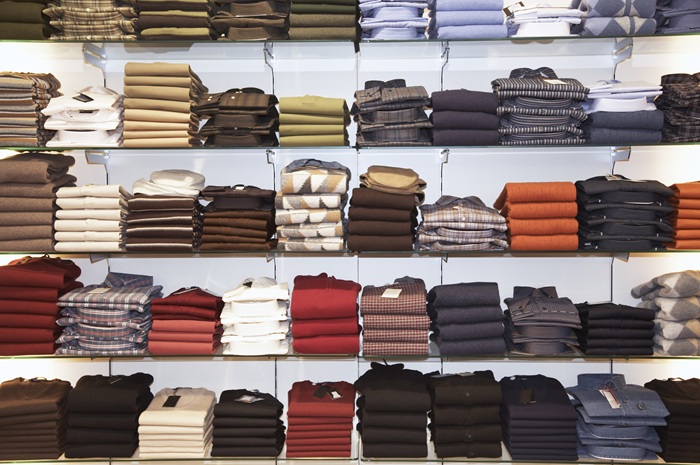
Bangladesh’s sweater exports to the western world are rising because of competitive prices and longer winters due to climate change. Exports in fiscal 2016-17 were up 5.64 per cent year-on-year. Three years ago, the window for sweater sales was at the most four months, from November to February. However, now, the window opens in October and continues until March.
The shift of work orders from China to Bangladesh is also another factor for the higher shipment, which exports nearly three million pieces a year. Knitwear is no longer confined to winter and is worn year round.
Given the higher demand, most factories have started automating their production line to boost output and cope with strict lead times. Recently, Vietnam and Cambodia have become major competitors due to their shorter lead times. The lead time from Bangladesh is around 40 days, whereas it is 20 days from the other two Asian nations. Bangladesh has more than 500 sweater factories in operation and nearly 60 per cent of these have switched over to automation to ramp up productivity. Prices of sweaters dropped and customers placed more orders in the jacquard category. An automated jacquard machine is not only able to produce diversified and fashionable products, but can also fabricate critical designs.
- 1
- 2
- 3
- 4
- 5
- 6
- 7
- 8
- 9
- 10
New Australian Wardrobe Economy: Where AI, sustainability, e-commerce converge
Australia’s fashion and apparel industry is no longer defined by post-pandemic recovery; it has entered a transformative phase. According to... Read more
Intertextile Shenzhen 2026- Pioneering the AI-driven future of fashion technolog…
The global textile industry is descending upon the Shenzhen Convention & Exhibition Center from June 9–11, 2026, for the highly... Read more
Yarn Expo Shenzhen 2026: GBA connectivity and AI innovation drive mid-year sourc…
The global textile industry is preparing for a strategic return to the South China manufacturing heartland as Yarn Expo Shenzhen... Read more
Indo-Dutch alliance targets textile circularity as global green jobs hit 142 mn
Netherlands and India formalized a roadmap to scale circular design and textile recycling. At the FICCI RECEIC Global Symposium 2026... Read more
Redefining what responsible production looks like
India's textile and apparel sector has set the global benchmark for sustainability at scale, and two clusters are leading the... Read more
China’s duty-free revival meets a reality check as Hainan shifts from VICs to va…
Hainan’s retail recovery is beginning to look less like a cyclical rebound and more like a rewiring of China’s domestic... Read more
Zombie inventory and shrinking margins inside China’s fashion returns meltdown
China’s digital fashion market, long celebrated as the world’s most sophisticated test bed for e-commerce innovation, is facing a destabilising... Read more
Circularity by Design: How EU rules are turning data into fashion’s new currency
The European fashion sector has entered a compressed transition window. Two regulatory confirmations: the revised EU Textile Labelling Regulation (effective... Read more
The Lyst Reset: Chanel and Dior rewrite luxury’s power index
The global luxury hierarchy has been quietly rewritten, and not by sales alone. In Q1 2026, Chanel rose to the... Read more
Inventory, not expansion, defines winners in global apparel
The 2025 fiscal year has crystallised that revenue growth and operational health are no longer moving in tandem. In an... Read more