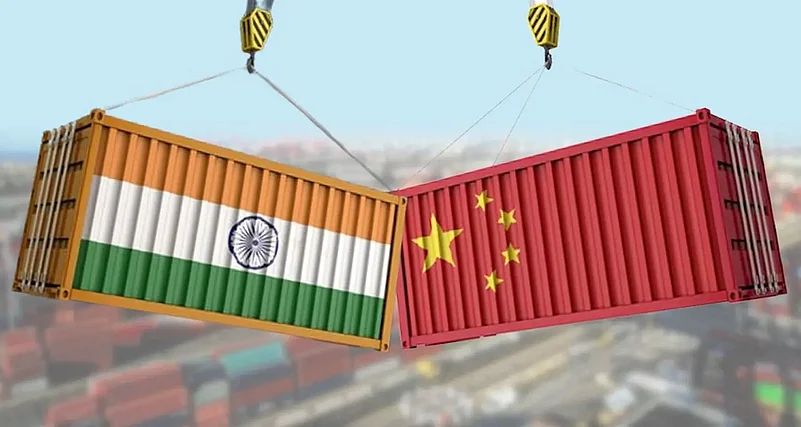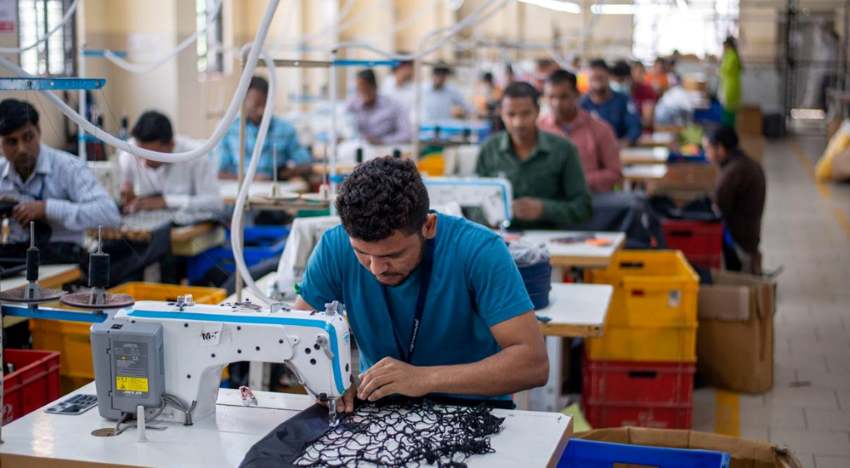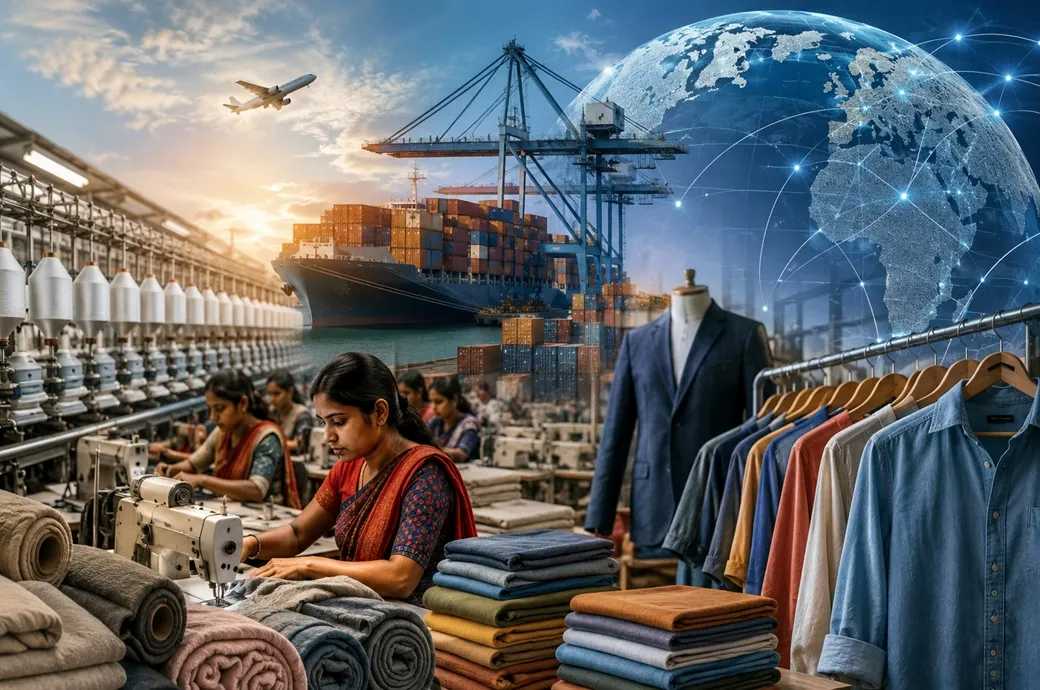
India’s ambition to build a $100-billion textile and apparel export industry by 2030 is facing a less visible constraint than tariffs, cotton prices or global demand: the digital readiness of its factories. The industry is positioning itself as a major beneficiary of the global China Plus One sourcing strategy, but much of the manufacturing base still operates through fragmented systems, manual processes and limited data integration.
A study by the Confederation of Indian Textile Industry (CITI), supported by the Northern India Textile Research Association (NITRA), highlights the scale of the gap. Almost 35 per cent of surveyed textile and apparel enterprises have not started deploying artificial intelligence (AI), while 38 per cent have no formal digital system. Only 14 per cent have fully integrated digital systems across their manufacturing operations.
The findings, from the report AI, Automation & Digitalisation Readiness in the Indian Textile & Apparel Industry, create a sharp contrast with the industry's export ambitions. Around 70 per cent of enterprises serve global buyers, meaning that a significant part of India’s export-facing manufacturing is competing globally with technology infrastructure that remains at an early or emerging stage.
The scale-up problem
The issue is no longer simply whether Indian factories use automation. It is whether they can connect machines, production planning, quality control, inventory and supply-chain data into a single operating system.
In spinning, weaving and processing clusters such as Surat, Coimbatore and Ludhiana, automation has made progress in basic machine operations and monitoring. But more sophisticated applications including predictive maintenance, yield optimisation, automated defect detection and dynamic production scheduling remain relatively limited.
That distinction matters because global sourcing is measured in more than unit cost. International buyers are demanding shorter lead times, consistent quality, traceability and detailed environmental and production data. A factory that cannot exchange production information quickly with its upstream suppliers or downstream customers is effectively operating with a slower supply chain.
For India, this becomes particularly important as it seeks to move from fragmented manufacturing to integrated fibre-to-fashion supply chains. A digitally disconnected spinner, weaver, processor and garment manufacturer can collectively offer competitive labour costs while still losing on speed, predictability and responsiveness.
Table: Digital adoption trends in textile & apparel units
|
Digital readiness metric |
Share |
|
No formal digital system |
38% |
|
AI deployment not yet started |
35% |
|
Fully integrated digital systems |
14% |
|
Enterprises serving international buyers |
70% |
Exports business are tightening
The timing of the digitalisation challenge is significant. India’s textile and apparel exports have remained around the $40 billion range for several years, with outbound shipments recently contracting 2.2 per cent to $35.7 billion. The competitive gap is also visible in apparel. Bangladesh and Vietnam account for roughly 9.5 per cent and 7.3 per cent of global apparel exports, respectively, while India’s share is around 3 per cent.
These numbers suggest the next phase of Indian competitiveness cannot rely exclusively on cheaper labour or additional manufacturing capacity. Scaling exports requires factories to increase throughput while controlling defects, inventory, energy consumption and turnaround times.
Digitalisation can influence each of those variables. Predictive maintenance can reduce unexpected downtime; machine-vision systems can identify defects earlier; production analytics can improve line balancing; and integrated enterprise systems can provide buyers with more reliable production and traceability information. The economic implication is important for MSMEs. Technology is shifting from being an efficiency investment to becoming part of market access.
MSMEs face the capital test
The challenge is particularly acute among small and medium-sized manufacturers. Large integrated textile companies can invest in enterprise software, sensors, automation and specialist technology teams. Smaller units often cannot justify the upfront capital or maintain dedicated digital expertise. The CITI-NITRA findings also points at weaknesses in workforce training, which remains largely informal and unstandardised. This creates a second barrier: even where technology is affordable, factories may lack employees capable of implementing and using it effectively.
One emerging model is therefore technology-as-a-service rather than technology ownership. A Tiruppur circular-knitting enterprise operating 60 machines is a an example. Manual fabric inspection was identifying only 60-70 per cent of knitting defects, including dropped stitches, needle lines and oil streaks. The company introduced an edge-computing computer-vision system across eight machines through a monthly subscription model.
Within five months, reported defect identification rose above 92 per cent, raw-fabric rejection declined 4.2 per cent and data flows were connected to yarn-supplier inventory records. The significance lies less in the individual installation than in the financing model. Subscription-based technology reduces the initial investment barrier and allows smaller manufacturers to test productivity improvements before committing substantial capital.
Build the digital infrastructure
For India’s textile strategy, the policy question is therefore not simply how to encourage individual factories to buy technology. It is how to create an ecosystem in which thousands of fragmented manufacturers can access it.
CITI has called for government-backed capital support for industrial software, sector-specific digital testbeds and regional common-access technology centres. Such infrastructure could allow MSMEs to experiment with computer vision, predictive analytics, production-management platforms and traceability systems without bearing the entire cost individually.
Regional technology centres could also address the skills problem by providing training, implementation support and shared technical expertise. This would be particularly relevant in clusters where thousands of small units operate alongside larger exporters. As Ashwin Chandran, Chairman, CITI opiens, AI automation and digitalisation are becoming important enablers of productivity, quality, resilience and competitiveness across the textile value chain.
That shift in perspective is critical. India’s $100-billion export ambition is ultimately a manufacturing challenge, but manufacturing competitiveness is increasingly a data challenge. Capacity expansion can add machines; digital integration determines how intelligently those machines operate together. For an industry seeking to capture a larger share of global sourcing, the digital divide is therefore not a peripheral technology issue. It is becoming part of the export equation itself.