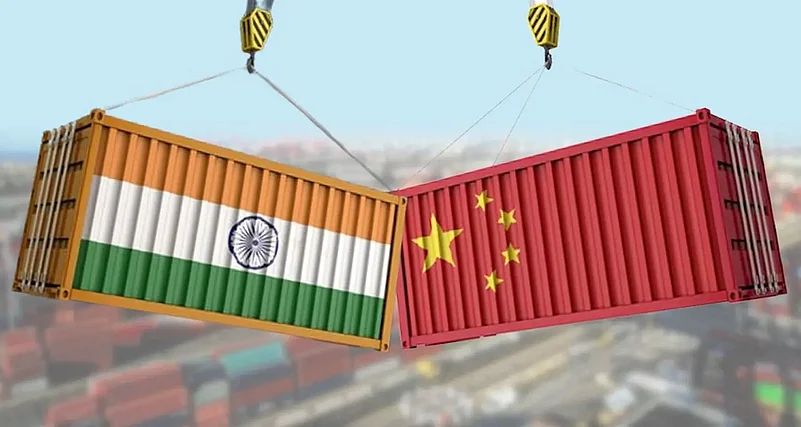
Japan’s corporate sector is increasing their capital deployment into Asia’s third-largest economy, India. Faced by 17 consecutive years of domestic population decline and a permanent drop in home-market consumer volumes, Japanese fashion, lifestyle, and retail conglomerates are aggressively building long-term operational scale across Indian metros. The commercial realignment comes as geopolitical conflicts and supply chain disruptions reduce the appeal of China, while tariff uncertainties and saturated competition constrain aggressive expansion in North America.
The corporate push was strengthened during recent bilateral trade discussions led by Indian Commerce Minister Piyush Goyal in Tokyo, following an investment summit where Japanese enterprises committed $12.5 billion across 120 agreements across manufacturing, semiconductors, and green energy. This private-sector capital reallocation is tracking toward Tokyo’s broader target of deploying 10 trillion yen into India, marking a transition from state-backed infrastructure projects to enterprise-level consumer and retail expansion.
High streets anchor lifestyle and footwear footprint
In the apparel and discretionary retail sector, Japanese brands are moving past initial trial phases to aggressive network rollout. Fast Retailing’s flagship label Uniqlo has established a highly profitable operational model in India, while minimalist lifestyle retailer Muji and heritage sneaker brand Onitsuka Tiger continue expanding footprint across top-tier shopping centres in Mumbai, Delhi NCR, and Bengaluru.
Table: Japanese retail & lifestyle majors India expansion strategies
|
Japanese company/brand |
India strategy |
Opportunity |
|
Uniqlo |
Store and sales expansion |
Apparel and urban consumption |
|
Muji |
Premium lifestyle retail |
Home, lifestyle and fashion |
|
Onitsuka Tiger |
Premium footwear expansion |
Affluent urban consumers |
|
Nitori |
Mumbai entry |
Furniture and home interiors |
|
Lawson |
Long-term market entry |
Convenience retail |
The lifestyle segment is also drawing new category entrants. Nitori Holdings, Japan’s largest furniture and home-furnishing retail chain with over 1,000 stores globally, recently entered the Indian market through a flagship at R City Mall in Mumbai, aiming to capture market share in an Indian home interior sector projected to cross $38 billion by 2029. Meanwhile, convenience retail giant Lawson has announced plans to establish a base in India, setting a long-term roadmap to roll out up to 10,000 stores nationwide by 2050.
Deloitte highlights enterprise depth
The retail thrust is underpinned by institutional and technology infrastructure. A recent study by Deloitte on Japanese Global Capability Centres reveals that Japan is now the largest contributor to India’s GCC in the Asia-Pacific region, operating over 100 dedicated innovation and engineering hubs. These centres manage enterprise software, supply-chain analytics, and artificial intelligence integration, with the broader Indian GCC industry projected to deliver an economic impact between $470 billion and $600 billion by FY2030.
Institutional capital is grew in parallel. MUFG Bank acquired a 20 per cent stake in Shriram Finance for $4.4 billion, marking the largest FDI in India’s financial services domain, while Sumitomo Mitsui Banking Corporation secured a 24.22 per cent holding in Yes Bank. Suzuki Motor Corporation’s venture arm, Next Bharat Ventures, recently launched a $200 million fund to back regional enterprises.
As Next Bharat Ventures founder Vipul Nath Jindal observed, Japanese companies face demand limits at home, making India an indispensable anchor for secular corporate growth.
Uniqlo scales premium volume operations
Fast Retailing's execution in India shows the commercial potential of adapting minimalist global product lines to local urban demand. Uniqlo India generated over Rs 1,100 crore in revenue during FY25, registering a 44 per cent year-on-year topline growth. By pairing functional everyday apparel with localized manufacturing partnerships and prime mall positioning, the company achieved profitability faster than many western retail predecessors. The apparel brand is now planning to double its physical store count and target Rs 3,000 crore in annual sales over the medium term.
Friction and execution issues
Despite capital commitments, foreign entrants face persistent execution barriers. India’s regulatory system creates operational issues through mandatory local sourcing norms for single-brand retail, high real estate leasing costs in prime metros, and bureaucratic delays in municipal and environmental clearances. Infrastructure execution issues too have surfaced in high-profile ventures, exemplified by public disagreements over project timelines on the Mumbai-Ahmedabad bullet train corridor.
Analysts at the Lowy Institute and the Observer Research Foundation emphasize that Japanese firms cannot detach entirely from East Asian supply webs. Instead, Tokyo is pursuing an autonomous diversification strategy, treating Indian consumer retail as an operational hedge to de-risk balance sheets while tapping the fastest-growing middle-class consumption pool in Asia.