The global activewear, denim and intimate apparel markets have built a substantial business around stretch. But the same fibre combinations that deliver elasticity and comfort are creating a growing end-of-life problem for apparel manufacturers, recyclers and brands. Stretch apparel is worth over $50 billion in annual retail turnover, with more than 80 per cent of stretch garments relying on elastane blended with polyester, nylon or cotton. The commercial challenge is that polyurethane-based elastane is difficult to separate from its host fibre. Chemical separation can be expensive, energy-intensive and accompanied by material losses.
The result is a recycling system poorly suited to stretch garments. Less than 1 per cent of post-consumer stretch apparel is estimated to be recycled into new yarn, leaving brands with higher sorting costs and increasing exposure to waste-related charges.
The blend problem
The industry has experimented with mechanically stretchable polyester and other alternatives, but these have struggled to replicate elastane's combination of stretch and recovery without compromising garment performance.
Table: Stretchable polyester and alternatives
|
Fiber configuration |
Material chemistry |
Recycling path |
Processing & sourcing viability |
|
Spandex / Polyester Blend |
Polyurethane + PET |
Chemical stripping |
High cost; low yield; fiber degradation during sorting |
|
Mechanical Stretch PET |
100% Polyester |
Standard PET melt |
Limited elasticity; prone to bagging and sagging over time |
|
Single-Polymer Polyethylene |
100% Polyethylene |
Direct mechanical re-extrusion |
High elastic recovery; zero chemical separation required |
A new approach developed by materials scientists at the Massachusetts Institute of Technology seeks to address this bottleneck by moving stretch performance into a single polymer platform.
Stretch without the mix
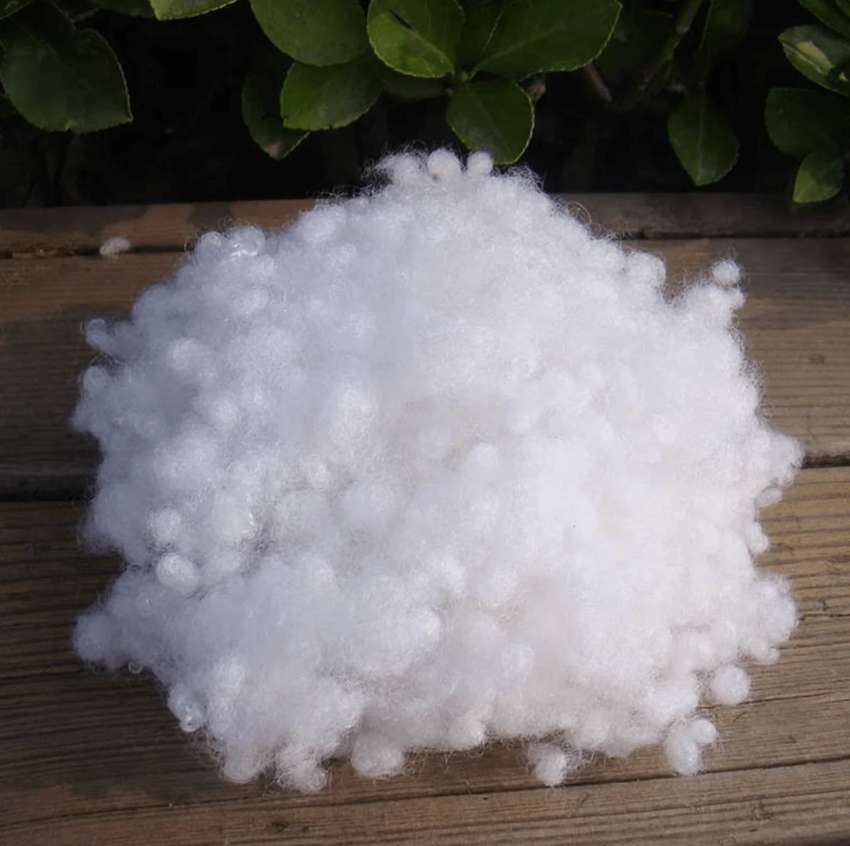
The polyethylene yarn uses a dual-structure architecture. A flexible polyethylene core offers elasticity, while a stiffer polyethylene filament is wrapped around it in a spring-like spiral. According to the supplied research, testing published in ACS Materials Letters the filament retaining its mechanical stretch and tensile strength through 10 thermal melt-and-respinning cycles. Load testing also reportedly matched or exceeded the break resistance of commercial polyester-spandex yarns.
The commercial significance lies less in replacing one fibre with another than in eliminating the separation step. A garment made predominantly from a single polymer can potentially be shredded, melted and re-extruded without first extracting elastane. That changes the economics of recovery: the recycler is processing one polymer stream rather than attempting to dismantle a composite textile.
Regulation strengthens the case
The timing is important. European sustainability regulation is now linking producer costs to product recyclability. Extended Producer Responsibility (EPR) systems and the EU Ecodesign for Sustainable Products Regulation (ESPR) are pushing brands towards designs that are easier to collect, sort and recycle.
For apparel companies, mono-material construction could therefore become a cost-management strategy rather than simply a sustainability initiative. Blended garments can attract higher waste-management and compliance costs where recyclability is incorporated into fee structures. A recyclable single-polymer garment, by contrast, can potentially qualify for more favourable treatment while reducing downstream sorting and processing requirements.
Table: Eco-modulation compliance costs
|
Operational parameter |
Spandex-PET blends |
Mono-material polyethylene yarn |
Commercial sourcing advantage |
|
Extrusion Temperature |
250-280°C |
175-185°C |
30% lower energy use during pelletization and spinning |
|
Dyeing Method |
High-heat aqueous bath |
Solution-dyed masterbatch |
Eliminates wet processing wastewater; colorfast |
|
Recycling Yield |
<15% (Downcycled) |
>90% (Fiber-to-fiber) |
Retains high resin value for closed-loop production |
|
EPR Fee Impact |
Higher penalty tier |
Lowest base fee tier |
Direct per-unit cost reduction under EU EPR mandates |
Mills face a manageable shift
The proposition could also be relatively straightforward for textile manufacturers. Polyethylene yarn can run on conventional circular knitting and weaving machinery with limited mechanical modification, according to the supplied information. The bigger change comes downstream. Because polyethylene has a lower melting point than polyester, mills would need to adapt dyeing and finishing processes. Solution or dope dyeing, where colour masterbatch is incorporated during extrusion, could replace conventional high-temperature aqueous dyeing.
That offers manufacturers a second potential saving: lower water consumption and reduced drying requirements, alongside more consistent coloration.
The approach also points to a broader redesign opportunity. If stretch yarn, closures, trims and base fabrics are developed around the same polymer family, garments could become substantially easier to shred and reprocess.
From sustainability to sourcing strategy
For sourcing, the attraction of mono-material polyethylene is ultimately operational. The conventional stretch model requires brands to accept a trade-off between performance and recyclability. A single-polymer architecture seeks to remove that compromise by making elasticity part of the polymer structure rather than introducing a separate elastane component.
That could influence future fabric specifications, supplier qualification and mill investments, particularly as European regulation raises the cost of difficult-to-recycle products. The bigger question is scalability. Laboratory performance and pilot-stage recycling economics must translate into consistent yarn production, commercial fabric performance, colour stability, garment durability and competitive pricing.
If those hurdles are cleared, polyethylene stretch yarn could shift from being a materials-science alternative to a sourcing technology one capable of changing how activewear is designed, manufactured and recovered.