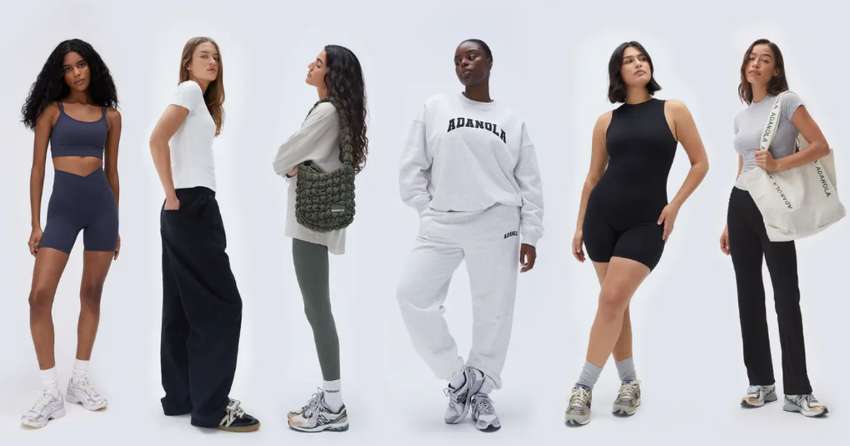
The conventional boundaries separating fashion jewellery, ready-to-wear and leather goods, have collapsed on the international retail floor. At the September edition of Milano Fashion & Jewels (MFJ), held at Fiera Milano, the commercial dialogue across the exhibition halls revealed a decisive transformation: multi-brand independent retailers and concept store buyers are no longer buying individual jewellery pieces in isolation.
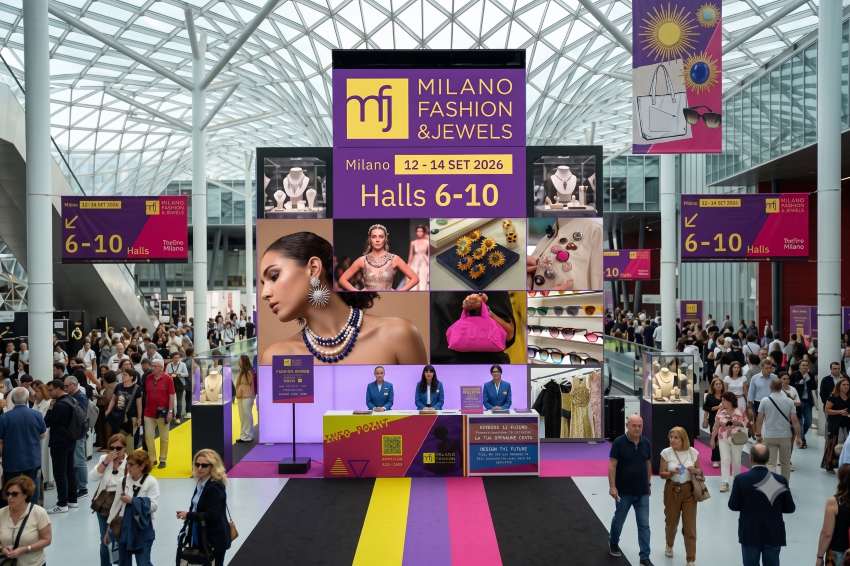
Instead, they are curating modular, cross-category visual statements designed to provide an instant, cohesive merchandising story on the shop floor.
This operational evolution—dubbed the "Total Look" retail revolution—is directly supported by Fiera Milano’s wider strategic platform, Fashion Link Milano. By co-locating Milano Fashion & Jewels alongside MICAM (footwear), MIPEL (leather goods), TheOneMilano (prêt-à-porter), and Lineapelle (materials and components), the ecosystem brings finished adornment, accessories, apparel, and structural manufacturing into direct commercial dialogue. Rather than navigating isolated supply chains, buyers are leveraging Milan to assemble coordinated visual merchandising sets that maximize retail basket sizes.
Shifting from purchasing lists to curated boutique propositions
The driving force behind cross-category merchandising is the changing role of the fashion buyer. Retailers face consumers who demand styled lifestyle narratives rather than fragmented items, where a standalone pair of earrings risks becoming lost inventory while matching accessories multiply sell-through potential. This dynamic marks a clear transition away from traditional, siloed buying habits: where wholesale sourcing previously required fragmented trade trips, isolated counter displays, and standard outsourced components, the emerging retail model relies on unified single-point sourcing through Fashion Link Milano, modular lifestyle vignettes, and shared hardware engineering across cuffs, neckwear, and bag handles. By shifting from vulnerable single-item impulse purchases to coordinated multi-piece styling, independent boutiques are able to elevate average transaction values while replacing mono-segment trade exhibits with synchronized ready-to-wear showcases.
As Filomena Sannino, Exhibition Manager and Head of Fashion Events at Fiera Milano, emphasized, the fair’s mission is to rethink what the retailer takes back to the boutique:
"Buyers are increasingly thinking about the total look. They can discover a jewellery piece, an accessory, and an apparel product and immediately see how they can work together in the store. The buyer can therefore leave the fair not just with one product, but with an idea for an entire proposition."
Filomena noted that the contemporary buyer has evolved from an inventory clerk to an active boutique curator, "The product is still at the centre, but we want to give the buyer more than a product... The question has shifted from ‘Do I like it?’ to ‘Can I sell it?’ If a buyer leaves Milan with something they did not have before, we have created value."
Unified Hardware Engineering: Bridging leathercraft and cast adornment
Nowhere is this cross-category synergy clearer than at Annibale Baldini, an artisan label based in Tegoleto (Arezzo, Tuscany). Renowned for their Italian leathercraft and distinctive metal sculpture, the brand has eliminated the technical wall between leather goods hardware and statement bijoux. Rather than treating a handbag buckle or handle as an anonymous component, Annibale Baldini engineers sculpted brass animal heads—such as giraffes, elephants, and panthers—that appear identically as ergonomic jewelry and functional leather accoutrements.
Alessia of Annibale Baldini detailed how this modular approach drives high retail turnover across their international store accounts:
"Not only the bag—all the complete bags and jewels are matched together. Like the giraffe: we have not only the bag, we have the bracelet, the necklace, the pendant, the ring. For the elephant collection, this is the elephant, and this is the elephant handle—these are sets. Everything is designed near Florence, with our designer born in Arezzo. It is all Made in Italy and all handmade."
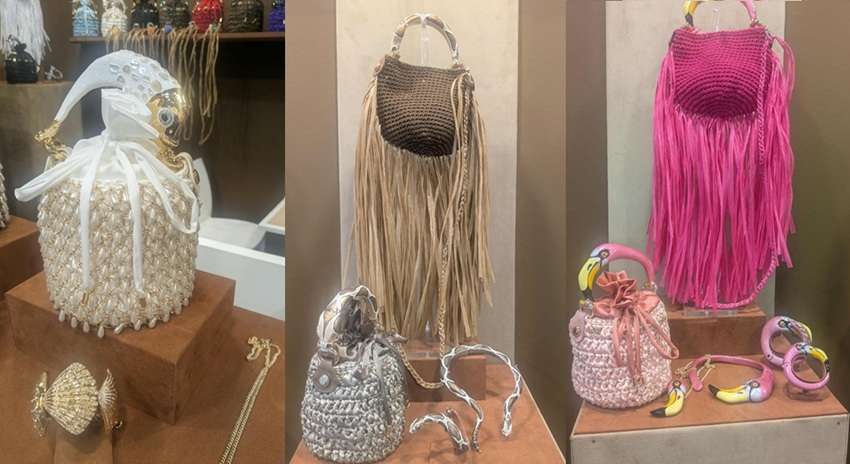
The commercial validity of this dual proposition is proven at the till, where the brand supplies 56 major independent boutiques across Italy alongside export partners in the United States, Northern Europe, and China:
"We work with many shops in Italy, and they usually work with Americans, Nordic Europe, China, and Russian clients. For example, we have a shop in Cortona, near Florence. In a season from March to October, she sells about 100 bags in a small city—because she works intensely with tourists who buy into complete, authentic Made-in-Italy collections."
For the boutique buyer, stocking a sculptured elephant handle alongside its corresponding statement bracelet solves the visual display challenge immediately: the accessory and the jewellery cross-sell each other.
Wearable Spatial Design: Architectural discipline for Multi-Brand retail
While Annibale Baldini leverages sculptural zoological themes, Marri Cortona, helmed by architect Silvia Bazzanti in Cortona, Tuscany, takes a structural, architectural approach to the "Total Look". Bazzanti translates spatial design principles into wearable adornment, crafting geometric brass frameworks integrated with stitched saddle leather, coloured enamels, and mixed regional textures to anchor high-concept apparel assortments.
At Milano Fashion & Jewels, Marri Cortona demonstrated how regional craft can build a robust retail network without succumbing to fast-fashion cycles. Representing the brand alongside Bazzanti, Roberta outlined their wholesale footprint, "We are in Cortona. Cortona is between Florence and Arezzo in Tuscany. Silvia is the designer. Our brand is very famous, young, and it is all handmade, Made in Tuscany, to be very precise. In Italy, we supply a network of more than 100 multi-brand shops, with our biggest markets concentrated in Milan and Rome. Buyers come to us for wholesale and export because Italian standards of design and manufacturing are high."
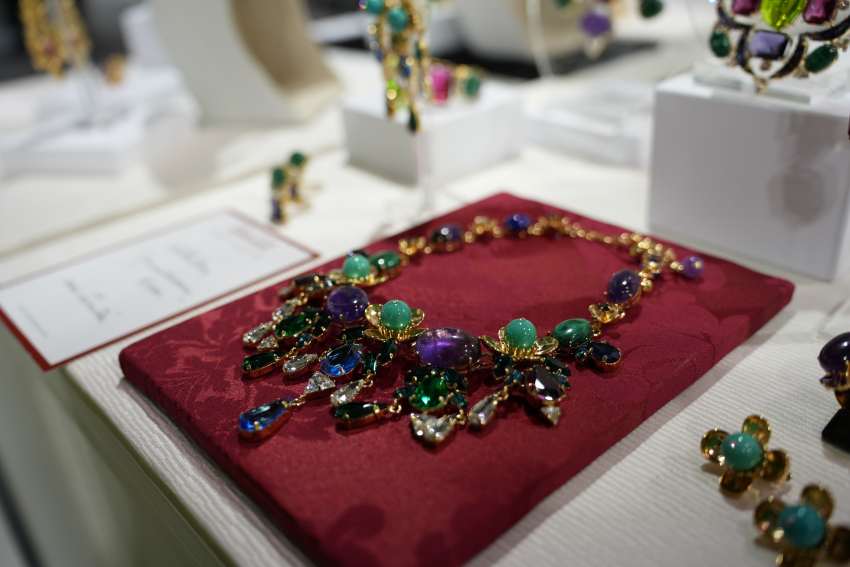
For concept store retailers stocking structured linen tailoring, outerwear, or artisanal leather goods, Marri Cortona’s architectural jewellery provides an aesthetic counterbalance that enables multi-brand boutiques to merchandise clothing and accessories under a single design philosophy.
Atelier versatility and cross-category alignment
The shift toward the "Total Look" is also reshaping traditional workshop practices across Italy.
At Florentine fashion jewellery maker Celeste G., founded in 1985 by Andrea Trambusti, second-generation designer Sara Trambusti highlighted how multi-material versatility inside the atelier allows them to service modern apparel-driven buyers.
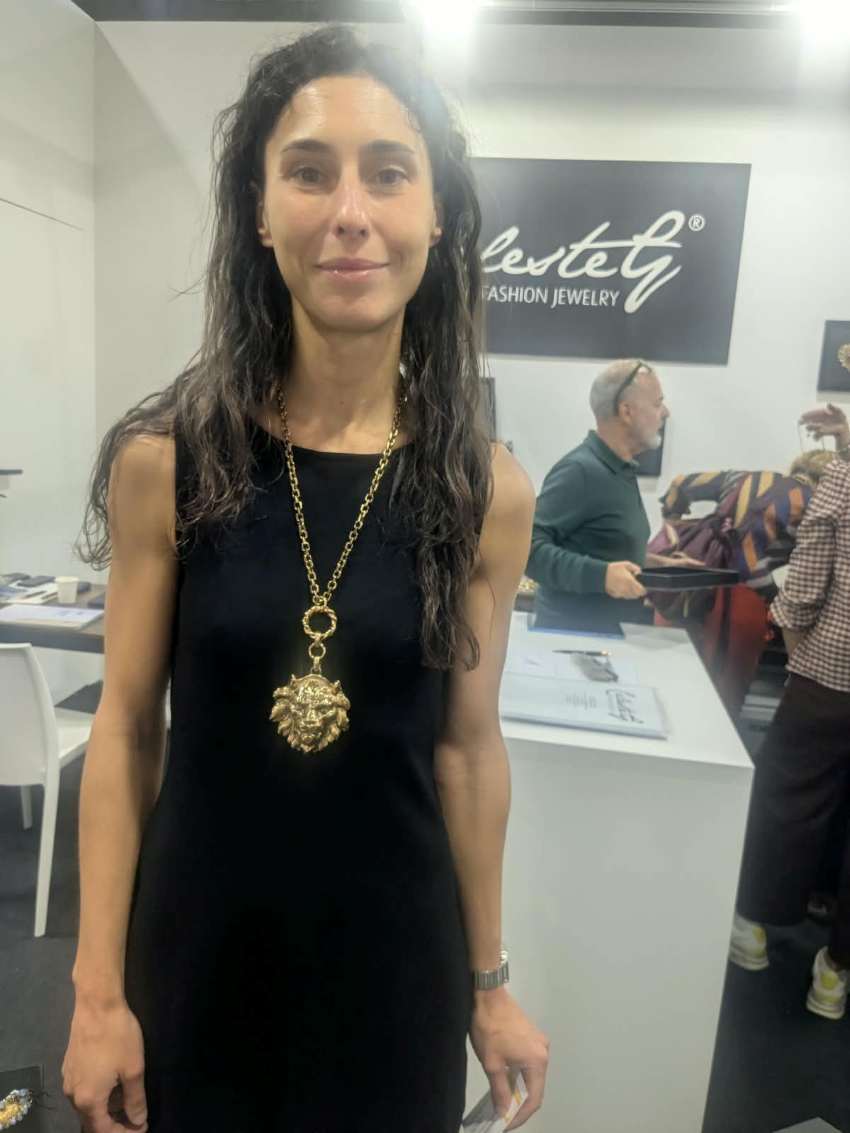
She adds, "Inside our company, everyone is able to do everything. Me and my dad, we design and produce everything inside our laboratory using brass, different crystals, and hand-applied enamel. Every piece is manually done, one by one. We supply 130 shops in Italy and over 30 wholesale customers in the Russian area. In this period, our business is going very well because clients recognize authentic handmade Italian craftsmanship that can complete their seasonal style stories."
Similarly, in Naples, Valentina of Byba Bijoux demonstrated how print motifs are leaping across traditional product boundaries
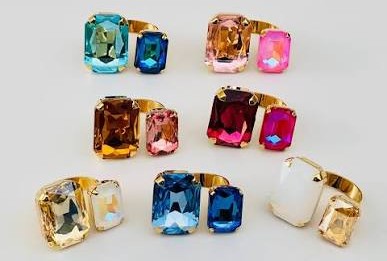
by incorporating animalier patterns printed directly onto glass cabochons mounted on lightweight aluminium and brass chains, saying, "We show this animalier glass effect for the first time. When international buyers try our manufacturing and our taste, they recognize the quality and understand how it coordinates with their ready-to-wear collections."
This commercial integration on the show floor was reinforced by MFJ’s Fashion Hub through sessions such as ‘From Material to Product, Fashion That Matters’, and ‘Beyond the Lookbook: Honest Conversations in Retail’. Runway showcases—including the ‘Made in Italy Fashion Show’ and collective presentations from regional artisanal delegations, including 26 fashion and jewellery brands from Sicily alongside Neapolitan and Tuscan collectives, presented jewellery styled in direct dialogue with tailored outerwear, daywear, and accessories.
The Milan Advantage: A connected trade infrastructure
The emergence of the "Total Look" as a dominant retail strategy underlines the broader logic of Fiera Milano’s master plan. In a global trade landscape where travelling to separate regional fairs for footwear, leather goods, accessories, and apparel is increasingly inefficient, Milan’s coordinated calendar provides an integrated commercial alternative.
With Fashion Link Milano drawing 37,000 professional visitors across its joint September events and setting its sights on the February 20–22 edition alongside Sì Sposaitalia and TheOneMilano, the proposition has crystallized: "One trip, Multiple purchasing decisions!" As demonstrated by the commercial success of workshops like Annibale Baldini and Marri Cortona, manufacturers that step outside single-category silos to deliver cohesive, modular design propositions are capturing the modern buyer's open-to-buy budgets. In the contemporary fashion ecosystem, jewellery is no longer an isolated accessory; it is an indispensable building block of the unified retail vision.