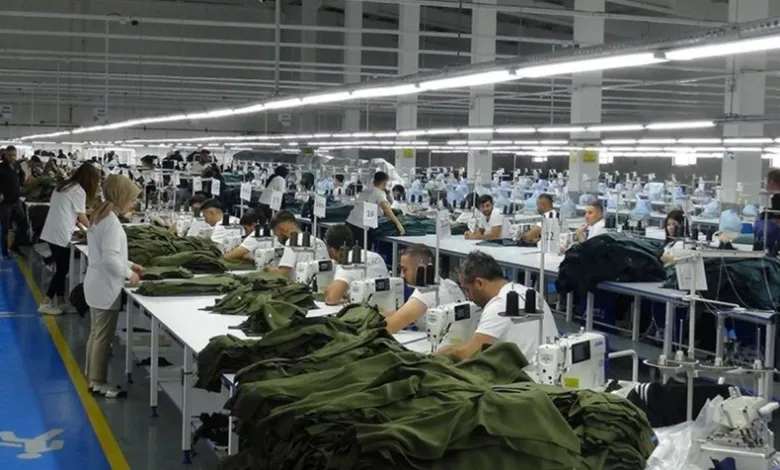
Rishad Bathiudeen, Sri Lanka's Minister of Commerce and Industry has vowed to safeguard the country's apparel industry from the Trans-Pacific Partnership (TPP) trade agreement which has the potential to result in trade diversion from Sri Lanka. The minister said, we need to be able to carefully address the new Trans-Pacific Partnership (TPP) Agreement. We in the government understand that TPP is a trade challenge in the future and are currently studying it.
Bathiudeen was addressing the launch of Ransalu Pranama Combo Card jointly by Joint Apparel Association Forum (JAAF) Sri Lanka, Channel 17, Mobitel and Commercial Bank at Cinnamon Grand, Colombo on May 9. The country's pioneering workforce smartcard was launched to honor its apparel workforce has matured to become the first ever dual swipe card in the country.
Further, the minister said the TPP is not a trade challenge only for Sri Lanka but it even affects trading systems of its own 12 member countries in the Asia-Pacific region including Australia, Brunei, Canada, Chile, Japan, Malaysia, Mexico, New Zealand, Peru, Singapore, the US and Vietnam. The minister said Sri Lanka however, can generally expect some major aspects that could change and advised the apparel manufacturers to safeguard their designs.
- 1
- 2
- 3
- 4
- 5
- 6
- 7
- 8
- 9
- 10
The 2027 Mandate: Why denim’s future hinges on verifiable data
For decades, the global denim industry has relied on a narrative of durability, heritage, and authenticity. That narrative is now... Read more
Europe’s textile core unravels as costs, imports and policy pressure bite
Europe’s textile and apparel sector, long seen as a benchmark for craftsmanship and industrial depth, is slipping into a prolonged... Read more
Automation, innovation, regulation are the forces shaping textiles in 2026
The global textile sector has entered a new era. Early 2026 saw the industry breach a $1.06 trillion valuation, reflecting... Read more
The new Brussels rulebook, every EU apparel order is now a balance-sheet risk
The humble export order sheet is undergoing a transformation. What was once a straightforward commercial instrument: SKU, volume, FOB price,... Read more
Why 2026-27 could be a defining cotton year for India’s farm-to-fashion economy
The global cotton economy is entering a more constrained phase, and for India, the implications run far beyond the farm... Read more
Luxury resale’s next big battle is no longer digital, it is about who controls s…
For nearly a decade, the luxury resale story was written in the language of platforms. Market leadership was measured by... Read more
Digital Arms Race: Indian apparel giants deploy AI to neutralize tariff crisis
The Indian textile and apparel sector is in a digital survival phase in 2026, shifting from traditional labor-intensive models to... Read more
Europe’s Textile Endgame: Why Project FAE is becoming fashion’s most critical in…
Europe’s apparel majors are no longer treating circularity as a branding layer. With Project FAE or Feedstock Activation Europe, the... Read more
Engineering color at source, dye-free production is cutting cost, water, and tim…
For over a century, coloring has been anchored in wet processing, an energy-intensive, chemically saturated stage that happen post spinning.... Read more
The €11 bn deadlock, can Europe’s textile recycling catch up?
Europe is at a tipping point. Fast fashion consumption, led by rising incomes and a growing global middle class, has... Read more