FW

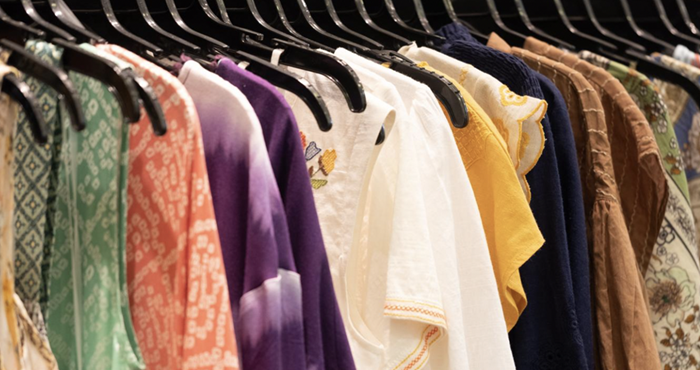
The US cotton industry expects a three per cent increase in sales in Indonesia this year. The target would be achieved by approaching consumers directly to promote the products rather than only approaching businesses.
Indonesia imports most of its cotton from the US, Australia and Brazil. Indonesia is Cotton USA’s fourth largest market after China, Turkey and Mexico. Sales in Indonesia range between $300 million and $600 million a year. As a clothing material, cotton is competing with cheaper synthetic materials like polyester. The cotton market share in the raw material market fluctuates from time to time, depending on changing market demand.
To strengthen its grip on Indonesian market, Cotton Council International held its first Cotton Day Indonesia, a series of business seminars and fashion shows, to increase awareness about products among Indonesian consumers. The organization plans to hold Cotton Day every year henceforth. It held such events in Japan too 15 years ago. Cotton Council International is the export promotion arm of the National Cotton Council, a US industry association promoting the brand Cotton USA.
The population in Indonesia keeps increasing with a positive birth rate at around one per cent and there's an emerging middle class wearing more of quality garments.
Italy is keen to make its fashion industry truly eco-sustainable. A new loan program has been designed to provide concrete support to the introduction of eco-responsible fashion industry practices.
For the very first time, a fashion industry association and a bank are launching a funding project entirely dedicated to sustainability. A list of ecological criteria valid for the whole industry has been drawn up. But for fashion labels to be able to comply with these standards, the entire manufacturing and supply chain must be able to adopt them. This means the industry in its entirety must be involved in the transformation and follow the same direction.
The idea is to fund medium to long-term investments designed to improve manufacturing operations, for example, by eliminating dangerous substances from textile production or using clean energy. Small suppliers of major Made-in-Italy labels have been allowed to access credit finance on terms that were the same as those generally accorded to more powerful corporations.
Sustainability has now become the differentiating factor among brands. The Green Carpet Fashion Awards will be presented for the first time at the forthcoming Milan Fashion Week, a sort of Oscars for eco-sustainable fashion. Eco-sustainability has become a rallying cry.
Pierre Berge, cofounder of Yves Saint Laurent, is dead. He was 86. Berge was the longtime partner of the late designer Yves Saint Laurent. A philanthropist and art collector, Berge was also a tireless campaigner for gay rights and donated a large slice of his fortune to AIDS research. He provided the means for research to defeat AIDS.
Berge was a particularly French self-made man, as passionate about culture as he was about making money. Two museums he masterminded, dedicated to Saint Laurent's life and work, are to open in Paris and Morocco this year.
Over the years Berge built up a large art collection and one of the world’s greatest libraries in private hands, which he was in the process of selling when he died. Like the proceeds of his and Saint Laurent’s art collection -- which went under the hammer for about €340 million in 2009 in what was dubbed the sale of the century -- almost all of the money from the sale is going to their charitable foundation or to HIV research.
He loved Marrakesh in Morocco, setting up a museum of Berber art there, yet last year lashed out at designers for creating Islamic clothing and headscarves, accusing them of taking part in the enslavement of women.
Thomas Krautschneider is the new chairman of European Textile Services Association. He is the CEO of Salesianer Miettex, a family-owned Austrian company, founded in 1916, and employing 2,450 people, with 22 plants across Austria and eight other countries.
The textile services industry is a major contributor to the European economy, with a current annual turnover of €12 billion and employing 1,35,000 people in the EU. The textile services market has grown in almost every segment and product type in recent years.
ETSA members are committed to lifecycle thinking and ecological principles. This means long-lasting textiles, lower energy and water consumption in the textile care process, and eco-friendly detergents. ETSA aims to dispose of textiles in an environmentally acceptable manner at end-of-life, which means they are recycled or used as raw material for power generation. ETSA’s goal is to promote and defend industry’s interests in close cooperation with suppliers and national associations within a European context. It values fair competition, eco-efficiency and sustainability.
Salesianer Miettex’s core business is comprehensive provision of rented textiles for hotels and restaurants, work wear for industry, trade and commerce, and textile supply for the health services sector. It offers clean room textiles, washroom hygiene, and dust control mats and graphic mats. The company has a clear commitment to quality, hygiene and sustainability.
Dyneema bonded leather is a material created in collaboration between ECCO Leather and DSM Dyneema. It combines the luxurious look and feel of leather with the strength of Dyneema fiber.
Designers and brands have a new material to work with: a paper-thin material with the appeal and luxurious look of leather. Dyneema fiber is the world’s strongest fiber. It’s 15 times stronger than steel yet floats on water. ECCO Leather’s reputation as tanning innovators made the company the logical choice to co-develop a new leather material bonding Dyneema composite fabric with the rich and organic properties of premium leather.
The result is an unique new leather featuring a fine natural surface character blending aspects of distinctive Dyneema fabric structure with the leather’s original grain pattern. It delivers on the performance expectations of Dyneema fabrics matching the tensile strength and comparable leather qualities at a fraction of the weight.
The secret of Dyneema bonded leather is rooted in a multi-phase development sequence involving pre-tanning, bonding and a careful series of interim and final tanning stages. The final material also simultaneously integrates unique haptic and visual chrematistics that give it unexpected expressive potential within the fashion sector, while still being relevant for highly functional performance-based applications.
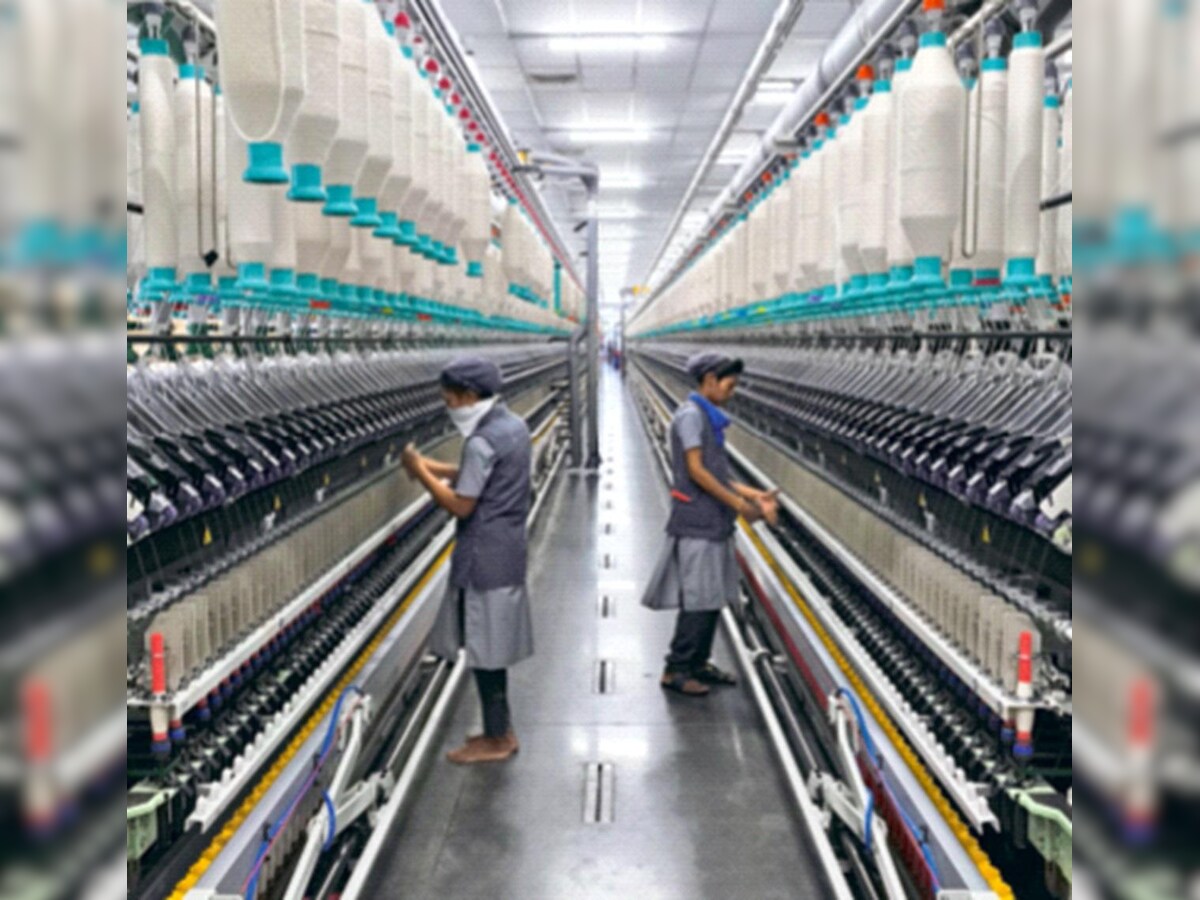
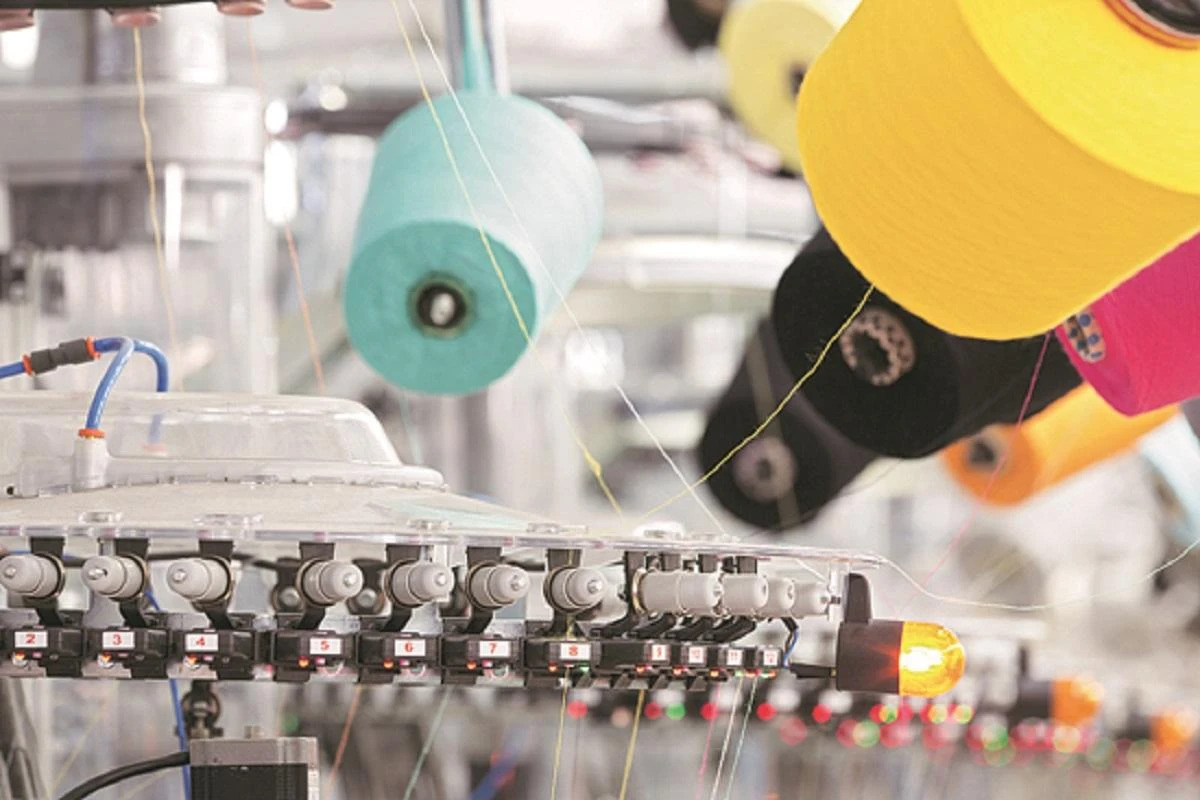
DyStar aspires to become the world’s most sustainable and responsible supplier of colors, chemicals and services to the global textile industry. The company’s product portfolio is broader than ever but the newer product range come with the added advantage of being, on an average, less resource intensive to manufacture. This and other factors, including active efforts to improve operational efficiency across existing production sites, have helped the company surpass four of its six 2020 targets, which seek to reduce resource consumption intensities and corresponding waste outputs by 20 per cent of 2011 levels.
When completed, the new Global Innovation Center in China will host state-of-the-art laboratories dedicated to process technology development and research on next-generation alternatives. DyStar’s online tool eliot is gaining popularity among customers, brands and retailers for the reliability of its modules. Conceived more than a year ago, eliot aims to empower users with the information they need to make responsible choices in product selection and process optimization.
The company strives to achieve a new balance between being a responsible supplier and a profitable business in these changing times. Recent efforts to correct internal weaknesses include the installation of new safeguards aimed at strengthening due diligence, protecting and empowering whistleblowers, and closing procedural gaps.
Western European garment industry workers in BRIC (Brazil, Russia, India and China) countries earn only half of the living wage. While globalisation has made Western European clothing supply chain fairer by increasing employment opportunities and income for workers in BRIC countries, their income is still insufficient to support a decent standard of living.
Garment factory workers are only paid around half the living wage, and agricultural workers are paid even less. Taking into account financial demands on workers - income tax and social security contributions - in addition to wages, workers would need to be paid, on average, an additional 35 per cent to offset these factors.
Despite some improvements in workers’ income, and employment opportunities through globalisation over the last 20 years, they are still not paid living wages, so the supply chain cannot be described as fair. There can be potential impacts on companies and consumers if BRIC workers are paid a living wage. For example, a company may choose to absorb the additional cost or pass the cost on to consumers. Faced with a higher priced product, consumers might choose to buy less, which could in turn have a positive impact on the environment (by reducing carbon emissions) but possibly a negative social impact (by reducing employment).
Eight Armenian companies have come together to launch a line of jeans clothing called 5900 BC. The name derives from the fact that Armenian history predates the birth of Christ by 5900 years.
On January 2, 2015 Armenia became a member of the Eurasian Customs Union (EACU) within the Russian established Eurasian Economic Union (EEU). From that moment on, Armenia has started the distribution of its textile products to the markets of the EEU member states. Some 94 businesses are operating in the textile and garment industry of Armenia. The country exported 50 million dollars and imported 170 million dollars of textile and garment products in 2014.
Armenian companies specialize clothing, knitting and textile processing co-operate with European and American partners, while their main export markets remain the CIS states. They have substantial experience in cut, make and trim and full package contracting. Textiles are one of the oldest branches of Armenian economy, and accounted for over one quarter of the total workforce during the Soviet era.
Meanwhile Vietnam is seeking partners in Armenia to develop production projects. Armenia has expressed its desire to cooperate with major firms with much experience in production management so as to revive the local garment industry and boost export.
"After witnessing the quick success gained by two fast fashion giants, H&M and Zara, retailers have come to believe if you give customers latest trends in a short period of time, they will be lured to purchase. While this trend stayed far longer than anticipated, winds of change seem to be turning towards a more sustainable paradigm where consumers no longer plan to discard their outfit for new and is giving retailers a run for their money. Robert Wallstrom, CEO, Vera Bradley, believes many of brand's patterns have a longer shelf life than they expected."
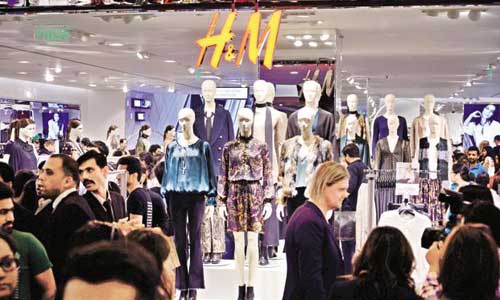
After witnessing the quick success gained by two fast fashion giants, H&M and Zara, retailers have come to believe if you give customers latest trends in a short period of time, they will be lured to purchase. While this trend stayed far longer than anticipated, winds of change seem to be turning towards a more sustainable paradigm where consumers no longer plan to discard their outfit for new and is giving retailers a run for their money. Robert Wallstrom, CEO, Vera Bradley, believes many of brand's patterns have a longer shelf life than they expected. The company has been sending patterns to the clearance bin, thereby hurting gross margin. Now Vera Bradley is working on the frequency at which it introduces new styles. It turns out customers didn’t need a hot new thing quite as often as the company expected. At the Chico's brand, executives are doing a major reset of the merchandise every six weeks instead of every four weeks.
Social media influence
Instagram, Snapchat and other digital platforms are accelerants that carry new looks across the globe in an instant. That dynamic is here to stay. But retailers should just keep one thing in mind: Not every customer is a fast-fashion customer. Lots of women aren't as budget-conscious as they were in darker economic times. They don't care about micro-trends. If a garment is flattering and durable, they would buy it. For instance, for Lululemon Athletica its best-selling sports bra is a new design called the Enlite, which costs $98. Women are paying that much for something that will end up sweat-soaked at the bottom of their gym bag – even when Lululemon offers many other sports bra styles at about half the price. But this one is made from a lighter-weight fabric and designed differently to offer more shape than a typical sports bra. Women are willing to pay because it seems innovative and functional.
The simple thread here is mid-priced retailers shouldn't broadly adopt the fast-fashion playbook. Each store should interpret it and apply it surgically – only in ways that makes sense for its specific customer base. That might mean a retailer uses its speedier supply chain not to go after some style the Instagram-influencer set is pushing, but to buy more of a classically styled sweater that’s been quickly embraced by consumers. It’s a test-and-learn approach to figure out which colours of a certain sheath dress get traction in which geographic markets before you place a massive order. In the end, the bottom line stays – you should work on your core strengths rather than blindly following the strategy of big retailers.
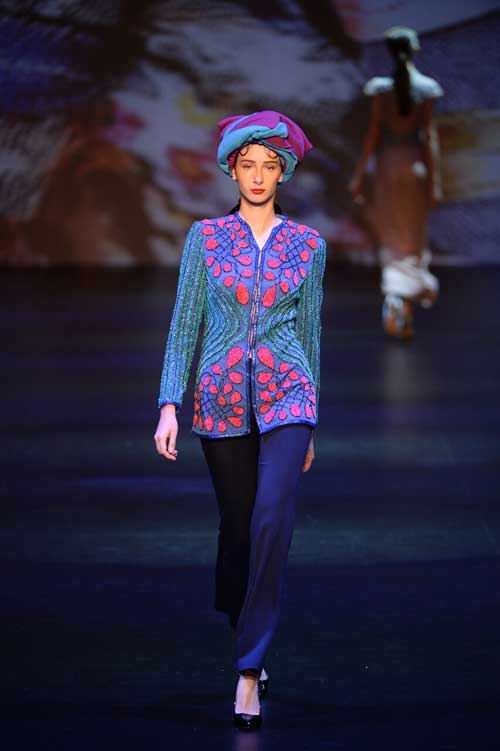
IKA (pronounced ee-ka) means “a thousand islands with one unity”. Like her name, the talented designer creates multi-faceted and multi-dimensional designs like no other – a thousand creative ideas with one unity.

Fashion designer, Ika, treats designing as a serious issue. “For me, fashion design is not persay a career but a way to express myself day to day. My roots contribute to the major strength in embroidery which I use a lot in my collections.”

Born in Indonesia, Ika was raised and educated in Bali. Driven by her interest in fashion, she spent several years in Europe to be trained in apparel design. The calling of Asia drew her back to the Far East where she made Hong Kong her second home, founded Butoni Limited in the early 1980s, while Bali becomes her source of inspiration.
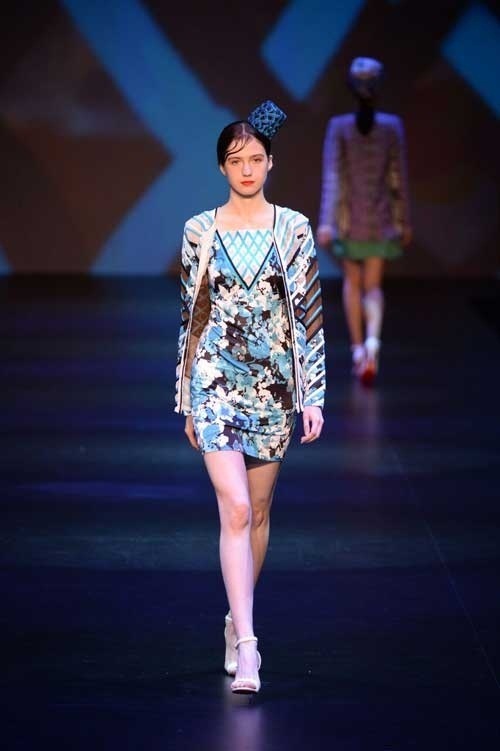
Ika known as a legendary designer plays a lot with rich and heavy embroidered fabrics, in colours and designs having a strong Asian and Indonesian influence. Her fashion show at CENTRESTAGE also featured turquoise as one of the interesting colours.