FW
Kenya’s records Sh8 billion rise in textile and apparel accessories’ earnings
Boosted by higher sales to the US and the Netherlands, Kenya’s earnings from textile and apparel accessories grew Sh8 billion in the nine months to September 2021. As per Kenya Export Promotion and Branding Agency (Keproba) stats, textile firm’s revenues rose 31.1 per cent to Sh33.7 billion in the review period compared to Sh25.7 billion a year earlier. The US and The Netherlands were Kenya‘s largest export markets during the period, says Wilfred Marube, CEO, Keproba.
FTA with the US, and African Growth and Opportunity Act (Agoa) allows Kenya to export selected goods at preferential terms to the US, exempting them from paying tax. The initiative allows Kenya to export more than 6,000 product lines, which is mostly dominated by the export of textile and apparel. Locally, the revival of Rivatex also boosts Kenya’s textile sector by creating a demand for locally produced cotton and created thousands of jobs.
Likewise, the introduction of Bacillus Thuringiensis cotton, Kenya’s first genetically modified, insect-resistant cotton seeds, boosts cotton farming in the country. Keproba supports the sector by partnering with its key stakeholders including business membership organizations (BMOs) like Kenya Fashion Council to maintain high production standards and create value-added products that meet the global export market standards, adds Marube.
The agency recently developed a new strategy to increase uptake of locally designed and manufactured apparel, textiles, leather and accessories including through the ‘Buy Kenya Build Kenya’ campaign.
Malaysia’s Caely Holdings Bhd to boost lingerie production in Indonesia
Malaysia-based investment holding company, Caely Holdings Bhd, plans to form a joint venture to increase its lingerie production capacity in Indonesia. Gok Ching Hee, CEO says, the company is currently finalizing terms and conditions for the agreement with a potential JV partner that would then invest in a plant in Indonesia. Caely currently exports undergarments to Germany, the US and Canada. However, has been getting more enquiries from companies in Turkey, France and Australia. And this is encouraging them to expand, with the plant in Indonesia aiming to increase capacity threefold, compared to its factory in Teluk Intan, Perak.
The recent surge in orders is due to companies shifting away from sourcing their products in China, adds Gok The orders will help Caely use up the current capacity of its Indonesian plant, he states further.
India’s KPR Mills’ Q3 FY2022 net profit declines 12.57 per cent
In its Q3 FY2022, KPR Mill’s net profit declined by 12.57 per cent to Rs 211.77 crore against Rs 242.22 crore in Q2 FY2022. As per an Equity Bulls, the company’s total income grew by 4.90 per cent to Rs 1,285.83 crore from Rs 1225.72 crores reported during the previous quarter.
On a Y-o-Y basis, KPR Mills posted a 35.52 per cent growth in profit to Rs 211.77 crore for the period ended December 31, 2021 as compared to net profit of Rs 156.26 crore posted for the period ended December 31, 2020. Total income grew 36.86 per cent to Rs 1,285.83 crore during the period ended December 31, 2021 as compared to Rs 939.51 crore during the period ended December 31, 2020.
Stradivarius refreshes visual identity with a refined logo
To be more in line with its current brand positioning, Galician Group company, Stradivarius is refreshing its visual identity. As per a Fashion Network report, the move aims to assert the fashion retailer’s identity by creating a new more contemporary and refined logo, designed together with the Barcelona-based studio Ana Mirats and written in a font that was created exclusively for the brand.
The new visual illustrates Stradivarius’ two differentiating elements: treble clef, a symbol reflecting the dynamism of the brand; and the personalized font designed to provide readability and notoriety in a more contemporary style.
Founded as an independent brand by the Triquell family, Stradivarius is the fifth largest brand in terms of turnover for the Galician conglomerate that is behind Zara, Pull & Bear, Massimo Dutti, and Bershka. The brand closed the 2020 financial year with a total of 936 stores worldwide and a turnover of €1.283 billion, 26 per cent lower than the sales recorded a year earlier.
Indonesia: APSyFI says Incentives for textile imports should not exceed domestic produce
Incentives for imported textile products should not exceed those for domestic textile products, says Redma Gita Wiraswasta, Chairman, Indonesian Filament Yarn and Fiber Association (APSyFI). The current provision of incentives for imported textile raw material products has resulted in a large number of imported goods entering the country, hampering the domestic textile raw material industry, says a Indo Textiles report.
Reduction in income tax incentives in Article 22 of imports in a number of manufacturing sectors will strengthen local products, Wiraswasta adds. . It will also help domestic producers meet the demands of raw materials for the local textile market, he adds. Indonesian Fiber and Filament Yarn Producers Association (APSyFI) was Founded on May 31, 1975. 22 companies of APSyFI’s members are producing polyester staple fiber, polyester filament yarn and nylon filament yarn. Indonesia is one of the world's 10 largest producers of synthetic fiber, with total capacity of 830,000 tons of polyester staple fiber, 840,000 tons of polyester filament yarn, 32,000 tons of nylon filament yarn and 550.000 tons of rayon staple fiber.
Bangladesh cotton farmers missing out on $3 bn domestic market: CDB
Cotton farmers in Bangladesh are missing out on the $3 billion domestic market with their growing preference of other cash crops, says MD Akterruzzzaman, Executive Director, Cotton Development Board(CDB). Last year, the country produced only 1.77 lakh bales of cotton which or only around 1 per cent of the total annual consumption of the raw material of nine million bales. This has raised cotton imports price to over $3 billion annually from the US, African countries, Australia, Brazil, Pakistan, and Central Asian nations, he adds.
As per a Daily Star report, scarcity of arable land, emphasis on food production, and lower price of cotton are responsible for farmers' lack of interest in growing the textile raw material. Parvez Anwar, Head, Department of Agronomy of Bangladesh Agricultural University adds, farmers also do not have the confidence to grow cotton abundantly as they do not get ready markets and good prices. The CDB hopes to lift cotton output to 2 lakh bales by 2022 and 3 lakh bales in the next five years, as a part of its plans to grow the crop on one lakh hectares by 2030 and meet 10 to 15 per cent of local demand.
Currently, the board is implementing three major initiatives to boost cotton production and improve quality. It is executing extended project for cotton production involving Tk 150 crore; a capacity-building project involving Tk 63 crore; and a donor-backed project to improve the quality of the raw material involving Tk 8 crore. The state-run organization has teamed up with a UK-based international clothing brand to enhance the capacity of 15,000 farmers under a project. The CDB mainly provides technical support. Moreover, there are two more projects under the CDB aimed at alleviating poverty through cotton cultivation in hilly areas such as Bandarban and providing soft loans to farmers.
India: Dyes and intermediates exports surge 25 per cent April-December 2021
From April-December 2021, dyes and intermediates exports surged by 25 per cent as demand from international markets increased. As per data by Basic Chemicals, Cosmetics & Dyes Export Promotion Council (Chemexcil), India’s dyes exports touched 4.08 lakh MT from April to December 2021, compared to 3.26 lakh ton in the same period of 2020. Gujarat accounted for an estimated 70 per cent of dye and intermediate production in the country, says Bhupendra Patel, Chairman, Gujarat region, Chemexcil.
While dye exports surged, dye intermediates declined during the same period. Reduction in exporters incentives under the duty drawback scheme and the MEIS scheme made manufacturers less competitive in the international market, adds Patel. Even though April-December exports surged, manufacturing capacities are currently underutilized for dyes and intermediates manufacturers, owing to steep rise in raw material costs.
Rise in raw material costs by 60 per cent has increased exporters’ costs of operations. This has also reduced their capacities, adds Yogesh Parikh, President, Gujarat Dyestuff Manufacturers’ Association (GDMA). With textile industry sales taking a hit, the overall demand for dyes have also declined. Export demand has also gone down due to the Chinese New Year holiday across China, Hong Kong and other countries, Parikh adds.
Online marketing campaigns boost AWI’s China sales to $122 million
Targeted online marketing campaigns have helped Australian Wool Innovation’s retail collaborators in China to record $122 million in extra wool garment sales. As per a Sheep Central report, during Wool Week in October 2021, followed by Double 11 and Double 12 festivals collaborators’ extra wool garment sales increased 40 per cent to $122 million. John Roberts, CEO, AWI says, the latest campaign highlighted premium natural qualities and effortless style of Merino wool –with the aim to make Merino wool the most coveted apparel fibre for consumers during China’s 2021 winter.
The firm’s wholly owned subsidiary — The Woolmark Company – partnered e-commerce giant Tmall to put Merino wool in the forefront of digitally savvy shoppers’ minds, whilst further championing the wool products of premium Chinese and international brands. The Woolmark Company also worked with the No.1 livestreamer in China, Viya, to host a livestream event on September 27, which was especially popular. Brand partners included: MO&Co., Lily, Eifini, GXG, Dazzle, Edition and Banxiaoxue. This has raised AWI’s intentions to buy Merino Wool by 22.4 per cent to 87.1 per cent, says the firm.
Bangladesh apparel exports value to reach $50 billion in 2022: BGMEA
The value of Bangladesh apparel exports is likely to reach $50 billion in 2022, said Bangladesh Garment Manufacturers and Exporters Association President, Faruque Hassan at a views exchange meet arranged by the Chattogram Port. The event aimed to discuss different aspects of the recently opened direct shipping route between Chattogram Port and Italy's Porto di Ravenna. It was attended by Rear Admiral M Shahjahan, Chairman, Chittagong Port Authority, Charles Stuart Whitely, EU Ambassador to Bangladesh and Enrico Nunziatya, Italy Ambassador. BGMEA exported $4 billion worth of garments a month in November and December 2021 and hopes to touch the $50 billion mark in 2022, Hassan said. Direct connectivity with Europe would reduce business costs by 40 per cent and cut shipment time to 16 days.
He hoped more European shipping lines would launch such services on their dirct routes with Chittogram port. Shahjahan added, the Chattogram port can handle some 4.5 million 20 foot equivalent units (TEUs) of containers, or goods worth $80 billion a year. The Patenga Container Terminal would be operational within June 2022, and another deep seaport was being built in Cox's Bazar's Matarbari.
Enrico Nunziatya and Charles Stuart Whiteley expressed hope direct shipping connectivity between Bangladesh and Italy would enhance bilateral relations. It would also help the two countries boost trade, they believed.
RCEP will strengthen economic integration amongst member states: UNCTAD
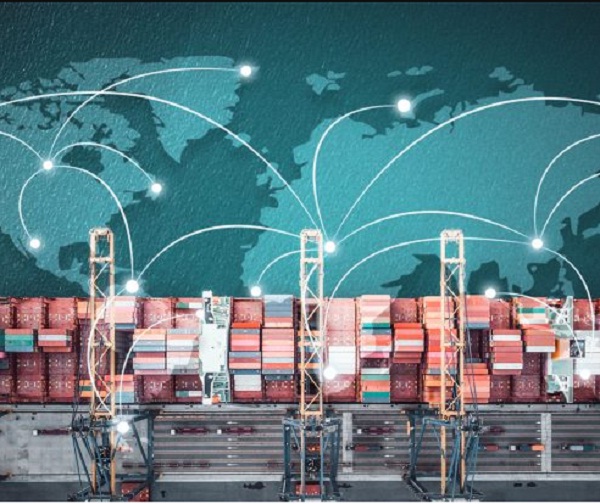
The Asia Pacific region is likely to emerge as the major beneficiary of the Regional Comprehensive Economic Partnership (RCEP) as importers will increasingly move away from the EU, US and other non-member markets, says a new report by the United Nations Conference on Trade and Development (UNCTAD).
New trade worth $17 billion on the anvil
Titled, ‘A New Centre of Gravity’, the report forecasts, exports worth billions of dollars will get diverted from nations not included in the trade deal. Importers in the RCEP block will capitalize on tariff concessions offered in the agreement, boosting intra-Asia exports by nearly 2 per cent from 2019 levels, or approximately $42 billion. Non-member nations will no longer benefit from lower tariffs as the 15 members will secure trade roughly worth $25 billion. They will also generate new trade worth $17billion amongst member states. RCEP will emerge a as the new centre of world trade, predicts the report. Tariff concessions offered by the agreement will boost trade within the newly formed bloc, it adds.
Deals with broader trade issues
Covering almost a third of the world’s population and 30 per cent of its GDP, the RCEP agreement was finalized on January 1. The deal brings together the 10 Asean nations, alongside China, Australia, New Zealand, Japan and South Korea. It standardizes trade rules across the region. One of the primary goals of the agreement is to support wider business environment by dealing with broader issues such as intellectual property, e-commerce, regulation of competition and government procurement. The deal has been delicately negotiated to help countries protect their export sectors. However, the UNCTAD report says, tariff concessions offered in the agreement may lead to disruptions in world trade pattern in future.
Tariff elimination to boost exports
The RCEP agreement eliminates tariffs on 90 per cent goods over the next 20 years. It also eliminates tariffs on 65 per cent of products traded within the bloc. This tariff elimination will benefit Japan most as it exports to member countries will grow 5.5 per cent or $20 billion from 2019.
Other countries like Australia, China, South Korea, and New Zealand are also likely to benefit from tariff reductions. China’s exports to the RCEP bloc will grow by $11.2 billion, Korea’s exports by $6.7 billion, Australia’s by $4.1bn while New Zealand’s exports will grow by $1.1 billion.
Trade diversion to impact developing nations
The RCEP-led trade diversion will also affect major markets such as the US and the EU besides impacting the developing economies of Bangladesh and Pakistan. As per the report, the EU will lose exports worth $8.3 billion to RCEP countries while US’ exports are expected to be hit by $5.1billion. Hong Kong’s exports will decline by $3.3billlion and Taiwan’s by $3billion.
Countries like Bangladesh, Pakistan and Sri Lanka will suffer bigger losses with Bangladesh reporting a 12 per cent drop in exports to RCEP. Exports by smaller emerging economies including Vietnam, Cambodia, Indonesia and the Philippines are also likely to drop due to tariff concessions, with Vietnam’s exports dropping by $1.5 billion. Yet, the UNCTAD report, upholds joining of RCEP by these countries as it strengthens their economic integration and offers them various other benefits like a boost in foreign direct investment, technology sharing, structural transformations, etc.