FW

"Designers today are equipped with the right mindset and tools to face the rapidly changing manufacturing and retail landscapes. In a panel discussion at Sourcing at Magic in Las Vegas recently, experts set out to further streamline some of the sector’s confusion. The panel titled, “Fashion Design Is All About Tech and Innovation,” moderated by Fashion For Profit President Frances Harder, denim design and fit experts urged designers to use technology to create ways to overcome the denim industry’s biggest hurdles, including sustainability, on-demand manufacturing and performance fabrics."
 Designers today are equipped with the right mindset and tools to face the rapidly changing manufacturing and retail landscapes. In a panel discussion at Sourcing at Magic in Las Vegas recently, experts set out to further streamline some of the sector’s confusion. The panel titled, “Fashion Design Is All About Tech and Innovation,” moderated by Fashion For Profit President Frances Harder, denim design and fit experts urged designers to use technology to create ways to overcome the denim industry’s biggest hurdles, including sustainability, on-demand manufacturing and performance fabrics.
Growth of the athleisure segment
Fabric innovation is the reason for denim’s comeback from the hit it took from the athleisure and activewear markets in 2014. As Jennifer Lynn Peterson, Designer, Silver Jean Co points out, everyone discovered that athleisure could be fashionable and comfortable at the same time. Jeggings and indigo knit helped the denim industry stay relevant. Denim mills had to develop denim urgently. Stretch denim, however, continued to be a hard sale for men’s brands. As Stefano Aldighieri, President of Another Design Studio 2.0 noted, brands would never even advertise it. They would not tell people it was stretch because otherwise men traditionally would refuse to wear them.
Brands need to focus on macro trends
Peterson feels, denim trends are less about new styles and more about achieving a certain look. Brands are styling jeans on their websites as an entire outfit. They want to be able to visualise themselves wearing it. Whereas fashion trends used to differ from city to city, said Ram Sareen founder of Tukatech, trends spread like wild fire and should be among designers’ least concerns. According to him brands should now consider how segments of the market are changing.
Aldighieri urged brands to extrapolate design concepts lifestyle and cultural shifts. According to him, brands should really look at the macro trends—the things that are really important—then give their own interpretation.
Consumers warm up to sustainable denim
According to Silver Jeans Co, consumers are warming up to sustainability. The technology required to be sustainable is becoming affordable. The company is planning to launch machinery that streamlines the process that requires fewer machines, no pumice and requires less water.
Aldighieri fears sustainability will be lumped with other industry trends. Sareen, on the other hand, advises brands to take a proactive approach to sustainability through on-demand manufacturing. According to him, the biggest cause of concern is the landfills of unsold garments. To eliminate excess, brands require better technologies to make only what they need.
In the last five years India’s exports of cotton yarn have declined by 25 per cent and fabric exports have declined by seven per cent. Reason: duty disadvantage faced by Indian exporters in major markets. Chinese imports of cotton yarn from Vietnam or Indonesia are duty free but Indian yarn carries 3.5 per cent import duty.
The decline in exports is impacting the whole value chain from farmers, spinners to weavers and knitters as there is considerable export surplus in the country. Exports of Indian spinning mills were good during 2013-14 when cotton yarn was covered under schemes such as the two per cent incremental export incentive, the two per cent interest subvention and the three per cent focus market incentive.
However, suddenly all incentives were withdrawn, leaving spinning mills in the lurch. India’s cotton yarn exports to China have fallen 48 per cent from 2013 to 2017 but exports from Vietnam and Indonesia have increased 129 per cent and 55 per cent respectively in the same period.
Markets like the EU, China, Turkey and Vietnam impose an import duty of eight per cent to 12 per cent on Indian fabric while duty free access is given to countries such as Pakistan, Cambodia and Bangladesh.
World production of all fibers rose to 111 million metric tons in 2018, a one- year increase of four million tons, and a rise over the past decade of 35 million tons. Of the world total, natural fibers accounted for 32 million tons in 2018, an increase of less than two million tons in 10 years. The share of natural fibers in world fiber production fell from 41 per cent in 2008 to less than 30 per cent in 2018.
World production of synthetic filament is 50 million tons; of this polyester filament alone is about 45 million tons. Synthetic staple production is 22 million tons, and production of cellulosic fibers is seven million tons.
Cotton production in 2017-18 is estimated at 26.72 million tons. World production of jute fell to less than three million tons because of poor weather in India and Bangladesh. Jute markets in Bangladesh and India showed increases in value and decreases in volumes during 2018. A decreased jute production caused by poor weather means that consumption exceeds production, and stocks are being reduced. It is likely that prices could continue to increase during 2019. Production of wool fell in 2018. Wool production figures have been declining since 2000.
World cotton production for the 2018-19 season is forecast up slightly, led by larger crops in China, Brazil, and Australia. But this will offset lower production in Turkey and India. US production is down almost 2,00,000 bales and consumption is reduced by 1,00,000 bales.
The harvested area in Australia is estimated at 0.3 million hectares, down 43 per cent from last year. Yield is forecast at 1.887 tons per hectare, two per cent below the five-year average. Yield is expected to increase from last year because of an estimated decrease in the share of the area sown to lower-yielding dryland cotton.
Brazil is expected to have record exports, driven by a record crop. November and December 2018 Brazil exports showed record monthly numbers. Continued improvement in grading and classification of Brazil’s cotton is also supporting strong interest from overseas buyers.
Stagnant demand from Brazil’s domestic yarn and textile industry is expected to encourage future shipments. Brazil’s exports are forecast to be more than a third higher than last year. A weak monsoon has dragged Indian cotton production by nearly seven per cent. Yield is down five per cent from last year. The below-average monsoon rainfall coupled with pest infestation has truncated India’s cotton harvesting. After the first picking, farmers in Gujarat abandoned non-irrigated areas.
US cotton acreage in 2019 is expected to be 2.9 per cent more than in 201. Overall abandonment is projected to be lower in 2019 because most regions currently have adequate moisture levels. Abandonment is assumed at approximately ten per cent for the United States.
A modest increase in US mill use of cotton is expected in the 2019 crop year. As the single largest user of US cotton, US mills continue to be critically important to the health of the cotton industry. In the face of rising textile imports from Asian suppliers, the US textile industry has focused on new investment and technology adoption in order to remain competitive.
Trade tensions and increased competition from other major exporting countries have led to a decline in the US trade share. Despite the decline, the US will remain the largest exporter of cotton in 2018. US exports are projected to reach 15 million bales in the 2018 marketing year.
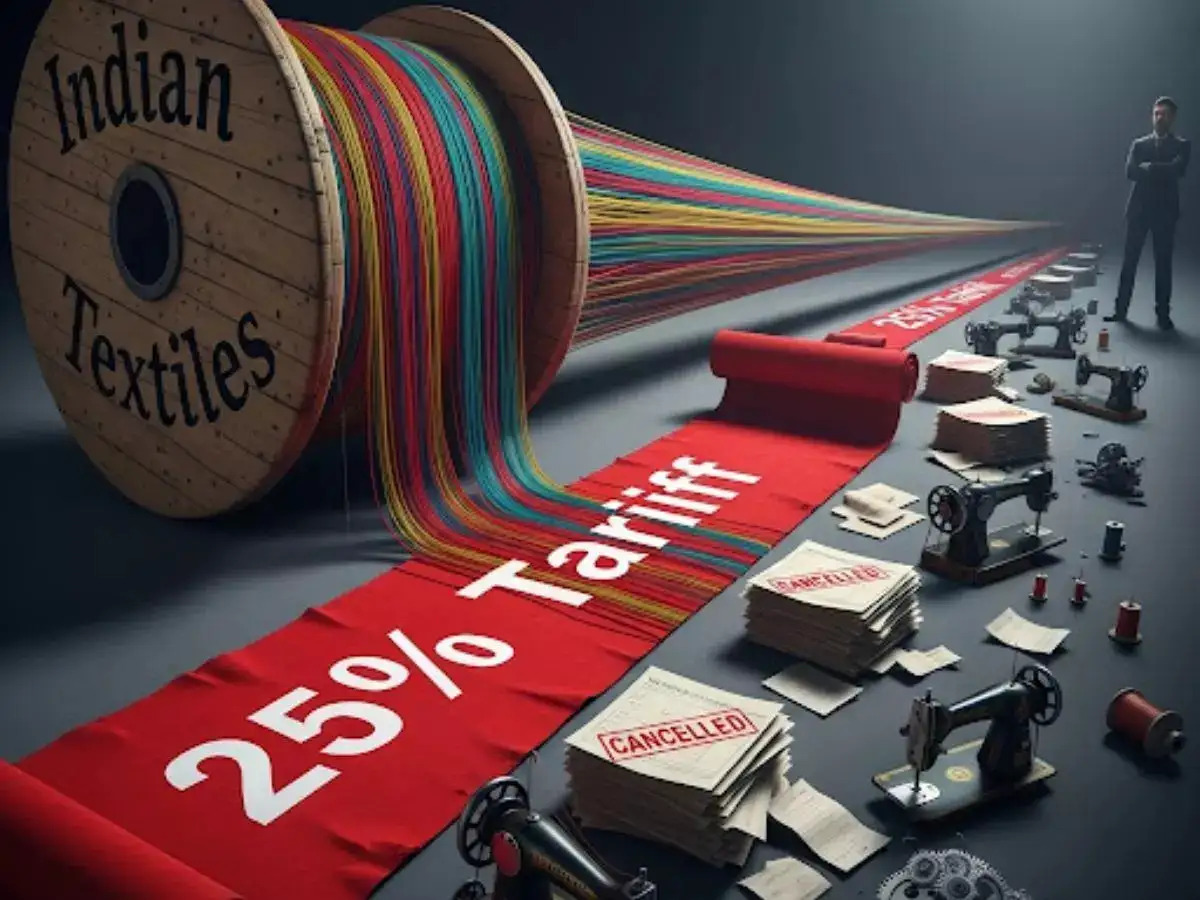
A key factor affecting the US cotton industry is the ongoing US-China trade dispute and the 25 per cent tariff on US cotton imported into China. With the imposition of 25 per cent tariff, China has turned to other suppliers, allowing Brazil, Australia, and other countries to gain market share.
After a 7 per cent increase in exports during 2018, Guatemala's apparel and textile sector expects to reach $2 billion in sales this year. Crisis in Nicaragua and an 8 per cent increase in customer demand in the United States were some of the reasons for growth reported last year by textile companies in Guatemala.
According to the Bank of Guatemala (Banguat), during the first 11 months of last year sales of costume items to the U.S. represented 91 per cent of the total sold by local companies. Figures show between January and November 2017, and the same period in 2018, exports to the US registered an 8 per cent increase, from $1.111 million to $1.200 million.
India's cotton imports may jump 80 per cent from a year ago. Production could fall to the lowest level in nine years due to low rainfall in key growing regions. Since production is not sufficient to fulfil local consumption from March onward imports are expected to pick up.
Due to the dry weather farmers were forced to uproot plants early. They couldn't go for third or fourth pickings. Rains in Gujarat and Maharashtra, which account for more than half of India's cotton production, were nearly a quarter below normal during the June-September monsoon season in 2018.
Indian farmers have adopted genetically-modified seeds that are resistant to boll worms but that hasn't stopped infestations. India is likely to produce 33 million bales in the current season. Last year's output was 36.5 million bales.
The drop in output is likely to lead to lower cotton shipments from India. India's exports could fall 27.5 per cent from a year ago, the lowest level in a decade. The drop in Indian supplies could help rivals such as the United States, Brazil and Australia increase exports to key Asian buyers such as China, Bangladesh and Pakistan. Higher imports by the world's biggest cotton producer could support global prices, trading near their lowest in more than a year.
The eighth edition of Asia Apparel Expo will be held in Messe Berlin from February 20-22, 2019. The expo will feature European apparel professionals who can meet a wide variety of Asian suppliers for men, women and children’s wear clothing as well as a wide range of fashion accessories plus garment trimmings. Over 350 companies from Hong Kong, China, Bangladesh, India, Pakistan and Taiwan will display their creations at the show.
The expo is established as the major sourcing event in Europe exclusively for Asian suppliers of finished apparel, contract manufacturing and private label development. It connects the Asian clothing manufacturers with the suppliers providing low cost, high quality and stable products to European brands. This year the expo will be supported by Export Promotion Bureau, Bangladesh, China Council for the Promotional of International Trade (CCPIT) Jiangsu, China and Bureau of Commerce of Qingdao, China.
A yarn bank has been set up in Ludhiana to facilitate the garment industry in procuring yarn without any middleman. There will be no price issues. Yarn sellers fix rates arbitrarily and yarn prices of yarn fluctuate every day. A few companies had developed a cartel and buyers were being exploited. While input costs were increasing the customer was not ready to pay more.
As of now, only the power loom and loom industries can avail of the facilities at the yarn bank. Knitwear manufacturers also want to be included in the scheme, arguing the procedure of making cloth is the same, the only difference being that the knitwear industry uses machines while the other industry uses looms.
A special purpose vehicle (SPV) has been formed and 13 members have been selected from Ludhiana and who will be purchasing the yarn and will also control its input cost. As much as two crore rupees have been given to the SPV for three years without any interest by the Textile Department. If three to four transactions are done in a year then it can be approved further.
Ludhiana is a hub of the knitwear industry and has around 5000 units with a majority of them in the medium and small scale sector.
KPR Mill will add another 10 million garment capacity to its existing facility besides expanding its processing capacity to match the increased garments' requirements. With this the total capacity of the company will increase to 115 million garments per annum and the processing to 22,000 MT per annum.