FW

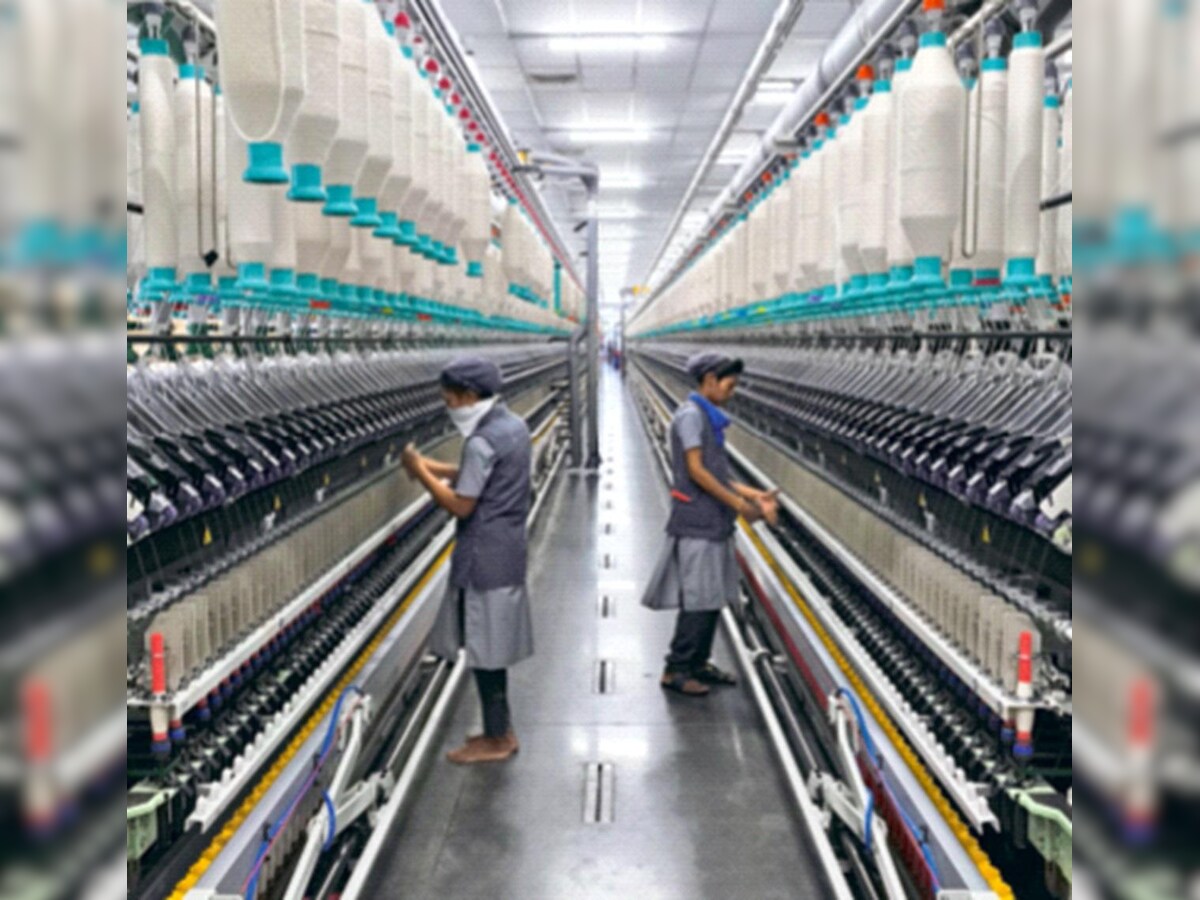
“Truetzschler technology has made my life more comfortable,” says Rajiv Garg, Managing Director of Gupta Spinning Mills, Panipat, India. He was referring to the transformation experienced by Gupta Spinning Mills after installing the latest technology Truetzschler machines.
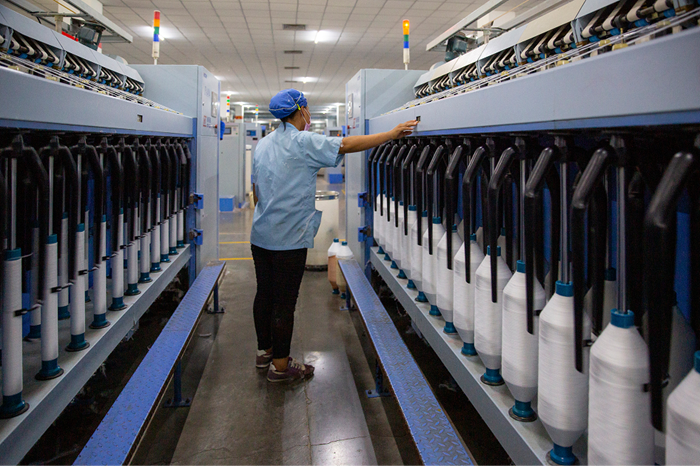
Gupta Spinning Mills had more than 150 old generation cards. The performance of these cards was erratic due to various technical problems. Getting the required production was a major pain area and the maintenance costs were sky high due to breakdowns. This impacted the efficiency of the entire mill.
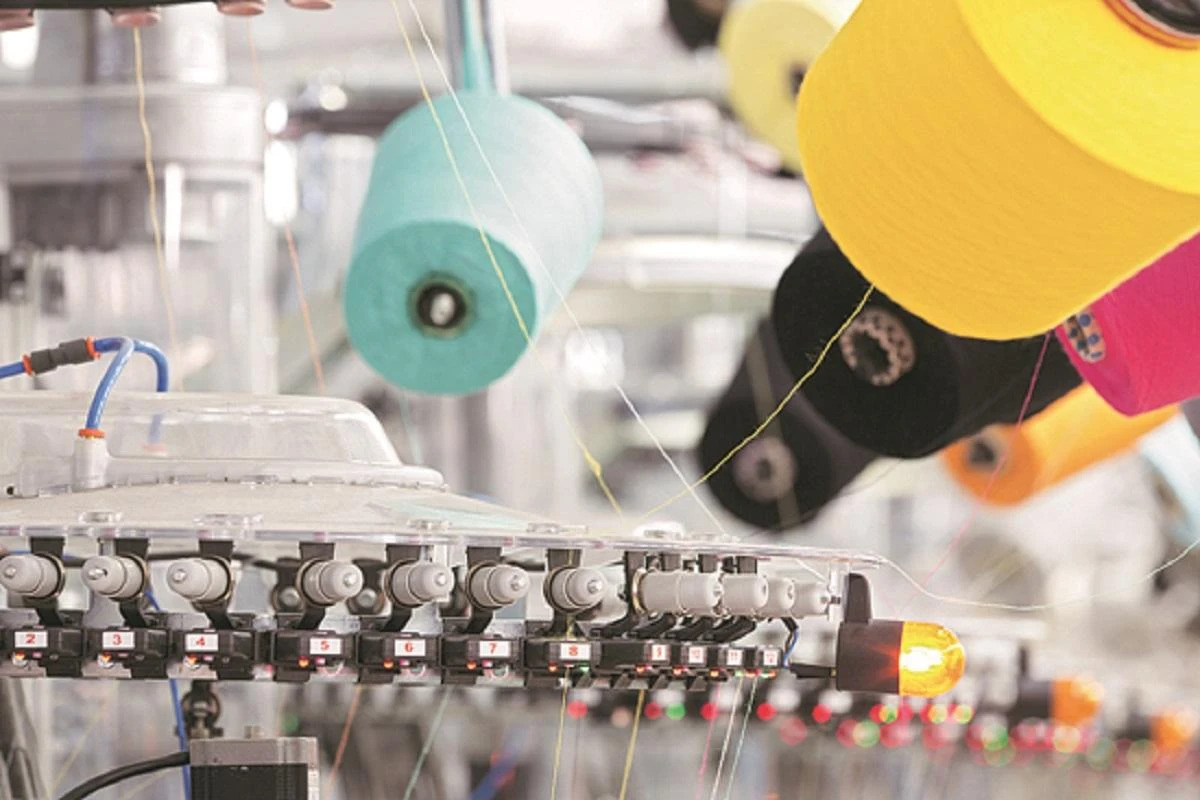
In the year 2012, when Mr Garg thought of modernising the mill, the launch of Truetzschler’s TC series card – with its 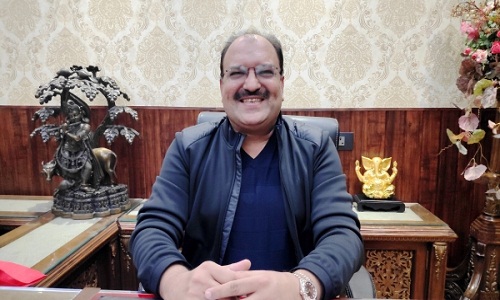 advanced features and excellent price performance ratio – came at the right time. Mr Garg modernised a section of the mill immediately. Replacement of old cards with the TC series Truetzschler cards soon changed the trajectory of the mill with increased production and better quality output. It also resulted in saving a lot of space with the reduction in the number of cards. Soon, Mr Garg started replacing all the mills’ old cards with TC series cards, until today he has a total of 58 Truetzschler cards that include TC 5, TC 8 and TC 10 cards, running on an average Ne 8’s count, feeding 12,000 rotors and producing 125 tons of yarn per day. “No other cards can run at a production rate of 135 kg/hour. My life has become more comfortable after installing Truetzschler machines in my mill”, says Mr Garg with a great sense of satisfaction.
The mill workers are also happy as the new Truetzschler cards need less maintenance. They appreciate the innovative features of the Truetzschler cards such as the precision mote knife setting PMS in licker-in zone, precision flat setting PFS and T Con, to name just a few. The working environment in the mill has also become cleaner as the waste collection system of the Truetzschler cards is very effective. Overall there is now a pleasant ambience in the carding department as the workers daily job has also become easier.
Adds Mr Garg: “With the launch of each new card model, Truetzschler raises its own technological bar and we are looking forward to ITMA, Barcelona, for the new model launch from Truetzschler, which I am sure, will offer even more user benefits”.
Latin America’s most important textile show, Colombiatex de las Americas, is being held from January 22 to 24. During the event, recent innovations in the Brazilian textile industry are announced through launches by 39 companies. In addition to offering apparel fabrics and inputs, companies introduce technological developments in machinery for faster productive processes in cutting and apparel-making, automation, design and energy efficient equipment.
The 39 Brazilian companies are members of the Texbrasil and Brazil Machinery Solutions Programs, partnerships between Abit (Brazilian Textile and Apparel Industry Association) and ABIMAQ (Brazilian Machinery Builders’ Association), with the support of Apex-Brasil (Brazilian Trade and Investment Promotion Agency).
Among Texbrasil companies are Cataguases; Covolan Têxtil; Rosset, Sancris Linhas, fios, zíperes; Santanense, Cedro Têxtil, Malhas RVB, SantaConstancia, La Estampa Tecidos & Artes, Linhas Trichê, Hudtelfa, Santista, Paramount, Indústria Denim Canatiba, Manequins Expor, Vicunha Têxtil, Nicoletti Têxtil, Incotex, Salotex, Têxtil J. Serrano, Dalila Têxtil, Creora, MPRO, Lunelli Têxtil, Innovativ, Berlan, Estrela Aviamentos, Latina, Eberle-Mundial and Pelican Têxtil.
While Brazil Machinery Solutions companies include Audaces; Orizio, Castilho; Censi; Comelato Roncato; Delta; Inarmeg;  SocioTec and Weko.
At this new edition of the textile show, the Brazilian delegation is showing visitors trends for 2019 and new developments, using fashion shows held in the Brazil space. The collection brings together inputs from member companies, which were transformed into single items, filled with colors and design, representing the charm and evolution of Brazilian fashion.
One of the main Brazil attractions will be the virtual expo on Brazil’s Industry 4.0 and a virtual reality experience of a model Industry 4.0 plant, highlighting the country and the importance of its industry. This experience is developed by ABIT and ABIMAQ in partnership with Brazil’s National Service for Industrial Training (SENAI).
During this visit, which will be led by Brazilian specialists, visitors can also access a virtual mirror. The device uses a camera to take body measurements, with the person then choosing the model and print.
“Colombia is the best scenario to show Latin America the advances and technologies in Brazil in textile and apparel production. Colombiatex is a commercial showcase par excellence that lets every visitor learn close-up about what our industries offer,” says Rafael Cervone, CEO of the Texbrasil Program. He adds that “even this year, we are very excited about our alliance with Senai, making it possible to share Brazil’s advanced manufacturing in Colombia.”
According to Patricia Gomes, Executive Director for Foreign Markets at Abimaq and the manager of the BMS program, Brazil is a reference in the machinery and equipment sector for the textile industry in Latin America in terms of quality, technology and competitiveness. “From January to November of 2018, industry exports to Latin American countries reached USD 24.3 million, which represents a 10% increase in relation to 2017, when they were at USD 22 million,” she points out.
About Texbrasil
The Brazilian Textile and Fashion Industry Internationalization Program (Texbrasil) works with textile and apparel industry companies to develop strategies for success in the global market. Over nearly 20 years, it has helped around 1500 brands to enter the export market, bringing in USD 3.6 billion in business. The Program is conducted by Abit in partnership with the Brazilian Trade and Investment Promotion Agency (Apex-Brasil).
About the Brazil Machinery Solutions Program – The result of a partnership between the Brazilian Investment and Trade Promotion Agency (Apex-Brasil) and the Brazilian Machinery Builders’ Association, the Program is aimed at promoting Brazilian machinery and equipment exports, while strengthening Brazil’s image as a manufacturer of technological and competitive mechanical capital goods. The BMS Program currently has 400 members, including industries in various sectors, such as agriculture, textile, mining, plastics, packaging and others.
About ABIMAQ
The Brazilian Machinery Builder’s Association (ABIMAQ) was founded in 1937, with the goal of working to strengthen the national industry, mobilizing the sector, carrying out initiatives in conjunction with political and economic authorities, fostering trade and international cooperation and contributing to enhancing performance in terms of technology, training of human resources and managerial modernization.
About Abit
Founded in 1957, the Brazilian Association of the Textile and Apparel Industry (Abit) is one of the most important organizations within the country’s economic sectors. It represents the productive force of 33,000 companies nationwide of every size, employing over 1.6 million workers and together generating annual revenues of US$ 36.2 billion.
The Japan Sewing Machinery Manufacturers Association (JASMA), has announced that it has been accepting exhibitor applications from major textile machinery manufacturers for the Japan International Apparel Machinery (JIAM) 2020 OSAKA since May 2018. The leading textile machinery exhibition will be held from May 20-23, 2020, at Intex in Osaka, Japan.
The show has set its exhibition theme as ‘the forefront of the future technology and master craftsmanship collaboration’, with many major manufacturers and organisations expressing their intent to participate as exhibitors, according to a press release on the show.
Since exhibitor registration opened in May 2018, the show has received many inquiries from companies and organisations in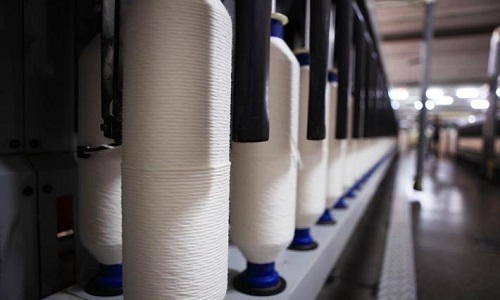 Japan and overseas. JASMA has actively promoted JIAM 2020 OSAKA to the industry stakeholders at related trade shows held in Japan, as well as at sewing-related trade shows held across Asia in 2018 (including Taiwan, Dongguan, and Korea).
JASMA has also solicited groups in Europe, such as with the VDMA German garment and leather technology association and its members, for participation in JIAM 2020 OSAKA as exhibitors and visitors.
Consequently, companies from Germany and other countries in Europe have also announced their participation at the show’s overseas pavilions. Organisers plan to engage in a wide range of promotional activities to attract exhibitors and potential visitors, in addition to conducting a publicity campaign at industry-related trade shows in Japan.
A press conference for JIAM 2020 OSAKA and the exhibition overview will also take place at DTC 2019 Dongguan, China in March; as well as at Texprocess 2019 Frankfurt, Germany in May, and at CISMA 2019 Shanghai, China in September. The events will provide specific information on topics related to JIAM 2020 OSAKA accordingly.
The EU is about to impose trade sanctions against Cambodia as a result of alleged human rights violations in the country. That means, Cambodia won’t be allowed to export goods duty-free and quota-free to the EU. Sanctions will damage Cambodia’s economy, where a $5 billion garment industry employs 7,50,000 people and is the biggest exporter.
In addition, the EU is mulling imposing tariffs on Cambodian rice for three years as a result of a surge in imports deemed to have hurt European rice producers. Progress on workers' rights in Cambodia has slowed significantly. While the government still allows some independent unions and workers'-rights organisations to operate, the space for them to advocate effectively is shrinking.
A number of labor union and human rights leaders have been targeted for official harassment, and some have been arrested or criminally charged. In several high-profile cases, labor leaders who were charged with baseless crimes in 2013 still have those charges pending against them. A law restricting freedom of association, adopted in 2015, restricts the activities of a wide range of non-governmental organisations, including those advocating on behalf of workers. Another law adopted in 2016 places onerous constraints on those who wish to form new unions.
A recent Deloitte study indicates making the right investments–such as moving supply chains closer to consumers can help distinguish winners from losers in retail. The study looked at some of the key issues for retailers in 2019, noting how this year could be the tipping point where decisions on investments that help empower the consumer could pay off big time down the road.
For 2019, the study forecasts an empowered consumer who has an increased desire for personalised services; a continuation of newer, smaller and tech-enabled competitors stealing market share; an economic climate with high consumer confidence, but a tightening monetary policy that is typically a precursor to a recession; a value chain across retail becoming increasingly compressed; and the blurring of what were once distinct industries–such as retail and technology–that now are more interconnected than ever before.
Consumers in 2019 are likely to face both headwinds and tailwinds. Tax cuts, along with nominal wage growth, have provided a boost to disposable income. But recent Fed rate increases have meant higher borrowing costs, and potential tariff increases on a wider range of goods from China could add to price pressures.
The fashion industry is yet to completely realise the potential of 3D printing technology. This lag is due to the fact that synthetic materials commercially available for 3D printing like polylactic acid are not flexible and comfortable enough to be used as textiles or in garments. They print as solids and lack any spaces that allow air to pass through them like conventional fabrics.
One promising avenue in this field is combining 3D printed panels with the traditional textiles. The adhesion of these 3D printed panels to the garment, although needs to be worked upon by fine-tuning of the printing parameters. Also, designers have researched and came up with a collection of garments modeled as the geometry of sound wave, using rubber mesh that allows the dresses to contract and stretch like a memory foam mattress. The structure compresses when the weaver sits down and springs open when they get back standing.
This design does give the flexibility 3D printing lacked in fashion, but the comfort part is still a far reach. The look of this fabric resembles fake leather and it lacks comfort and sticks to the body. Hence, obviously more research is needed, but everyone is moving in the forward direction.
3D printing is limited to its use in jewelry and athletic wear segments in fashion right now. Brands like Nike and Adidas are using this technology for manufacturing high-performance padding and shoe soles, which are generally made from foam. NASA is also using this technology to produce 3D –printed chain mail material to be used for protective armors for astronauts.
Llocal authorities in Vietnam have, lately, expressed strong concerns over some of the latest apparel and textile projects, especially those pertaining to dyeing. In fact, several areas and provinces in the country have vehemently refused to take up any project that has an investment of $100 million or more to avoid any kind of damage to the environment. Among the major cities that have rejected textile investments projects in recent times are Hanoi, Da Nang and Dong Nai.
Statistics show that over 90 per cent of foreign direct investment (FDI) in textile sector is today restricted to only apparel-only production projects (8.3 per cent of capital is used for textile and dyeing factories). With lack of adequate capacity and resources to handle dyeing projects, apparel-only projects are the ones that are getting green signal. If Provincial government continues refusing textile and dyeing projects, Vietnam will have to keep outsourcing dyeing projects for foreign partners, because it does not have fiber and fabric for export.
Corporate Knights has ranked Kering as the second most sustainable company across all industries in the world and the first in luxury and fashion. To achieve its leadership position, Kering was assessed against 21 key performance indicators covering resource management, employee management, financial management, clean revenue and supplier performance.
Kering, a luxury group and manages the development of a series of renowned houses in fashion, leather goods, jewelry and watches. Among these are Gucci, Saint Laurent, Bottega Veneta, Balenciaga, Alexander McQueen as well as Kering Eyewear. By placing creativity at the heart of its strategy, Kering enables its houses to set new limits in terms of their creative expression while crafting tomorrow's luxury in a sustainable and responsible way.
The Corporate Knights’ Global 100 rating index is considered one of the leading benchmarks for corporate sustainability world-wide and reflects the best performing businesses in relation to long term economic, environmental and social criteria. The index is a ranking of the world’s most sustainable corporations and is recognized as the joint best index in the world, for its relevance, insight, trustworthiness and convincing methodology. Rigorously analyzed against 21 key performance indicators, those corporations selected for inclusion represent the top two per cent in the world on sustainability performance.
Milano Unica (MU) 2020 S/S fair will be held at Rho Fieramilano, in Milan, Italy from Feb 5 to 7, 2019. The fair will feature the participation of The Japan Observatory. It will be co-organised by JFW and the Japan External Trade Organization (JETRO). The event will feature 31 companies/associations including nine new exhibitors.
“The Japan Observatory”, which made its debut at Milano Unica in September 2014, now marks the 10th anniversary of its participation. ‘Eco’ marks will be included on fabrics at the Japan Trend & Index booth to further promote Japan fabrics to visitors.
The Sustainable Angle’s Future Fabrics Expo, will be held from January 24-25, 2019 in London. The two-day event will focus on circular fashion, a concept perhaps most succinctly summed up as “take, make, remake,” by Eva van der Brugge, innovation manager at global sustainable platform Fashion For Good. It will also focus on the issues of waste in fashion along with visionary solutions by presenting a selection of materials that leave a lower ecological impact. It will host seminar talks — one of which includes Lukas Fuchs, a research analyst at the aforementioned charitable foundation.
The expo, in the past eight years, has mushroomed from an up-and-coming gathering held at London College of Fashion in 2011, to a must-go industry showcase, taking place in a 22,000 sq. ft. space and featuring guests from global clothing brands like Stella McCartney.