FW

"A recent report on State of Fashion 2019 by Mckinsey/BOF notes the top challenges for the fashion industry are: volatility, uncertainty, speed of changing consumer preferences and sustainability. To tackle these, the reports advises industry leaders to be nimble, digitally skilled, experiment with new trends Mckinsey predicts a lower growth rate of 3.5 per cent for 2019 over 4.5 per cent in 2018. However, this growth rate is likely to differ by geography and segment. This calls for building resilience and productivity improvements."
 A recent report on State of Fashion 2019 by Mckinsey/BOF notes the top challenges for the fashion industry are: volatility, uncertainty, speed of changing consumer preferences and sustainability. To tackle these, the reports advises industry leaders to be nimble, digitally skilled, experiment with new trends Mckinsey predicts a lower growth rate of 3.5 per cent for 2019 over 4.5 per cent in 2018. However, this growth rate is likely to differ by geography and segment. This calls for building resilience and productivity improvements.
New products, business models to tackle novelty issue
According to a survey in Britain, one in three young women considers clothes to be old after wearing them once or twice. Also, an average person buys 60 per cent more clothes compared to 15 years ago. They are also retained for only half as long time. To solve the challenge of newness, the brands need to respond quickly to changing trends, launch the right products and innovate their business models.
Technology, social media to reduce gratification time
From in-store assistants of brands and retailers, consumers’ inspirations have shifted to multiple sources like the social media, influencers and celebrities. According to a 2017 study, about half the respondents were influenced by bloggers, influencers compared with just 20 percent placing faith on the in-store assistants. To minimise the time between the want moment to have moment, players need to use technology solutions. Also, offline retailers need to promote products in-store with social / influencer credibility with real-time intelligence.
Emphasis on key areas to guarantee returns
With a potential slowdown in global economy by 2020, players will look for key opportunities to boost productivity compared to previous years. They need to work on certain key areas to get maximum returns on invested capital. This can be achieved by using technology/big-data to drive decisions along with human intuition, using cutting-edge prediction model to decide volume bets, shifting to sophisticated stock deployment using cognitive technology enabled replacement or replenishment models.
Start-ups to improve market relevancy
As per Mckinsey millennial survey, young generations are more likely to follow up-and-coming brands. These brands show high saliency and engagement in social media. The incumbents need to build a way to stay relevant by learning how to think small, working with start-ups, building innovation bandwidth internally or through an incubator
Exploring demand model through data analytics, automation
Innovations in the data analytics and automation will enable players to explore "on demand" model of fulfilling demand. However, with the help of social media consumers are establishing trends as opposed to brands and retailers. To retain their brand identity players need to induct data based demand sensing tools in the development process and nearshore products
"The 2013 Rana Plaza collapse in Bangladesh and the 2012 factory fire in Pakistan city kick started a series of litigation processes, public awareness campaigns and safety inspections kick-started in the aftermath of the two fatal incidents. Although some compensation was paid to the victims' families, but did these tragedies succeed in teaching a lesson to European companies, consumers? Interestingly a Bangladeshi court recently decided to evict European safety inspectors from its factories. This group of inspectors comprising over 200 firms — including global clothing giants such as H&M and Zara-owner Inditex —are signatories to the Accord on Fire and Building Safety in Bangladesh, sealed after the Rana Plaza factory collapse in 2013."
 The 2013 Rana Plaza collapse in Bangladesh and the 2012 factory fire in Pakistan city kick started a series of litigation processes, public awareness campaigns and safety inspections kick-started in the aftermath of the two fatal incidents. Although some compensation was paid to the victims' families, but did these tragedies succeed in teaching a lesson to European companies, consumers?
Eviction impacts ties and economy
Interestingly a Bangladeshi court recently decided to evict European safety inspectors from its factories. This group of inspectors comprising over 200 firms — including global clothing giants such as H&M and Zara-owner Inditex —are signatories to the Accord on Fire and Building Safety in Bangladesh, sealed after the Rana Plaza factory collapse in 2013.
Bangladesh government established a national regulatory body to take over Accord’s work. In May, a Bangladesh court ordered the European safety inspectors to halt operations following a petition filed by a local readymade garment supplier against the agreement. The European inspectors' inability to inspect factories is likely to result in severing of ties with many suppliers and also have a negative impact on Bangladesh's economy.
A survey by ActionAid Bangladesh, an international non-profit group, revealed earlier this year that nearly 48 per cent of the survivors of Rana Plaza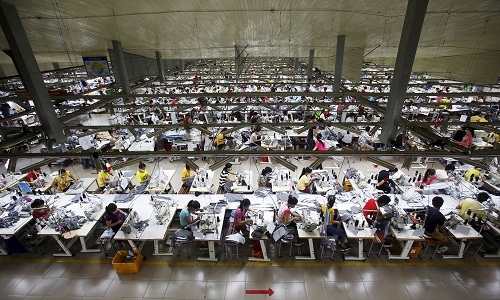 incident are out of employment due to their physical and mental weaknesses. The report stressed apart from mental trauma, many survivors suffer from headaches as well as hand, leg and back aches, which have rendered them unable to return to work in Bangladesh's multibillion dollar garment industry.
Trial and pressure
In 2015, a group of people affected by the Karachi factory blaze filed a case against KiK at a German regional court in Dortmund. They are demanding €30,000 in compensation from KiK and accuse the company of being jointly responsible for inadequate fire protection measures at the Ali Enterprises garment factory. KiK however rejects the claims. The company has agreed to pay a total of $5.15 million (€4.7 million) to the affected families and survivors following a negotiation overseen by the International Labour Organization. It however refused to make compensation payments for injuries incurred, as it could not be held responsible for the fire.
Policies to safeguard worker’s rights
In September, Saage-Maass, a human rights activist and lawyer working with the European Center for Constitutional and Human Rights in Berlin blamed lack of certification process of these tragedies. It is clear that pressure on European companies to ensure safety and better conditions for workers in South Asian factories has increased in the past few years.
At the same time, the Bangladeshi court's decision to evict European inspectors shows how local capitalists can pressure their governments into ignoring workers' safety to maximise profits. Rights groups say it is crucial that European governments pile pressure on South Asian leaders to force them to implement proper policies to safeguard workers' rights.
"Export of knit T-shirts by India registered an export value of $570.17 million in Q2 FY 18-19. This is a 9.62 per cent decline over the previous quarter. This trend of falling exports is an indication for exporters to move towards more value added apparel exports, rather than competing with countries like Bangladesh. In Q2 FY 18-19, India’s exports of knit T-shirts to the US declined 13.50 per cent to $126.52 million. Export of cotton T-shirts declined by 10.80 per cent while those of T-shirts made from other fibers declined by 19.32 per cent."
 Export of knit T-shirts by India registered an export value of $570.17 million in Q2 FY 18-19. This is a 9.62 per cent decline over the previous quarter. This trend of falling exports is an indication for exporters to move towards more value added apparel exports, rather than competing with countries like Bangladesh.
The dip countrywise
USA:
In Q2 FY 18-19, India’s exports of knit T-shirts to the US declined 13.50 per cent to $126.52 million. Export of cotton T-shirts declined by 10.80 per cent while those of T-shirts made from other fibers declined by 19.32 per cent.
Nigeria:
Nigeria’s total knit T-shirts imports from India were valued at $ 23.27 million in Q2 with growth of 43.11 per cent over the previous quarter. India exported T-shirts made of cotton and other textile fibers. Cotton T-shirts exports totaled $17.31 million whereas T-shirts made from other fibers totaled $5.95 million.
U.A.E.:
India’s exports of knit T-shirts to UAE were worth $136.88 million in Q2 FY 17-18, a drastic fall of 40.76 per cent. Exports of cotton T-shirts totaled to $43.69 million, a fall of 14.25 per cent in Q2 FY 18-19 over the previous quarter. Exports of T-shirts made of other fibers totaled to $24.45 million with a negative growth of 4.49 per cent over the previous quarter.
Germany:
India’s knitted T-shirts exports to Germany totaled to $53.51 million in Q2 FY 18-19 with negative growth of 3.50 per cent over the previous quarter. Cotton knitted T-shirts rule the basket with an export value of $37.99 million. T-shirts made of other fibers perceived a positive growth of 12.07 per cent to $13.18 million in Q2 FY 18-19.
UK:
United Kingdom’s knitted T-shirts imports from India witnessed a fall of 12.22per cent in the Q2 FY 18-19 to $40.44 million. Cotton T-shirts exports dropped 14.81per cent to $31.13 million. T-shirts made of other fiber were exported to the UK with a value of $7.45 million, growth of 1.78per cent.
France:
Exports to France totaled to $26.41 million in Q2 FY 18-19. Cotton T-shirts exports dropped 41.77per cent in the Q2 over the previous quarter, with exports totaling to $20.26 million.
South Africa:
India’s knitted T-shirts exports to South Africa have improved by 48.90 per cent over the previous quarter in the Q2. India exported only T-shirts made of cotton, synthetic fibers and other fibers to South Africa. Out of which T-shirts made of other fibers dropped by 33.46per cent, totaling to $3.5 million. Cotton T-shirts exports totaled to $19.61 million in Q2 FY 18-19 with a growth of 87.30per cent over the previous quarter.
The Netherlands:
Knitted T-shirts exports to the Netherlands too dropped by 42.03 per cent to $17.97 million in Q2 in FY 18-19 over the previous quarter. Cotton T-shirts exports totaled $11.4 million and T-shirts made of other fibers was $5.29 million in the Q2 FY 18-19.
Italy:
India’s knitted T-shirts exports to Italy dropped in the Q2 FY 18-19 over the previous quarter by 12.85. Exports value totaled $11.26 million in Q2 FY 18-19. Cotton T-shirts exports dropped 10.20 per cent over the previous quarter, while T-shirts made of other fibers dropped 25.79 per cent.
With consumer attitudes beginning to change, people are becoming much more aware of the environmental impact of their choices, and the need to reduce, reuse and recycle gowns are made from Finnish birch trees. The dress was designed using innovative loncell technology.
Ioncell uses a range of materials, including wood, recycled newspaper, cardboard and old cotton, to make fabrics with less of an environmental impact than the processes used to make cotton and viscose. It can also be recycled. A fabric made from Ioncell is soft to touch. It has a lovely sheen and falls well. Most importantly, it’s an environmentally sustainable option.
Making durable, recyclable clothes from wood means carbon emissions can be reduced since the carbon is stored in the lifespan of the fiber. Finland’s forests are also sustainably grown – each year, the growth actually exceeds harvest – and they require no watering. Ioncell produces cellulose-based textile fibers, like viscose, but unlike viscose production, the process uses a safe, non-toxic ionic liquid instead of harsh chemicals, which can end up polluting local water sources.
The fibers are biodegradable and don’t release harmful microplastics into the environment as they break down, or when they’re washed. The technology is still at the research stage, but the aim is for an Ioncell pilot production line by 2020.
The US is seeking to boost bilateral business with Bangladesh over the next three years. The value of two-way trade is over $7.47 billion. Trade is projected to be even higher in future between the two countries in the days to come.
The US is the single largest export destination for Bangladesh, the bulk of which is covered by apparel products. Apparel is 16 per cent of Bangladesh’s exports to the United States. The country’s export earnings are 2.3 per cent higher than last year. The main export are woven garments followed by knitwear products and home textiles and caps. The US procures over 25 per cent of Bangladesh’s woven products, nine per cent of knitwear and 18 per cent of home textile products.
Until October, Bangladesh’s apparel exports to the US rose 31 per cent over last year. During July to October, earnings from wovens rose 24 per cent. Earnings from knitwear exports saw a gain of eight per cent. This gain can be attributed to two major factors: global shift in sourcing strategy, which is commonly known as China plus sourcing strategy, and increasing work orders due the ongoing trade war between the US and China.
White Street Market will be held in Italy from January 12 to 14, 2019. The show will offer three days entirely focused on sustainability and fashion culture. It will not be the usual trade show but a true B2C meeting point where final consumers and insiders can meet, interact and discover new trends of the main players of international street culture.
The June 2018 edition attracted around 9000 visitors. This time the show expects to replicate and register higher attendance. It will host about 60 top brands, including young minded ones like Timberland, New Balance, Dickies, Iuter, Pony, Daily Paper, and fashion collections such as Nana-Nana and Last Heirs. It will also host over 25 events including happenings, presentations, talks and workshops.
A special space will be given to skateboarding. Two women’s skater crews–an Italian and an American–will perform on a special half pipe to be installed in the location, alongside with other initiatives related to this popular sport.
A capsule of fashion films focused on brands and urban fashion system realities will be presented. Among the movies will be Skate Kitchen and We Margiela. A significant presence of eco-friendly fashion, design and beauty brands will complete the event.
Companies are finding ways to improve the impact of their operations and products on the environment. The EU has developed a variety of initiatives, including the Circular Economy Action Plan and the Single-Use Plastics Directive. The initiatives emphasise upcycling, recycling, resource efficiency and reclamation.
Indorama Ventures has formed a joint venture with Loop, which may prove to be the biggest contributor to the development of a circular economy within the textile industry, and is poised to take the recycling of polyethylene therephthalate PET fibre-based products to the next level.
The joint venture—which has received backing from global giants such as Coca Cola, Danone, Evian, L’Oreal and Pepsi—makes use of Loop Industries’ technology, which allows plastics of little or no value to be diverted, recovered and recycled endlessly into new virgin quality PET.
PrimaLoft has launched a new product made from 100 per cent recycled PET which biodegrades when exposed to microbes in landfill or ocean water. However, it remains highly durable throughout its usable life cycle. The company expects 90 per cent of its insulation products to incorporate 50 per cent post-consumer recycled content by 2020. The global textile industry produces around 60 million tons of waste annually. Of this only 32 per cent is reused or recycled.
New recycled fibers and technologies are allowing the denim industry to become increasingly good at making old feel and look new. Lenzing is ramping up the amount of waste it’s recycling for Refibra—a request that’s coming directly from the denim market. In 2019, Lenzing will begin offering Refibra made with 10 per cent more post-industrial cotton, increasing the amount of waste recycled from 20 per cent to 30 per cent.
Lycra has made strides to improve performance of stretch technologies, and advance both their comfort and sustainability in denim. The company’s latest innovation, Lycra T400 with EcoMade technology, maintains the stretch, recovery and retention characteristics of Lycra T400 fiber but with a sustainable twist.
Lycra T400 with EcoMade comprises 68 per cent sustainable fibers. Fifty per cent of the fiber is made from recycled PET and 18 per cent made from plant-based materials. The fiber fits in nicely with brands that have 2020 sustainability goals to meet, and lives up to the performance standards of its popular predecessor.
Mills are also creating circular economies in their own production. Italian denim mill Berto has introduced Pianeta, a fabric made with 35 per cent cotton and 65 per cent cotton yarn regenerated from its own production waste.
Bangladesh’s readymade garment industry has forayed into a few new areas of late. The country has been exporting winter wear to West for around 30 years. Eighty per cent of the products made by the country's export-oriented apparel factories were for long limited to traditional items like blankets and sweaters generally made of cotton.
Germany tops the countries that import large volumes of winter clothes from Bangladesh. Others are Europe, the US and Australia. Suits and blazers are major exports. Manufacturers find them as highly promising value-added products. Apart from traditional readymade garment makers, specialised tailoring houses are now engaged in making suits and blazers for exports.
Still at a nascent stage, suit-blazer factories are at present dominated by five or six houses. One of them is capable of shipping readymade suits worth $26 million a year. It aims to export suits and blazers worth $100 million by 2021. Orders from industrialised countries like the UK, the US, Japan and Germany continue to pour in.
Great prospects notwithstanding suit manufacturing sector is plagued by a lot of drawbacks. The most glaring is the lack of skilled hands and required technology.
PETA France has announced the winners of third edition of 2018 PETA Vegan Fashion Prize, which is the third edition of the awards. Burberry, Versace, Maison Margiela, Jean Paul Gaultier and Diane Von Furstenberg emerged winners of the Biggest Luxury Fashion Moment award in the high-fashion segment. The awards in the Biggest High-Street Moment category were bagged by Comptoir des Cotonniers, Promod, Princesse Tam Tam and Lacoste.
The developer of fake-fur via recycled plastic bottles, Ecopel, bagged the Innovation Award while the Best Vegan Shoe Collection went to Studio Céleste, the footwear line of Galeries Lafayette. UK-based e-retailer Asos bagged the Most Progressive Retailer Award as it banned dealing with collections made of cashmere, silk, duvet, feathers and mohair across its platform.
Other award winners include: Magnethik for Best Wool-Free Coats, Ashoka Paris for Best Vegan Bags, and Napapijri for Best Cruelty-Free Parkas.