FW

The Asia-Pacific Trade and Investment Report (APTIR) 2018 by the United Nations Economic and Social Commission for Asia and the Pacific (ESCAP) notes an accelerated imposition of restrictions on trade in goods and services, and more reservations on Foreign Direct Investment (FDI). The United States-China trade tensions have also begun to disrupt existing supply chains and dampen investor confidence, as evidenced by the deceleration in trade growth after the first half of 2018. If the trade tensions remain, export growth may slow to 2.3 per cent in 2019, compared to a nearly 4 per cent growth in export volume in 2018. FDI inflows to the region are also expected to continue in their downward trend next year, following a 4 per cent drop in 2018.
Tariff hikes are expected to cut global GDP by $150 billion, and regional GDP by a little over USD40 billion. Importantly, as many of the main export industries in the region are relatively labor-intensive, a contraction of export could spell at least temporary hardship for many workers. At a minimum, Asia and the Pacific will see a net loss of 2.7 million jobs due to the trade war, with unskilled workers -often women- shouldering more severe impact.
The absence of a factory to process hides and skin into leather is hindering the growth of the leather industry in Uganda. The country has seven medium-sized leather tanneries and several small ones, with an installed capacity to process close to 10,000 hides and 47,000 skins per day, but no factory that processes hides and skins into final leather. As a result, many Ugandans prefer imported leather products since they feel domestic products are of poor quality.
The situation has robbed the local industry of a potential market and a productive ground to breed their businesses and brands to grow and be more competitive. Uganda’s small-scale entrepreneurs are encouraged to invest in the textile and leather industry in the country.
They are being urged to start tanning the tides from Uganda as opposed to buying expensive leather from other countries. Uganda has the potential to produce 1.4 million cattle hides, 3.1 million goatskins and 0.68 million sheepskins annually. Nonetheless, the collection rates currently average at 1.2 million hides, 2.4 million goat skins and 0.54 million sheepskins.
Entrepreneurs are urged to think beyond the business confinement of their national boundaries, casting their network of opportunities beyond the east African region and into the global market.
Recent Statista figures reveal in 2017 Pakistan imported $240 million worth of used clothing making it the world’s largest importer in this category. The flea markets known as Landa Bazars specialise in selling used clothes in the country. These markets are found in all major cities and cater to middle-class and poor customers looking for moderately priced warm clothing for a couple of weeks of cold weather.
Pakistan has a huge domestic textile industry that meets the needs of the people with relatively cotton clothing for the rest of the year. Pakistan is also a big exporter of readymade garments. The top exporters of used clothing included the United States ($648 million), Germany ($371 million), the United Kingdom ($348 million), China ($219 million) and South Korea ($214 million). The top importers in 2016 were Pakistan ($206 million), Ukraine ($166million), Kenya ($131million), Malaysia ($129million) and Ghana ($126 million).
According to key findings from a new study of 2,000 shoppers, who were polled as part of tech company True Fit’s ‘Fashion Derailed’ report, 77 per cent women choose not to purchase clothing online as they are unsure of what size to buy. Meanwhile half of them purposely avoid certain retailers due to their unpredictable fits and sizing.
The research also estimated that Brits amass £32,951 worth of unworn clothing in their wardrobes over their lifetime, primarily due to difficulties in choosing the right size when shopping online. Mintel data estimates British women spend £29.4 billion on clothing this year, though 45 per cent of female shoppers in the UK admit to buying clothes online which they never wear and 44 per cent acknowledged that they wore an item they online only once in their lifetime.
As per a study, Britishers admit they only wear three-quarters of the clothing in their wardrobes while online jeans top the list for both men and women as the trickiest fashion item to buy online. Trousers, boots, dresses, and heels complete the top five lists of fashion items that prove most difficult to buy online.
The next edition of Première Vision will be held in Milan’s Superstudio Più on May 28-29, 2019. The following 2019 edition happening in London will be held on December 4-5, 2019. The first London edition attracted 2,344 visitors, increased by 17 per cent against November 2017. Out of total visitors, 53 per cent were international. Out of these, 48 per cent were Turkish followed by Italian, Spanish, French and German.
Attendance by the US visitors, which numbered among the show’s top 10 visiting countries, declined by 25 per cent
Pakistan will increase trade and investment ties with Japan. The country wants to increase its exports of textile products to Japan and is trying to get Japan to grant duty free access. Meanwhile they are also trying to attract more Japanese investment to Pakistan. There are currently some 86 Japanese companies in Pakistan. More are coming in. Japan sees Pakistan as a country which offers business and employment prospects.
Japan-Pakistan relations are embedded in business, aid, politics and security. Pakistan has a long standing trade and investment relationship with Japan and wants to build upon the reserves of historical linkages, goodwill and understanding. Pakistan provides Japanese investors full investment security and an one window operation.
Pakistan-Japan relations have their roots in the ancient civilization of Gandhara. Since the creation of Pakistan in 1947, the two countries have enjoyed cordial and friendly relations. Right now Japan focuses on small-scale socio-economic projects mostly run by NGOs in Pakistan. Japan would be better served by participating in big national mega-projects such as railways, roads, tunnels, ports, and shipping.
Japan assigns high value to its bilateral relations with Pakistan since the nature of their cooperation is multidimensional. Japan has helped Pakistan in the areas of humanitarian assistance, social security and infrastructure development.
Shetland fleece has won the 2018 British Wool National Golden Fleece competition, in association with JG Animal Health. Entered by Robin and Margaret McEwen-King, the fleece has been recognised as the best in the UK. The 2018 Reserve Champion title was awarded to Sam McConnell from Ballymartin, Co Down with a Rouge fleece. The results were announced on December 13, 2018 at The British Wool National Golden Fleece Awards Presentation.
The Golden Fleece is a nationwide competition open to all British Wool producers, aiming to highlight the quality of British wool. Producers from England, Scotland, Northern Ireland and Wales are invited to enter their fleeces at any of the eleven British depots across the UK. In addition, the champion fleeces from 17 regional agricultural shows attended by British Wool were automatically entered into the four country finals.
The competition attracts entries from all corners of the UK, and the final eight include two fleeces from each home nation - one traditional carpet type, and one speciality/knitwear type. The winning Shetland fleece was entered into the final having won the speciality/knitwear category in Scotland.
"The Tirupur’s garment industry employs nearly 7 lakh people directly. Until last year, the industry grew at a rate of 20 per cent year-on-year. The cluster, last year, witnessed negative growth for the first time in nearly a decade. After GST was implemented, the cluster lost nearly 5.4 per cent of total drawbacks and incentives that it previously enjoyed. This also included 5.5 per cent excise rebate. To protest against this, exporters made strong representations to the government. The Commerce Ministry then increased MEIS from 2 per cent to 4 per cent, but also reduced ROSL from 3.6 per cent to 1.7 per cent. After all these adjustments, exporters enjoyed only 7.7 per cent of drawbacks."
 Global festive season has brought a ray of hope to Tirupur, which recently witnessed one of its worst years. Demonetisation coupled with the implementation of Goods and Services Tax (GST) system halted growth at India’s largest knitwear and readymade garments cluster. Demonetisation proved to be a big blow as it sucked out liquidity from the market. Just as the sector struggled to get back on its feet, GST brought the garments industry back to the brink of death.
The Tirupur’s garment industry employs nearly 7 lakh people directly. Until last year, the industry grew at a rate of 20 per cent year-on-year. The cluster, last year, witnessed negative growth for the first time in nearly a decade. After GST was implemented, the cluster lost nearly 5.4 per cent of total drawbacks and incentives that it previously enjoyed. This also included 5.5 per cent excise rebate. To protest against this, exporters made strong representations to the government. The Commerce Ministry then increased MEIS from 2 per cent to 4 per cent, but also reduced ROSL from 3.6 per cent to 1.7 per cent. After all these adjustments, exporters enjoyed only 7.7 per cent of drawbacks.
Ethiopia emerges as a viable option
The bleak outlook at Tirupur’s garment exports market has forced many exporters to look for other avenues of growth. One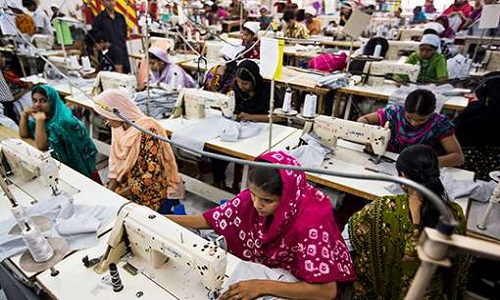 such destination is the African country Ethiopia which offers several incentives. Betting on the prospects, SCM Garments from Tirupur recently set up a 500-machine unit in Ethiopia. The biggest advantage, according to M Ashok, Chief Marketing Officer SCM Garments, is duty-free entry into both the European Union and India. Also, labor in the country is cheap and abundant.
However, according to Kumar, efficiency levels in the country are low, given its raw and untrained labor. This takes away most of the benefit of lower costs. Also, the labor isn’t reliable and can only produce basic styles of garments. They will require atleast a few months of training to learn new garmenting styles.
Growth of domestic market
Another revenue stream that several garment exporters in Tirupur have been turning to is the domestic market. The apparel market in India is growing at nearly 10 per cent every year. Fall in exports led to a huge number of exporters, especially the smaller ones, shifting to the domestic market to cater to companies such as Reliance, Big Bazaar, Pantaloons and Arvind Mills. Warsaw International makes garments for Puma, and is now manufacturing and selling to Puma for its Indian customers.
Falling rupee gives exporters a better value for their goods against the euro and dollar. Exporters expect the rupee to fall further. They are requesting the government to announcement new schemes in the budget in case the value of rupee increases after the general elections next year. They also hope that the policymakers incorporate both domestic and international factors while formulating new policies or exporters are in danger of being washed away.
China’s cotton stocks have drastically fallen, from 60 million bales in 2014 to just under 13 million bales. This dramatic reduction has been due to three years of aggressive selling with 11.5 million bales sold in the latest annual round of selling which ended in September. China was able to increase reserves dramatically as additional imports were allowed to offset purchases from the domestic crop.
In 2015-16, China’s shift away from a price support program for cotton caused internal prices to fall, which helped to boost consumption but also helped to lower production. The gap between the two grew to nearly 15 million bales. From 2012 to 2015, the gap between cotton consumption and production in China was less than five million bales.
At the same time, China stopped issuing additional TRQ (Tariff Rate Quota) import licenses under its sliding-scale quota category. The belief is that the country wishes to maintain around 11.5 million bales. World cotton production for 2019 is forecast to be down, led by Pakistan, China, and India more than offsetting higher production in Brazil.
Trade is projected up with higher Brazil exports and rising Pakistan demand. Global use is down sharply mainly because of China’s lower-than-expected annual growth amid uncertain economic prospects and textile exports.
Welspun is planning to expand its capacity by setting up a fully integrated and independent flooring plant in Telangana. The company will manufacture carpets, area rugs and carpet tiles in this facility. It will invest Rs 11 billion in this facility with a capacity to produce 27 million sq. mt per annum. The company is planning to begin commercial production in the new plant by end of 2019.
Welspun also plans to manufacture products for specialised use in healthcare, fire departments, aerospace, defense, automobile, railways and other utilities. These products include specialised features such as fire retardants, stain resistant, anti-bacterial, PET resistant, and soil resistance, among others. The company also plans to tap opportunities in the bedding segment.
Another high potential segment that Welspun plans to foray into is global wellness economy. The company has partnered with Stay Well to infuse wellness into hotel rooms with features and programs to maximise the guest experience and minimise the impact that travel has on the human body.