FW

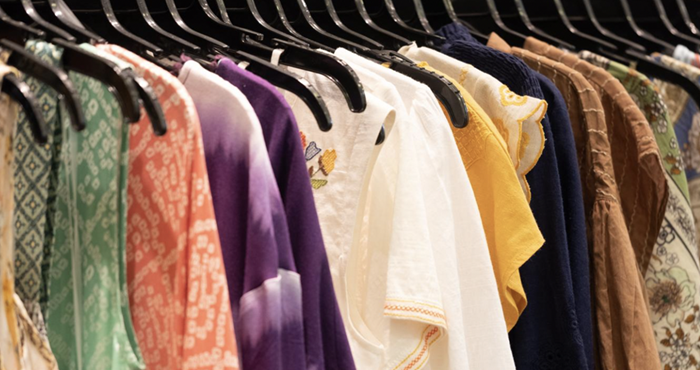
The Sensitive Fabrics collection by Eurojersey for the Spring/Summer 2020 season focuses on its technical performance. The collection is expressed in two macro themes centred on the Ecoprint and digital printing processes. The company uses the Ecoprint technology to reproduce tone-on-tone and contrasting affects on the smooth surface of Sensitive Fabrics, thanks to the use of lacquers, color and metal pigments, which create patterns with amazing effects of transparency and high-definition luminous contrasts.
In the new collection, brocade effects are reminiscent of the 18th century-style charm of decoratively embossed textiles and precious jacquard-like patterns applied to the surface of Sensitive Fabrics; at the same time, the use of metallic pigments and glitter confer sheer glamour thanks to the luminosity of the lurex effect. A play of transparent effects in neutral shades is intertwined with a foliage pattern traced in white pigment. A sequence of shiny-matt effects spring from a cascade of lacquers or metallic glitter, combined with white pigments on the extremely smooth surface of Sensitive Fabrics.
Digital printing, thanks to 3D print technology, successfully creates designs and structures which are textural-looking and endowed with realistic 3D effects. With this printing technology, colors and graphic designs benefit from an extremely precise definition, as well as generating high-resolution textures.
Khondoker Latifur Rahman has been elected as first Vice-President and Mozaharul Haque the second Vice-President while Zahir Uddin Haider has been elected as Vice-President and Monir Uddin Ahmed as Vice-President Finance of Bangladesh Garments Accessories & Packaging Manufacturers & Exporters Association (BGAPMEA)
BGAPMEA started operation in 1989. The association is the prime organisation to safeguard the interest of Garments Accessories and Packaging manufacturers & exporters of the country. The BGAPMEA represents more than 1600 export-oriented garments accessories & packaging industries in the country. The GAP sector acts as a backward linkage industry of RMG as well as other export oriented industries like frozen food, pharmaceuticals, ceramics, leather goods, vegetables, etc. Now almost all requirements of garments accessories & packaging of readymade garments and other export oriented industries are being met up locally which is about 95 per cent.
Lenzing is expanding its environmental leadership commitment. The group is changing from coal-fired boilers to gas-fired boilers in China. Lenzing, a leader in sustainability in the textile and nonwovens industry, is passionate about addressing the challenges the industry is facing. Lenzing plans to reduce its CO2 emissions by 30 per cent by 2030.
Lenzing supports the Fashion Industry Charter for Climate Action. Signatories will work together on topics like decarbonization of the production phase, selection of climate friendly and sustainable materials, low-carbon transport, improved customer dialogue and awareness of all stakeholders as well as exploring circular business models.
Lenzing also supports Refibra technology, a circular business model which uses cotton scraps as a raw material for the production of a new virgin fiber. These initiatives underpin the Lenzing Group’s ambition to help greening up the textile and the nonwovens industries by extending collaboration with partners in the industry.
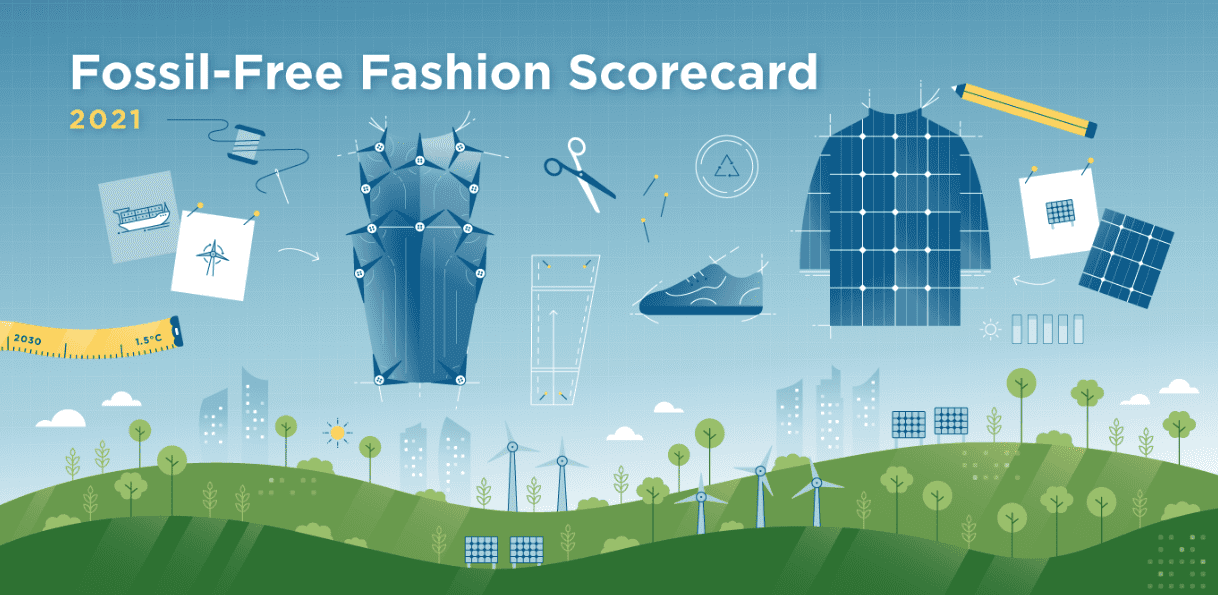
Business has an increasingly vital role to play in accelerating the shift to a low-carbon and climate-resilient economy. Fashion plays a crucial role on both sides of the climate equation – as a contributor to greenhouse gas emissions, and as a sector with multiple opportunities to reduce emissions by the targeted 30 per cent while contributing to sustainable development.
Clothing manufacturers in Laos are encountering ongoing hurdles to survive and thrive. Shortage of skilled labor is a chronic problem. Customers want quality products and manufacturers hold little power to bargain as their costs rise while the prices received remain constant.
Laos is unable to compete due to a lack of raw materials within the country and the high transportation costs with no direct sea routes. In 2015, Laos had 92 garment factories with just 78 now remaining. Seven of these are owned by Lao businesses, seven are joint ventures and the remainder are owned by overseas interests.
The Japanese are large investors in the garment sector, followed by Thai nationals. Currently, a total of 50 factories are members of the association with 40 manufacturing exclusively for export and six catering to the domestic market as well as exports. These factories employed 26,000 people at the beginning of this year with women comprising 90 per cent of the workforce and 0.5 per cent foreigners.
Most foreign employees are in the administration and technical divisions, especially those from Thailand, Japan, China, the Philippines and Sri Lanka. Laos’ garment exports in 2016 were down by 7.25 per cent compared to 2014. The main export markets are the EU, Japan, the US and Canada.
Kering with global innovation platform, Plug and Play launched the Kering Sustainable Innovation Award in Beijing. The award aimed to fast-track sustainable innovation within the luxury and apparel sectors in Greater China. It offers a prize that included comprehensive mentorship and networking, travel to Europe and the US to meet fashion and innovation leaders, and a € 100,000grant to the top winner.
Inspired by Kering’s motto ‘Crafting Tomorrow’s Luxury’, the award identified promising change-making startups and technologies with a positive environmental and social impact on Greater China . In particular, Kering sought startups that address challenges in terms of alternative raw materials, green supply chain, retail & use and the circular economy.
The highlights of the event were the two panel discussions featuring experts in sustainability, fashion and innovation. The conversations brought forward enlightening thoughts concerning accelerating Chinese innovation for a more sustainable luxury and fashion industry.
Indorama Ventures Public (IVL) has entered into an agreement to acquire UTT Beteiligungsgesellschaft mbH. UTT is one of the leading suppliers of airbag fabrics and other highly specialised solutions in technical textiles. The company has two sites in Germany and Mexico with approximately 420 employees and produces around 70 million square meters of fabrics.
Subject to regulatory approvals, UTT will be acquired by PHP Fibers, a company owned by Indorama Ventures and Toyobo. With this acquisition, Indorama Ventures will strengthen its portfolio in the airbag sector and add the UTT weaving sites in Germany and Mexico to the yarn production sites in Germany, the USA and the JV participation in China as well as to the PHP Fibers weaving mills in Germany and the USA established with the expertise of Toyobo.
The combination of both companies will form a leading integrated manufacturer of airbag yarns and textiles globally to offering wider choices to its customers in a more cost efficient manner. The acquisition clearly demonstrates the strategic importance of the Automotive Division for Indorama Ventures. IVL is not only focusing on tire yarns, but also on other trendsetting segments such as airbags.
India’s new simplified return forms for goods and services tax (GST) will be rolled out from April 1 next year. The refund process is being further streamlined to make it completely online and friendly for taxpayers.
In the first eight months (April-November) of the current fiscal, the government has collected over Rs 7.76 lakh crore as GST. The 2018-19 budget had estimated annual GST collection at Rs 13.48 lakh crore, which means a monthly target of Rs 1.12 lakh crore.
The Revenue Department, whose monthly target from GST is around Rs 1 lakh crore, was short by Rs 4,000 crore in GST collection in November. GST collection in November was Rs 97,637 crore. The department wants to raise that monthly target to Rs 1.10 lakh crore.
If India permits 100 per cent FDI in multi-brand retail trade it will improve the ease of doing business for the sector. To overcome the barriers and enable a smooth growth and harmonious coexistence of traditional and modern retail, a single cohesive national retail policy should adequately address all concerned areas.
Several steps need to be taken, including strengthening labor laws by regularising policies around part-time labor to ensure greater participation of women in the workforce; and reviewing food safety policies to update archaic laws governing stocking limits, weights and measures, labeling, and taxes on expired food items. Real estate constraints for retail expansion should be removed by creating dedicated retail special economic zones as well as simplifying regulations and real estate approvals for kiranas to expand their stores.
Improved access to capital will help retail business especially traditional retailers. With a simplified, cohesive policy and a focused effort on modernising the traditional retail sector, it is possible to create multiple wins such as higher growth of the sector, larger traditional retail stores under regulatory compliance, and improved back-end efficiency with a lower overall cost to serve. The current foreign direct investment policy permits overseas players to hold 51 per cent stake in an Indian retail company.
With readymade garment exporters losing competitiveness due to lower rates of export incentive scheme, exporters in northern India have requested the Centre to immediately review the new rates to boost the exports. Last week, the Central Board of Indirect Taxes and Customs (CBIC) slashed duty drawback rates on cotton, man-made and blended garments. The new drawback rates will be effective from December 19, 2018
The duty drawback rates for apparel industry have decreased for most garment categories such as cotton, man-made and blended. In a letter written to the Finance Ministry, the Apparel Export Promotion Council (AEPC) has pointed out the move has come as a setback for the industry which is already losing global market share due to reduced competitiveness after the implementation of GST.
According to industry, around 30-40 per cent of exporters have already started utilising their capacity to cater to the domestic demand. The domestic market is pegged at around Rs 3.25 lakh crore and is almost three times more than the exports market. However, manufacturers having deep pockets can sustain in the domestic market.
Child labor has fallen in Cambodia’s garment factories. A survey of almost 500 licensed garment export factories found 10 cases of child labor, down from 74 in 2014. However, there are concerns that children turned away from factory jobs may be working elsewhere, including homes where garments are produced by subcontractors.
The subcontract is a big, unknown area in Cambodia. Child labor usually involves workers under the age of 15, who are presented as much older. Child workers are often from families who have had to migrate because climate change has hit their harvests.
Companies are facing growing scrutiny to ensure their operations are slave-free as rising demand for cheap clothing fuels labor exploitation in factories worldwide. Cambodia, under fire for its human rights record, plans to increase the monthly minimum wage in the textile sector in January. A brand like H&M, for instance, says wages in Cambodian factories producing its clothing are 24 per cent higher than the minimum.
Cambodia’s garment industry is the largest employer in the country. About 40 per cent of its GDP comes from garment exports and the sector employs more than 800,000 workers. Cambodian factories supply global brands including Gap, H&M, Nike, Puma and Adidas.