FW

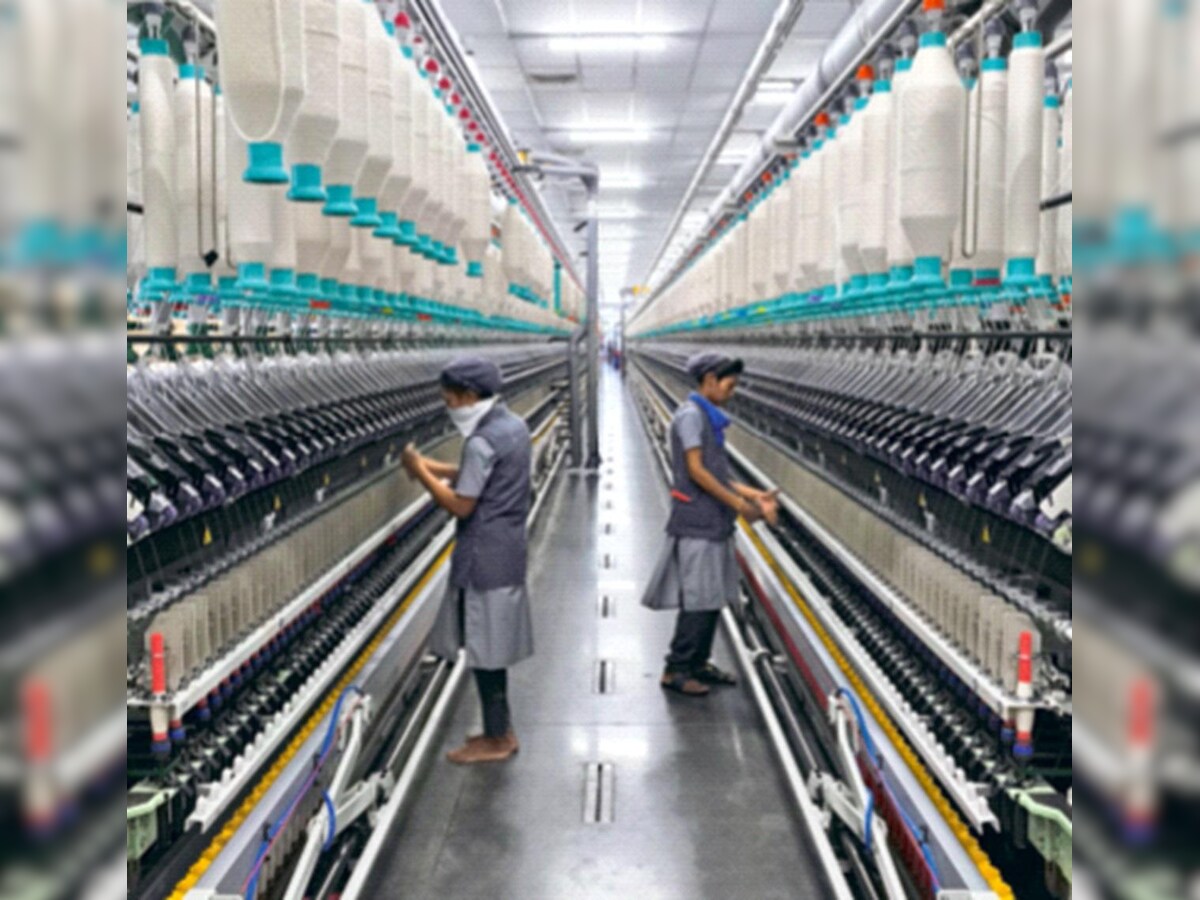
Bangladesh has given more tax waiver to encourage garment exports. Value added tax or VAT has been waived in transportation, IT services, security services, laboratory tests etc for the export oriented clothing industries. Payment of VAT on water, electricity and gas bill has also been made easier. This is expected to reduce the cost of manufacturing garments and increase export earnings and competitiveness.
Earlier garment factory owners paid five per cent VAT on the transport of goods from port to factory. Now, no VAT will be paid for transport charges. Similarly the 15 per cent VAT on employing security guards has been completely lifted. No VAT needs to be paid for chemical tests of clothing products or laboratory tests. For this examination, owners of garment units had to pay VAT at 15 per cent.
At present, garment factories have a VAT waiver facility of up to 60 per cent for the bill of services like gas, electricity, water etc. But they had to face many complications to get this facility and refunds were done through a department. Now exporters will get this facility directly. In September, the rate of source tax in the readymade garment sector was reduced by one per cent. At the same time, the corporate tax of this sector was reduced from 15 per cent to 12 per cent and for the green industries the corporate tax was fixed at 12 per cent.
Bangladesh denim exports to the EU, during January-August 2018, increased 4.23 per cent compared to the same period last year. There was a healthy rise in denim exports to the US and European Union (EU) markets. The country witnessed 14.20 per cent rise in export earnings from January to September 2018.
Many factors have worked in favor of Bangladesh such as improved technology in fabrics manufacturing; better safety standards in the apparel sector; and the ongoing trade war between China and the US. Buyers’ confidence for sourcing products from the country has got a boost.
Bangladesh has increased its production capacity in both denim fabric manufacturing and denim products. Bangladeshi manufacturers have also moved to introduce the latest technologies for improved quality of products. The country has established state of the art denim fabric manufacturing plants with increased production capacity. This has attracted more work orders from buyers in the US and EU. As a result, manufacturers can supply orders within a much shorter time compared to earlier.
The US is the single largest importer of clothing and China is the largest exporter of apparel goods in the world. The trade war has brought in more orders for Bangladesh manufacturers.
The textile machinery manufacturer, KARL MAYER, is participating more and more in shows concentrating on applications and end-uses. “We want to pick up customers at key textile areas and introduce them to something new by offering innovative textiles and concepts,” says Oliver Mathews, the Sales Manager of the Business Unit Warp Knitting, when speaking about the aims behind this decision. The next important date in KARL MAYER’s diary of events is ISPO Munich. KARL MAYER can be found here on stand 408 in hall C4 of Messe München – right at the centre of the exhibition’s trends hub.
KARL MAYER will be demonstrating the performance features of warp-knitted textiles on an area of 120 m², surrounded by the latest fabrics, styles and accessories.
TEXTILE-CIRCUIT shows how electrically conductive yarns can be incorporated directly into the textile in a single step during fabric production. The positioning of the electrically conductive yarns is done to meet the requirements of the intended end-use. For example, this can produce warp-knitted textiles having sensor functions, which are opening up completely new potential applications in the sportswear and outdoor sectors.
Textiles that can do so much more are also at the focus of solutions in the field of active sports. With their functional zones, which are also integrated directly during manufacture, these new articles provide breathability and compression following the principles of body mapping. They, therefore, deliver maximum efficiency when producing high-performance activewear for ambitious athletes.
LEISUREE.FASHION is a futuristic concept for producing sporty athleisure wear and comfortable, everyday clothing, as well as conventional underwear and lingerie. The fabrics offer all the comfort of sportswear with the soft support of activewear and also produce a sophisticated look with zones featuring decorative lingerie elements – the perfect combination of style, sportiness and comfort.
Gabriela Schellner, the Head of Textile Product Development at KARL MAYER, is convinced that the products on show will familiarise the sportswear and outdoor sectors with warp knitting technology. In particular, she intends to come into even closer contact with brand manufacturers at ISPO. She wants to learn more about their ideas and requirements for new product developments, and to develop new solutions with them.
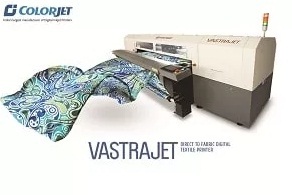 ColorJet India Ltd, India’s largest manufacturer and exporter of digital textile printing technologies will be launching and showcasing live demonstrations of its best selling direct to fabric printer, VASTRAJET at DTG-Dhaka which runs from January 9-12, 2019, at ICCB in Bangladesh in hall no. 6, booth no. 313.
ColorJet digital printers are an established name in, both textiles, as well as sign & signage applications. ColorJet digital printers are reputed to offer reliable performance year after year. Having firmly established itself as the biggest digital printer manufacturer in India, ColorJet is now all set to repeat its success story in Bangladesh and countries of Asia, Africa and Europe.
The consumers of Bangladesh share a common passion for colourful textiles with consumers of India and ColorJet brings to the table its experience and expertise, which includes a deep understanding of fashion sense in the sub-continent.
Fully realising that investment in digital printing requires a lot of support and hand holding in the initial stages, ColorJet has tied up with Universal Textile Machinery & Spares Ltd - Bangladesh to fully meet the need for making spares and consumables available to customers in Bangladesh.
To investors in digital printing, perhaps even more important than the technical support, it is the extensive and the holistic approach to selling a digital inkjet printing solution rather than a digital inkjet printing machine.
The VASTRJET is a workhorse with its robust Konica-Minolta print heads and for the production rate it delivers, it probably has the lowest carbon footprint. The printer is ideally suitable for home furnishing producers with a working width of up to 320 cms.
What’s more, it is also available in a hybrid version or two ink systems. Though reactive dye inks are the most popular choice in the sub-continent, pigment inks are preferred by some. ColorJet offers the VASTRAJET in the open system with both ink systems and also with direct disperse.
“Before the end of 2019, ColorJet hopes to install atleast five printers in Bangladesh, two of which are already in advanced stages of negotiations,” Jitender Pal Singh, Textile Head at ColorJet India said.
ColorJet maintains its No.1 position in India as per the latest IDC 2018 Q1 Super Wide Format report, while assiduously pursuing excellence in digital printing since 2004.
About ColorJet India Ltd: ColorJet India Ltd, the largest manufacturer of digital inkjet printers in India, markets its products in 14 countries worldwide. Founded in 2004, the company maintains its operations via two manufacturing facilities and sales offices spread across seven countries, which include India, China, Bangladesh, UAE and Sri Lanka. To-date, ColorJet has installed and implemented over 4,000 of its printing solutions and products across 315 cities around the world backed by a strong 278 member team, of which almost 100 are in technical related functions. For more information please visit www.colorjetgroup.com
Epson, will show its solutions for the home textile market at Heimtextil expo, 2019 which will be held at Frankfurt, Germany. The company will present its offering to both operators in the sector and to visitors by creating a living room in partnership with Brochier, the prestigious brand of top of the range furnishing fabrics.
Few of the displayed furnishing item in this setting like sofa, armchair, poufs, curtains and carpet will be made of fabric printed by Monna Lisa, inkjet textile printer featuring the suggestive motif of the Utopian Philodendron, chosen from the company’s archive of furnishing fabrics. Also, on display will be the SureColor SC-S80600, ideal, to print wallpaper, and SureColor SC-F9300 for sublimation textile printing, the ideal solution to personalise household items and to create 3D printed objects, such as plates, cutlery and vases.
SureColor SC-F9300, 64”, sublimation printing, is a user-friendly economic printer. This highly flexible machine is the ideal choice to produce small volumes of quality fabrics and to sublime custom-designed motifs on hard substrates, such as, for example, anti-splash panels, table tops, cups, cutlery and vases. A 4-colour printer that uses UltraChrome DS ink with high density HDK black, the model SC-F9300 offers Epson PrecisionCore TFP double print heads for consistent and reliable results that feature exceptional colours and definition.
SureColor SC-S80600, the printer that supports a wide range of substrates to meet all needs, from posters to graphic applications and Interior Decoration. With its advanced substrate management system, the printer ensures high precision for exceptional performance. Automated maintenance of print heads and the collection system for condensate produced by ink allow uninterrupted printing, thus ensuring high levels of productivity.
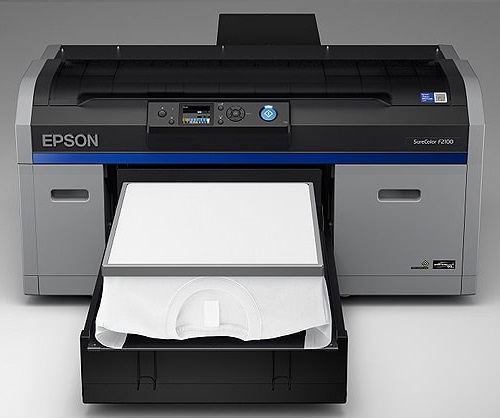
SureColor SC-F2100 for direct printing on fabric that can produce in a few minutes kitchen towels, aprons, cushions and personalised bags. A printer that is highly appreciated by the market: Epson estimates that, from its launch until August this year, it has been used to print about 36 million T-shirts worldwide.
“Epson’s printing solutions combine cutting edge technology, such as Epson PrecisionCore print heads, dedicated inks and precision mechanics, to meet the demands of a market that seeks a rapid and versatile approach even in the furnishing sector. As witnessed by our commitment to ensure ongoing development of inks and high quality printers, our goal is to become a strategic technological partner for high quality industrial textile printing,” said Giovanni Pizzamiglio, Direct To Fabric Sales & Marketing Director, EMEAR & Americas.
DuPont Advanced Printing is considered an industry leader in flexographic printing solutions for consumer packaging and digital printing inks for textile, commercial, home, and office applications that deliver consistent, high-quality print performance and productivity. DuPont™ Artistri® textile ink jet ink portfolio includes all chemistries (acid, reactive, pigment, dye sublimation and direct disperse) and ranges from low to high viscosity for compatibility with a variety of printheads.
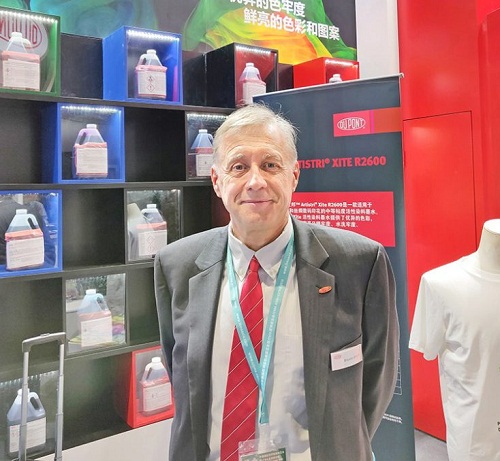
Mr. Eric P. Beyler, Global Marketing Leader – Artistri Inks, DuPont Advanced Printing
In an exclusive chat with The Textile Magazine, on the sidelines of the recently held ITMA Asia 2018 event in Shanghai, Mr. Eric P. Beyler, Global Marketing Leader – Artistri® Inks, DuPont Advanced Printing, gave detailed insights on the company’s products and solutions.
When asked to elaborate on specifically the inkjet inks product portfolio of DuPont, Mr. Eric Beyler replied stating: “We serve both the roll to roll and Direct To Garment (DTG) segments. In addition to acid, reactive, pigment, direct disperse & Dye Sublimation Artistri® ink jet inks, we also provide pretreatments and processing guidance so our customers have the total solution at their disposal.
Pointing out to the importance of the textile printing segment for DuPont globally, Mr. Eric Beyler mentioned that company has a near 100-year long history dedicated to helping customers move to the digital textile era and at the same time significantly lower its environmental footprint.
For the textile printing segment, Artistri® ink jet inks is DuPont’s brand. The company offers inks both for roll to roll (Xite inks) and DTG (Brite inks) customers.
Going into details on the key global markets for DuPont’s textile printing business, Mr. Eric Beyler said: “Digital textile segments are in the same regions as the traditional textile segments and they all have their uniqueness. The USA for DTG and Italy for fashion have been historically key for the transformation of textile printing into digital. Today, digital is growing fast all over the world, from Brazil & Turkey to China & India. The number of print equipment manufacturers continues to grow and these manufacturers hail from many countries throughout the world, from Brazil and Portugal to Australia and Korea.”

When queried how important is the Indian market for DuPont’s textile printing inks vertical, Mr. Eric Beyler said: “Digital textile is a fast-growing segment in India with a very large traditional printing base. It is a major producer of roll to roll digitally printed fabrics, with reactive, dye sublimation and direct disperse inks being the high-volume inks today. Use of pigment inks in DTG is in its early stage but growing fast and many customers are asking us to help them with printing Artistri® pigment inks in roll to roll applications. DuPont’s portfolio and expertise in pigment inks (including pretreatment, polymers, dispersions & ink formulation) enables us to provide complete solutions to our customers in India poised to catch the growing wave of digital printing with pigment inks.”
The textile printing inks market today is highly competitive with products across every price point. Given this scenario why should a customer consider using DuPont inks? In his response to this question, Mr. Eric Beyler listed down certain key advantages offered by the inks saying: “DuPont has been innovating, manufacturing and selling ink jet inks for more than 25 years. Artistri® textile ink jet inks deliver advantages in 3 critical areas for our customers – color, productivity & innovation. With the polymers and dispersions, we develop, and with more than 15 years of textile ink formulations, we enable dye & pigment ink sets to deliver bright colors, deep blacks and offer an excellent white ink for DTG applications. By adding quality, consistency and printing reliability, we help our customers lower their production costs and optimize their productivity. We keep the new ink products coming, constantly innovating & renewing our portfolio to help our customers be successful with increasingly demanding standards.”
DuPont textile inks are manufactured in the USA, with its primary technology center being located in Wilmington DE. “We are expanding our technical footprint with centers in Germany, Japan and China to better understand and respond to our customers’ needs,” Mr. Eric Beyler added.
When asked to share his thoughts on whether digital textile printing is the answer for sustainable printing solutions, given the reputation of the textile industry for being among the top polluting industries, Mr. Eric Beyler observed: “We believe the technologies with the lowest environmental footprint, namely pigment, dye sublimation and direct disperse, will be key in taking the digital share of textile printing to the next level. We are dedicated to continuing to innovate to help our customers achieve high quality printing with the lowest environmental impact.”
Sounding optimistic about the future prospects of the textile printing market, Mr. Eric Beyler said: “We see continued growth for digital textile inks and are investing in people and assets to support & develop the DuPont™ Artistri® inkjet portfolio and be a major contributor to digital textile customers. We find that we must be agile to be able to respond to our customer’s changing needs, and be differentiated as the number of players is ever increasing. Our customers want more than an ink, they want a complete technical and business solution. We are ready to deliver on this challenge and help our customers succeed and grow.”
A renowned manufacturer of automatic sewing machines has introduced a six-axis robot for intricate sewing applications in automotive interiors.
The sewing robot is extremely user-friendly in operation © Yaskawa
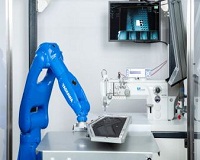
A Yaskawa Motoman GP7 is the basis of the fully automatic RoQom 6000 sewing system © Yaskawa
KMF Maschinenbau GmbH in Schwäbisch-Gmünd has been specialising in the manufacture of automatic sewing machines since 1973. While the customer base at its start-up consisted mainly of clothing manufacturers, today most orders come from the automotive sector – and these are customers who demand top quality.
Dietmar Kuhn, plant manager at KMF, specifies the requirements: “When it comes to leather seat covers for premium vehicles, the parallel decorative stitching must be accurate to a tolerance of half a denier – and with a 0.4 mm thick thread that means 0.2 mm. That’s why these high-quality curved seams in parallel lines are virtually impossible to produce by hand.” Besides that, well-trained seamstresses who can cope with the stress of intense concentration in piece- and shiftwork are hard to find.
In order to comply with customer requirements for high quality appearance from the automotive industry there is a constant need for new, innovative solutions. Subject to the dictates of quality and cost-effectiveness, the experts at KMF see gigantic potential in robotics for providing process-reliable solutions. They have already acquired robotics experience in the automatic application of spray adhesives to upholstery and are using this know-how for the development of robot-aided sewing technology.
Need for fast and precise six-axis robots
The criteria of dynamism, range and precision played a decisive role in the selection of a suitable robot. Because the required tolerance on the finished part was 0.2 mm and leather as a natural material is subject to variations, the company set about locating a six-axis robot with a repeatability that was better by about the power of ten. In addition, it was extremely important to KMF that the robot manufacturer should have a global network, as 75% of its automatic sewing machines are for export.
“Following an intensive market analysis we found the ideal combination in Yaskawa as a system partner and the Motoman GP7. With a repeatability of 0.03 mm the robot is extremely accurate, its reach of almost one metre also fits the bill, and dynamically the six-axis robot can keep pace with our sewing machines,” stresses Kuhn. This robot forms the basis for the fully automatic RoQom 6000 sewing system, which also comprises a sewing machine, image processing system, safety SPS and corresponding templates in which the parts are secured.
Challenging tasks for market introduction
At the launch of the RoQom 6000 the automatic sewing cell was called upon to demonstrate its performance in a demanding application. The task set was to produce parallel curved seams on leather seat covers for vehicles in the premium segment. The extra effort involved with this decorative stitching is justified not only visual grounds – as Kuhn knows, it also performs an important comfort function: “Top-stitching causes three-dimensional deformation of the surface, which contributes to improved air circulation and in turn prevents the formation of sweat.”
With the robot sewing cell the automatic production of curved seams in lockstitch is fast, process-reliable and economical. Only the insertion and removal of the article in the template firmly mounted on the robot wrist is still manual. All further production steps are shared by the robot and sewing machine. The robot exactly follows the predetermined path of the seam in time with the sewing machine. With an accuracy of one tenth of a millimetre, the Motoman GP7 turns and tilts the article, factoring in the correction values of the stationary image processing in real time, in the course of which the tolerances of the natural material leather are compensated.
High-quality appearance
The articles that leave the plant have a high-quality appearance and are characterised by a degree of precision that would be impossible to achieve by manual work. “Those who are not familiar with our sewing robot will no doubt question the manufacturing process of these articles,” says Kuhn. In contrast, manual sewing processes are prone to error and require intensive quality checks.
With the combination of sewing robot and camera-aided tolerance compensation, RoQom 6000 rises to a new quality level. The automated process results in a significant reduction in the defect rate. Rejects of the expensive items are virtually eliminated, adherence to delivery deadlines is improved and much time is saved.
But reproducible quality and a high cost-efficiency of the process are only one side of the medal. Users from the automotive industry are particularly enthusiastic about the new freedom they gain with regard to intricate seam contours: “There are no bounds to the creativity of the designers when it comes to seam contours. This will have an impact on interiors in future, and permit even greater individualisation,” of that Kuhn is certain.
Besides the sewing of car seat covers, KMF has already received enquiries from the automotive industry for door panels for side trim and three-dimensional sewing on the dashboard.
Kuhn also sees a glowing future for robot-aided sewing in other areas, such as the sewing of filters and technical textiles: “This process offers unlimited potential. One of the enquiries recently received is for robot-sewn blankets for new-born babies.”
Industrie 4.0-compatible process
The use of robotics featuring state-of-the-art control technology finally creates the prerequisite for integrating sewing processes into Industrie 4.0 environments. For this purpose, the modular stand-alone cells can be simply incorporated into existing processes. RoQom 6000 systems are highly flexible when it comes to conversion to other product versions and plant extension. Individual cells thus can be extended step by step to complete production lines in which manual loading and removal of the article is replaced by automatic loading.
“To enable us to sew items with larger dimensions, we can easily replace the Motoman GP7 currently being used by Yaskawa six-axis robots with an ever greater reach. And if need be, we can use our big post-bed sewing machines for three-dimensional working. Under these conditions, we see considerable potential for the robot-aided process as a basis for the future of sewing,” says Kuhn.
Saurer is supplying 48 ZinserImpact 72XL compact spinning machines with a total of 82,944 spindles to Sanko Textiles. The tradition-rich Turkish textile company is thus one of the first customers worldwide to use this new generation of machines. The internationally leading company has valued its relationship with Saurer, the ring-spinning specialist, for years.
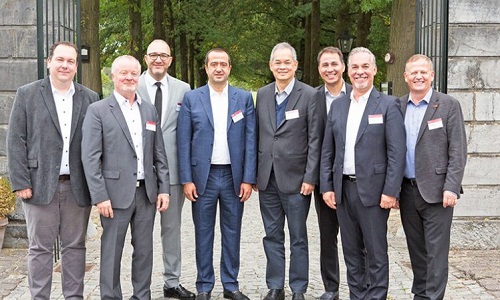
Mr. Hakan Konukoğlu, Member of board, Sanko Holding (fourth from left), Gökhan Aydın, Strategy and Business Development Manager, Sanko Textiles (third from left), Clement Woon, CEO, Saurer (fifth from left) and members of the Saurer management team
Branded yarns for the world market
Sanko was founded in 1904, produces around 250 tons of yarn per day and today employs a total of 2,520 people in spinning and knitting division. With its Textiles Innovation Center, founded in 2000, Sanko is constantly developing new textiles, such as the successful yarn brand Zeugma and others. Sanko is one of the pioneers in processing of organic cotton: In 2002, the company commissioned one of the world’s first certified spinning mills for this material.
By choosing the new ZinserImpact 72XL, this successful company underscores its claim of being ahead of the competition. Sanko wants to further enhance its competitive advantage with Saurer’s most modern generation of ring-spinning machines.
Peak technology for productivity and quality
Sanko is investing in a flexible and highly efficient overall solution consisting of roving and compact spinning machines. The roving is supplied by six ZinserSpeed 5A with a total of 1,152 spindles. Equipped with the RoWeLift transfer station, the RoWeClean tube-cleaning system, the RoWeStore empty-tube store and the world’s most effective doffing technology, the roving frames guarantee maximum cost-effectiveness. The ZinserSpeed 5A are connected to the compact spinning machines via the Autoflow FlexFlow system. This makes the assignment of the roving frames to the ring-spinning machines more flexible, and opens up potential for optimisation in operational planning.
The 48 ZinserImpact 72XL machines, each with 1,728 spindles, have been perfectly tailored to the spatial situation on site. This has resulted in an optimum ratio of production output per square metre of production area.
The central FlexiDrive of the ZinserImpact 72XL ensures consistent yarn quality over the entire machine length. The self-cleaning compact spinning technology, Impact FX, guarantees the most economical and top quality thanks to its constant compact power. The machines are equipped with the CS1 S premium spindle to further reduce noise emissions, vibrations and energy consumption in the high-speed range.
With its comprehensive range of applications, the ZinserImpact 72XL provides Sanko with a decisive flexibility bonus. For example, the Turkish trendsetter for innovative yarns is relying on the economical FancyDraft fancy yarn function to set itself apart in the textile markets with new creations.
The new Zinser compact spinning mill will go into operation this year. Thanks to this forward-looking modernization strategy, Sanko’s machine suite is one of the most innovative and efficient in the world.
“We have been relying on Saurer’s leading technologies for years,” says Hakan Konukoðlu, Sanko Holding board member. “The new ZinserImpact 72XL is an important building block in our future modernization strategy.”
Quality before quantity: China turns increasingly to superior quality weaving machines from Dornier for manufacturing technical fabrics.
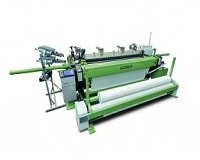 The new generation of rapier weaving machines, the P2 TGP: More and more Chinese textile companies are choosing weaving machines from Dornier in order to meet the growing demand for high quality technical fabrics for aircraft parts, filters, automotive and safety textiles © Dornier
Audacious investment objectives, rising wages, enormous funds for research and development (equivalent to about 226 billion euro in 2017 alone) and emerging aspiration towards quality: China‘s evolution from the overflow production facility for the West into a high-tech industrial powerhouse grows.
This trend is also reflected strongly in the Chinese textile industry, and is being monitored attentively at the Lindauer Dornier GmbH (Lido): „China has always been an important market for us, but since the demand for higher quality textiles has also begun to grow, it has become our biggest market“, says Wolfgang Schöffl, Head of Business Unit Weaving Machines at Dornier.
In China, LidO weaving machines are used to create fine scarves and elegant women‘s apparel from cashmere wool and silk as well as intricate airplane parts from carbon fibers. This last category is part of the growing global market for technical textiles, which is supplied with special coatings, airbags, tirecord and filters as well as much else which is manufactured in the Middle Kingdom on weaving machines from Dornier. And the volume of these high-performance fabrics required just to satisfy China‘s domestic demand is enormous.
Flawless processing of high-performance fibers
The fact that the Chinese city of Xi‘an cleans its air with the tallest anti-smog tower in the world (100 m) is convincing testament: cleaning air and water is a major concern in China. And this is one reason why Dornier offers its new P2 rapier weaving machine in its most powerful configuration (Type: TGP) for the chineses market.
This machine is able to bring a reed beat-up force of up to five tons for producing wide, seamless fabrics for high density air and water filters. „The textile is exposed to exceptionally high forces specifically for wet filtration; seams are weak spots, which should be avoided if possible“, explains Schöffl and further: „The greater the volume of high-quality fabrics China manufactures, the more weaving machines we can send them“, says Schöffl. At the same time, the division head continues, besides the technical quality the company‘s Chinese customers also value LiDO‘s aftersales and training services, ease of contact and fast response times.
Textile industry is booming with innovations taking center stage. Today, manufacturers are equipping their machine with advanced technologies by constantly upgrading their production methods. With latest development in machine functions, various textile technologies have tremendously eased operation, improved productivity and efficiency and at the same time ensured safer working condition. In a 24/7 operated factory, machine downtime of few minutes might lead to huge material and economic losses. In addition, biggest challenge is to bring the production back to normal in shortest possible times. Today, next generation automation technologies can be leveraged to overcome these challenges. Machines built with powerful controllers, high-speed motion components, interactive HMI systems, focus towards improving operational efficiency, reduce machine stoppages and increase availability of the machine. Automation has largely helped textile factories to efficiently use raw material, reduce waste, minimize energy consumption and reduce machine footprint.
Reduced footprint using decentralized control system
 Machine manufacturers are striking a balance between increased productivity and decreased energy consumption. In addition, shop floor space is of prime concern for factories, and they are constantly trying to optimize it. Machine builders can aid the endeavor of factories by reducing the footprint of their machines. Apart from the machine mechanics, cabinet occupies a lot of space. A slightest reduction in cabinet can help reduce costs as well as save space. A decentralized architecture helps machine builders have enhanced performance with same or increased output. Textile machines involves highly dynamic and precise functions, which demands extremely fast movements controlled with absolute precision. Today, machine architectures include high speed and low maintenance drive systems. Machine have become dynamic and such dynamic scalability might become a bottleneck in existing machine design.
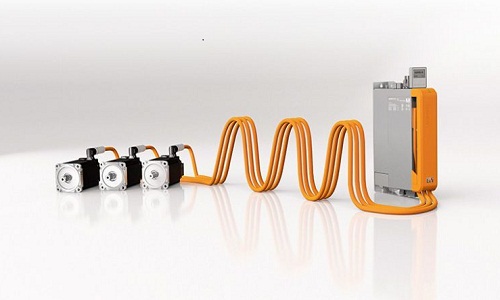
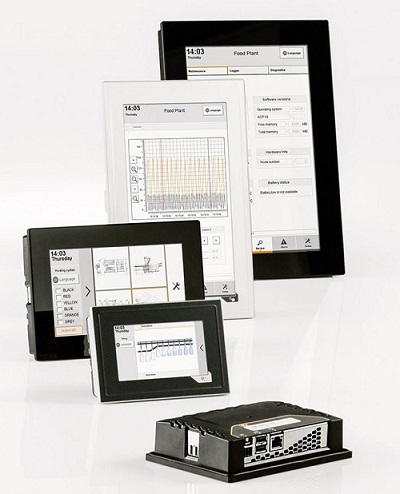
B&R enables textile machine builders to incorporate decentralized architectures in their machines and provide the necessary scalability in hardware and software. The power panels from B&R, which are integrated PLC and HMI as single unit have been a sheer game changer in this segment. These touch panels have reduced magnitude of control cabinet in the machine. In addition, the compact and versatile X20 I/O system gives complete flexibility over machine topology. An X20 I/O systems connected over Ethernet POWERLINK, a vendor independent real time communication protocol provides the necessary decentralized intelligence in machines, thus, maximizing space utilization effectively. The advanced motion control from B&R – ACOPOS P3 has further been able to reduce cabinet space on the motion front. A single ACOPOS P3 can control three servomotors, offering complete flexibility for expansion to deliver critical machine function. ACOPOS P3 reduces the cabinet space by 69% and the single cable solutions reduces the number of cables. ACOPOS P3 melds seamlessly with machine control system, HMI and safety system offering a complete system solution needed by textile machinery. All these systems are easily programmed using the powerful software from B&R – Automation Studio. Automation Studio is a single platform for enabling programming of complete range of hardware from B&R as well as providing an extensive simulation environment.
Intelligent machine diagnostics
Automation has been enhancing machine performance and B&R has been a trusted name in the textile industry for providing scalable and flexible automation solutions. With machines going digital, machine manufacturers are not just adding intelligence to machine operations, but also to diagnostics. To map the reasons of machine downtime and fix them with an appropriate solution, OEMs are taking advantage of mapp Technology from B&R. mapp Technology is revolutionizing the development of application software in the field of automation. These modular software blocks simplify development of new programs and reduce development time for new machines and systems by an average of 67%. With mapp blocks seamlessly integrated into Automation Studio environment, it becomes extremely easy to configure and relieve the developer of having to program every single detail.
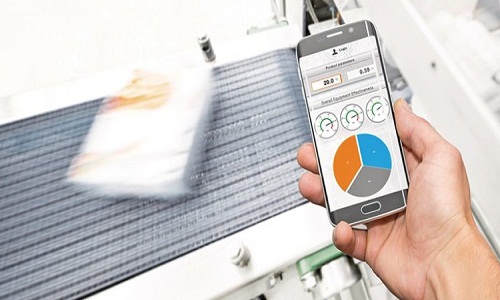
mapp Cockpit, an interesting component of mapp technology is an advanced yet easy-to-use tool for commissioning and troubleshooting machines. mapp Cockpit is built on web-based technology, enabling monitoring of machine parameters graphically over HMI as well as on any web supported devices such as a smart phone. The machine operator can is able to analyze the characteristics of a machine with a high degree of precision, owing to the trend functionality. mapp Cockpit uses open protocol OPC UA to connect and collect information from machines. It allows machine manufacturer easily create commissioning pages tailored to the machine operation.
Scalability makes machines future ready
 In the era of customization, OEMs might not have standard machines built in large quantities but might have more customer specific machines in smaller batches. When technology upgrades, OEMs strive to have it implemented in their existing machines and B&R is the apt choice for machine builders when it comes to scalable systems. In conventional systems, the machine builder needs to know the hardware to be programmed and then can start writing the code. With B&R, the machine builder not only does not need a hardware but also does not need to know which hardware would be used to start programming. Automation Studio programs all B&R products independent of hardware and a machine builder can change from an X20 controller to a power panel (integrated HMI & PLC) to an Automation PC to Simulation at any given point in the machine development. Such scalable systems reduce rework and costs in case of changing hardware after starting development and are preferred by machine builders. This is even true for ACOPOS drives and machine builder can change from one drive system to another in no time. In addition, with B&R a machine builder can synchronize servo, stepper, VFDs and robots easily with no programming effort, thanks to Automation Studio & mapp Technology. All B&R controllers support OPC UA client and server communications, ensuring them to be IoT ready. The machines can share data to IT systems or cloud in real time with queuing protocols such as OPC UA, MQTT or AMQP, which are supported by all B&R systems. Thus, with our scalable portfolio, flexible software and intelligent programming, B&R consistently allows machines to be future ready.
Textile industry going digital with B&R
Like every other industry, textile industry too is on course of digital transformation. As the industry moves towards digitalization, machines within a factory are expected to connect with each other and to IT systems. B&R trusts open source, vendor independent solutions with OPC UA acting as a key player enabling vertical and horizontal connectivity. As machines are developed to meet new age regulations, B&R helps machine builders with its advanced automation solutions in this transformation. With edge architectures, together with predictive maintenance, end users achieve reduced machine downtime and higher productivity.