FW

"The EU is reluctant to take action against Cambodia and Myanmar, who continue to enjoy duty-free market access to the EU, despite being accused of severe human rights violations. The Cambodian government, under longtime ruler Hun Sen has squelched democracy, while the Myanmar military has committed horrible atrocities against the Rohingya ethnic minority. Both these countries enjoy the ‘Everything But Arms’ trade preferences, as a part of a development policy intended to improve livelihoods by encouraging exports. European officials are worried frequently changing the eligibility of these preferences would not only increase political risk but also undermine those goals by discouraging investment in the countries affected."
 The EU is reluctant to take action against Cambodia and Myanmar, who continue to enjoy duty-free market access to the EU, despite being accused of severe human rights violations. The Cambodian government, under longtime ruler Hun Sen has squelched democracy, while the Myanmar military has committed horrible atrocities against the Rohingya ethnic minority.
Both these countries enjoy the ‘Everything But Arms’ trade preferences, as a part of a development policy intended to improve livelihoods by encouraging exports. European officials are worried frequently changing the eligibility of these preferences would not only increase political risk but also undermine those goals by discouraging investment in the countries affected.
Major employment generators
Cambodia and Myanmar together account for a little over a fifth of total imports into the EU under the Everything But Arms program. Both these countries have developed their successful apparel export industries that primarily rely on low wages. Until recently, both had seemed to be moving toward a more democratic future. Myanmar received the EU trade benefits only after restoring democracy and releasing Nobel Peace Prize winner Aung Suu Kyi from house arrest. Since then, the country’s exports to the EU have increased tenfold.
While exports enrich factory owners and corrupt government officials they also employ hundreds of thousands of poor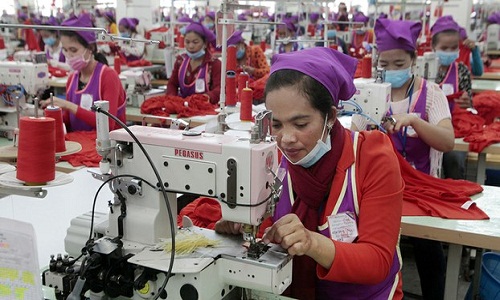 workers, especially young women. Although apparel factories are known for exploitation of workers but they offer alternatives to the poor in these countries. Especially for the young women who dominate sewing jobs in these factories, the only other alternatives are subsistence agriculture, domestic service, or marriage and motherhood at a young age.
EU adopts a cautious approach
The EU is cautious about enforcing the eligibility conditions of Everything But Arms since it could hurt the very people the program is designed to help. The new tariffs would hit exports from Cambodia and Myanmar hard, along with the workers in those factories.
EU officials, over the next year, will investigate the allegations and engage with officials in both governments to see if they will take steps to protect democracy in Cambodia and ensure a safe return for the Rohingya, nearly a million of whom have fled Myanmar for refuge in neighboring Bangladesh. If they do not, both countries could lose some or all of the duty-free market access they currently enjoy in Europe.
The threat of losing duty-free access to the EU is serious and credible enough to persuade these countries to reform. That will be harder in Cambodia and Myanmar, where the problems are deeply rooted in politics and the desire to hold onto power. If the EU suspends Everything But Arms benefits, thousands of people in Cambodia and Myanmar could lose their jobs and be thrown back into dire poverty.
The Maharashtra government’s Cooperation, Marketing and Textile Department has proposed to develop a textile university at Harpur in South Nagpur. The textile secretary Atul Patne has stated that if the plan materialises, it will be the nation’s first textile university. The Nagpur Improvement Trust (NIT) has been appointed as nodal agency for planning and construction of the university which is to be developed on the State Handloom Corporation’s two-acre land.
State Handloom Corporation own five acres of land. The administrative building of the corporation will come up on one acre and other related infra on the remaining two. The NIT board of trustees appointed Nela Designers of Harish Chandani as architect and project management consultant of the project. The university will offer courses related to powerloom, handloom, spinning mills, silk, hosiery etc. However, there is no courses available in ITI, polytechnic and engineering colleges to educate the students on these fields. All these will be provided in the Textile University.
Integrated Fiber company Invista introduced the new patented Lycra FreeF!t technology to the North American audiences at the recent Kingpins NYC show. The new material provides greater comfort to denim and woven fabrics while allowing apparel to maintain its shape without the potential loss of recovery which is more common in softer stretchy material.
Lycra FreeF!t fabrics are made using the Invista’s patent pending technologies that covers yarn, textile processing and fabric structure. The fabrics use Lycra dualFX yarns which are specially treated and then woven in specific constructions to provide the soft stretch. In addition to easy stretch, these fabrics also provide a wider fit window because they are less compressive than typical stretch fabrics.
Furthermore during the show, the attendees were also able to preview Invista’s CoolMax Natural Touch technology, an cutting-edge offering that blends two type of CoolMax fiber with cotton and lycra which remains cool and yields a soft hand. Invista, headquartered in the USA, is one of the leading integrated producers of chemical intermediates, polymers and fibers. The company’s technologies for nylon, spandex and polyester are used to produce clothing, carpet, air bags and countless other everyday products.
In its submission to the Supreme Court on Accord’s appeal against an order that it cease operating in Bangladesh from November 30, the government has stated that the Accord should only be allowed to continue operations in Bangladesh under a set of highly obstructive constraints which strip the globally-respected safety initiative of its ability to operate independently of government and employer control. The constraints include that this will be the last extension allowed to the Accord maintaining its office in Dhaka.
The government’s conditions, if accepted by the Supreme Court, would destroy the independence of the Accord by subjecting all its decisions to the approval of a government committee. Another condition would prohibit Accord inspectors from identifying any new safety violations, effectively requiring them to ignore deadly hazards found during their inspections, such as faulty alarm systems, blocked fire exits, and cracks in structural columns. Yet another would prevent the Accord from taking any action against factory owners who threaten or fire workers for raising safety complaints.
The Accord has been instrumental in radically improving the safety of garment factories in Bangladesh since it was established in the wake of the Rana Plaza factory collapse in 2013 that claimed over a thousand lives. The Accord has identified more than 100,000 fire, building, and electrical hazards and the large majority have been rectified. Over two million workers have participated in safety training in over 1,000 factories.
P Thangamani, Minister of Electricity, Prohibition and Excise, Tamil Nadu, has urged industrialists to handover the required land for establishing zero liquid discharge based Common Effluent Plant (CETPs) in the state. The minister also mentioned that for improvement and betterment of the textile industry, a permanent solution was needed for addressing these issues and the solution to that is establishing CETPs. Also, he urged the government to make the villagers aware that the CETPs would not pollute the ground water.
The minister further revealed that currently 18,000 MW power was generated in the State and an additional 5,000 MW was needed in the near future, of which Tangedco had proposed to generate 4,000 MW by 2023. Jayalalithaa, former Tamil Nadu Chief Minister, had earlier announced setting of CETPs at Rs 700 crore as most of the units in Tirupur, Erode, Salem, Namakkal and Karur districts were cottage industries. But industrialists were yet to provide land for the project.
KnowTheChain, a benchmark that helps companies calculate their approach to address forced labor, has issued a new report marking out that forced labor risks within the supply chains of 43 international apparel and footwear brands found discouraging performances, with two-thirds of the companies ranked with an overall score below 50 out of 100, and nearly a quarter scoring under 10 out of 100.
This year’s apparel and footwear benchmarks report stated that luxury apparel brands such as LVMH, Prada and Salvatore Ferragamo fetched a rating of under 15 out of 100. While Adidas, Lululemon and Gap secured rankings of 92, 89 and 75 respectively. Notably, the overall report gave apparel and footwear industry an average rating of 37 out of 100 with leading footwear brands like Skechers and Foot Locker scoring as low as 7 and 12 respectively.
Reportedly, the apparel and footwear sector significantly relies on migrant labor. For example, in Jordan’s total apparel workforce, migrant workers account for 70 per cent and 44 per cent of the Mauritius apparel workforce.
Additionally, migrant employees are at particular risk of exploitation, as employers often hold their passports to stop them from travelling freely and enable recruitment agencies to charge hefty fees. In Taiwan, recruitment agents were reported to charge such employees up to US $ 7,000, for jobs in fabric mills.
Following a unanimous vote by STLA members and lengthy discussions between the two organisations, UKFT will take over the management of Textiles Scotland (STLA) from January 1, 2019. This will provide new opportunities to the Scottish companies by being part of a wider network while retaining the Scottish focus.
The Textiles Scotland branding will be continued, as will the Scottish focus of the activities, support and government lobbying. Existing Textiles Scotland members will be transferred to a new company called UKFT Scotland. UKFT Scotland will join the main UKFT board and UKFT CEO Adam Mansell will join the Scottish Industry Leadership Group.
UKFT will work with the industry to develop a new membership offer that will help Textiles Scotland become a self-sustaining organisation, including using its expertise to develop an export strategy and a skills strategy for Scottish members.
Knitwear makers in Tirupur expressed disappointment over the reduction of duty drawback rates on readymade garments (RMG). The Union government recently slashed the rates on cotton-made readymade garments from 2 per cent to 1.9 per cent and also the rates on many other RMG.
While change may have been minimal, it has not gone well with industrialists as the sector had recorded negative growth last financial year due to demonetization and GST. The Tirupur Exporters’ Association has been insisting the government to increase the duty drawback rate from 2-2.5 per cent to 4.5 per cent. The move sends a wrong message, especially when the exporters were struggling to compete because of absence of a level-playing field in the international RMG market.
The government has also increased the rates on cotton and cotton yarns by 0.35 per cent and 0.5 per cent respectively.
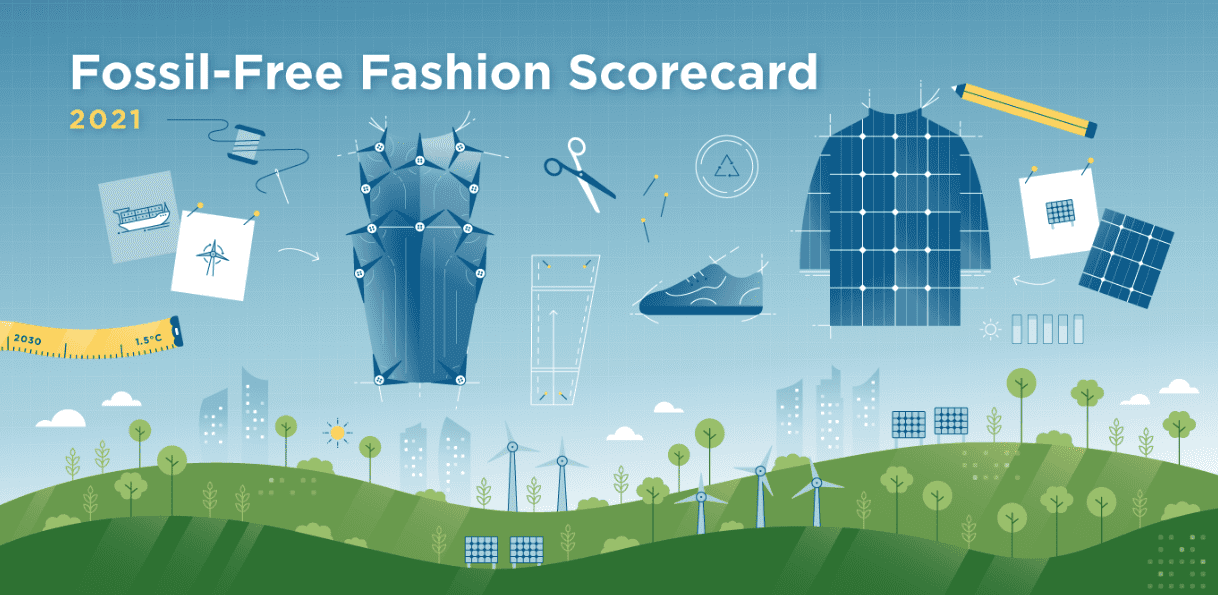
Under the auspices of UN Climate Change, over forty leading apparel brands, suppliers and supporting organisations recently launched the ‘Fashion Industry Charter for Climate Action’ at the UN Climate Change Conference (COP 24) – which is being held Poland. Signatories to the new Charter include brands such as Puma and H&M, who both chaired working groups on the new initiative, as well as Adidas, Burberry, Esprit, Gap, Hugo Boss, Inditex, Kering Group, Levi Strauss and Target, among other organisations.
These companies have now set an initial target to reduce their aggregate greenhouse gas emissions by 30 per cent by 2030 and promised to phase out coal-fired boilers or other sources of coal-fired heat and power generation in their own businesses and direct suppliers from 2025. The signatories have appealed for wider support from the fashion sector and urge new parties to sign up to the Charter’s new commitments.
The new charter was signed by 42 organisations including leading brands and retailers, fashion industry environmental NGOs and textile suppliers. Aligned with the goals of the Paris Agreement, the Charter contains the vision for the industry to achieve net zero emissions by 2050.
Australia has trimmed its forecast for wool production by nearly 5 per cent as dry weather across the world’s largest producer of the fiber squeezed production to at least a 21-year low - the worst on record. According to the Australian Bureau of Agricultural and Resource Economics and Sciences (ABARES), wool production during the 2018/19 season will total 385,000 tonnes, a decline from the September estimate of 404,000 tonnes.
With Australia’s east coast, home to the majority of the country’s livestock industry, receiving 40 percent less rainfall, farmers have been forced to cull sheep after pastures wilted.
While the drought has left many Australian farmers struggling to survive, the decline in production will also pressure the global garment manufacturing industry.
Australia provides about 90 percent of the world’s exported fine wool used in clothing manufacturing. Lower production will force millers to either pass on the cost or require retailers to cut down on the use of the fiber.