FW

P Thangamani, Minister of Electricity, Prohibition and Excise, Tamil Nadu, has urged industrialists to handover the required land for establishing zero liquid discharge based Common Effluent Plant (CETPs) in the state. The minister also mentioned that for improvement and betterment of the textile industry, a permanent solution was needed for addressing these issues and the solution to that is establishing CETPs. Also, he urged the government to make the villagers aware that the CETPs would not pollute the ground water.
The minister further revealed that currently 18,000 MW power was generated in the State and an additional 5,000 MW was needed in the near future, of which Tangedco had proposed to generate 4,000 MW by 2023. Jayalalithaa, former Tamil Nadu Chief Minister, had earlier announced setting of CETPs at Rs 700 crore as most of the units in Tirupur, Erode, Salem, Namakkal and Karur districts were cottage industries. But industrialists were yet to provide land for the project.
KnowTheChain, a benchmark that helps companies calculate their approach to address forced labor, has issued a new report marking out that forced labor risks within the supply chains of 43 international apparel and footwear brands found discouraging performances, with two-thirds of the companies ranked with an overall score below 50 out of 100, and nearly a quarter scoring under 10 out of 100.
This year’s apparel and footwear benchmarks report stated that luxury apparel brands such as LVMH, Prada and Salvatore Ferragamo fetched a rating of under 15 out of 100. While Adidas, Lululemon and Gap secured rankings of 92, 89 and 75 respectively. Notably, the overall report gave apparel and footwear industry an average rating of 37 out of 100 with leading footwear brands like Skechers and Foot Locker scoring as low as 7 and 12 respectively.
Reportedly, the apparel and footwear sector significantly relies on migrant labor. For example, in Jordan’s total apparel workforce, migrant workers account for 70 per cent and 44 per cent of the Mauritius apparel workforce.
Additionally, migrant employees are at particular risk of exploitation, as employers often hold their passports to stop them from travelling freely and enable recruitment agencies to charge hefty fees. In Taiwan, recruitment agents were reported to charge such employees up to US $ 7,000, for jobs in fabric mills.
Following a unanimous vote by STLA members and lengthy discussions between the two organisations, UKFT will take over the management of Textiles Scotland (STLA) from January 1, 2019. This will provide new opportunities to the Scottish companies by being part of a wider network while retaining the Scottish focus.
The Textiles Scotland branding will be continued, as will the Scottish focus of the activities, support and government lobbying. Existing Textiles Scotland members will be transferred to a new company called UKFT Scotland. UKFT Scotland will join the main UKFT board and UKFT CEO Adam Mansell will join the Scottish Industry Leadership Group.
UKFT will work with the industry to develop a new membership offer that will help Textiles Scotland become a self-sustaining organisation, including using its expertise to develop an export strategy and a skills strategy for Scottish members.
Knitwear makers in Tirupur expressed disappointment over the reduction of duty drawback rates on readymade garments (RMG). The Union government recently slashed the rates on cotton-made readymade garments from 2 per cent to 1.9 per cent and also the rates on many other RMG.
While change may have been minimal, it has not gone well with industrialists as the sector had recorded negative growth last financial year due to demonetization and GST. The Tirupur Exporters’ Association has been insisting the government to increase the duty drawback rate from 2-2.5 per cent to 4.5 per cent. The move sends a wrong message, especially when the exporters were struggling to compete because of absence of a level-playing field in the international RMG market.
The government has also increased the rates on cotton and cotton yarns by 0.35 per cent and 0.5 per cent respectively.
Under the auspices of UN Climate Change, over forty leading apparel brands, suppliers and supporting organisations recently launched the ‘Fashion Industry Charter for Climate Action’ at the UN Climate Change Conference (COP 24) – which is being held Poland. Signatories to the new Charter include brands such as Puma and H&M, who both chaired working groups on the new initiative, as well as Adidas, Burberry, Esprit, Gap, Hugo Boss, Inditex, Kering Group, Levi Strauss and Target, among other organisations.
These companies have now set an initial target to reduce their aggregate greenhouse gas emissions by 30 per cent by 2030 and promised to phase out coal-fired boilers or other sources of coal-fired heat and power generation in their own businesses and direct suppliers from 2025. The signatories have appealed for wider support from the fashion sector and urge new parties to sign up to the Charter’s new commitments.
The new charter was signed by 42 organisations including leading brands and retailers, fashion industry environmental NGOs and textile suppliers. Aligned with the goals of the Paris Agreement, the Charter contains the vision for the industry to achieve net zero emissions by 2050.
Australia has trimmed its forecast for wool production by nearly 5 per cent as dry weather across the world’s largest producer of the fiber squeezed production to at least a 21-year low - the worst on record. According to the Australian Bureau of Agricultural and Resource Economics and Sciences (ABARES), wool production during the 2018/19 season will total 385,000 tonnes, a decline from the September estimate of 404,000 tonnes.
With Australia’s east coast, home to the majority of the country’s livestock industry, receiving 40 percent less rainfall, farmers have been forced to cull sheep after pastures wilted.
While the drought has left many Australian farmers struggling to survive, the decline in production will also pressure the global garment manufacturing industry.
Australia provides about 90 percent of the world’s exported fine wool used in clothing manufacturing. Lower production will force millers to either pass on the cost or require retailers to cut down on the use of the fiber.
"As per ‘State of Fashion 2019’ report by McKinsey & Company and the Business of Fashion (BoF), China will overtake the US as the world’s largest fashion market for the first time in 2019. The report predicts the leading trends expected to shape luxury fashion industry in 2019. Despite predicting year-on-year growth of 3.5 to 4.5 per cent for the fashion industry next year, experts remain pessimistic. This pessimism could be driven by fears of the accelerating trade war between China and the US, and uncertainty in Europe over how Brexit will impact the global fashion market, according to the study."
 As per ‘State of Fashion 2019’ report by McKinsey & Company and the Business of Fashion (BoF), China will overtake the US as the world’s largest fashion market for the first time in 2019. The report predicts the leading trends expected to shape luxury fashion industry in 2019.
Trade war leads to pessimism
Despite predicting year-on-year growth of 3.5 to 4.5 per cent for the fashion industry next year, experts remain pessimistic. This pessimism could be driven by fears of the accelerating trade war between China and the US, and uncertainty in Europe over how Brexit will impact the global fashion market, according to the study. However, in the report, Joann Cheng, Chairman of Fosun Fashion Group & Lanvin, expresses her belief that the trade war will have minimal effect on China’s business.
Increasing omnichannel integration
Technology-impacted consumer shifts are among the most important trends predicted for the coming year. Luxury fashion brands in China have been quick to utilise the country’s most popular social-media-turned-e-commerce app WeChat, which boasts over 1 billion daily active users. Around 54 per cent of the McKinsey-BoF State of Fashion Survey respondents prioritise omnichannel integration alongside investing in e-commerce and digital marketing as their number one priority for 2019.
Contrasting views
While 51 per cent of executives in the premium and luxury fashion sector believe fashion sector will ‘become better; in 2019; 19 per cent believe it will stay the same. In North America’s market, a staggering 64 per cent executives believe the industry will become worse suggesting America is more cautious of impending trade war tariffs.
Growing domestic demand
China is the world’s fastest-growing consumer market, accounting for more than 18 per cent of all final goods consumed. Chinese manufacturers are using its vast production abilities to cater to surging domestic demand even for luxury products. China’s Singles’ Day shopping holiday this year hit an estimated $30.8 billion in sales, surpassing both Black Friday and Cyber Monday in the United States combined.
Incorporating trust value in products
The increasingly discerning customers are demanding specific information on materials, labor conditions, duties and mark-up. According to the report, fashion companies must cater to demand of distrusting consumer and ensure full transparency across the value chain. 65 per cent of respondents cited consumer needs for trust in product authenticity and creative originality among their top 5 trends for 2019.
Leading the global fashion arena
Surveying over 270 global fashion executives, the report uses McKinsey & Company’s database of over 500 private and public companies to analyse and compare the performance of individual business against their peers by category segment and region. It recognises the top 20 companies leading charge in the global fashion arena. These “super winners” now account for 97 per cent of global economic profit, compared with 70 per cent in 2010, showing their increasing dominance in the market. These 20 companies include: Inditex, Nike, LVMH, TJX Companies, Hermès, H&M, Richemont, Ross, Adidas, Kering, LBrands, Pandora, Fast Retailing, Next, VF, Luxottica, Michael Kors, Gap, Hanesbrands and Burberry.
Messe Frankfurt has included the US Clean Show in its portfolio. The Clean Show, together with Texcare International and Texcare Asia, is one of the leading technology fairs in THE industry and will help the entire value chain master the challenges of the coming years from digitisation to sustainability and from Industrie 4.0 integration/automatisation to the best possible customer benefit.
The government in Pakistan is planning to help restart 200 textile mills in Pakistan that were closed for the last three years due to financial crunch and other factors. The government is planning to take concrete steps for the rehabilitation of the textile industry and restore round-the-clock gas supply to the industrial units, enabling them to attain manifold increase in the industrial production and ensure maximum jobs for the workers in the Industrial units and thus eliminate unemployment from the country.
The government recently started work on Phase-II, III of Faisalabad Garment City project, which will be accomplished within shortest possible period to make this project fully operational.
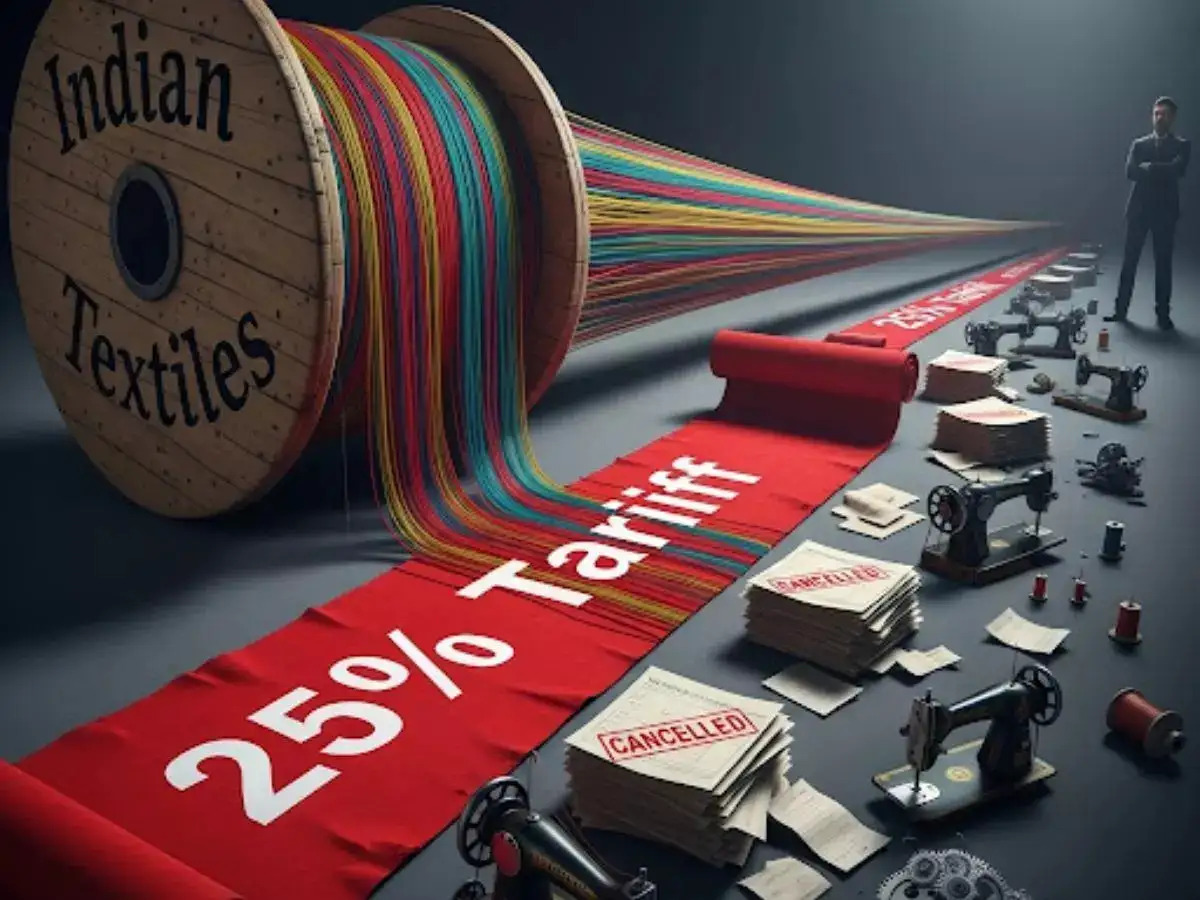
US Trade Representative Robert Lighthizer has warned new tariffs will be imposed on China if the US-China trade negotiations do not reach a successful end by March 1, 2019. In Argentina last weekend, Trump and Chinese President Xi Jinping agreed to a truce that delayed the planned Jan. 1 US hike of tariffs to 25 percent from 10 percent on $200 billion of Chinese goods while they negotiate a trade deal.
Lighthizer demanded certain concessions for the US, across a number of areas, if these tariffs are to be avoided. These concessions include demands for increased purchases of US goods in a more open Chinese market, as well as structural changes to a system that, for example, forces American firms to turn over technology to Chinese partners as a condition of doing business.
The demands are similar to those made under previous Democratic and Republican presidents, but Lighthizer said he felt Trump’s willingness to go beyond “dialogue” and impose tariffs will produce results.