FW

The Central Board of Indirect Taxes and Customs (CBIC) has slashed duty drawback rates from 2 to 1.8 percent for cotton garments. For polyester, the new duty drawback rates will be 2.3 per cent from 2.5 per cent earlier. The new drawback rates will be effective from December 19, 2018.
Exporters noted there has been a marginal increase in business for the past couple of months mainly due to dollar appreciation but the industry is far behind the 2016-17 level. They advised the government to stop raw cotton export to boost exports.
Apparel exporters are required to use various inputs for making garments. About 70 per cent of the material consumed is cotton, which is agri-product coming from farming sector and out of GST ambit. It comes loaded with embedded taxes, which the farmer has to pay for production and transportation of cotton.
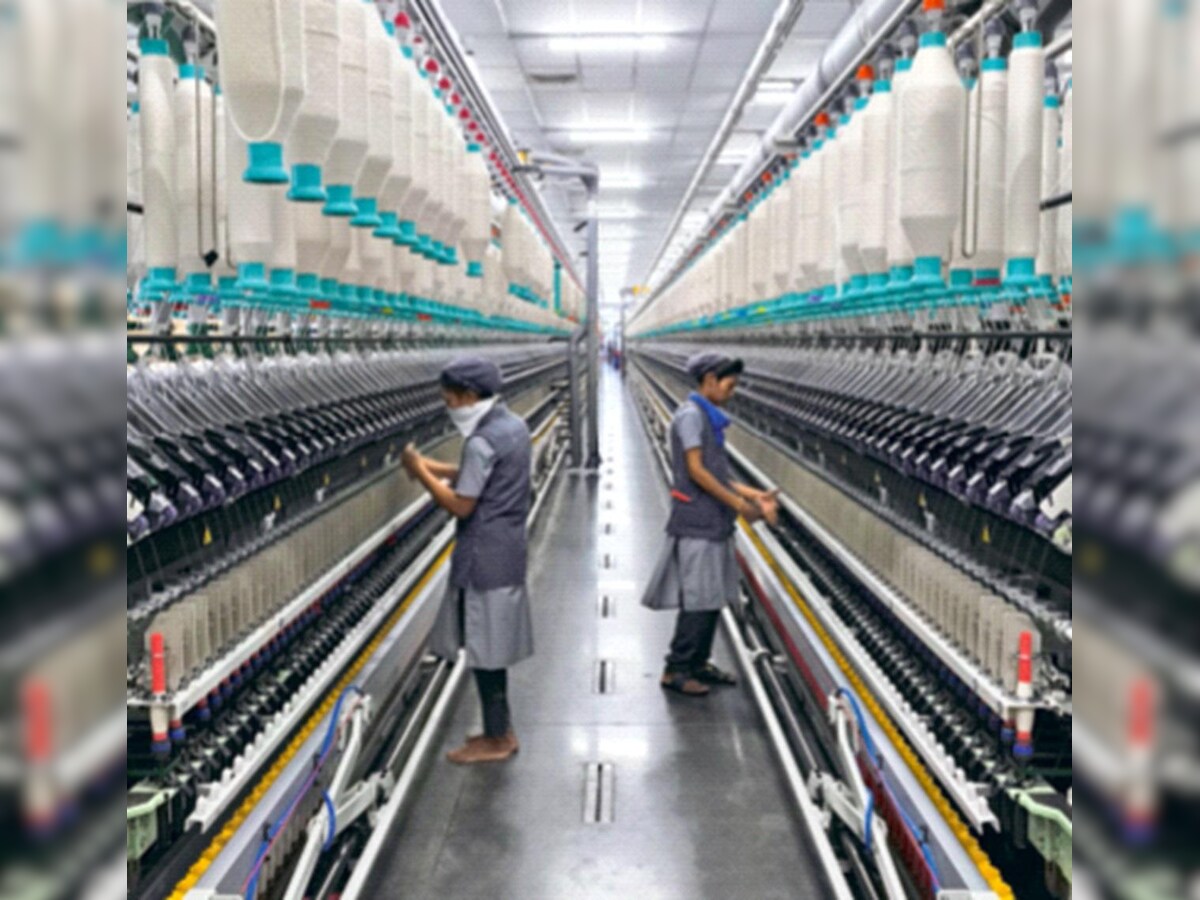
During the production process of fabric and garments, electricity gets consumed which is also embedded in the cost of garment. Expenses are incurred on fuel and transportation, exporters said, giving reasons for losing market share in the international market. All these add to the input cost and leads to losing competition especially with China.
CAI, which released its November estimate of the cotton crop for the season 2018-19, beginning from October 1, 2018 has estimated cotton crop for the 2018-19 season at 340.25 lakh bales (of 170 kg each). This is lower by 3 lakh bales than its previous estimate of 343.25 lakh bales made during last month.
The CAI has projected a total cotton supply during the months of October and November at 95 lakh bales, which consists of arrivals of 70 lakh bales upto November 30, 2018. Imports are around 2 lakh bales upto November 30 and the opening stock at the beginning of the season has been put at 23 lakh bales.
The estimate of cotton consumption during the months of October and November is 54 lakh bales while the export shipment of cotton upto November 30 has been estimated at 10 lakh bales. The stock at the end of November is estimated at 31 lakh bales, including 27 lakh bales with textile mills and the remaining 4 lakh bales are estimated to be held by CCI and others.
The projected annual balance sheet for the season 2018-19 drawn by the CAI has estimated total cotton supply, till end of the season upto September 30, 2019, at 390.25 lakh bales.
Reports by the US Department of Agriculture (USDA) suggests, Brazil exports of cotton to China and other Asian countries are expected to rise for 2018-19 marketing year, partially stemming from US-China trade tensions. Exports are forecast to reach 6 million bales, up from 4.2 million bales from the banner 2017/18 season. The USDA also cited continued improvement in grading and quality of Brazilian product, as a secondary reason why demand of Brazilian cotton from China is expected to rise.
Meanwhile, Brazil's 2018-19 marketing year cotton area is expected to reach 1.4 million hectares, an increase of 19 percent compared to the previous marketing year. The planted area expansion is a result of rising cotton prices and strong export demand. Domestic consumption is forecast at 3.5 million bales, a marginal 3 per cent increase compared to last marketing year, based on increased investment and an increase in economic activity that is expected on the back of positive market sentiment for the incoming administration of President-elect Bolsonaro.
David Beckham united his long standing partnership with adidas Originals, with his role as Ambassadorial President at the British Fashion Council (BFC) to drive new generation engagement within the creative industries and provide a platform for global design talent. Makerlab Presents: Here to Create.
This creative platform is aimed at furthering education in the design and fashion sector and champion emerging designers. To mark the launch of the partnership designers Nicholas Daley and Paolina Russo were selected as inaugural partners of the collaboration.
"Consumers and government are increasingly focusing on the environmental impact of fashion across the globe. While last month’s BBC3 documentary Fashion’s Dirty Secrets exposed the industry’s failings to the public, the Environmental Audit Committee is conducting an inquiry into sustainability in fashion. Although many retailers implement sustainability policies, most business leaders still prioritise profits over responsible retailing. Many shoppers however, often choose a cheaper option over a more sustainable one."
 Consumers and government are increasingly focusing on the environmental impact of fashion across the globe. While last month’s BBC3 documentary Fashion’s Dirty Secrets exposed the industry’s failings to the public, the Environmental Audit Committee is conducting an inquiry into sustainability in fashion. Although many retailers implement sustainability policies, most business leaders still prioritise profits over responsible retailing. Many shoppers however, often choose a cheaper option over a more sustainable one.
Although sustainability initiatives pose a temporary financial burden on companies, not implementing them pose greater financial risks. PR disasters such as the collapse of the Rana Plaza factory in Bangladesh in 2013, or government intervention, for instance, could suddenly ramp up costs or impact sales. Furthermore, there is the risk of being overtaken by competitors who have adopted sustainable principles, as consumers who are increasingly well informed and demanding choose more responsible brands.
Brands take up sustainability challenge
A consumer research study conducted by Mark & Spencer had revealed only 10 per cent consumers are likely to pay more for environmentally friendly products. A further 70 per cent of respondents adopted sustainability in some form, but expected the industry to absorb the cost.
M&S’ has adopted a Plan A initiatives that includes sourcing all cotton from sustainable sources by April 2019, its shopping recycling partnership with Oxfam, and a focus on sustainable design as part of its Plan A 2025 commitments. The brand publishes a large amount of information on its website to underpin this trust, including the location of its factories for food and clothing, details on its second- and third-tier suppliers across the supply chain, the location of its dye houses and the raw materials used.
Another brand trying to become more sustainable, Pentland Brands believes retailers need to look beyond short-term margins. Speedo launched its new H2O Active range, which uses Econyl – a fabric made from recycling fishing nets and plastics into first-grade nylon.
Sustainability impacts consumer behavior
The new event, Drapers Sustainable Fashion, will bring together the most sustainable brands and retailers, trailblazers and unicorns, disruptors, progressive thinkers and pioneers to discuss what we can do and why change is not optional. Consumers may not choose sustainability due to the cost factor but the trend is impacting their behavior in different ways.
Retailers need to be more open about sustainability. By staying silent, brands risk being considered non-emphathetic. Oxfam saves around 7,200 tons of clothes from being dumped into landfill every year thanks to its waste saver processing plant. Similarly Burberry announced it would stop the practice of incinerating unsold clothing and accessories to protect the brand and prevent them from being sold cheaply.
No sustainability regulation in place
Besides the Modern Slavery Act, there is currently no sustainability legislation in fashion. The government’s options for regulation include a French-style “duty of vigilance” law, a ban on textile incineration, higher taxes for use of virgin materials, and levies based on the amount of waste produced. The British Retail Consortium (BRC) is also concerned about lack of enforcement. It believes the practice of unscrupulous suppliers paying textile workers in the UK below minimum wage is going unchecked, and is lobbying for action.
Companies, who do not act until the government compels them to, face greater risks. So the time to act is now whether it is the PR, consumers or the regulation.
Global yarn production increased 5 per cent between the first and second quarters of 2018. Higher output were observed in Egypt (+1.4 per cent), the USA (+3.2 per cent), South Africa (+3.3 per cent), globally in Asia where the overall +5.7 per cent increase was led by Chinese Taipei and Korea, Rep. An opposite trend was observed in all surveyed European countries, Brazil and Japan. Forecasts for Q3/18 are only optimistic in Africa but the Q4/18 previsions turn positive in all regions except Brazil where stability is expected.
Global fabric production, however, decreased by 0.25 per cent from Q1/18 to Q2/18. This contraction reflects a -6 per cent output reduction in Africa, a decrease of -0.5 per cent in Asia, a +1.6 per cent increase in Europe, and a +3.7 per cent increase in Brazil. World output level has now reached 87 per cent of its Q2/17 level. Fabric production in all regions is expected to decrease in Q3/18 except in Brazil where stability is foreseen.
Messe Frankfurt, the international trade fair, congress and event organiser with its own exhibition grounds in Frankfurt am Main, Germany, has finalised a deal with the Clean Show Executive Committee (CEC) to purchase the Clean Show, the largest trade fair for linen, uniform and facility services in the Western Hemisphere. As a part of the deal, TRSA, the association for the linen, uniform and facility services industry, and its four association partners will maintain their close involvement with the biennial Clean Show.
The first edition as a part of the Messe Frankfurt portfolio of textile-care fairs will be held in New Orleans from June 20-23, 2019. Future events are planned for Atlanta and Orlando in 2021 and 2023, respectively. Messe Frankfurt will organise the Clean Show in cooperation with its five former owners, including TRSA.
The purchase of Clean Show will elevate the portfolio of trade fairs organised by Messe Frankfurt for linen, uniform and facility services businesses. Texcare International has been held in Frankfurt am Main, Germany, since 1956. The network has expanded to include trade shows in China and the United Arab Emirates, as well as conferences in growth markets under the heading ‘Texcare Forum.’
Hohenstein India will also be able to offer its tailor-made services in one of the world’s textiles hotspots from its new lab in Gurugram. The leading testing service provider and research partner opened a textile testing laboratory in Gurugram, this month.Earlier this year, in July, the company opened a textile testing laboratory with a comprehensive service portfolio in Dhaka, Bangladesh. The new laboratory will be fully operational after a construction period of just eleven months. During tours, the visitors can get an impression of the local capabilities.
With around 50 employees on a total of around 3000 square metres, Hohenstein India will offer textiles manufacturers, brand suppliers and retailers a variety of textile technology and chemical tests such as performance testing, restricted substance list (RSL) compliance, harmful substance control, quality control and inspections, and expert report services.
The National Council of Textile Organizations (NCTO) board of directors have voted to endorse the US-Mexico-Canada Agreement (USMCA) and will educate the Congress on its improvements over NAFTA. NCTO is a Washington, DC-based trade association that represents domestic textile manufacturers, including artificial and synthetic filament and fiber producers. The organisation will also press for the passing of USMCA in early 2019.
USMCA improvements over NAFTA include a standalone chapter for textile and apparel; stronger rules of origin for sewing thread, pocketing, narrow elastics and certain coated fabrics; fixing the Kissell Amendment loophole and stronger rules for customs enforcement
The US International Trade Commission (ITC) held a public hearing on November 15-16 in Washington, DC as a part of its investigation of the likely impact of the USMCA on the US economy.
Kering has become a Frontier Founder under Savory’s Land to Market™ program to advocate verified regenerative sourcing solutions and expand the regenerative agriculture framework in fashion’s global supply chains.
As part of their collaboration, Kering and Savory will identify and develop a new network of farms that Kering will be able to access. As a first step to build regenerative supply within this network, Kering will focus on its key sourcing regions and work along with Savory to support farmers pursuing and demonstrating positive ecological outcomes on their land. This will provide the Group with a new sustainable sourcing solution that verifies its key raw materials and provides traceability back to the farm. Furthermore, the resulting network of farms will offer a pathway towards more restorative and regenerative practices for other companies to follow and can be incorporated in fashion and Luxury’s supply chains more broadly.