FW
H&M changes its garment sizes
The new-season H&M garments will bear hang tags bearing the words, “You’ve asked, we’ve listened! We’re changing our sizing. Try on this item to find your size.” These tags will appear on new inventory as a part of a multilateral, multinational move by the company to shift its ladies’ sizing. Affecting the US, UK, Ireland, Canada, Mexico, and Colombia markets, the hang tags will be the first obvious clues shoppers will likely encounter.
The first phase of the change, which was effected in 2017, included shifting of the brand’s XS–XXL sizing scale by one standard deviation and also adding XXS (reflecting the former measurements of XS) within Divided, a department that typically serves teens and younger customers. The second phase will encompass shifts in numbered sizing, and would soon equate a former size 12 with a current size 10, and a size 10 with an 8.
Neil Fiske appointed President, CEO of Gap brand
Gap Inc has appointed Neil Fiske as President and Chief Executive Officer of the Gap brand. Fiske will serve on the company’s senior leadership team, reporting to Art Peck, President and Chief Executive Officer. Armed with 20 years of brand building and turnaround experience in specialty retailing, Fiske most recently, served as Chief Executive Officer at Billabong International, where he restored the flagship Billabong brand to a position of market leadership and multi-year share growth. Prior to that, Fiske was the President and Chief Executive Officer at Eddie Bauer for five years, repositioning the company to focus on its heritage as America’s original outdoor outfitter. Fiske was also chief executive officer at Bath and Body Works, where he led the complete brand transformation, reversing a multi-year trend of negative comp store sales.
Fiske began his career at Boston Consulting Group, focused on consumer goods and retail. He graduated from Harvard Business School with a Masters of Business Administration and received a B.A. in Political Economy from Williams College.
Pakistan struggles to put FTAs in place
Pakistan has not concluded any Free Trade Agreement (FTA) in the past five years. Even the revision of FTA with China remained inconclusive since the agreement was largely in favor of China and was causing a huge trade imbalance. Nine rounds of negotiation were held between Pakistan and Thailand but due to differences on a few subjects the agreement could not be signed. Pakistan felt that allowing Thailand access to its auto sector would pose challenges and put the FTA at odds with the new auto policy which aims at enhancing the domestic production. Presently, the bilateral trade is in favor of Thailand. The FTA, if implemented, is expected to lessen the trade deficit while doubling bilateral trade.
Similarly another major FTA was to be signed with Turkey but that too remained inconclusive for various reasons. Pakistan explored the possibility of a free trade agreement with South Korea but no serious efforts were made to conclude the FTA.
Pakistan has failed to benefit from any of the six bilateral trade agreements over the past decade with the country struggling to get tariff incentives from its trading partners. The country has so far signed free and preferential trade agreements with six countries, including China, Malaysia, Sri Lanka, Iran, Mauritius and Indonesia.
Eurojersey partners with Framis Italia
Eurojersey and Framis Italia have joined hands for a collaboration that combines the functional aspect of heat-bonded taping with the comfort of innovative sensitive fabrics. Eurojersey is a leader in Italian-made warp knit fabrics. Framis Italia is a leader in the application of polyurethane heat bonded applications for the apparel industry.
Sensitive fabrics are endowed with excellent technical and aesthetic properties. Comfortable and perfectly smooth, thanks to an ultra-flat surface, resistant to frequent washing and endowed with a remarkable elastic memory, they provide the perfect fabric ground for the most innovative manufacturing technologies, by artfully combining functionality and tailoring.
Thanks to NoSo Bonding Technology by Framis Italia, the heat bonded tapes applied directly onto the flat surface of sensitive fabrics support the muscles of the body while facilitating its movements. Without restriction, they conform naturally to the body, shaping the silhouette with just the right amount of support and a calibrated compression.
The NoSo Bonding Technology project, which designs and develops both heat-bonded adhesive film and the machines used to apply it, is the only guaranteed and integrated system for heat bonded joints, welds and applications without any need for stitching, offering a practical and tangible solution from product design to production.
EOG charter gets new members
Outdoor Industries Association (OIA) and Outdoor Sports Valley (OSV) have adopted the sustainability charter of the European Outdoor Group (EOG). In doing so, they have outlined support for its goals of pursuing best practice in corporate citizenship, responsibility and sustainability in the outdoor sector.
OIA and OSV have become the latest industry bodies to declare their commitment to the charter which, of late has seen a marked increase in companies choosing to become signatories. The EOG sustainability charter was launched in 2016.
Scandinavian Outdoor Group (SOG) has also signed up to the voluntary charter. The support of Outdoor Industries Association and Outdoor Sports Valley is seen as a clear sign the sustainability charter is gaining momentum across Europe. EOG welcomes the support of both associations and will work closely with them to help their members follow the steps towards a more sustainable future for the sector that are outlined in the charter.
A key principle of the charter is that EOG does not set out to be prescriptive but rather provides a framework designed to support participating organisations in the implementation of sustainability objectives. European Outdoor Group, founded in 2003, is an association that represents the common interests of the European outdoor industry.
US Cotton task force sets sustainability goals
The Cotton USA Sustainability Task Force has established goals for improvements in key areas of environmental stewardship, farm productivity and resource efficiency including land, water, air, input and energy use by 2025. The task force was established by the US cotton industry in 2017. It includes representatives from all US cotton industry’s seven raw cotton segments: cotton producers, ginners, merchants, co-ops, warehousers, cottonseed processors and US textile mills. The US is the world’s largest cotton exporting country and the third largest producer.
The goals set by the task force to be achieved by 2025 are: reducing the amount of land needed to produce a pound of cotton fiber by 13 per cent; reducing soil loss by 50 per cent, in balance with new soil formation; reducing greenhouse gas emissions by 39 per cent; reducing energy to produce seed cotton and ginned lint by 15 per cent; increasing water use efficiency (more fiber per gallon) by 18 per cent; and increasing soil carbon in fields by 30 per cent.
The United States cotton industry is the first to establish national, quantifiable goals for sustainability. Additionally, its farmers operate under voluminous, stringent and enforceable regulations. The industry has made great gains in sustainability over the past 35 years.
India’s cotton exports increases 43 per cent in 2018-19
Indian farmers have been urged asked to grow cotton on maximum area as its demand is set to increase in 2018-19 due to various factors. It is likely to increase 43 per cent to 10 million bales (of 170 kg each) in the 2018-19 marketing year on strong overseas demand, especially from China.
In the last few days, traders have exported more than 1.5 lakh bales of cotton to China. Traders said there is demand for all qualities of cotton with Indian cotton selling at discounts of 7-10 cents per pound.
Indian cotton is quoted at Rs 46,500 per bale in the spot market, much lower than Rs 54,000 per bale in the US and Rs 58,000 per bale in Australia. CAI president Atul Ganatra says China has almost exhausted its cotton inventory and will be in the market to import the fibre. India has a good chance, especially with the new duty on imports from the United States.
Out of India's total cotton shipment of 6.2 million bales undertaken till May of this marketing year, 20 lakh bales have been exported to Bangladesh; 10 lakh bales to China; 12-13 lakh bales to Vietnam; 11-12 lakh bales to Pakistan; 7-8 lakh bales to Indonesia and rest to Sri Lanka and others.
According to CAI, India is the world's largest cotton producer and second-largest exporter. Gujarat, Karnataka, Andhra Pradesh, Madhya Pradesh and Tamil Nadu are main cotton growing states.
Cos debut at Pitti 94, plans worldwide retail expansion
Cos, the minimalist label aimed at creative professionals owned by H&M, is debuting at at Pitti 94, the latest edition of the world’s most sleekly organized menswear fashion week.
For Pitti, Cos presented inside the rarefied Renaissance cloisters of the Istituto degli Innocenti. The troupe attired in the spare yet chic Cos x Pitti Uomo collection. The main features of this collection included elongated and voluminous cuts finished with displaced buttons and exaggerated lengths and made in mono-colors of gray, navy blue, fine white and putty gray.
Cos plans to open 10 boutiques before the end of the year adding to its current chain of 248 stores worldwide. These include: Basel, Switzerland and Changsha, China which both open this Friday. Also planned for 2018, openings in Hotel Dieu in Lyon, France; Kuala Lumpur, Malaysia; Austin Texas and Los Angeles in the USA; Augsburg, Germany; Lyngby, Denmark; Brisbane, Australia and Bangkok, Thailand.
Bangladesh garment shipments to India double
Bangladesh’s garment shipments to India have more than doubled in the first 11 months of the fiscal year. Between July last year and May this year, $187.37 million worth of woven garment items were shipped to India and $65.70 million worth of knitwear products.
The reason for exponential rise is bulk purchase by western brands with operations in India and Indian clothing chains, which are finding Bangladesh’s garment items more competitively priced for India’s bulging middle-class demographic. Besides Indian retailers like Tata, Reliance and Arvind, western brands like H&M, Zara and Mango are sourcing garments from Bangladesh in bulk. Like in previous years, woven garment shipments outnumbered knitwear as the demand for formal shirts is high in the country packed with office-going executives.
Bangladesh’s garment manufacturers see India as an emerging market. In the next few years, they expect garment exports to India to cross the $1 billion mark. Bangladeshi garment exporters face a 12.5 per cent countervailing duty for shipments to India, although India has duty-free facility on all Bangladeshi products except some alcoholic and beverage items. Overall, Bangladesh exports to India increased 24.67 per cent year on year in the July-May period.
China to emerge a strong cotton importer once more
"Production growth in China has been lean due to limited farmland and high labour costs. China has agreed to significantly increase its purchases of the US goods and services, and cotton is one of the top agricultural exports of the US. Production of viscose staple fibre will increase further in 2018, pulling down prices, observes Zhu Beina, President, China Cotton Textile Association. The association anticipates cotton textile sector to be using 4 million ton of viscose fibre by 2019."
 Tim Bourgois, head of the cotton platform, Louis Dreyfus Company forecasts by 2019-20, China will become major cotton importer, importing 10 to 15 million bales (2 to 3 million tons) each year. The current volume is around 5 million bales in 2017-18. Once the world’s top cotton importer, China has seen imports shrink from more than 5 million ton in 2011-12 to around 1 million ton in 2017, due to its efforts to reduce stockpiles of the fibre. Bourgois foresees, domestic cotton usage will increase by 1.5 million bales to 41.5 million bales in 2018-19.
Production growth in China has been lean due to limited farmland and high labour costs. China has agreed to significantly increase its purchases of the US goods and services, and cotton is one of the top agricultural exports of the US. Production of viscose staple fibre will increase further in 2018, pulling down prices, observes Zhu Beina, President, China Cotton Textile Association. The association anticipates cotton textile sector to be using 4 million ton of viscose fibre by 2019.
Taking global cues, during the recent China Cotton Industry Development Summit, 1.00 million ton of cotton quotas would be issued recently, and the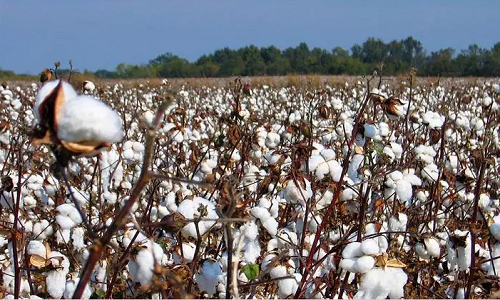 quotas will continue to increase in 2019. The sliding-scale duty quotas will be released to textile mills, while for processing trade quotas, mills need to apply for it. Though the specific releasing time has not been said, the news has been bullish for international cotton market, as the global market cannot fulfill the demand of 1.00 million ton.
Evolving supply dynamics
The three largest cotton producers: China, India and the US, estimate cotton output may decrease in 2018-19 season. Supply is likely to be relatively tight in 2018-19 season. International cotton prices are likely to remain high, or even increase, leading to higher international cotton prices than domestic prices. During June and Dec, cotton that will arrive at Chinese ports will be from Australia and West Africa (Jun-Oct), Brazil (Oct-Dec) and Central Asian and India (Nov-Dec). Except Australian and Brazilian cotton, which on arriving period, there may be outstanding orders to be concluded, for Indian, West African and Central Asian cotton, the sources have been signed contracts mostly, let alone the quality sources.
In USDA May supply and demand report, ending stocks outside China in 2017-18 are supposed to rise 1.90 million ton (increasing volumes of US, Indian and Brazilian cotton are 1.00 million ton), but the quality of remnant 2017-18 US and Indian cotton is a challenge. As Indian cotton has no quality advantage compared with China’s Xinjiang cotton, with no obvious price edge, China reduces the imports of Indian cotton. Going by the current market dynamics, while the supply on international market is tight, downstream mills may have no suitable sources to import and cannot use the quotas. Global and Chinese cotton prices are likely to increase.