FW

Major retailers are backing on the Cotton Egypt Association’s (CEA) drive to rid the supply chain of falsely labeled Egyptian cotton goods. They support the measures being taken by the CEA to root out dishonest manufacturers and counterfeit goods from the supply chain. John Lewis and Dunelm are among those backing the drive.
Manufacturers who do not meet the new criteria will no longer be licensed to produce Egyptian cotton products or use the trademarked logo. John Lewis says all Egyptian cotton products they sell are 100 per cent genuine. Similarly the UK-based Dunelm Group supports the new accreditation process put in place by the CEA to protect the Egyptian cotton brand and will be continuing to insist suppliers meet those standards as a condition of trade with Dunelm.
CEA has also partnered leading testing and verification body Bureau Veritas. The process, which has been endorsed by several academic and professional bodies, works by extracting DNA from cotton fibers, yarns, woven, knitted, fabric or finished apparel. This can then be used to identify the origin and source of the fibers and the percentage of genuine Egyptian cotton in a product. Only manufacturers found to be producing 100 per cent Egyptian cotton goods will receive the accreditation.
Big brands and retail giants are waking up to sustainability and need for green value chains supporting it with huge amount investments by introducing sustainable clothing lines within their collections and ethical manufacturing processes. Following this, the UK’s most-anticipated fashion trade show that claims to be the largest gathering of fashion buyers, Pure London has announced the launch of a new section within its show format to display sustainable collections. Called Pure Conscious, the new section will focus on sustainable brands by giving them a dedicated space at the event to be seen and heard.
Pure Conscious aims to impart education around the much debated topics and connect designers with prospective retailers and brands. This would entail creating a one-on-one business platform for new and emerging talent(s) as well, that otherwise go unnoticed at similar events.
The fashion event will also showcase a slew of content-based programs and seminars highlighting the circular loop economy, sustainable fashion and ethical processes. Fashion technology as a subject would also be explored as a key to empowering the entire supply chain to be more sustainable in its outlook.
Notably, Common Objective is the team’s latest online platform which was launched at the Ethical Fashion Forum. The platform is focused on carrying forward the 12-year legacy associated with the Ethical Fashion Forum which is described as the “LinkedIn for ethical and sustainable fashion.
Puma may shift some production from China to other Asian markets if US tariffs are imposed on footwear. The German sportswear maker currently makes about a third of its products in China. It is looking to move sourcing of footwear to countries like Vietnam and Indonesia and apparel to Cambodia and Bangladesh.
Apparel and footwear could be included in tariffs to be imposed by the US on Chinese imports. The tariffs could mean Puma has to accept a lower US margin or raise prices. However, Puma might have an advantage over larger rivals Adidas and market leader Nike in being able to move sourcing faster because its volumes are smaller.
For Puma first quarter sales in the Asia-Pacific region jumped 35 per cent. Puma has about 1,400 points of sale in China, compared to about 10,000 for its rivals. The brand has already been shifting production away from China over the last couple of years due to rising labor costs. However, it’s unlikely tariffs could shift footwear production back to the United States, although medium to long-term it makes sense to move sourcing closer to its major markets.
Moving production for the US market could take about 12 months. The capacity freed up could also be used to make products for the booming Chinese market, where Puma’s sales growth was exceptional in the first quarter. <p
For Q1 Kering’s consolidated revenue is up 27.1 per cent on a reported and 36.5 per cent on a comparable basis. Buoyed by favorable market conditions, this increase is well balanced across all distribution channels. Directly operated stores continued to see strong growth momentum (up 39.9 per cent on a comparable basis), with double-digit growth in all geographic regions, particularly North America (up 54.3 per cent on a comparable basis) and Asia Pacific (up 42.2 per cent on a comparable basis). At the same time, online sales more than doubled during the quarter.
Revenue from the wholesale network rose 30.5 per cent on a comparable basis. Kering Eyewear continued developing its organization, and the collections under the Cartier license, whose sales were consolidated for the first time, were very well received. With a solid framework and bolstered infrastructure, Kering Eyewear has successfully made a name for itself.
Gucci’s revenue was up 37.9 per cent and 48.7 per cent on a comparable basis. Sales in its directly operated stores, where all product categories and nationalities recorded double-digit growth, rose 50.4 per cent on a comparable basis. Revenue posted sharp increases in all geographic regions, particularly North America (up 64.4 per cent) and Asia Pacific (up 49.4 per cent). The house’s online sales, driven by the US, reported triple-digit growth.
Yves Saint Laurent’s revenue was up 12 per cent as reported and 19.6 per cent on a comparable basis.
Textile manufacturers in Pakistan want the zero-rated tax facility to continue. They also want pending tax refund claims to be cleared. Pakistan’s exports have fallen despite the GSP Plus status the European Union awarded the country in 2013 that allows exports at sharply reduced or zero duty. Textile exports have a 57 per cent share in Pakistan’s total exports.
In Budget 2017-18, export refinance facility was maintained at three per cent, export-oriented sectors continued to remain zero-rated and the duty-free regime for machinery imports stood unchanged. A five per cent regulatory duty was, however, imposed on the import of polyester filament yarn.
Now, textile exporters expect more incentives in the upcoming budget for 2018-19 that could help boost their earnings. Industry has also called for reintroducing the duty drawback scheme and removing or at least curtailing duty on the import of synthetic yarn and polyester staple fiber. They are seeking the removal of Gas Infrastructure Development Cess as well which will reduce the cost of production and improve competitiveness.
Meanwhile, the textile industry wants tax on cotton imports scrapped. Textile manufacturers are attracted by the long fiber of imported cotton compared to the cotton produced in Pakistan.
Bangladesh’s garment makers want source tax on export receipts to be waived for three years. As of now, there is a 0.70 per cent tax on total export proceeds from major export items, including garments. Exporters suggest a tax of 0.50 per cent only on cutting and making instead of a source tax on export proceeds.
The plea from garment exporters come at a time when apparel shipments are on the rise. Garment shipments rose nine per cent year-on-year in the first nine months of the fiscal year. Source tax collected from export proceeds of garments is roughly the revenue collected as income tax from the apparel sector. Apparel makers enjoy a reduced corporate tax rate of 12 per cent.
Some garment exporters are said to import fabrics duty-free and sell them in the domestic market. Producers who make cloth for the domestic market say this hurts them. Leather goods and footwear manufacturers and exporters have called for a reduction of tax on technical assistance and royalty fees and duty-free benefits for importing equipment to ensure fire safety at factories. The garment industry is the country's main export earner. It is looking to hit 50 billion dollars in shipments by 2021.
Intertextile Shanghai Home Textiles will be held in China from August 27 to 30. The home textiles trade event will feature a wide variety of home textile products ranging from bedding, bath, table and kitchen, curtains and upholstery and textile designs and technology, whole home, sun protection, wall coverings and carpets and rugs.
Intertextile Shanghai Home Textiles serves as an ideal platform for suppliers to introduce new products to the market as a large number of visitors including import and export corporations, wholesalers, distributors, chain stores and home product manufacturers are expected.
Euroart, based in China, will present both imported decorative fabrics and wallpaper as well as self-owned fabric brands. Buyers can expect to discover advanced jacquard, embroidery, silk and printing techniques. Fabrics design company Jab Anstoetz will present new outdoor fabrics. Its Around The World collection possesses high color stability, mould-resistance and easy-care features. Jab will also introduce advanced Fiber Guard fabrics which prevent dirt and meet Oeko-Tex standards.
Bedding products are another highlight of the show. Advansa will display new fiber formula Suprelle 95, which is a combination of enhanced sleep comfort and ease of care. French brand Today will promote its full range of fashionable bedding items.
Itma Asia + Citme will be held in China from October 15 to 19, 2018. The event will showcase state-of-the-art machinery as well as products that boost automation and energy-saving features. Over 1,600 textile machinery manufacturers will exhibit. Chinese manufacturers will take the largest area, followed by Germany, Italy, Japan and Switzerland. Sector-wise, spinning machinery forms the largest sector. This is followed by finishing and dyeing, knitting, weaving and nonwovens.
As China’s textile industry continues its transformation, demand for advanced machinery and technology is on the rise. The enthusiastic response for the exhibition is the result of China’s ongoing strategic push for innovation to enhance the global competitiveness of the Chinese textile and other industry sectors. To enhance the country’s position in the global value chain, China has drawn up a roadmap to upgrade industries through innovation.
The exhibition is the industry-leading platform in Asia for textile machinery manufacturers to showcase a wide spectrum of cutting-edge solutions. The last such combined show in 2016 welcomed 1,673 exhibitors from 28 economies and had over 1,00,000 visitors from 102 countries.
In today’s global market, textile makers are sourcing innovative solutions and upgrading their facilities. The drive for better technological solutions is expected to grow in Asia, especially China. Hence, leading brand names will have a large presence in at this event.
President of Adidas North America will step down from his role on July 1. King will be succeeded by general manager of Adidas North America Zion Armstrong. King, 59, has led the North America division of the German sneaker company since June 2014. An Adidas spokesperson said King is stepping down on good terms with the company. He will stay on as an adviser to Armstrong following the transition.
Armstrong has been with the company since 1998, when he joined Adidas New Zealand as a product manager for footwear. He then held executive titles at both the Adidas headquarters in Germany and in the Asia-Pacific region at Adidas South Korea. He moved to Portland in 2015, and has since been second-in-command to King as general manager of North America.
King was the PBJ's Executive of the Year in 2016 and was honored as one of the year's top executives in 2018. Armstrong will report directly to Adidas Executive Board member Roland Auschel, who is responsible for global sales.
Adidas is a global leader in the sporting goods industry with the core brands adidas and Reebok. Headquartered in Germany, the company employs around 57,000 people across the globe and generated sales of € 21 billion in 2017.
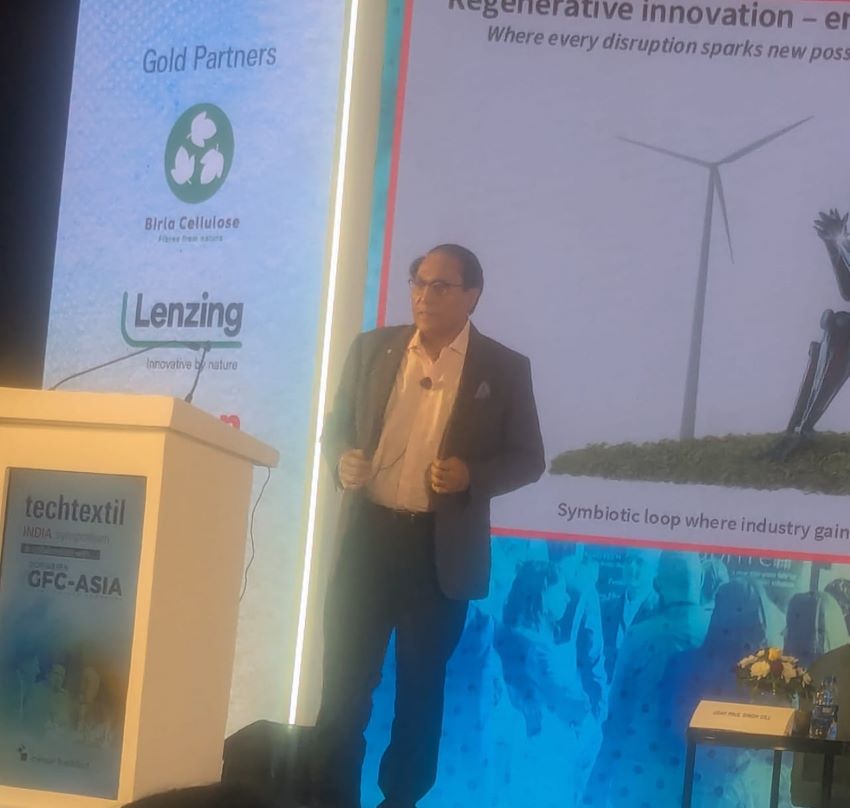
The Lenzing Group (Lenzing) has redefined Tencel, as its textile premium brand at the 2018 Fibers & Yarns by Tecoya Group in Mumbai India. The redefining of Tencel brand is a key milestone of Lenzing’s new brand strategy to enhance product brand offerings, foster connection with customers and consumers, and drive consumer demand. Tencel is well positioned to be a major growth engine in the textile sector, with a brand portfolio that caters to distinctive usage – Tencel Active, Tencel Denim, Tencel Home, Tencel Intimate, and Tencel Luxe, all enabled by two versatile and highly compatible fibres, Tencel Modal and Tencel Lyocell.
Designed and based on the findings and insights of an extensive market research, the brand architecture is an important step for Lenzing to transform from a business-to-business (B2B) fibre producer to a business-to-business-to-consumer (B2B2C) brand. The redefined Tencel product brand, along with the tagline ‘Feels so right’, will enable Lenzing to embark on communication around messages that move beyond fibre types and characteristics towards everyday use and benefits that brands and consumers value.
S Jayaraman, Regional Commercial Director-South Asia and South East Asia, explains, “With a longer-term strategy to enhance connection with customers and consumers, 2018 will be a game changer for Lenzing. Globally, the wood-based cellulosic market is still small compared to the overall fibre demand and we expect greater growth in the foreseeable future.” Specifically, the South Asia market is poised to capture an even larger share of that growth because it has all the necessary ingredients for success in the textile industry – from infrastructure to cost competitiveness, from population size to people expertise.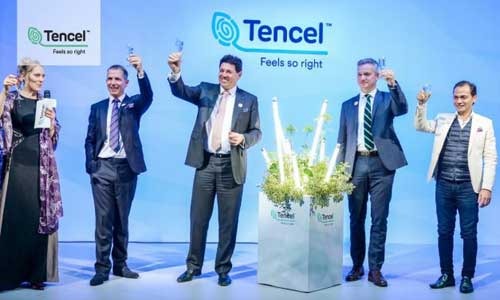
“We are charting a bold new course to simplify our product portfolio and elevate our brand to bring more value to consumers and industry partners,” said Vernon Yeo, Head of Marketing & Branding for Asia, Middle East and Africa Region. “As Lenzing’s flagship brand in the textile sector, Tencel will grow beyond fibre types and functional characteristics, it will become a true consumer-focussed brand with a promise of something more functional and emotional. By elevating Tencel to a promise to the consumer rather than a product message to the value chain, we can start to excite consumers, retailers and brands about the holistic benefits of botanic fibers.” Guided by the brand promise of ‘Feels so right’, Tencel brings greater degree of comfort and higher performance to consumers while making them feel good about the choices they make. He said they to create a stronger connection with the industry value chain and consumers through our expertise around sustainability, especially in Tencel Modal and Tencel Lyocell fibres. In the long run, the plan is to build Tencel not only into a trusted B2B brand but also a preferred consumer brand, which provides B2B customers with ease to maximise marketing effectiveness and enables consumers to identify ‘feel-good’ products made with sustainable materials.
Newer avenues
New swing tags and marketing materials will be launched on a retail level to provide clarity on product benefit claims containing Tencel branded fibers. The swing tags, along with more detailed guidelines on B2B and B2C usage, are now available on Lenzing’s new e-branding service platform, which caters to B2B customers and retail partners, offering faster, more sustainable and more user-friendly solutions for certification and licensing.
“By applying the new brand strategy, we will take a more personalized and targeted approach to reflect the Tencel brand essence of ‘softness’ and ‘feeling good with a natural touch’ with local B2B customers, retail partners and consumers,” says Avinash Mane, Head-Commercial, South Asia. “We will work closely with the local industry value chain and retail brands to educate consumers about Tencel featured value propositions like product quality, functional benefits and sustainability. Co-branding programmes such as swing tags or packaging, and co-marketing campaigns with retail brands will enable us to reach out to consumers directly. With more brand exposure and ongoing consumer education from this year onwards, consumers will see more of us through the Tencel brand in apparel and home textiles and/or in our partners’ retail outlets in the South Asia region.”