FW

Italian menswear show Pitti Uomo has entered a collaboration with Danish trade show Revolver. This will provide a chance for a selection of Scandinavian labels, both established and emerging, to showcase their talent in contemporary menswear.
Revolver represents the most progressive contemporary Scandinavian designer-driven fashion brands. The trade show welcomes a huge number of visiting buyers, press, and industry insiders.
The Pitti Uomo-Revolver partnership which starts next June is planned to last for three seasons. This season, it will allow 15 Scandinavian menswear labels to showcase their collections within a genuinely Nordic atmosphere, since the section will also feature iconic contemporary design brands from the furniture, art and food sectors.
The collaboration marks a step forward for Revolver, which is keen to promote Scandinavian creativity, notably in Italy. In recent seasons, the Danish trade show partnered with Milan-based fashion innovation event White Milano. The collaboration with Pitti Uomo will now give Revolver access to one of Italy’s major fashion shows.
Pitti Uomo is a biannual event that attracts buyers from around the world, designers and creative people, industry players and managers. It includes presentations, fashion shows, displays and installations. The trade fair plans an exhibition on the theme of fashion and football next June.
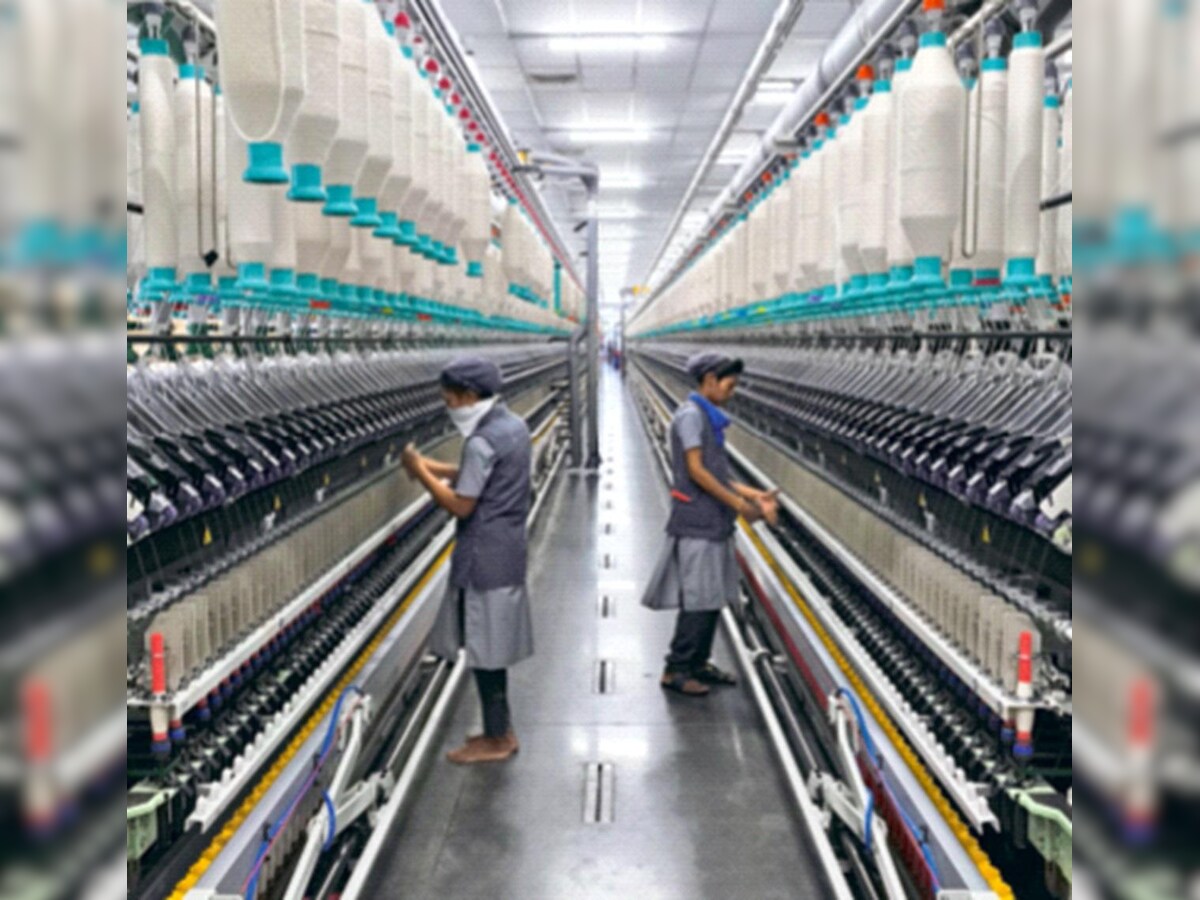
Textile mills in south India, which are facing a high rate of attrition, plan to conduct a job fair at Tripura on April 25 to 26 to recruit workers directly. Seven textile mills would take part in the fair with an aim to recruit about 4000 workers. This is on a trial basis and candidates can join work immediately. There are several schemes of the central government under which mills will train the workers for three months and then induct them as operators.
About 2,500 textile mills in the south employ close to seven lakh workers, of which more than 60 per cent are migrants. A migrant worker stays at a unit for just seven or nine months and leaves. This affects almost 30 per cent of the production. There is no process to verify the profile of workers and mills are unable to find out if a worker who goes home will return or not.
So migrants need to be trained not only in work but also in workplace systems. Hence it was decided to conduct job fairs in different states where mills can recruit directly.
Tripura has extended support for the initiative. It will identify eligible candidates village-wise and verify their details. Just a group of villages are taking part in the job fair initially.
For Q1 Levi Strauss’ net revenues increased 22 per cent on a reported basis and 16 per cent in favorable currency translation effects, driven by broad-based Levi’s brand growth in all regions and channels.
In Europe, net revenues grew 30 per cent, with the strongest growth in women’s and tops. In Asia, net revenues increased five per cent, thanks in part to an expanded direct-to-consumer business. The company had a particularly strong holiday season in the US. Net revenues increased 13 per cent in the Americas. The increase was seen across wholesale and direct-to-consumer channels in all markets.
On a reported basis, direct-to-consumer revenues grew 24 per cent on performance and expansion of the retail network as well as e-commerce growth. Wholesale reported revenues increased 21 per cent, driven by higher revenues from Europe and the Americas.
On a reported basis, gross margin was 54.9 per cent of revenues compared with 51.2 per cent in the same quarter of fiscal 2017. The margin benefit stems from revenue growth in the direct-to-consumer channel and international business, lower product sourcing costs and a favorable transactional impact of currency. The momentum and growth trends seen in the last half of the year not only continued but also accelerated in the first quarter. The incremental investments made in marketing, direct-to-consumer expansion and a more diversified portfolio are paying off.
Lectra has released the first of a series of cloud-based applications. One of these, Quick Estimate, revs up product development efficiency and is instrumental to managing costs. Another, Quick Nest, provides easy access to automatic marker making and capitalizes on cloud technology to handle heavy volumes of calculations in parallel, maximizing productivity and marker efficiency.
These apps empower decision-makers to respond in an instant. These well-packaged, light cloud applications will redefine the way fashion customers store and process data. These apps will also ensure enterprise-wide transparency as management teams gain full visibility of consumption needs for all products in development and production, thanks to viewable access of consolidated data for approval and reporting purposes.
Quick Estimate allows product development teams to calculate fabric requirements instantly. Pattern developers now have the flexibility to make pattern adjustments more quickly to optimize costs, while protecting the brand’s quality and assuring speed-to-market.
Quick Nest can be accessed through Diamino, Lectra’s marker-making solution. During the production development stages, Quick Nest users will be able to process more detailed markers faster. Quick Nest can also be used by production teams to treat lists of markers automatically in record time via the cloud. Lectra is a technological partner for companies using fabrics and leather.
Environmental protection is a top priority for Salvatore Ferragamo. In 2017, the group invested in projects to reduce consumption and obtain important environmental certification for its facilities, in order to minimise the environmental impacts of its operations.
Salvatore Ferragamo pursues a corporate social responsibility process, which began several years ago. Specific initiatives will be pursued over three years. The group believes in local community, synonymous with history and culture, and in the talent of young Italians, who are capable of resolving today’s problems and updating Italy’s creative legacy. It has sustained this legacy by financing, restorations of important works of art, like Neptune’s Fountain in Piazza della Signoria, Florence, and promoting, experimentation with sustainable materials, while remaining steadfast in its commitment to Made in Italy products.
Salvatore Ferragamo believes sustainability is a commitment to be included in development strategies and implemented in the long term. The group strives to make products that last longer, by investing in quality and thereby reducing waste. Italy-based Salvatore Ferragamo, and founded in 1927, is among the world’s leaders in the luxury industry. The group is active in shoes, leather goods, apparel, silk products and other accessories, along with women’s and men’s fragrances, eyewear and watches.
France's LVMH is raising projects in the luxury goods sector by entrepreneurs, including a startup working with silkworms on new materials and another whose software may help spot forgeries. Recently, the Louis Vuitton owner revealed a Paris-based startup programme, which aims to support 50 businesses a year by presenting them in a mega-campus where they can work together with its brands.
The world's biggest luxury goods LVMH, is following the paths of French cosmetics giant L'Oreal in grasping a corner of Station F, a massive startup incubator in Paris where it offers rent-free space to the startups. Ian Rogers, a former Apple music executive says the idea is to animate and activate those conversations around the things that may affect the luxury industry.
He further adds that LVMH has been concentrating its startup efforts in the French capital. LVMH, which also owns fashion label Christian Dior and champagne house Moet and Chandon, did not disclose how much it was spending on Its Station F venture, which kicked off in November but was recently unveiled.
Rogers did not rule out that LVMH or its venture capital arm could invest in some of the startups later on, and stated that there were no immediate plans to support the firms financially. Increased by strong demand from Chinese consumers recently LVMH posted a rise in first quarter sales. A lot of startups had some contact with LVMH or other luxury brands but want to grow their reach.
Bangladesh’s yarn production is set to expand 2.67 per cent this fiscal year on the back of rising garment exports. Cotton imports have been on the rise over the last several years thanks to higher demand from garment manufacturers. Cotton imports in Bangladesh have been increasing between 20 per cent and 25 per cent over the last few years. This year, Bangladesh’s cotton imports will increase by 25 per cent.
Of the total demand for yarn, Bangladesh imports nearly 30 per cent. These are mainly from India, China, Vietnam and Pakistan. However, garment makers use more local yarn mainly to reduce the longer lead-time. Bangladesh's 430 spinners can supply nearly 90 per cent of the demand for yarn from the knitwear sector and 35 per cent from the woven sector.
Bangladesh woven garment manufacturers import fabrics from countries like China, India, Vietnam and Pakistan. The market for clothing retail in Bangladesh is nearly $8 billion a year. Gradual development of the upstream supply chain, including spinning, dyeing, finishing, weaving and printing, creates more demand for cotton to meet the required supply to the garment industry. Yarn consumption in the local markets has increased due to higher consumption of clothing by people in the country.
Euratex has launched a new strategy to represent and strengthen the voice of the European textile and apparel industry. Euratex is the European Apparel and Textile Confederation. It interacts with European policy institutions in Brussels as well as governmental bodies and partner organizations around the globe. It engages with EU policy makers and other key stakeholders in new ways.
Adding to Euratex traditional interest areas – trade and industry policies – are new objectives and priorities like sustainability, innovation and education. Euratex’s member companies which are overwhelmingly small and medium-sized enterprises cover a broad industry cross-section in terms of product, market segment and geographical spread.
Over the last 10 years the European textile and clothing industry, representing an annual turnover of over €171 billion, some 1,78,000 companies and 1.7 million workers, has been able to modernize and reinvent itself into a forward-looking, innovative and export-oriented sector. The EU-27 is the largest world market for textile and clothing products. Further, it is the second world exporter in textiles as well as in clothing.
The confederation has now decided on an internal reorganisation appointing three new directors: Isabelle Weiler (Trade and Industry), Lutz Walter (Innovation and Skills) and Mauro Scalia (Sustainable Businesses).
"Heimtextil India and Ambiente India, touted as India’s premium fairs for home textiles, homeware and interior décor, have launched Bespoke Living, an exclusive product showcase space dedicated to companies dealing with signature collections at Pragati Maidan, New Delhi from June 27–29, 2018. With four successful editions, Heimtextil India and Ambiente India, also slated on the same dates, have become the country’s leading business trade fairs to showcase the finest quality of dining, living, giving and home textiles. The launch of Bespoke Living is aimed at highlighting unique brands dealing with crafted designs that will range from plush statement pieces to extensive signature collections for home and retail furnishing."
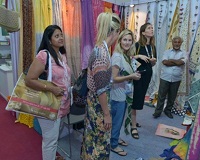
Heimtextil India and Ambiente India, touted as India’s premium fairs for home textiles, homeware and interior décor, have launched Bespoke Living, an exclusive product showcase space dedicated to companies dealing with signature collections at Pragati Maidan, New Delhi from June 27–29, 2018. With four successful editions, Heimtextil India and Ambiente India, also slated on the same dates, have become the country’s leading business trade fairs to showcase the finest quality of dining, living, giving and home textiles. The launch of Bespoke Living is aimed at highlighting unique brands dealing with crafted designs that will range from plush statement pieces to extensive signature collections for home and retail furnishing.
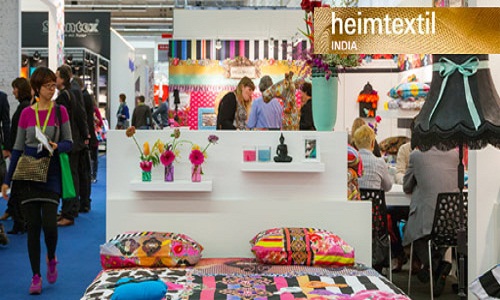
The term luxury décor is not restricted to brand names anymore. With trends like fully furnished luxury houses, theme dominated homes and tastefully designed retail showrooms rapidly picking up in the country, consumers are open to different styles and unique designs. Be it the very popular Scandinavian themed houses to colourful cultural artefacts creating a soothing aura, Indians now want their homes and businesses to reflect their personal style with statement interiors.
Halls dedicated to Bespoke Living will feature selected designer brands from India and around the world showcasing their premium collections. This product showcase arena will be beneficial for interior designers, architects, hotel buyers, buyers of luxury goods and luxury homes developers. Business visitors can gain knowledge about the upcoming trends, source timeless pieces, build new connections with people sharing the same interest and experience the quality of the products in person. Exposure to best in class products and latest trends presented here will help them create a better home design experience for their clients.
Displaying regal designs
Excelling in statement leather pieces the brand Three Sixty will showcase their latest leather collection that comprises of rugged travel accessories and signature furniture pieces. Inspired by the world’s deserts and explorers who traversed them, the brand designs fully customisable handmade products, which are available in beautiful shades of tan. “Our latest collection at Bespoke Living will showcase our ever-evolving tastes and designs. We believe luxury need not be synonymous with breaking open the bank. Traditional Indian craftsmen can craft the most beautiful signature pieces and provide quality beyond compare,” shared Vikash Gupta, CEO, Three Sixty. International exhibitors present at the show will showcase exquisite artefacts like decorative ceramics with glaze, handmade clay wreaths with metal leaves, ceramic vases and other decorative items to make every home unique.
Apart from this specially curated design platform, Heimtextil India and Ambiente India 2018 will host the Interior Lifestyle Awards that will bring creative masters from the interior decor and home textile sectors together by recognising their art and giving them an international platform to showcase their designs. The trade fair will also organise the Hospitality Day, a hospitality and retail procurement programme that will bring top class purchase managers from the industry to build new contacts and source quality products. Together, Heimtextil India and Ambiente India will host over 100 companies from countries like India, Indonesia, Switzerland and Thailand showcasing trendsetting designs in the interior décor and home textile industry.
"Grabbing the third spot, Bangladesh is reigning its share in global exports of textile and apparel products. The country’s exports registered a growth of 9 per cent over the last five years to reach $34.4 billion in 2016, while imports have increased at a CAGR of 7 per cent in the same period to reach $10.3 billion in 2016. Bangladesh’s textile and apparel trade balance recorded a surplus of around $24.1 billion in 2016. When we talk about imports, cotton is the largest imported category by Bangladesh, representing 55 per cent of total textile and apparel imports (2016). This is followed by man-made textiles, others and apparel with a share of 35.0 per cent, 6.8 per cent and 3.2 per cent respectively. Top 10 suppliers accounted for around 94 per cent of textile and apparel imports by Bangladesh. China is the largest supplier accounting for 58 per cent share, followed by India and Pakistan with a share of 19 per cent and 6 per cent respectively."
Grabbing the third spot, Bangladesh is reigning its share in global exports of textile and apparel products. The country’s exports registered a growth of 9 per cent over the last five years to reach $34.4 billion in 2016, while imports have increased at a CAGR of 7 per cent in the same period to reach $10.3 billion in 2016. Bangladesh’s textile and apparel trade balance recorded a surplus of around $24.1 billion in 2016. When we talk about imports, cotton is the largest imported category by Bangladesh, representing 55 per cent of total textile and apparel imports (2016). This is followed by man-made textiles, others and apparel with a share of 35.0 per cent, 6.8 per cent and 3.2 per cent respectively. Top 10 suppliers accounted for around 94 per cent of textile and apparel imports by Bangladesh. China is the largest supplier accounting for 58 per cent share, followed by India and Pakistan with a share of 19 per cent and 6 per cent respectively.
India business relations
India is the second largest supplier of textile and apparel products to Bangladesh, at around $2 billion in 2016. It has registered a CAGR of 4 per cent over the last five years. Cotton textiles is the largest category with a share of 77 per cent in India’s T&A exports to Bangladesh. This is followed by man-made textiles and apparel having share of 17 per cent and 4 per cent respectively.
Currently, Bangladesh imports its required consumption of yarn and fabric from China, India and other nations to fill the demand-supply gap. It has served as a key export market for Indian cotton and man-made textiles since long. However, many new investments are the offing in the spinning and weaving sectors of Bangladesh in the coming years with many big firms taking a keen interest to set up spinning and weaving units there.
Going by its strong emphasis on the sector, the country is soon going to emerge as a self-sufficient textile and apparel hub by focussing more on backward integration in the next 10 years. This is expected to lower the export opportunities for China and India. While Bangladesh is a key export market for Indian textiles, it will be important for Indian firms whose major export market is Bangladesh to look for newer markets for their exports in the coming years.