FW

China’s staple fiber production rose 0.5 per cent in 2017. The bulk of the increase was driven by viscose staple fiber production, which managed to offset the year-on-year drop in polyester and acrylic staple fiber production. Despite the year-on-year drop in accumulated output, polyester staple fiber production is still expected to make up the bulk of overall staple fiber production in China. More than 70 per cent of staple fiber production in the country is expected to be polyester staple fibers.
Accumulated polyester staple fiber production underperformed year-on-year in 2017. There was a 1.4 per cent drop year-on-year. A year-on-year drop in production among polyester staple fiber producers held back year-on-year growth in overall staple fiber production. Viscose staple fiber production made up the bulk of the year-on-year increase in China’s overall staple fiber production in 2017 up to December and accounts for more than a fifth of recorded Chinese staple fiber production in 2017.
Acrylic staple fiber production is expected to be 4.4 per cent of total staple fiber production in China. After a positive year-on-year growth in accumulated acrylic staple fiber production in 2017 up to November, acrylic staple fiber producers ended with a year-on-year drop in accumulated output by December.
Victoria's Secret made the somewhat controversial decision to abandon its seemingly popular swimwear and apparel categories to focus solely on lingerie, beauty and the Pink brand. According to a report, Victoria’s Secret sales declined every single month last year. Things were worse in the first half of the year, with drops between 10 and 14 per cent most months. Towards the end of the year, those declines shrank somewhat to the single digits.
With e-commerce taken out, Victoria’s Secret same-store sales plummeted 6 per cent after a 2 per cent decline a year ago, and bath and body Works added 4 per cent, for an overall 2 per cent same-store sales decline at L Brands stores.
L Brands CFO Stuart Burgdoerfer says the brand will continue to be disciplined in the management of inventory, expenses and capital. Investors will continue to keep an eye on how L Brands handles Victoria Secret retail locations and products in general. L Brands stock has consistently slid since it peaked in 2015 with a price of close to $100 a share, as of press the stock (LB) is trading in the $44 range.
The US has renewed the Cotton Ginning Cost Share (CGCS) program. The program will allow cotton growers to receive a cost share payment based on their 2016 cotton acres reported to the Farm Service Agency (FSA), multiplied by 20 per cent of the average ginning cost for each production region.
Payments will be calculated based on a producer’s 2016 cotton acres reported to the FSA, with per-acre payment rates set at 20 per cent of the regional costs of ginning. America’s cotton producers have now faced four years of financial stress. In particular, cotton producers confront high input and infrastructure costs. That economic burden has been felt by the entire cotton market, including gins, cooperatives, marketers, cotton seed crushers and the rural communities that depend upon their success.
CGCS is aimed at providing direct marketing assistance to producers, alleviating a portion of the economic conditions producers are struggling with. US cotton is struggling due to heavily-subsidized foreign fiber competition and the immediate lack of a safety net policy on par with other crops. Reauthorizing this program for the 2016 crop will help cotton growers offset their ginning costs, which in turn will improve many growers’ financial situation and help keep them in business.
Xeros has a near-waterless laundry system. Polymer technology allows washing machines to use a fraction of the water normally used during washing, while still being able to remove stains and protect linen for hundreds of machine washes.
Xeros has developed washing machine components capable of reducing water use by 50 per cent and preventing microfiber shedding from synthetic clothing. It is estimated that each laundry cycle creates hundreds of thousands of microfibers from textiles.
The XOrb polymer technology and XDrum technology work together inside the washing machines to prevent water loss and promote lower use. X Filtra also uses a filtration process to reduce the number of microfibers released from textiles when washed.
Xeros’ core purpose is to give washing machine manufacturers and home laundry customers a washing solution that delivers unparalleled cleaning results and garment care, at the lowest cost, and with the greatest sustainability for the planet.
The laundry system is expected to be great benefit to Cape Town, South Africa, which has had a severe lack of water in recent months and where municipal water supply may be shut off in July. If this happens, Cape Town will be the first major city in the world to run out of water.
Global textile coatings market is expected to grow at a CAGR of 3.9 per cent from 2017 to 2025. Of all the segments, the polyurethane and polyvinylchloride sub-segments held leading position in global textile coatings market in 2016. Another segment involving the manufacture and use of full surface coasting technology showcases a high demand than other technologies. From the end users’ perspective, the upholstery fabric and industrial clothing segments held the top position on the leaderboard with respect to utilization and demand.
Larger companies who have a global presence in this market are expected to improve their product portfolio so that specific demands from diverse industries can be fulfilled. The competitive landscape is expected to grow stronger as the textile coatings market spreads more extensively. New opportunities along with better production capacity and product quality are some of the goals that are being planned by the market leaders.
The Asia Pacific region is expected to continue to showcase the maximum growth. The rising prosperity of industries such as building and construction, transportation, chemical, and many more have been the most prominent factors behind the upsurge experienced by the global textile coatings market. Among the key players are Clariant, Huntsman, Omnova Solutions and Dow Chemical Company.
The spinning industry in Bangladesh is facing eroding margins and increasing cost of power and wages. The interest rate will reach two digits soon and the local currency is going to be devalued. These challenges may become issues in the near future. Consequences may arise from the exit from LDC status that is expected beyond 2021.
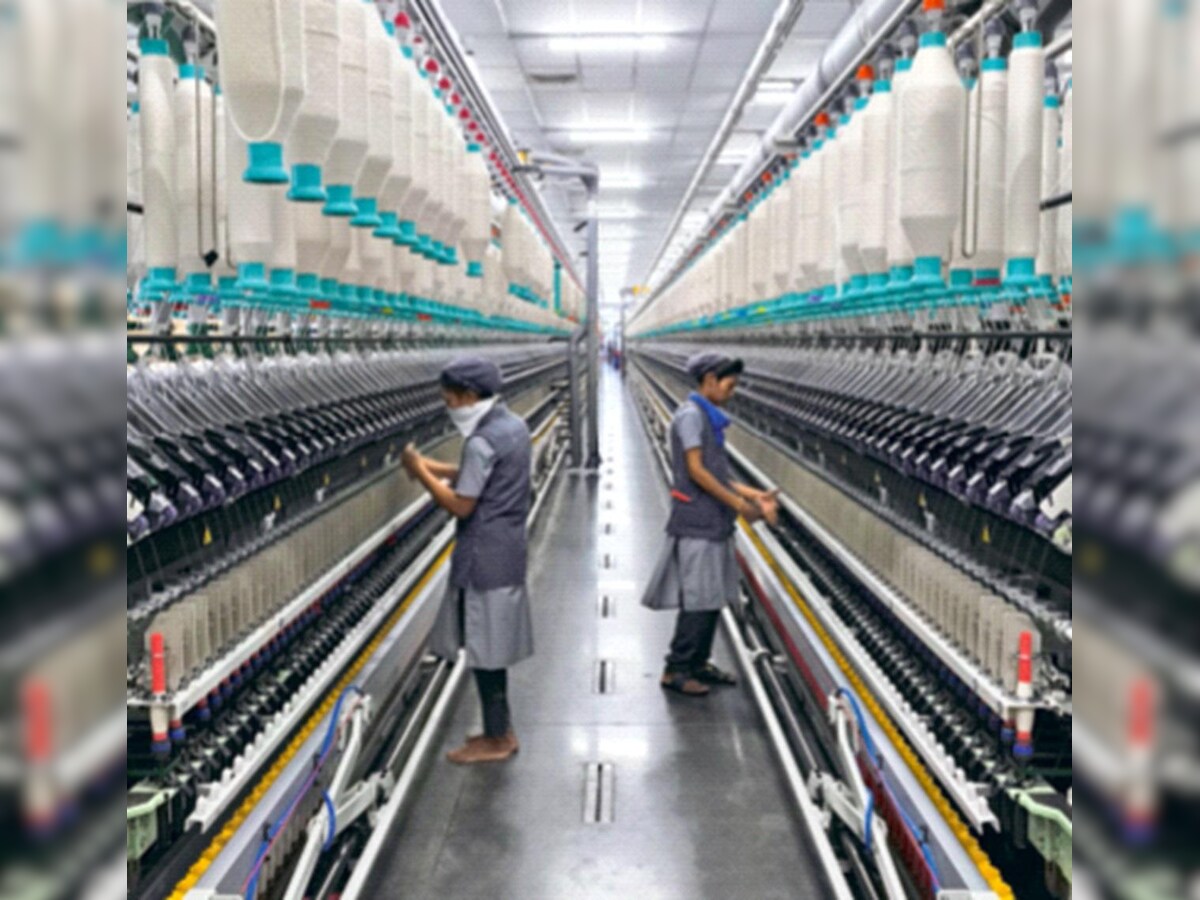
Inefficient machinery and equipment need to be replaced. Focus would be on replacement of major spinning components like motors, spindles, rings and systems to make spinning energy efficient, productive and profitable. There needs to be new investment and expansion in 100 per cent cotton yarn spinning. Bangladesh is predominately a cotton knit garment exporter and requires cotton ring carded and combed yarn. So, ring investment would be focused on mostly carded with auto-doffing and compact attachment.
The new investment and expansion in blended yarn spinning would be dominated by air jet spinning or Vortex. Vortex yarn has cost advantages over ring yarn. Investment in specialty yarn would be in the form of recycled yarn, new and specialty blended yarn, special count yarn, and mélange yarn. The focus should be to manage efficiently the spinning process from planning, material, process, system, marketing, finance to currency, interest and capital market and people.
The 3rd Edition of the Garment Machine Manufacturers Suppliers Association (GMMSA) ended on a positive note in Ludhiana. The exhibitors showcased their range of technology from knitting machines (both flat and circular), sewing machines for knitted garments, hanger systems and spare parts through to needles. Narinder Kumar, President, GMMSA was satisfied with the outcome as he said this edition was the best among all three editions of GMMSA which saw visitors from across India including a team from Arvind Mills and Nepal. Most manufacturing hubs also marked their presence at the fair. The 4-day tradeshow, which began on February 25, had significant footfalls.
Most exhibitors were happy with visitors as well as business enquiries and were hopeful to close deals in the next few days. Technology giants such as Magnum Resources, HCA, IIGM, Narinder International, KP Exim and Ramana International were also happy with the outcome. Besides well-known woollen and knitted garment manufacturers, GMMSA 2018 displayed many home furnishing manufacturers from North India who were offering home textile products manufactured using knitted fabric.
On Day 4, students from many training institutes were in attendance. Post its success, the organising committee promised next GMMSA will be organised on a grander scale with an international feel.
Global cotton production is projected to decline in 2018-19 based on lower yields and decreases in harvested area. Consumption is projected to continue to grow riding on global economic expansion, an expected acceleration of consumer demand for textiles, manufacturing growth for cotton, and rising environmental and production costs for synthetics.
Based on these projections, global stocks would decline to 18.2 million tons. Current projections for the 2017-18 season include production at 25.8 million tons and consumption at 25.4 million tons. Most major cotton producing countries have estimated increased planted area for 2017-18 over the previous season. Production increases are coming off gains in planted area rather than yields this season. However, Australia has decreased planted area yet still increased cotton production with a yield growth of 16 per cent.
Major producers, India and Pakistan, with estimated area increases of 16 per cent and 24 per cent respectively, encountered production losses from pink bollworm this season. Global average yield for 2017-18 is currently being estimated at 778 kg per hectare, a 0.1 per cent increase from the previous season, while area increases are 12 per cent greater from the previous season. Current estimates for the 2018-19 season are for production to move to 25.4 million tons and consumption to rise to 26.5 million tons.
Gildan Activewear, around a year ago, acquired the intellectual-property rights of American Apparel, the LA-based company founded by Dov Charney in 1989. During its heydays, American Apparel’s revenues spiralled up to around $634 million in 2013 before its downfall. Gildan took formal control in February 2017 and had around a month to get its act together with new production and marketing strategies. In the first year itself the company raked in $50 million and this year, it aims to double sales to $100 million. Garry Bell, Gildan’s VP, corporate marketing and communications says to remain true to the label’s roots, the marketing, merchandising and design team is in Los Angeles and will stay that way. The brand has a distinct voice, a distinct feeling and vibe, and we don’t want to disrupt that.
The marketing team spearheaded by Sabina Weber — who worked at American Apparel before the company declared bankruptcy — has an all-female team, many of who also worked at the LA-based American Apparel. Weber and her team are marketing the brand on social media and selling the collection on its e-commerce site, which was up and running at the end of last July.
Gildan is looking at expanding sales to the UK and further to Europe, Canada and Japan. Currently, the wholesale business is generating maximum revenue for American Apparel, with sales to concert promoters, souvenir tours and fund-raisers. For consumer, Gildan has been selling on the back of its campaign ‘Back to Basics’ which consists of basic T-shirts, sweats, baseball jerseys, rugby shirts and shorts that retail for $22 to $54 — if they are made in the company’s factories in Nicaragua and Honduras.
The company has junked the risqué ad campaigns that American Apparel was known for and has given a classy edge to its photo shoots which uses real people with real bodies as against thin models who are not typical average person.
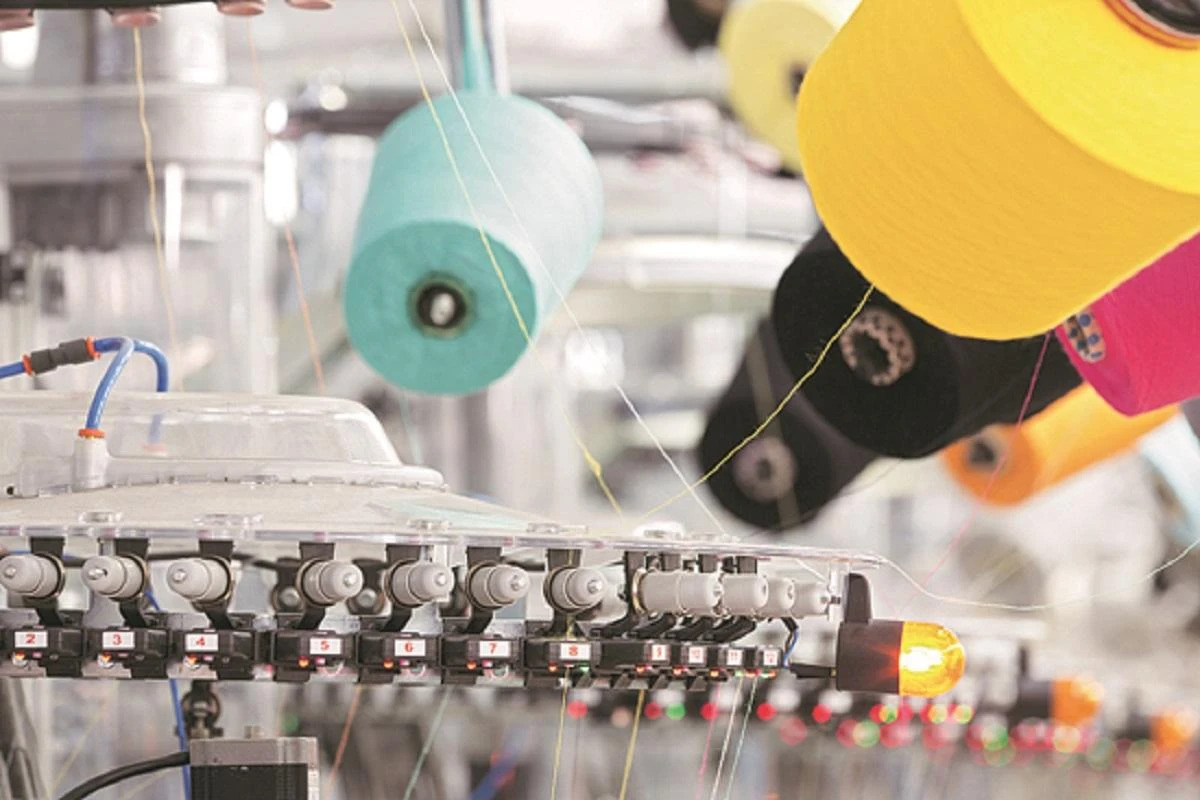
PolyOne’s fiber colorant technology enables textile manufacturers, converters and brands to increase sustainability, operational efficiencies, and market response rates to drive their success in the global textile industry.
The fiber colorant solutions combine colorants and specialized melt spinning equipment to provide an adaptive, innovative system for coloring polyester fiber. This allows textile manufacturers to increase production speeds, flexibility and process control. It also eliminates the need for water and wastewater treatment, up to ten liters per kilogram of fiber, commonly required with aqueous dyeing processes.
The company has enabled a transformation in the way upholstered fabrics, footwear, apparel, safety straps, industrial fabric, and more can be manufactured. The technology not only improves sustainability, it fosters rapid, on-site design and scale up, enabling economically viable smaller lot sizes and improving production flexibility overall.
Recent commercial projects for this technology include textiles for high performance sports apparel, automobiles, home furnishings, and carpeting. The technology is critical to helping manufacturers who are at the forefront of adopting sustainable solutions across their entire supply chain to address sustainability, production flexibility, and speed-to-market goals.
The fiber colorant innovation is one of several high-growth technology platforms that underpin PolyOne’s expectation of delivering double digit EPS growth in 2018 and beyond.