FW

The athleisure trend has ensured that many retailers and brands have begun to launch their own collections. A study by market research firm NPD Group reportd the ‘sport leisure’ style has become the largest category in the US sneaker segment, beating ‘performance’-oriented footwear. In contrast, while demand for sport leisure styles rose 17 per cent last year to $9.6 billion in sales, sales of performance apparel fell by 10 per cent to $7.4 billion, NPD said, noting that the performance category’s decline has speeded up in the last two years.
Sales of ‘running-inspired’ sneakers skyrocketed by 39 per cent and ‘casual athletic’ styles went up by 24 per cent, driving 2017 growth, NPD stated. Matt Powell, senior sports industry advisor at NPD says. the bubble around leisure will not burst anytime soon no. Athleisure rules the runway and the line between what is an athletic shoe and a casual shoe continues to blur. Brands and retailers must continue to feed this trend.
NPD reported that the German company Adidas’ 2017 US sneaker sales skyrocketed by over 50 Adidas last year, the fastest of all players. Adidas’s classic three-stripe Superstar and Tubular Shadow sneakers, both part of its athleisure segment, made NPD's top 10 selling shoe list. Adidas is aware of the importance of fashion; on its website, it describes the Tubular Shadow knit shoe as an update of its original Tubular running design for “contemporary street fashion.” For its Superstar line, Adidas claims it is “an authentic reissue of a classic sneaker” fit for anyone from “basketball MVP to street wear queen.” The brand also has added fashion buzz through well known partnerships with celebrities and designers including Kanye West, Pharrell Williams and Stella McCartney.
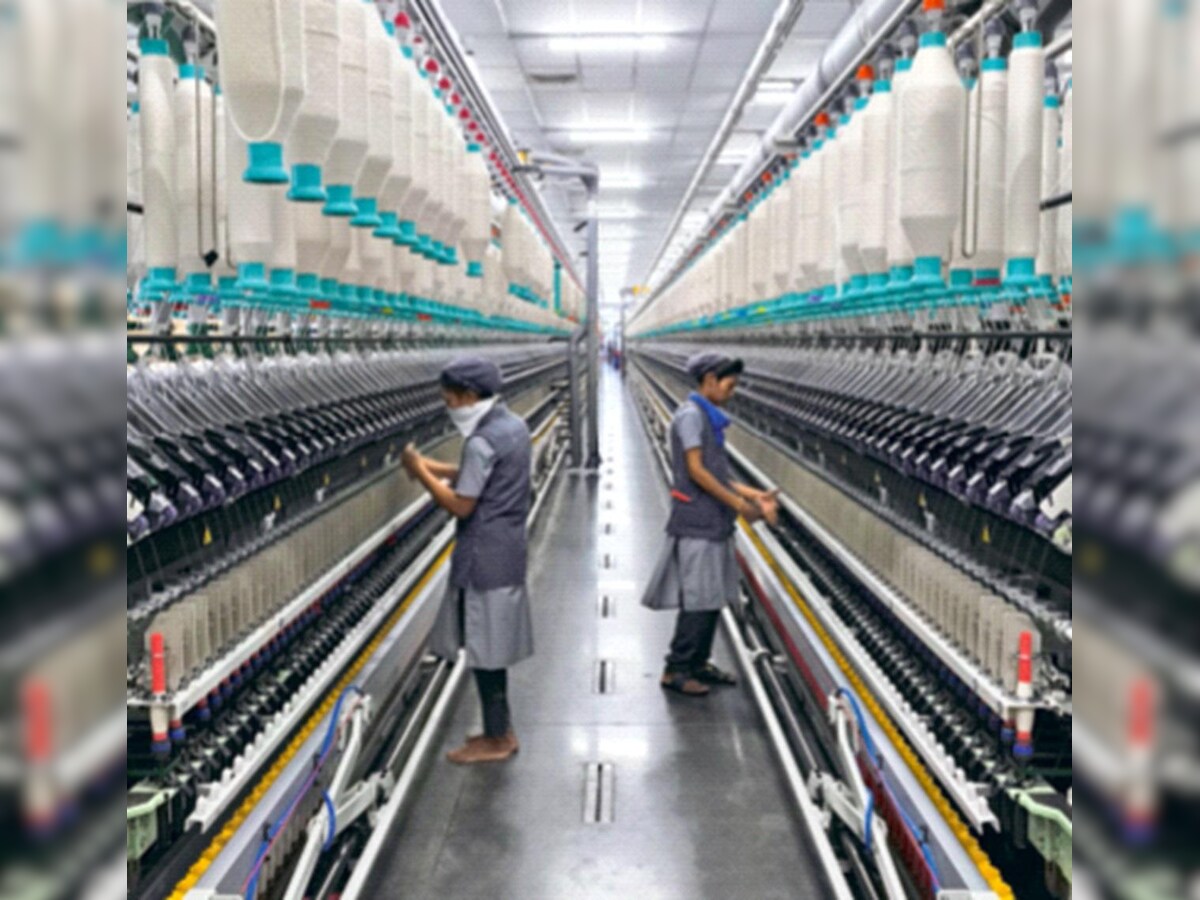
Sutlej Textiles launched its home textiles specially upholstery, curtains and made-ups, since 2015 at its Damanganga home textiles unit at Daheli in Gujarat. The company recently completed expansion project at Damanganga to increase capacity to 9.60 million meters per year. Following capacity expansion, Sutlej projects higher volumes, revenues and surplus. The company also exports around 25 per cent of its home textile production
Sutlej transformed itself from specialised yarn manufacture to home textiles. Leveraging its in-depth understanding of the textile industry, the company ventured into the home textiles segment as per the needs of a growing market of premium home textiles including upholstery, curtains and made-ups.
The division has a world-class design facility comprising cutting-edge manufacturing equipment and state-of-the-art German design software. The facilities also has a full-fledged testing laboratory with latest equipments for testing yarns and fabrics. It also possesses a world-class design facility and outsources cutting-edge international designs.
The plant is also equipped with state-of-the-art equipment to produce made-ups. This segment represents a value-added extension of the company’s product mix.
Sutlej Textiles recently acquired the Design, Sales and Distribution (DS&D) business along with brands of American Skills Mills (ASM) LLC operating from Pennsylvania. ASM offers strategic fit on its strength of original designs based on American sensibilities, in-depth understanding of customer markets and a unique product portfolio including dobby, jacquards, velvets and suede using a variety of fibbers such as rayon, linen, cotton, polyester, silk and acrylic. The company is well known for its ability to deliver customised solutions across diverse designs, blends, colours and finishes from a single integrated unit.
Narain Aggarwal, Chairman, SRTEPC says synthetic and rayon textile exports during April- November 2017-18 recorded $ 3553 million in value terms when compared to $3309 million during the corresponding period of the previous year recording a growth of 7.37 per cent. Aggarwal said the Ministry of Textiles has set an ambitious export target of $7.53 billion for the current fiscal. The export target is estimated at about 20 per cent growth in 2017- 18 as against exports during 2016-17.
So far during April-November 2017, about 50 per cent of the export target has been achieved, however, due to uncertainties and challenges in the indirect taxation under the GST regime he is worried how the target would be achieved. No doubt in spite of various current odds and challenges the council members have been working hard and.
During 2016-17, SRTEPC chairman said synthetic and textile exporters could achieve an export turnover of $5.85 billion when compared to $5.79 billion in the previous year registering a decent growth of 1.5 per cent. Exports of fiber yarn and made-ups recorded growth of 8.49 per cent, 7.91 per cent and 3.27 per cent respectively whereas exports of fabrics fell by 7.59 per cent last year Narain said.
The Indian MMF textile industry has been severely impacted due to import of cheap fabrics mainly by traders who don’t actually use these imported fabrics. In this regard the council has represented to government to increase duties on imported fabrics. The government in October last year increased the effective duties on import of the Manmade fiber fabrics covered under chapters 54 55 and 60.
ISKO and Diesel are joining forces again. Magnete Exposure I sneakers combine the exclusivity of the denim ISKO Jeather fabric with the unique Diesel style. The sneakers presented as part of the Diesel Spring Summer 2018 Preview, are the result of a successful partnership between the Italian brand and ISKO, global leader in denim fabric manufacturing, once again on the cutting edge with its innovation and experimentation. This is the second time the two brands are working together in the footwear sector; as far back as 2015 they had established a partnership to produce three men’s shoe models.
The Magnete Exposure I model is based on the ISKO Jeather concept, a state-of-the-art fabric which combines the denim performance with genuine leather feeling. The collaboration between the two international fashion system brand names is a tribute to anyone searching for comfort, as well as for a trendy look.
The fabric is soft to touch and glossy, characterised by unique stretch power and nuances with an assertive approach. Magnete Exposure I sneakers are currently sold in Germany, South Africa, Israel, Austria, Australia, Switzerland, Japan, Greece, Chile, Italy, UK, Bolivia, Czech Republic, Iran, Poland, New Zealand, Armenia and Belgium.
Swedish fashion retailer H&M has dropped plans to ask shareholders to reinvest their dividend payouts in newly issued shares, saying the move had proved problematic to carry out. The retailer was set to make the request to its annual general meeting in May in order to help finance investments in analytics and technology and rekindle growth at the embattled firm.
According to the company investigation has shown the reinvestment plan would be difficult to implement, both from a technical perspective and because of time constraints. After decades of rapid store expansion, the world's second-biggest clothes group after Zara owner Inditex has struggled in the last couple of years to respond to the rise of ecommerce, with its sales growth and share price both drooping.
With the reinvestment plan off the table, H&M stated that it would propose paying an unchanged dividend of 9.75 Swedish crowns per share for the 2016/2017 fiscal year, to be paid in two instalments, one in May and the other in November.
H&M, which said last month that sales at the start of the year had been slower than expected, is due to hold its first ever capital markets day on Wednesday as it looks to reassure investors unnerved by a 50 per cent fall in the stock over the past two years.
Asia Apparel Expo will be held in Germany from February 22 to 24, 2018. Nearly 400 factories are participating in the expo showing a wide range of sourcing solutions and the high quality production capability available for the international supply of men’s, women’s and children’s wear. Hong Kong and China are represented as well as other major apparel exporting countries of Bangladesh, Pakistan and India. Their aim is to meet the demand of European customers for finished garments, contract manufacturing and private label development.
Asia Apparel Expo is an essential trade show in Europe where sourcing professionals can meet a wide variety of Asian apparel, fashion accessories and footwear suppliers brought together under one roof. From clothing manufacturers through to suppliers of accessories and trimmings, this sourcing presentation is a well-edited snapshot of the significant apparel production available in Asia.
This is the only business event in Europe exclusively for Asian clothing manufacturers and fabric suppliers to connect with European brands, enabling clothing professionals to expand their Asian factory network and production opportunities and take advantage of the hallmarks of Asian apparel supply - high productivity and speed to market.
The event will have new offerings of gloves and belts, handbags, hats and caps, scarves and shawls, stockings, socks and tights, jewelry, earrings, pins and brooches.
Bangladesh Garments Accessories & Packaging Manufacturers & Exporters Association (BGAPMEA), a national chamber of garment accessories and packaging suppliers of the country, has forwarded six main demands to the government to ensure good business for the segment this year.
Md. Abdul Kader Khan, President of BGAPMEA, listed these demands. The six points are a reduction in corporate tax for accessories and packaging to 12 per cent as against the current 35 per cent; allocation of 5 per cent of cash incentives; imported raw materials to be unloaded using ‘free time’ facilities at Chittagong/other land ports; single-digit interest rate for bank loans; quicker hand over of Utilisation Permission (UP) to importers at port; and implementation of 0.70 per cent source tax for the next five years.
Khan said in-spite of the lack of support from the government and other trade associations, the accessories and packaging sector has reported $6.70 billion in revenue during the 2016-2017 fiscal. Of the total, items valued at $1.12 billion were exported directly to the Netherlands, South Africa, the Middle East, Italy, Germany and Austria. The accessories and packaging sector is a shadow exporter industry that bagged a business worth of $6.70 billion in 2016-17. “Constant pressure from buyers to minimise product cost of RMG manufacturers is also pressurising accessory manufacturers to minimise cost, so our profit margin has reduced to a considerable level.”
He also said that to bring in new business for this sector in 2018 the government must take necessary measures to resolve those six demands. “We are hopeful that 2018 will bring good business to the sector. Though devaluation of Taka against USD has lowered our profit margin, we are still hopeful if products order grows and the government supports us, we can recover such losses,” Khan asserted.
Bangladesh's High Commissioner Riaz Hamid-ullah is confident about signing the FTA with Sri Lanka this year. Riaz says, the Bangladeshi ministry is now in discussion with the Ministry of Development Strategies and International Trade. They are now engaged in a joint study to determine the scope, modalities and sectors of the agreement. Once this is done they will develop joint recommendations for the formulation of the agreement. The proposed FTA is largely focused on service sector not goods and targeted at logging into the international supply chain. This should go beyond bilateral trade between the two countries.
The High Commissioner also invited proposals and recommendations for the FTA from the business council. Speaking of development of his country's economy and infrastructure, Hamidullah noted trade with Bangladesh were not limited to its market but connected to global and regional trade. “Bangladesh is becoming more connected in its economic landscape and its physical landscape is also becoming a lot smoother, connecting the country to the regional market,” he added.
The good relations the two countries shared and the facilitation extended to Sri Lankan investors by the different governing authorities has made the country an excellent option for investment-related partnerships. The investment of $100 million by LAUGFS Gas (Bangladesh) in the Mongla Port was testimony to the good investment opportunities present in Bangladesh for Sri Lankan investors, he claimed.
Over the next five years, the Australian apparel and footwear industry is expected to experience strong growth, particularly from sportswear and children’s wear categories. In response to the strong demand for active wear, a growing number of apparel brands have extended their profile to include athleisure.
In 2017, international and local fast fashion brands continued to expand store footprints in areas outside capital cities to capture consumers living in suburban areas. Fast fashion brands in 2017 such as Cotton On and H&M opened 31 and six new outlets respectively.
Athleisure is set to continue to be the driving force in the sportswear category and the growing number of older parents who have greater financial stability and are more willing to purchase high quality clothing for their children will support the children’s wear category. In the apparel, footwear and sportswear category, online retailing is expected to be a key channel in driving sales. Since consumers are accustomed to shopping online through websites and mobile applications, apparel and footwear retailers are expected to offer products in these channels to remain relevant.
A seamless shopping experience between online platforms and physical stores facilitated by mobile applications and services such as same day delivery and click and collect will be new norms rather than differentiators between brands.
Alvanon in partnership with former editor-in-chief of Apparel Monthly, Jenny Liu, has launched The Shanghai Apparel Experience Center (SHAEC), a special industry centre that will connect and bring to market path breaking technologies and sustainable innovations targeted at changing the fashion industry in China and worldwide. SHAEC will display Asia’s most advanced digital fashion and consumer facing innovation. It will provide industry leaders and fashion business professionals in management, design, development, production, supply chain and retail, hands-on access to cutting-edge transformative technologies.
In addition, it will run a programme of professional seminars and workshops targeted at addressing the most challenging issues and opportunities facing the industry. Alvanon founder and CEO Janice Wang says, “By bringing together fashion industry pioneers and China business leaders who have local, regional and global perspectives, the Shanghai Apparel Experience Centre will create a community hub that connects and inspires new ideas and solutions. It will accelerate collaborations and development between the fashion industry and adjacent industries such as digital technology and media.”
SHAECs partner Jenny Liu, who has over 25 years’ media experience, “For a very long time there has been a big gap in the Chinese market between international brands and local know-how, SHAEC will bring the key players together and provide the resources, tools, news and information businesses really need to thrive and succeed in the Chinese and wider global market.”
Li Xin, the China National Garment Association’s deputy secretary general feels to align with China’s expansive One Belt, One Road Initiative, the fashion industry is going through a historical revolution. “We want to build an industry of innovation-driven technology, culture led fashion and responsibly guided sustainability. SHAEC creates a shared space and a new model that drives innovation and development,” Li Xin opines.