FW

The prospect of a US-Malaysia bilateral trade agreement continues to be bleak until the Comprehensive and Progressive Agreement for the Trans-Pacific Partnership (CPTPP) is completely adopted. The CPTPP came into force when the US pulled out of the Trans Pacific Partnership. The remaining 11 members of the pact agreed to proceed with the treaty, following the US’ exit. So it is unlikely that a US-Malaysia free trade agreement (FTA) will transpire anytime soon.
A US-included TPP would have provided Malaysia the access to nearly 300 million consumers in America, as well as lower tariffs for Malaysian exports, among other benefits. Lower tariffs and access to US government procurements to increase Malaysian electrical and electronic exports would have also led to tariff savings along with business opportunities.
Malaysia had earlier expressed a disinterest to pursue the TPPA without the US. Now, however, it has become more receptive in proceeding with the multilateral trade agreement, while engaging with the US in a separate dialogue. Malaysia feels a FTA would be vital to elevate trade and investment ties between the two countries and that the TPPA framework, which has been delayed since 2008, could be used as a template to complete the FTA negotiations. The US is Malaysia’s third largest trade partner, behind China and the European Union.
For the fourth quarter of 2017, Puma’s currency adjusted sales rose 14.5 per cent. Gross profit margin improved by 250 basis points to 47.1 per cent. Further improvements in sourcing, higher sales of new products with a higher margin, a higher proportion of own retail sales and selective price adjustments contributed to the margin improvement.
Operating expenses increased by 11.7 per cent. This is mainly due to higher investments in marketing to support both the brand desirability and sales. For the full year currency adjusted sales were up by 15.9 per cent. Gross profit margin increased by 160 basis points to 47.3 per cent. Operating expenses were up by 11.7 per cent.
In fiscal 2017, sales at Puma's own retail operations increased in currency-adjusted terms by 22.9 per cent. The share of total sales was 23.2 per cent compared to 21.9 per cent last year. This growth was achieved by a strong increase in sales on a comparable basis in its own retail stores, an increased number of own retail stores and a strong improvement of the e-commerce business.
Puma had a good year in 2017 and grew 16 per cent. For 2018, the brand expects an increase in sales at constant exchange rates by ten per cent.
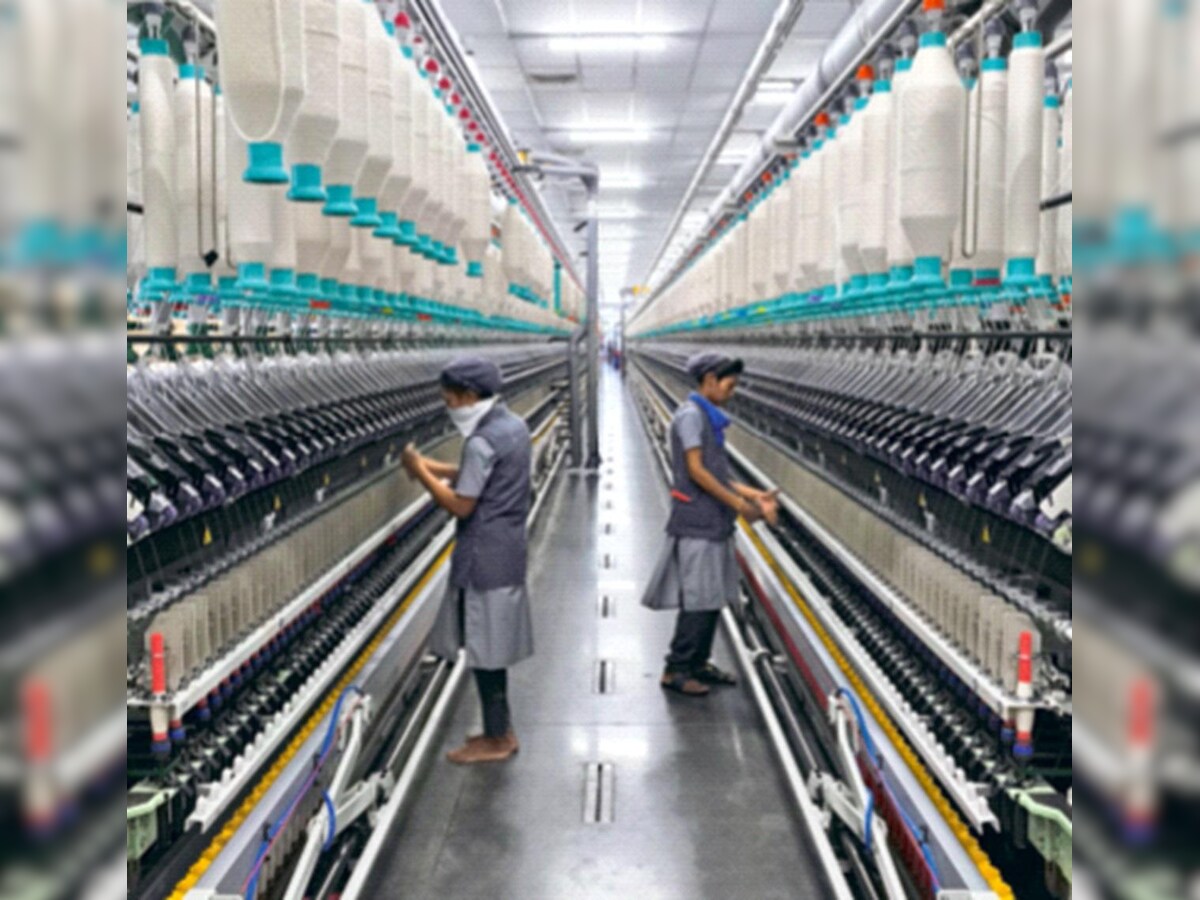
An efficiency conundrum hounding the Sri Lankan apparel industry over the past two decades has seen giants such as MAS Holdings giving up on trying to break through the production efficiency barrier to focus on the complete supply chain. In 2018, MAS’ factories are operating at 65 per cent efficiency, which is what they were operating at in 2000.
But technology has enabled production which took six weeks in 2003 to improve to four days today. The duration from purchase order to delivery which was eight weeks in 2003 has fallen to six days in 2018. The sizes of small orders have fallen from 10,000 to as low as 200. Improving efficiency alone has become irrelevant. In order to further minimize waste and speed up delivery times, the firm has adopted other strategies. Lean manufacturing has played a big part in eliminating waste across the value chain and bringing timelines and lead times down.
MAS Holdings has learnt from the automobile industry on how to seamlessly adapt resources to produce differing styles of the same product with minimum waste and delay. Employees on the production floor are now well trained in at least three skills, in order to allow them to rotate and not have production disrupted by absenteeism or skill shortages.
Cashmere World will be held in Hong Kong from March 14 to 16, 2018. The fair, covers the whole supply chain of cashmere from raw materials to yarns to fabrics including scarves, shawls and sweaters. This year, there is a particularly strong presence of companies from Inner Mongolia at Cashmere World.
Key buying offices are regular visitors to Cashmere World as it is the only trade fair dedicated to cashmere and natural fine fibers. These buying offices include such prestigious brands such as Burberry, Hugo Boss, Loro Piana, Armani, Eastmax Fashion among others.
Since trade fairs are not only about buying-selling and sourcing but also an outstanding opportunity to network and get up to date with the latest market, fashion and trend information, two new spaces are being launched this year – Fashion Connect and Cashmere Trend Space. Fashion Connect will allow participants to stay up-to-date with the latest fashion and industry trends and tech innovations. Cashmere Trend Space is a dedicated area featuring upcoming cashmere and fine fiber colors for 2018-19. It illustrates trends through knitwear, cashmere and fine fiber samples chosen from the latest collections of participating Cashmere World exhibitors.
Over 60 Canadian fashion industry companies and brands, especially from Quebec and Montreal, are participating at Magic, Las Vegas which opens from February 12 to 14. Participating companies, ranging from small and medium enterprises to global leaders, intend to benefit from this unique platform to introduce their 2018-19 fall/winter collections, meet with key buyers and develop new business opportunities.
The show will enable foreign buyers to discover Canada’s strengths. During this international show, the fashion industry will increase opportunities to showcase its expertise and creativity, strengthen commercial ties, and develop partnerships. Exhibitors from Canada are present in sections of the show, including women’s wear, men’s wear, footwear, furs and outerwear, denim, intimates, active wear, children’s wear and accessories.
The fashion industry in Québec generates sales worth $8 billion in manufactured goods and in wholesaler-distributor sales. With more than 1,850 players, including manufacturers, retailers, wholesalers, distributors and designers, it is a strategic pillar of Québec's economy, generating more than 83,000 jobs. Montréal’s fashion industry benefits from cultural and linguistic diversity, a quality workforce, a dynamic education system, a strategic geographical position, and a thriving design and creative community that ensures its continued growth.
Magic is the largest fashion marketplace in North America. The event is attracting over 4,000 exhibitors, including all major international fashion brands, and some 58,000 international visitors.
Bangladesh is losing ground in the US with apparel export falling behind Vietnam, and India due to lack of product diversification and rising production cost of local apparel products. The country's exported apparels worth $4.35 billion to the US in the first 10 months (January-October) of the current calendar year, which is 4.93 per cent lower than the value of exports during the corresponding period of the previous year.
As per the US Department of Commerce’s Office of Textiles and Apparel (Otexa), Bangladesh’s export earnings from US saw a 4.46 per cent fall to $5.07 billion in 2017, which was $5.30 billion a year ago. Bangladesh’s market share in US apparel market came down to 6.31 per cent. Apparel import by the US saw a 1.04 per cent rise in volume terms during the January to October 2017 period. US, the largest apparel importer in the world imported 23,109.54 million SME of apparels during the review period as against 22872.37 million SME in the prior-year period.
China, Vietnam, Bangladesh, Indonesia and India were the top five apparel exporters to the US during the first 10 months of 2017. The countries exported apparels worth $ 23.16 billion (down 3.64 per cent), $9.84 billion (up 6.79 per cent), $ 4.35 billion (down 4.93 per cent), $ 3.93 billion (down 2.81 per cent) and $3.22 billion (up 2.06 per cent), respectively.
The cumulative apparel import data of the US will further rise till the end of 2017 as per the projection. Holiday season sales are also expected to surge by 4 per cent this year in the country.
The Indian retail market is expected to grow at a CAGR of 10 per cent from 2016 to 2026. The market accounts for over 10 per cent of the country’s gross domestic product and around eight per cent of employment.
India is the world’s fifth largest global destination in the retail space. In the last couple of years, international single brand retailers like Ikea and H&M have entered India. Healthy economic growth, changing demographic profiles, increasing disposable incomes, urbanisation as well as changing consumer tastes are some of the factors driving growth in the organised retail market in the country.
Moreover 100 per cent foreign direct investment in single brand retailing has got the green single. This is expected to help organised sector grow by allowing more players to participate. This FDI approval makes that experimentation process more automatic and economical from a resource management perspective. Also, if a brand has a financial alignment with an investor, it can now close that deal much faster, instead of months going back and forth and risking jeopardising the deal.
One of the major issues faced by international brands is to meet the 30 per cent target for local sourcing by their Indian units after five years of setting up. Many brands see it as a restriction as not many want or can afford to have 30 per cent sourcing for the Indian market itself.
Levi Strauss increased 13 per cent in Q4 on a reported basis and 11 per cent in favorable currency translation. For the full year, revenue went up eight per cent, and seven per cent in constant currency. Q4 net income grew 20 per cent primarily reflecting higher ebit and lower taxes due to additional net foreign tax credits as well as the favorable impact of foreign operations as compared to 2016.
Adjusted ebit grew seven per cent in the fourth quarter reflecting higher revenues and gross margins. For the full year, adjusted ebit was flat, as higher revenues and gross margins were offset by higher costs related to the expansion of the company's direct-to-consumer business, increased advertising investments and higher compensation expense reflecting stronger company performance.
Direct-to-consumer revenues grew 20 per cent for the fourth quarter and 15 per cent for the full year on performance and expansion of the retail network, as well as e-commerce growth. The company had 53 more company-operated stores at the end of fiscal 2017 than it did at the end of fiscal 2016.
Wholesale reported revenues grew 10 per cent for the fourth quarter, reflecting higher revenues from the Americas and Europe, and five per cent for the full year primarily reflecting growth in Europe.
GST has many weavers and handloom organisations worried. Traditionally, the handloom sector has largely been exempt from taxation in India but that changed since GST came into effect last year. Under the new GST rules, all input materials used in handloom production, in addition to the finished cloth, attract a tax of five per cent to 18 per cent, which is a significant burden on weavers.
Earlier, the tax only applied to finished cloth. Now, everything is charged, the cloth, the thread. Besides the obvious financial burden of GST, many weavers are upset about other provisions under the new tax law. The existing transport services are now demanding a GST number for transporting their cloth anywhere within the country; even if the weavers choose to transport the cloth themselves, they have to produce an e-way bill, which is generated digitally. Individual weavers are also required to maintain regular accounts and file tax returns.
A small weaver in a village, with little education, who has known nothing but weaving all his life, is supposed to get an e-way bill done, having little computer smarts. Many weavers and artisans are finding it difficult to migrate to the new GST system or don’t have an income that would justify the effort it would take to comply with it.
"With annual sales of $12.4 billion, VF Corp has the potential to bring in dramatic shift not just in its operations but across the value chain. In order to do so, the company created a complex initiative called ‘Made for Change’, outlining aspirations for advancing environmental and social improvements across its business, portfolio of brands, global supply chain and communities worldwide. Letitia Webster, VP-global corporate sustainability at VF Corp, opines the mission began in 2011 when Eric Wiseman, then chairman of VF, asked her to start the corporate sustainability program for the company. Initial goals were set and achieved."

With annual sales of $12.4 billion, VF Corp has the potential to bring in dramatic shift not just in its operations but across the value chain. In order to do so, the company created a complex initiative called ‘Made for Change’, outlining aspirations for advancing environmental and social improvements across its business, portfolio of brands, global supply chain and communities worldwide. Letitia Webster, VP-global corporate sustainability at VF Corp, opines the mission began in 2011 when Eric Wiseman, then chairman of VF, asked her to start the corporate sustainability program for the company. Initial goals were set and achieved. The company set a carbon reduction goal of 5 per cent in five years and they actually reduced carbon footprint to about 12.5 per cent, saving millions of dollars.

With sustainable thought process in mind, VF, with brands such as Wrangler, Lee, Vans, The North Face and Timberland, came to the conclusion that in order to truly become a much more sustainable company and industry three things needed to be achieved: moving the linear model to the circular business model, understanding the material impacts that were driving and impacting the business and getting all of VF’s 65,000 associates and the millions of consumers who buy its products to help in moving in the right direction. Webster assed sustainability and responsibility became value driver and by creating a value, facilitating responsibility in the marketplace, VF will then create transformational impact. That is really fundamentally at the core of this strategy.
Made for Change
Fundamentally, VF Corp believes environmental waste is financial waste. They have set out a goal that by 2020 all of their distribution centers will be zero waste. The company is saving significant amounts of money at every single distribution center that moves to zero waste. They want to bring these results to the ultimate consumers as well. In order for us to move as an industry, as a planet, as a world—and everything that is important to us—if we are going to move in that direction, it has to make business-sense, Webster said. This can’t be a philanthropic effort, it absolutely has to fundamentally be embedded into business strategy and business plans and help drive the business—and help it be more efficient and reduce risk. Overall, VF has committed to reducing its global environmental footprint by 50 per cent from farm to door by 2030, which is about science-based targets.
VF is working closely with supply chain partners and our suppliers to announce something next year. The second aspect is focussed on materials. VF was a founding member of Sustainable Apparel Coalition, which developed the Higg Index, a standardised methodology for measuring the environmental impact of materials. According to Webster, the company integrated that into its material selection process and is now using it to help brands identify more sustainable materials.
Circular business models
The company is planning to enhance the use of used clothing or renting clothes. The company itself is looking at renting, since it does have products that are high value that consumers don’t need to buy because they use them one or two times a year. A number of pilots are being explored and could be launched in the next few months. The second area of focus of the Made for Change initiative, dubbed Scale for Good, looks at what’s really impacting the business and where VF has some of the greatest impacts. In addition, VF is looking at sustainable agriculture practices, reforestation and conservation efforts. On the materials end, a key is the use of recycled materials following the Higg model. The company has a goal to increase the amount of recycled materials, specifically nylon and polyester, by 50 per cent.
The third pillar, according to Webster, is around work and wellbeing, noting that the apparel industry is often not recognised as the best when it comes to work and wellbeing and VF is in a better position to bring a change. Through its responsible sourcing efforts, they are making tremendous headway in trying to create and share best practices in the industry and improve the way that workers are treated and elevate those best practices through supply chain.