FW

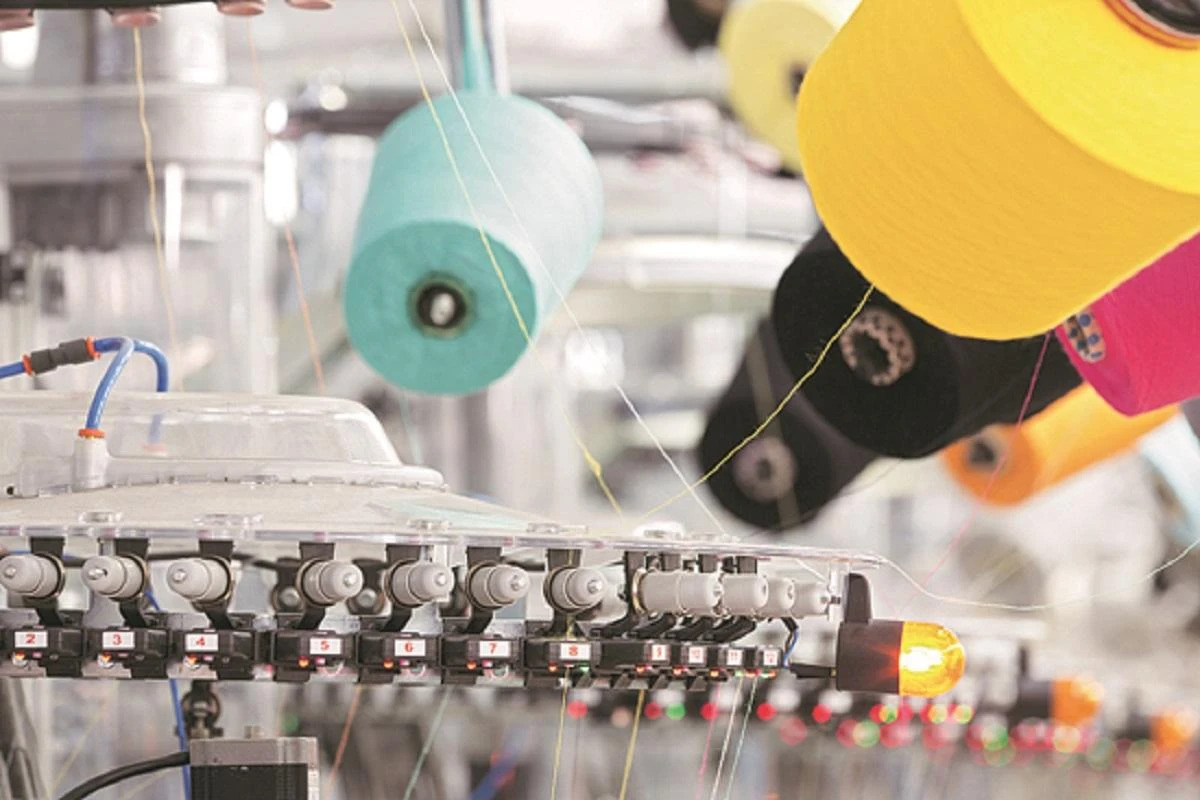
Fulgar launched the opening of new production centres in Sri Lanka in 2003 and Serbia in 2007. Fulgar is present in all textile sectors, from hosiery to circular knits, corsetry, swimming and sport, with high-quality products that stand out for their excellence and uniqueness, without ever forgetting the Made in Italy textile tradition. Fulgar Lanka representative will be available at DTG 2018, Hall- 02, Booth-203 which will be held at Bangabandhu International Conference Center (BICC) on February 08-11, 2018
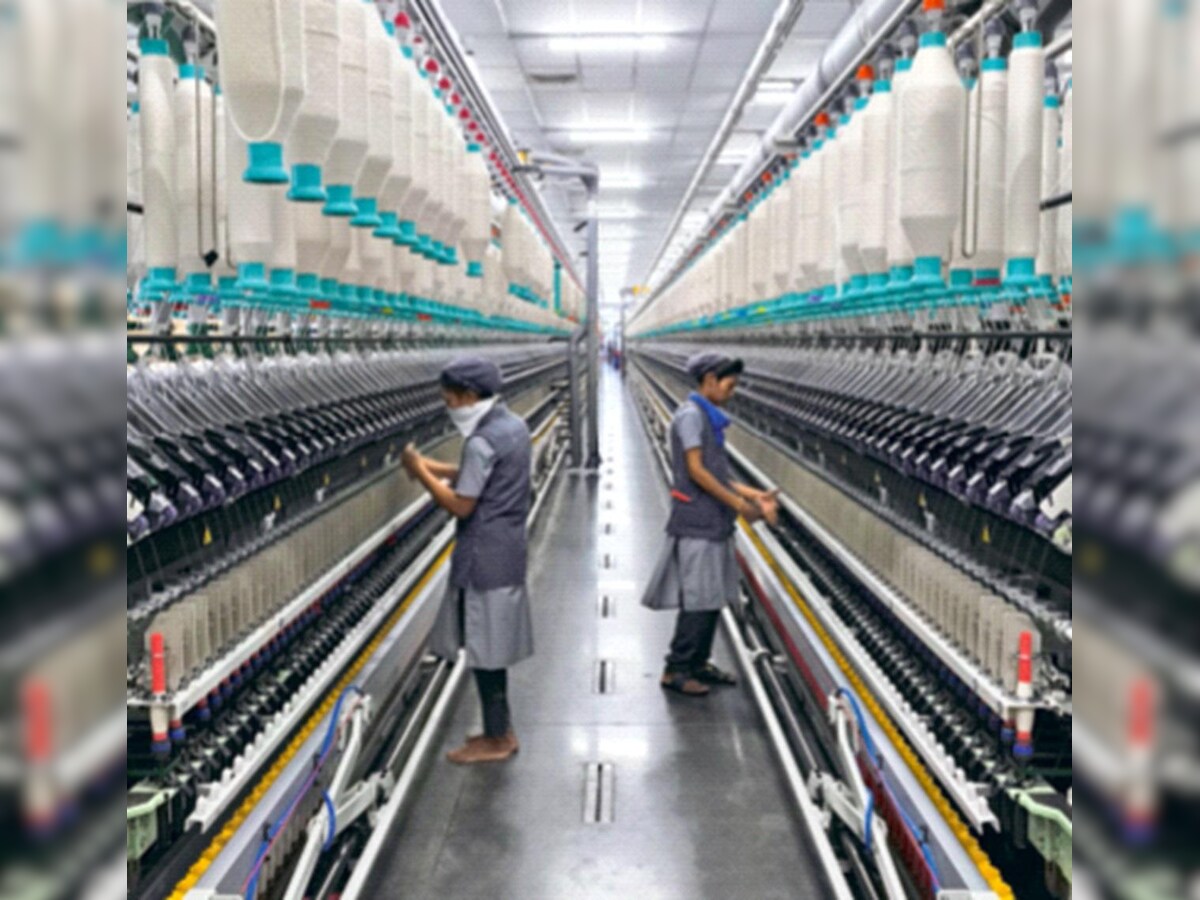
Fulgar Lanka specialises in textured and twisted nylon 6/6 yarns. It has 10 years of experience in developing unique, functional melange effects and boasts one the widest offers on the market with a production capacity of over 900 tonnes a month. It is currently present in most important Asian markets, especially Sri Lanka, India, Bangladesh, South-East Asia and China.
Developed on the model of Fulgar Italy, Fulgar Lanka draws inspiration from a series of key concepts – research, innovation, quality and sustainability. An in-house laboratory deals with client needs, and Fulgar Lanka has been awarded Oekotex Std 100 class I certification. Its operations also meet ISO 9001 regulatory requirements.
The nylon and covered yarns produced by Fulgar Lanka are used in a number of sectors, from seamless to circular knits, flat knits and weaving. These ingredients are invisible yet fundamental, placing Fulgar at the origins of so many fashion textile success stories in Asia also.
Fulgar Lanka’s core products are EVO, Q-Nova and Nanofibra, as well as blends with other yarns to create melange effects in the best traditions of the company. Their unique performance enables the company’s products to stand out and add value to the yarns.
The Bangladeshi government has started initiatives to revise the minimum pay for workers in the garment industry, which accounts for over 80 per cent of the country’s exports. The existing minimum monthly wage of Tk 5,300 or almost $65 came into effect from January 1, 2014. The Ministry of Labour and Employment has formed a panel by including a representative each from the trade body and labour organisation to its existing four permanent wage board members. State Minister Mujibul Haque says the committee will file a report with its recommendations in six months, after which the government will finalise the new wage structure.
RMG workers’ organisations are demanding Tk 16,000 as minimum wage, citing rise in cost of living post inflation. Around 4 million workers, mostly women, are involved in the around $28 billion industry in Bangladesh.
Despite being the second largest exporter of garment products, the country often faces allegations that all its factories do not follow the pay structure. The state minister hoped they’ll be able to give a new pay structure for the RMG sector within five years from the last one.
The permanent wage board panel headed by a retired district judge has a member who is not involved with any industry. When the government wants to decide the pay structure of any industry, it adds one representative from the workers and owners from each of the corresponding industry. Bangladesh Garment Manufacturers and Exporters Association President Siddiqur Rahman and Jatiya Sramik League’s Women Affairs Secretary Shamsunnahar are the two new members of the panel that will review the pay structure of the clothing industry.
The US believes Bangladesh needs the generalised system of preferences (GSP) facility to enhance its export in US markets and remain competitive with other countries, as GSP is the only duty-free facility of the US for developing countries.
However, a US Embassy officials in Dhaka say there was no petition by the Bangladeshi government to reinstate the facility post 2015. GSP facility was suspended post the Rana Plaza blaze in 2013. "Bangladesh never requested for GSP facility after 2015, but every year it is reviewed," he said.
However, if a petition is now made (to get the facility), it will have to go through 16 points, which include labour law reform as per the international standards as well as freedom of association and trade unionism in the country's EPZs. The country has made significant progress in improving labour situation, but it is still far behind from the standards set by International Labour Organisation (ILO). The number of labour union registration, which increased in 2014 and 2015, has decreased significantly, and it is also against the GSP action plan, he pointed out.
The US-Bangladesh investment relations is based on garment export, enjoying the largest market in America. But the US Embassy records $80 million less export last year when compared to the previous year. US-Bangladesh relations is expected to grow significantly in 2018 as the US Embassy foresees huge opportunity for US investors in Bangladesh. Many US companies have shown interest in investment in Bangladesh, considering the immense potentials in local oil, gas and energy.
Sustainable economic growth and growing middle class have also made the country attractive to the US consumer producers. But lack of infrastructure and regulations are among the difficulties that the companies face when considering investing in Bangladesh. The US expects that the country's export list will be diversified focusing more on value added products.
The king of denim, Adriano Goldschmied is sharing his denim expertise with a new project. The denim guru is partnering ‘An Original Penguin’ by Munsingwear for Fall ’18 that will combine Goldschmied’s denim know-how with the brand’s youthful aesthetic. Goldschmied has a wide range of projects. The designer led the re-launch of Edwin Jeans‘ North American reboot in 2017. The king of denim also partnered with Lenzing last year to design a 15-piece collection that showcases Refibra.
Goldschmied has announced, “We are very pleased to partner with Perry Ellis International and believe our inspirations will complement Original Penguin, with its iconic American sportswear and contemporary fashion appeal, adding to the premium menswear apparel market.”
Owned by Perry Ellis International Inc, Original Penguin is best known for reworking its archive of mid-century classics with seasonal updates to reflect a modern lifestyle. The collaboration permits the brand to tap into the on-going demand for denim in menswear. Oscar Feldenkreis, Perry Ellis International CEO and President exults, “With the resurgence of denim as a trend, our timely partnership with Adriano Goldschmied is truly exciting.
This collaboration will invigorate the brand with the combination of our enduring style with Adriano’s innovation, unique washes and imaginative designs. We anticipate a collection that is perfect for the brand’s style-savvy consumer that appreciates its heritage.” The collection will be targeted to premium department stores and will be sold on the brand’s company stores and website.
The 49th Hong Kong Fashion Week Fall/Winter opened doors today at the Hong Kong Convention and Exhibition Centre (HKCEC). The show organized by Hong Kong Trade Development Council (HKTDC) is being held from January 15 to 18 with 1,397 exhibitors from 13 countries and regions participating. They are showcasing latest fashion designs, global brand collections, garments, fashion accessories, fabrics and clothing accessories. The participating countries are: China, India, Indonesia, Japan and Pakistan with group pavilions. France, Bangladesh, Korea, Hong Kong , Taiwan , Thailand and the USA are the other participating countries; Malaysia joins as the new country participating in this edition of fashion week.
The theme for this edition is: ‘New-World Explorers’. Two new zones are debuting under this theme viz, ‘Corporate Fashion and Uniforms’ and the ‘World of Fashion Accessories’. The other major product zones are: Clothing Accessories, Emporium de Mode, Fashion Gallery, Fashionable Sportswear, International Fashion Designers’ Showcase, and Fabrics & Yarn among others.
Hong Kong exhibitor Innee-Sedona International will showcase a range of fashion accessory from Céline Dion brand. The brand’s 2018 F/W collection will make its world debut at Hong Kong Fashion Week with a range of products including handbags, luggage and small leather accessories. The Hong Kong Research Institute of Textiles and Apparel (HKRITA) and the Institute of Textiles and Clothing of The Hong Kong Polytechnic University will also showcase their newly developed textile products featuring temperature-control functions, suitable for both general apparel and specialised medical applications. Ningbo Seduno Group from Chinese Mainland is the biggest exhibitor.
More than 20 exciting events including fashion parades and presentations, seminars, as well as a buyer forum and networking reception will be staged. Fair highlights include: Fashionally Presentation, launched for the first time by the Hong Kong fashion website Fashionally.com. Unlike conventional catwalk shows, the parade will showcase 2018 FW works of local fashion designers Derek Chan, Aries Sin and Mim Mak, in a storytelling format set in a theatre-like stage, presenting a unique experience for buyers.
Hong Kong an important trade center in global textile and clothing and accessories space, clocked in business worth $13.2 billion in Jan-Nov 2017, recording a drop of 7.7 per cent over previous year during the same period and imported worth $11.3 billion during the same reflecting a drop of 5.7 per cent in the same period previous year.
The 49th Hong Kong Fashion Week Fall/Winter opened doors today at the Hong Kong Convention and Exhibition Centre (HKCEC). The show organized by Hong Kong Trade Development Council (HKTDC) is being held from January 15 to 18 with 1,397 exhibitors from 13 countries and regions participating. They are showcasing latest fashion designs, global brand collections, garments, fashion accessories, fabrics and clothing accessories. The participating countries are: China, India, Indonesia, Japan and Pakistan with group pavilions. France, Bangladesh, Korea, Hong Kong , Taiwan , Thailand and the USA are the other participating countries; Malaysia joins as the new country participating in this edition of fashion week.
The theme for this edition is: ‘New-World Explorers’. Two new zones are debuting under this theme viz, ‘Corporate Fashion and Uniforms’ and the ‘World of Fashion Accessories’. The other major product zones are: Clothing Accessories, Emporium de Mode, Fashion Gallery, Fashionable Sportswear, International Fashion Designers’ Showcase, and Fabrics & Yarn among others.
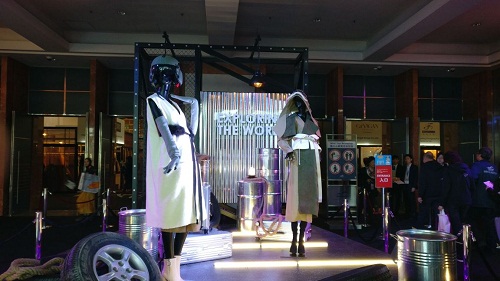
Hong Kong exhibitor Innee-Sedona International will showcase a range of fashion accessory from Céline Dion brand. The brand’s 2018 F/W collection will make its world debut at Hong Kong Fashion Week with a range of products including handbags, luggage and small leather accessories. The Hong Kong Research Institute of Textiles and Apparel (HKRITA) and the Institute of Textiles and Clothing of The Hong Kong Polytechnic University will also showcase their newly developed textile products featuring temperature-control functions, suitable for both general apparel and specialised medical applications. Ningbo Seduno Group from Chinese Mainland is the biggest exhibitor.
More than 20 exciting events including fashion parades and presentations, seminars, as well as a buyer forum and networking reception will be staged. Fair highlights include: Fashionally Presentation, launched for the first time by the Hong Kong fashion website Fashionally.com. Unlike conventional catwalk shows, the parade will showcase 2018 FW works of local fashion designers Derek Chan, Aries Sin and Mim Mak, in a storytelling format set in a theatre-like stage, presenting a unique experience for buyers.
Hong Kong an important trade center in global textile and clothing and accessories space, clocked in business worth $13.2 billion in Jan-Nov 2017, recording a drop of 7.7 per cent over previous year during the same period and imported worth $11.3 billion during the same reflecting a drop of 5.7 per cent in the same period previous year.
The Cotton Egypt Association (CEA) has launched a new brand identity and digital platform to re-enforce Egyptian cotton’s quality worldwide. The fresh, modern look, revealed this week at Heimtextil in Frankfurt, is designed to convey the superior quality and natural beauty of Egyptian cotton while luring consumers, retailers and manufacturers with its heritage and values.
Developed with UK-based brand specialist Salesworxs, the new strategy places the consumer at the centre of the Egyptian cotton experience, with a key emphasis on how the luxury hand-picked fabric feels against the skin. Khaled Schuman, Executive Director of CEA, said, “We believe that everybody should experience the luxuriously soft touch of Egyptian Cotton. We want people of all ages, worldwide, to seek out its strength, softness and durability. It’s all about the personal human touch. Our sales and marketing partner, Salesworxs, created a powerful brand identity which reflects the brand’s heritage whilst educating our audience as to our core values.”
Salesworxs’ MD, Richard Newman, said: “We know that a brand is a story that is always being told. It’s what people say about you when you’re not around. Egyptian Cotton is without question the world’s finest cotton. Our job is to ensure our global audience recognizes this when making purchasing decisions on relevant products such as home textiles and clothing.”
The rebranding is designed to increase consumer demand and retailer confidence and will support the CEAs drive to eliminate the supply chain of falsely labelled Egyptian Cotton goods. The CEA has appealed to all its manufacturers to become accredited. “This is a simple process that ensures transparency and traceability,” the site notes. “By using the latest scientific technology, we can identify the genomic fingerprint of the cotton, conduct DNA tests and confirm that 100 per cent of the fibre is genuine.”
Many foreign companies operating in China have come under fire for listing Taiwan and Hong Kong as countries. As per a statement on the regulator’s WeChat account, The Shanghai office of the Cyberspace Administration of China reprimanded Spanish fast fashion retailer Zara and American medical device maker Medtronic for mentioning Taiwan as an independent country.
Both companies were ordered to apologies by Friday night, carry out “self-inspection” of their websites and apps and turn in rectification reports. “Shanghai Cyberspace Administration will further assess the situation depending on the rectification result,” the statement added. Both companies apologised and updated their websites. Medtronic posted a statement on the microblog platform Weibo, “Medtronic fully understands China’s stance on its territorial issues and we sincerely apologise for causing misunderstanding among the Chinese public.”
American hospitality chain Marriott came under fire for mentioning Tibet, Macau, Hong Kong and Taiwan as separate countries in a customer questionnaire earlier this month and liking a Twitter post supporting Tibetan independence.
Despite Marriott’s apology reassuring the Chinese that the company doesn’t “support anyone who subverts the sovereignty and territorial integrity of China,” the Shanghai government demanded that Marriott close down its Chinese website and app for a week.
The Shanghai cyberspace administration’s statement also welcomed netizens to report such issues to safeguard a healthy online environment. Similar mistakes were noticed on the websites of companies, including Delta Air Lines and H&M. A Delta spokesperson informed that the company had updated its site. The series of public relations disasters has triggered an uproar on Chinese social media, with netizens calling for a boycott of foreign brands. “You first earned Chinese people’s money, and then hurt our feelings. I would like to ask you to leave China,” wrote one angry net user on Weibo.
Only two years since its launch, the ground-breaking Uster Tester 6 is making a significant impact in Bangladesh. Ambitious and quality-conscious spinners are keen to participate in the rapid growth in export sales by the country’s textile producers. Uster Tester 6 is more than the ultimate evenness tester, it is also the entry to wider potential benefits for mills, integrating data from other Uster quality measurement sources to create a real Total Testing Centre.
Bangladeshi mills have been seeing the advantages and correspondingly several Uster Tester 6 units are already in operation in the country and in the rest of South East Asia, following its global launch at the Milan ITMA in 2015.
The upcoming DTG exhibition may stimulate even greater interest among visitors to the Uster booth. At the 15th Dhaka International Textile and Garment Machinery Exhibition, to be held in city’s Bangabandhu International Conference Centre from February 8-11, Uster experts will provide visitors with first-hand information on the Uster Tester 6.
The sheer speed of the Uster Tester 6 – without compromise on quality – is hailed by all the spinners. The test speed of 800 m/min also provides highly reliable and extremely accurate results, due to the new Capacitive and Optical Sensors.
Abdul Latif, Deputy General Manager of Divine Spinning Mills says hairiness testing at high-speeds of 800 m/min, also now including Hairiness Length Classification, requires relatively much less time for testing.” Companies also report increased efficiency in quality management, with feature such as the graphical presentation of ‘timeline’ reports – analysing the product with a long-term perspective and providing quality data over a pre-defined time. Khorshed Ali, Senior Manager Quality Control at Pahartali Textile & Hosiery Mills noted, “We are able to analyse the product at a single glance.”
Morocco’s Ministry of Industry, Investment, Trade and Digital Economy has decided to end the exemption on some Turkish textile products despite the 2006 Free Trade Agreement (FTA), between the Turkey and Morocco. Effective January 9, Morocco’s decision aims to protect the domestic textile industry, facing the rise of Turkish products on the national market in recent years.
Several Turkish brands, including LC Waikiki, Defacto and Koton have decided to expand the national market by opening stores in major cities of the kingdom of Morocco including Casablanca, Rabat, Marrakech, Tangier, Fez and Agadir. This decision is post a study conducted by the Moroccan Association of Textile and Clothing Industries (AMITH) whose aim was to show up some Turkish operators who strategically sold at a loss to flood the national market with their products. In fact, imports of Turkish textile products registered a significant increase of 175 per cent between 2013 and 2017.
The Ministry's decision mainly concerns Article 17 of the FTA on transitional adjustment measures, over a period of one year, to ensure a balance in favour of domestic products. Rakiya Eddarhem, Secretary of State for the Minister of Industry, Investment, Trade and Digital Economy, in charge of foreign trade, said imports of certain Turkish textile products will be increased to 90 per cent under common law. These include man-made filaments, man-made staple fibres, carpets and other textile floor coverings, special fabrics, tufted textile surfaces, lace, tapestries, trimmings, embroidery, knitted fabrics clothing and clothing accessories, knitted or crocheted, articles of apparel and clothing accessories, not knitted or crocheted or made up, made-up articles, second-hand clothes and rags. Eddarhem also disclosed that the national textile sector is the third largest contributor to the Kingdom's gross domestic product (GDP) with a 7 per cent share.
In addition, the FTA makes it clear that tariffs under these measures cannot exceed 25 per cent ad valorem and must retain an element of preference for products originating in the other Party. The total value of imports of products subject to these measures may not exceed 15 per cent of the total value of industrial products imported from the other Party during the last year for which statistics are available. The flooding of the national textile market by Turkish products has contributed to a loss of 20,000 jobs per year over the last five years.