FW

South Africa is eyeing an economic turnaround riding on growth plans and investment projections in the textile & clothing industry. This sentiment was reflected by Jeff Radebe, Minister in the Presidency for Planning, Monitoring and Evaluation, South Africa. After having witnessed a major downfall post 1994, the country started gaining economic strength in 2005. In Western Cape, government and industry jointly established the Cape Clothing Textile Cluster (CCTC) in 2005, a not-for-profit initiative that believed that struggling participants in the sector needed to pool resources and collaborate as a cluster to counter the effects of globalisation. They worked on lean thinking principle to continuously offer more value to customers with fewer resources.
In time, the Department of Trade and Industry developed a nation-wide Clothing and Textile Competitiveness Programme (CTCP) to assist the industry in upgrading processes, products and people in order to compete effectively against other low cost producing countries. The initiative provides financial assistance to organisations as well as training in best operating practices, including lean manufacturing and thinking. By 2013, textiles and clothing accounted for about 14 per cent of manufacturing employment and represented South Africa's second largest source of tax revenue. These initiatives created growth momentum and the CTCP was able to create 12,000 jobs and assisted more than 400 companies. Experts say, sales of domestic clothing, textiles, footwear and leather increased from about R41.8bn in 2010 to over R50bn in 2015; an increase of 21 per cent over five years. By contrast, they decreased by 6 per cent in the former five years from 2005 to 2010.
Learnings from K-Way
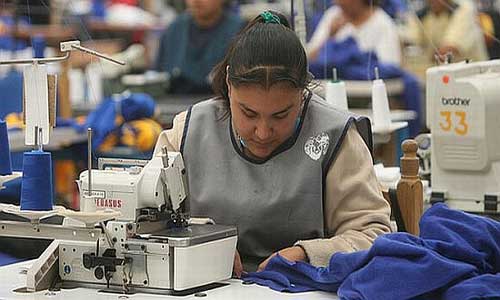
K-Way has been a great example of turnaround witnessed in the industry. In 2004, K-Way was operating at a loss and on the verge of shutting down. The company hired Bobby Fairlamb as GM with the aim of turning the business around in two years. K-Way benefited from the collaboration and support provided by both the CCTC and the CTCP. The latter provided funding and training in lean thinking that enabled K-Way to buy the best machinery available and double the scale of its production, while also improving quality. Later the organisation also benefited from an injection of enthusiasm and expertise from lean thinking consultant Herlecia Stevens. Fairlamb and his team used lean principles to identify and implement changes to achieve better results in the factory.
After initial success, they focussed on managing the much more difficult task of shifting organisation culture. People started becoming more engaged in their work and supervisors saw an increased ownership of the process. Absenteeism fell along with rework and reject rates. When Fairlamb joined K-Way, the factory was operating at 40 per cent productivity. This meant for every clothing item, which should have taken 10 minutes to manufacture, employees at the factory clocked roughly 16 minutes. By 2012, K-Way was operating at 75 per cent production efficiency. By 2015, it was charting an efficiency of 120 per cent, as employees took eight minutes or less to make the same garment. The ultimate result was, ‘If morale is up, all the KPIs are up’. If morale and engagement are down, you are always on the back foot. This case study actually would help industry in tiding through tough times.
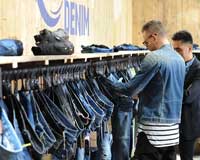
The Denim Premiere Vision Show, to be held on November 14 an 15 at the Paris Event Center (PEC), connects suppliers and buyers, responds to changes in the market and reflects the evolution of denim values through four key events: strengthened and multi-faceted fashion point of view; a distinctive offer featuring a new area dedicated to small quantities; eight workshops & conferences; and a festive event. The eight workshops and conferences would focus on 5 main issues, which include denim’s new socio-cultural values; fashion at the heart of denim; the keys to a denim product’s success; the circular economy and new business models; and changes in the value chain.
The denim pop-up street
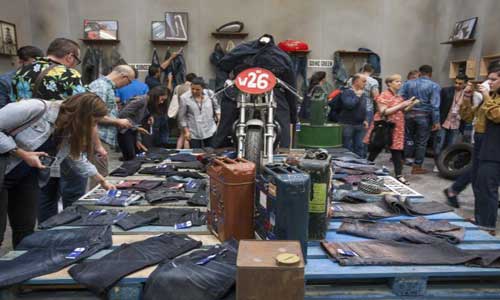
It will feature collections by avant-garde designers, cutting-edge players from the world of denim, art galleries, street art, collective ateliers. In the heart of the Marais, Rue du Vertbois will be entirely given over to denim, with a dozen boutiques taking part in an unprecedented night of experiences and shopping open to the general public.
Pure players, the show’s longstanding target, are now joined by new players with more diversified codes, profiles and expectations. Brands and fashion designers coming from luxury, medium and high-end ready-to-wear markets, web pure players, retailers, new generations of designers and consumers: these multiple communities are now gravitating into the denim universe.
Fashion & Trends: Areas to find inspirations
For younger generations, responsibility has become a prerequisite for creation, product development and the choice of materials. This imposes structural changes throughout the entire production value chain, which are at the heart of the themes presented by Denim Première Vision in its Smart Creation platform. This season, Denim Première Vision proposes a double event, at once open to younger generations and faithful to the heritage of denim, with fashion, the avant-garde, innovation and digital evolutions at its core, via an offer and program providing concrete solutions to this changing market. Denim Première Vision will be providing inspiration in three key areas dedicated to spring summer 19.
Showcase of avant-garde designers
Selected for their avant-garde creativity, eight international designers worked in collaboration with the show’s exhibitors to create 16 exclusive silhouettes. Exhibited in a dedicated area, they showcase their contemporary vision of the coming season. Their collection for sale will be displayed at the Denim Pop-up Street.
Meanwhile, the Trend Area has been updated for spring summer ’19. Arty and contemporary, the Denim Trends Area developed by the show’s fashion team will offer a more informative, efficient and immediate reading of seasonal stand-outs. Fabrics, accessories, finishes, cuts and silhouettes... all the season’s must-haves will be introduced through 10 inspiring highlights, presented via a selection of creative, technical and technological products and developments from exhibitor’s collections.
Premiere vintage market: season 3
The show welcomes the 3rd edition of this space, designed to provide inspiration and an exclusive shopping experience. Partnering the Première Vintage Market, teams from Italy’s Denim Boulevard have travelled the world to select the original pieces that will be offered exclusively at the show. A source of inspiration for creatives and designers, as well as an unique shopping space where denim lovers can find their favourite pieces.
Exchanges of ideas, collaborations, business this event will allow players in the denim sector to come together around the latest creative, technical and technological developments presented by the market’s most innovative suppliers.
There will also be a distinctive area dedicated to small quantities. Around 75 international exhibitors have been selected by a committee of experts and professionals including weavers (49 per cent), manufacturers/ launderers/ finishers (26 per cent), accessory makers – labels, rivets, buttons (15 per cent), technology developers (5 per cent), promotional organisations and service providers (3 per cent), spinners, to showcase their offerings. This will be known as SMQ corner – small minimum quantities.
To adapt to the needs of denim brands and fashion designers, the event is launching a new area: the SMQ Corner – small minimum quantity corner. A space that will bring together a selection of fashion manufacturers, laundries and finishes offering rapidity and reactivity, technical and technological know-how, a quality and proximity service, fast time to market, and above all flexibility in terms of production volumes. Five companies from Italy, Morocco, Portugal and Turkey will be featured in this space.
Three day Hanoi Tex will be held in Vietnam from November 1 to 3, 2017. This expo focuses on the machinery, spare parts, technologies of the garment industry. It will be a good platform for meeting best quality buyers from garment factories in Vietnam and neighboring countries in Asia.
Companies from China, Germany, Hong Kong, Indonesia, Japan, Korea, Pakistan, Singapore, Taiwan, Thailand, UK will bring advanced technology, equipment and material for Vietnam’s textile and garment sector. The textile and garment sector fetches the biggest export revenue for Vietnam. However, since processing is the main form of production in Vietnam the ratio of added value is not high. The problem is the underdeveloped supply chain which causes a low added value ratio in Vietnam compared to other countries.
Despite a slowdown in world economy, changes in material prices, natural disasters due to climate change, lower purchasing power, enhanced management of production and business activities have helped Vietnam be on track to achieve its 2017 economic targets.
The textile and garment industry expo is the biggest and the most important event in the textile and garment industry of Vietnam. It has taken place over 24 times since the 1990s.
The Apparel Importers Trade and Transportation Conference will be held in the US, November 15, 2017. This is one of the industry’s premier transportation policy events. The US fashion industry will convene at the event. It will bring together several hundred executives working in compliance, logistics, sourcing, supply chain management, government relations, and social responsibility to discuss trade and transportation policy.
Discussions will focus on how policy proposals will impact the industry’s supply chains and the outlook for sourcing in the new trade and customs policy environment. The conference will feature a panel with leading organizations in this space discussing how companies can allocate their resources and make a difference. Speakers include representatives from the Better Cotton Initiative, Canopy, Responsible Business Alliance and Worldwide Responsible Accredited Production as well as sourcing and social compliance executives who have worked for decades at top brands and retailers.
The conference is being hosted by the United States Fashion Industry Association. It represents the fashion industry: textile and apparel brands, retailers, importers, and wholesalers based in the United States and doing business globally. USFIA works to eliminate the tariff and non-tariff barriers that impede the industry’s ability to trade freely and create economic opportunities in the United States and abroad.
India has launched an initiative to help small industries adopt sustainable and efficient textile technologies. This initiative called Saathi is expected to benefit the almost 25 lakh powerloom units in the country which produce 57 per cent of the total cloth in the country. The use of efficient equipment would result in energy savings and cost savings to the unit owner who would in turn repay in installments to Energy Efficient Services over a four to five year period.
The provision to repay in installments is a novel idea as it will not cast undue burden on small power loom owners since they will not be required to incur any additional capital expenditure. This initiative is a step in the right direction as there is enormous scope for increasing the production and exports of fabrics from India in view of the abundant availability of raw materials and technical skills in the country. Exports of fabrics can be increased substantially if they are treated on par with garments and made-ups in terms of incentives.
However, despite these advantages, and even though weaving capacity has increased by 12 per cent over the last seven years, woven fabric production has decreased by 3.58 per cent as fabric export has become uncompetitive due to various added costs, non-refund of state levies and duty free access enjoyed by countries like Pakistan, Bangladesh, Vietnam in the EU market.
The US wants to renegotiate the North American Free Trade Agreement (NAFTA) with Canada. When NAFTA came into effect in 1994, the Canadian apparel industry took a hit as the terms of the agreement specified only garments made in Canada were considered eligible for free trade across the border. But there is no Canadian manufacturer of denim, so Canadian companies manufacturing denim products have to go abroad to source it.
Thanks to the agreement’s tariff preference levels (TPL), wool, cotton and other manmade apparel made from imported textiles can be exported duty-free to the US. That means Canadian apparel manufacturers can source materials from places like Bangladesh or Sri Lanka, make the products in Canada, and still reap NAFTA's benefits when exporting duty-free to the US.
If NAFTA is fully reorganized or revoked, Canadian apparel companies could lose their competitive edge. Canadians making goods in Canada would then either make goods in the United States or make goods off-shore and further perpetuate the decline of manufacturing in Canada.
Removing the TPL would prevent US companies from enjoying the duty-free shipment of products made with internationally-sourced materials. The only ones who would benefit would be companies that both source and manufacture domestically.
Kingpins Amsterdam was held from October 25 to 26, 2017. The first day was very crowded and lively, while the second one slightly slower, though busy. Most companies presented products and projects focused on sustainable practices and eco-friendliness.
Lenzing’s new fiber Refibra based on a circular economy pattern debuted at the show. Refibra launched a new special collaboration collection. It included different indigo fabrics and jerseys as well as denims employing different mixes of Refibra with other recycled or sustainable fibers, but also made with 100 per cent Refibra. Many companies offered their own interpretation of Refibra fiber for jeanswear and casual wear.
Invista presented the final results of a study done in five countries (Germany, Spain, US, China and Brazil) in 2016 among women wearing stretch jeans. To better advise consumers in choosing the best jeans Invista teamed up with an online publication and curated a shop hosting jeans from 19 brands mostly sold in the US. Invista also shared the results of the study with brands and retailers informing them about how to choose the best bi-stretch for their needs per each trouser’s silhouette.
The plan is to expand Kingpins shows throughout China, Europe and US, and enlarge their commitment to sustainable jeanswear on all fronts.
Fashion trade show Pure London has created a new sourcing event called Pure Origin. This is a platform to unite suppliers, buyers and brands and bring all aspects of fashion sourcing and manufacturing under one roof. Pure Origin was created following extensive research into the marketplace.
Pure Origin will be held alongside Pure London and Pure Man on February 11 to 13, 2018 with over 40 manufacturers. British manufacturers will be also represented at the show. The event will feature global manufacturers, exclusive briefings, content from WGSN and color methodology and forecasting workshops. Visitors will be also able to benefit from one-on-one advice and tutorials about the fast growing menswear market.
Pure London is expected to welcome over 800 brands from 48 countries and over 10,000 UK and international visitors. The trade show hosts a variety of companies across women’s wear, men’s wear, young fashion, athleisure, footwear and accessories.
Offering efficiency and time-saving benefits, Pure Origin will showcase a curated selection of international manufacturers, textile producers and white labels. Pure Origin was created to deliver all aspects of fashion sourcing and manufacturing under one roof.
The United Kingdom is renowned for its world-class retailing, booming e-commerce sector, innovative independents and resilience.
European and Asian countries are increasingly placing orders for Myanmar garments. In 2015, export earnings from garments accounted for 10 per cent of the nation’s total export value. Exports of garments to the EU increased 80 per cent.
The number of garment factories increased in recent years to over 400. In 2016, the garment sector employed up to 3, 50,000 workers, about 90 per cent of them women. Foreign direct investment in Myanmar’s garment industry has been significant. As of mid-2015, about 55 per cent of registered garment firms in the country were fully or partly foreign-owned. Among them, a quarter came from China, 17 per cent from Hong Kong, 29 per cent from South Korea and 12 per cent from Japan.
Foreign-linked firms supply almost all garment exports and these have surged in recent years. The lifting of EU and American sanctions has helped further boost export growth. Currently, Japan and European countries are placing the largest orders for garment shipments. Additionally garment exports also go to South Korea, China and America.
Myanmar’s garment industry is focused on cutting, making and packing, which is a basic contract garment assembly system that allows international garment companies to reduce their labor costs.
Iran is showing strong potential for luxury markets. Early last year, Iran re-entered the global economy after more than 30 years of isolation and austerity. With an educated, surging middle income population of almost 80 million, and a GDP of more than $400 billion, a number of brands are reportedly interested in returning to Iran or increasing their physical and digital presences there.
The young generation is hungry for luxury goods and wants to distance itself from the austerity of the ruling regime. Brands like Versace and Roberto Cavalli are expanding their brick-and-mortar networks in the capital Tehran. Iran is the second largest economy in the Middle East following only behind Saudi Arabia. The capital Tehran is home to luxury malls featuring major Western brands.
However, a grey market and a significant market for counterfeit goods have flourished. Grey market goods are typically defined as genuine branded goods obtained from one market that are subsequently imported into another market and sold there without the consent of the trademark holder.
So, Iranian consumers have grown used to a market littered with fake goods. Many wealthy Iranians are not well informed about the change in the retail landscape and still assume luxury goods in local boutiques are convincing fake versions of the Western brands they profess to be.