FW

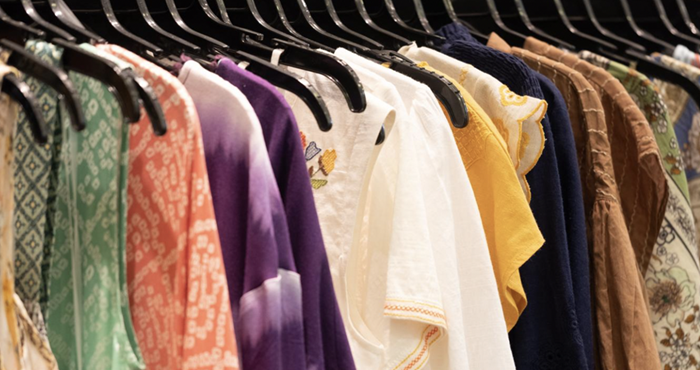
A recent investigation conducted by nonprofit Changing Markets Foundation has cast doubt on the effectiveness of apparel trade-in programs.
The Dutch organization used 21 Apple AirTags to track garments, including coats, trousers, and jackets, through prominent programs offered by companies like H&M, Zara, C&A, Primark, Nike, The North Face, Uniqlo, and M&S. The investigation covered locations in Belgium, France, Germany, and the U.K., with additional items donated to a Boohoo upcycling scheme. The study found that despite the program taglines promoting sustainability, the efforts fell short.
Approximately 76 percent (16 out of 21 garments) were either destroyed, left in warehouses, or exported to Africa for disposal, raising concerns about human rights and waste management crises. Trouser donations to M&S were scrapped within a week, while joggers donated to C&A were incinerated in a cement kiln. Shockingly, a skirt donated to H&M traveled thousands of kilometers from London to waste ground in Mali, allegedly dumped.
In response to the investigation, an H&M spokesperson acknowledged the seriousness of the findings and the need to meet higher standards. H&M's garment-collecting partner, Remondis, took over responsibility for the program in January 2023, and the company has pledged to ensure proper waste management.
Primark also clarified its take-back scheme, managed by Yellow Octopus, stating that donated clothing is responsibly handled and utilized through the Upcycle Labs initiative to create home products from textile waste.
Changing Markets' summary highlighted the necessity for European Commission regulators to implement "mandatory" reuse and recycling targets, tax synthetic textiles, and establish circular design standards in legal measures.
France and the Netherlands have already taken steps in this direction with legally binding reuse and recycling targets for used clothing. Past reports from Changing Markets have drawn attention to fashion's connection to Russian oil and clothing waste exports to Kenyan landfills, emphasizing various sustainability concerns.
In response to a persuasive campaign by global workers' union IndustriALL urging companies to divest from Myanmar, Inditex, the parent company of Zara, has taken decisive action. Inditex announced on Thursday that it is currently engaged in a phased and responsible withdrawal from Myanmar.
The company spokesperson conveyed this message in an email, stating, "As a result of IndustriALL's call, we are actively reducing our connections with manufacturers in the country.
" Myanmar has been a prominent producer of garments for various Western brands and retailers, but since the military junta took control through a coup in February 2021, concerns over human rights violations and instability have escalated. Inditex's move marks a significant step in solidarity with the efforts to address the situation and disengage from sourcing operations in the troubled nation.
A substantial increase of USD 582.93 billion is projected in global apparel market between 2022 and 2027, with a promising CAGR of 6.65%, as per a report by Technavio.
Segmentation and Growth Projections
Notably, the women's segment is anticipated to experience significant growth during the forecast period due to factors like evolving fashion trends, increased purchasing power, and the convenience of online shopping platforms.
The APAC region is poised to contribute 39% to the global market growth, driven by economic development, rising disposable income, and a burgeoning young population.
Market Dynamics - Key Drivers, Trends, and Challenges
Key drivers fueling market growth include the rising demand for sustainable and ethically produced clothing, as consumers increasingly value environmental and social impact considerations. This has led to the adoption of sustainable materials like organic cotton and recycled polyester, reducing the industry's environmental footprint.
A major trend shaping the market is the increasing online penetration in apparel sales, offering unparalleled convenience and vast product selection to consumers. Online retailers can maintain a larger inventory compared to physical stores, and customers can easily compare styles, sizes, colors, and brands.
However, the market also faces significant challenges, primarily from local and unorganized players offering low-cost counterfeit products that adversely affect sales of original brands. This infiltration of counterfeit items, especially in women's clothing, hampers market growth.
Bottomline
The Global Apparel Market is set for remarkable expansion in the coming years, driven by evolving consumer preferences, sustainable practices, and the growing influence of online retail.
Zero Waste Europe highlights the EU's lack of concrete textile waste prevention measures, despite being the top global buyer of clothes, impeding progress towards sustainability. Theresa Mörsen, Waste & Resources Policy Officer, stresses that planned interventions won't meet emission reduction targets, advocating for reduced overproduction.
The paper, "T(h)reading a path: Towards textiles waste prevention targets," calls for a radical industry overhaul, focusing on the significant global warming impact during production. The proposed Waste Framework Directive revision lacks specific textile waste targets, undermining waste prevention principles.
Zero Waste Europe proposes concrete EU-level textile waste reduction targets, previously supported by the European Parliament and Environmental Agency. Mörsen urges their inclusion in the current revision, aiming for at least one-third waste reduction by 2040.
Using textile products' weight per capita as an indicator, Europeans consume 26 kg and generate 11 kg of waste annually, with environmental consequences beyond the EU, affecting recipient countries in the Global South due to exported waste.
"T(h)reading a path" underscores cutting overproduction to decrease the industry's carbon footprint, aligning with Paris Agreement goals. The EU must lead in addressing the textile crisis through the Waste Framework Directive, requiring urgent action for a sustainable fashion industry.
Bangladesh's exports to China hit a three-year low of $677 million in the last fiscal year, with 2022-23 receipts being the lowest in a decade, according to data from the Export Promotion Bureau (EPB). Entrepreneurs struggled to benefit from duty advantages offered by China, while a limited product range hindered trade.
FY23 exports dropped 1% to $683 million, with the garment sector facing tough competition from China and other countries like Vietnam and India.
Despite challenges, opportunities exist in leather goods, IT services, and marine products, including fruits like mangoes. Bangladesh's trade imbalance with China widened as imports reached $19 billion, prompting efforts to attract Chinese firms for manufacturing.
Chinese companies focusing on their domestic market created opportunities for Bangladesh's apparel industry to explore other markets. However, price and compliance issues persist, and the lack of raw materials and intermediate goods from India further hampers exports.
To improve prospects, Bangladesh needs to enhance capacity in exporting items China imports, and compliance rules post-Covid-19 affected live fish and crab exports. EPB actively shares outcomes with higher authorities to address the export decline.
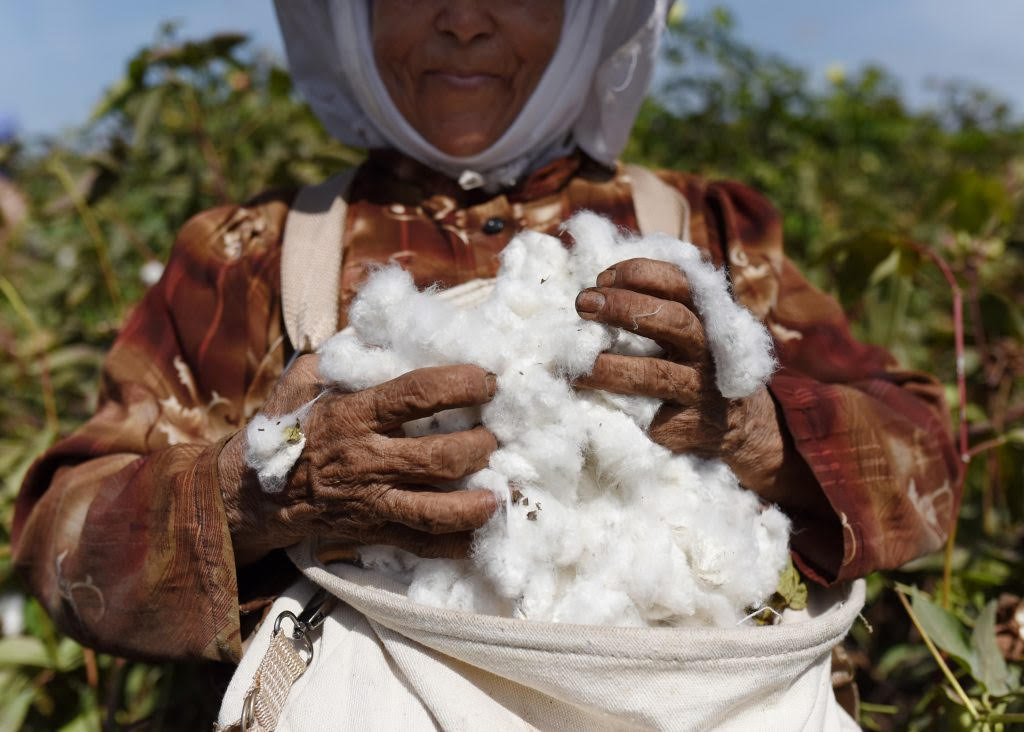
Better Cotton, the world's largest cotton sustainability initiative, has provided feedback on the European Union's proposed Directive on the Substantiation and Communication of Explicit Environmental Claims (Green Claims Directive). The initiative calls for greater clarity and alignment with existing laws to address greenwashing concerns and ensure accurate sustainability claims in the textile industry.
EU's Proposed Directive to Tackle Greenwashing
The EU's proposed directive, published in March, aims to establish common criteria for companies to substantiate their environmental claims, ensuring accuracy and verifiability of sustainability credentials for products and services. The legislative proposals seek to protect consumers and businesses from misleading practices commonly known as greenwashing, which have led to uncertainty among consumers about the authenticity of sustainability claims.
Better Cotton Welcomes the Directive for Clear Guidance
Better Cotton expresses support for the EU's proposed directive, emphasizing the need for clear guidance on communicating claims to standardize industry practices and combat greenwashing effectively. The initiative believes that a clear framework for claim substantiation will empower consumers to make informed purchasing decisions based on genuine sustainability commitments.
Claims Framework as a Pillar of Better Cotton Standard System
One of Better Cotton's key pillars is its Claims Framework, established through a multi-stakeholder consultation process and subject to annual review. The framework enables Better Cotton Members to communicate their commitment to sustainable cotton in an accurate and credible manner. By doing so, companies strengthen their dedication to achieving social, environmental, and economic improvements for cotton farmers and farming communities.
Advocating for Flexibility and Inclusivity
Better Cotton supports the EU's decision not to limit claim substantiation to a single standard methodology, such as the Product Environmental Footprint (PEF) or Life Cycle Assessment (LCA). The organization emphasizes that the multifaceted nature of cotton production requires flexibility in addressing various impact categories and practices across sectors and materials. A one-size-fits-all approach would risk undermining the ability of companies to make credible claims about their commitment to sustainable cotton.
Seeking Clarity and Alignment with Other Legislation
In its feedback, Better Cotton addresses the need for clarity and alignment between the Green Claims Directive and the Directive on Empowering Consumers for the Green Transition, another proposed legislation introduced in March. The initiative seeks to understand how sustainability labels, in addition to environmental labels, would be regulated under these directives, to ensure harmonization and avoid confusion.
Collaboration for Refined Legislation
Better Cotton welcomes the EU's leadership in standardizing sustainability communications and expresses openness to supporting authorities as they refine the proposed legislation based on stakeholder input. The initiative aims to contribute to a just transition towards sustainability, enhancing sustainable livelihoods and environmental responsibility in the textile industry.
As of May, the United States continues to experience a sluggish market for textile and apparel imports, witnessing a cumulative year-on-year decline of 22.2% in the first five months. The situation remains challenging, with imports from China dropping by 27.2% compared to the same period last year, and no clear turning point in sight.
Several factors contribute to the weakened demand for textile and apparel imports in the US.
Firstly, wholesalers and retailers still hold high inventory levels and have not completed destocking, leading to reduced motivation for restocking. Secondly, inflation and interest rate hikes in the country have diminished domestic consumption capacity for textile and apparel.
Interestingly, a shift in import performances between cotton and chemical fiber categories can be observed. Over the years, the growth of chemical fiber products has outpaced cotton, particularly during 2021-2022, resulting in a gradual decline in cotton's market share in the US import market.
As of May this year, chemical fiber products accounted for 80% of textile and apparel imports, while cotton's share was only 17.4%, down from 40% in 2010. When considering the main sources of these imports, for cotton textile and apparel, the US relies heavily on China, ASEAN countries, Pakistan, India, and Bangladesh, accounting for over 80% of total imports.
China's market share has declined since 2010, with ASEAN countries and Bangladesh showing an increasing share, though they depend on raw material imports, promoting China's textile exports indirectly. For chemical fiber products, the major import sources include China, ASEAN countries, Mexico, EU27, Egypt, India, and Turkey, which make up 85% of total imports.
China's dominance has decreased significantly, while other markets like Egypt have experienced substantial growth. In conclusion, the subdued demand for textile and apparel imports in the United States has led to a shift in market shares between cotton and chemical fiber categories, presenting both challenges and opportunities for various exporting countries, including China.
Impressive 70% YoY
Indian exporters participating in Amazon's e-commerce exports program, 'Amazon Global Selling,' witnessed a remarkable 70% year-on-year surge in business during the highly anticipated Prime Day event, as stated by the company.
Prominent Rise in Tier-2 and Tier-3 Cities
Exporters from tier-2 and tier-3 cities demonstrated substantial growth, ranging from 40% to an impressive 75% YoY increase. Panipat led the pack with remarkable exporter growth, followed by Indore and Jaipur (55% YoY), and Erode (40% YoY).
Best-Selling Categories
The beauty category secured the highest sales, boasting an impressive 125% YoY growth, closely followed by apparel with a significant 122% on-year expansion. Strong Growth in Home and Furniture Categories Products in the "home" category showcased an impressive 81% YoY growth, while furniture and kitchen products saw notable progress with 75% and 52% YoY growth, respectively, during the two-day sale event on July 11 and 12, as reported by Amazon India. Emerging Export Market
Japan
Japan emerged as a new high-growth export destination, with buyers from North America, Europe, Middle East, and Japan showing increased interest in Indian export products. Prime Day Catalyst for Global Sales
With a global membership base of over 200 million Amazon Prime users, Prime Day has consistently served as a crucial growth period for Indian exporters on Amazon Global Selling.
This year witnessed thousands of exporters from across the country reaching millions of customers worldwide with their 'Made in India' productsat Amazon India.
The European Union (EU) faces a dilemma regarding its trade relations with Myanmar amid the ongoing junta rule. Some argue that exporting to the EU is vital for the livelihoods of ordinary people in Myanmar, while others fear that importing products plays into the junta's narrative of business as usual.
Recently, the EU imposed its seventh round of sanctions on individuals and companies associated with the military regime, signaling opposition to human rights violations.
The EU's trade with Myanmar has increased significantly, raising concerns about indirectly supporting the junta. Justice for Myanmar calls for coordinated and stronger sanctions to limit the junta's access to funds and technology.
Myanmar's complex taxation system makes it challenging to ascertain the direct impact of trade revenue on the junta. Meanwhile, the situation in Myanmar remains dire, with ongoing violence and human rights violations against civilians.
International observers and UN rapporteurs urge the international community, including the EU, to take more decisive actions to support the people fighting against the military junta. Striking the right balance between protecting livelihoods and opposing the junta is a challenging task that requires careful consideration and collaboration.
Chinese online fast-fashion retailers are swiftly carving out a substantial presence in the US fashion industry, steadily increasing their market share. Shein and Temu, two prominent shopping platforms, have captured the attention of US consumers with their alluring offerings.
Boasting budget-friendly prices, complimentary shipping, regular discounts, and hassle-free return policies, Temu (a subsidiary of Pinduoduo Holdings) entered the US market last year, while Shein made its debut in 2017. These platforms have garnered a growing user base in the US by providing affordable and trendy fashion choices.
In 2022, Shein achieved a remarkable milestone, surpassing Amazon as the most downloaded app in both Apple and Google stores, with a staggering 200 million downloads. The platform's success has translated into significant financial gains, with annual revenue reaching $30 billion and attracting 13.7 million users annually.
Shein's astonishingly low prices include shoes for under $20, dresses for under $15, t-shirts for under $10, swimsuits for under $5, and earrings for under $2. Compared to renowned fashion brands like H&M, Zara, and Uniqlo, Shein offers visually similar products at even more competitive prices, often ranging from $20-$30 per item.
Moreover, Shein's app users enjoy daily discount coupons, ensuring better prices for their purchases. With apparel prices experiencing a 3.1 percent increase in the past year, the inflationary trend is putting strain on the budgets of many Americans, prompting them to seek more affordable alternatives.
Shein and Temu astutely entered the US market during a period of relatively high inflation, benefiting from the demand for cost-effective fashion choices. Apart from their attractive pricing, both Shein and Temu have won over millions of customers with their diverse styles and trendy products.
Outpacing traditional US brands, they rapidly introduce between 2,000 and 10,000 new individual styles (SKUs) to their apps daily, as reported by Rest of World. While Shein focuses primarily on branded apparel, Temu operates as a marketplace, offering a broader array of products, including home appliances, furniture, and accessories.
Bloomberg Second Measure data revealed that Temu's US spending in May surpassed the more established fast-fashion retailer Shein by 20 percent. Notwithstanding their success, Shein and Temu have become embroiled in legal disputes, engaging in lawsuits against each other over alleged antitrust violations and trademark infringements.
The allure of these Chinese online fast-fashion retailers has resonated with US consumers, as they find the products cheaper, more diverse, and appealing compared to mainstream platforms like Amazon.
The growing popularity of these platforms signifies a significant shift in the US fashion landscape, indicating that Chinese e-commerce retailers are poised to play a prominent role in the country's retail market.