FW


Founded in Nanjing, China in October 2008 as ZZKKO by entrepreneur Chris Xu, Shein grew to become the world's largest fashion retailer by 2022.
Global fashion & lifestyle e-retailer
Shein obviously is the envy of the fashion trade as it trailblazed its way into the wardrobes and hearts of women in a short time span, making it one of the biggest success stories.
With its super-cheap fast fashion that its fans couldn’t seem to have more of, Shein has particularly made a huge dent in a large market like the US.
Indeed this saw American policymakers go after Shein, all guns blazing. What shook the American lawmakers is that Shein was planning to sink itself into the heart of America by launching an IPO in the US.
Of course, that is still up for debate but clearly, the US and many parts of the Western world have regarded the Chinese brand as an interloper and a dodgy one at that.
Facts about the success story
From Global Triumph to Local Turmoil; Shein generated $30 billion in 2022, a 91 percent increase from the $15.7 billion it made in 2021. It has an estimated 74.7 million active shoppers of which, 13.7 million are based in the US.
Shein the app was downloaded 200 million times in 2022, making it the most downloaded shopping app of that year.
Recently it was valued at $68 billion ahead of a potential late 2023 IPO. Although Shein’s early growth came primarily from India and Saudi Arabia in the past two years, Brazil, Mexico, and the US have been its largest markets.
In a complete turnaround, India, the country that had contributed to Shein’s initial success banned the app in June 2020 as India and China faced off each other over land disputes in the Himalayan terrain that separates the two countries.
App
Shein was amongst the total 59 apps that were sent packing. However, a resilient Shein continued selling its items in India through Amazon and the latest news is Shein is partnering with the retail arm of Mukesh Ambani’s Reliance Industries for a return to India. A Shein spokesperson confirmed this in May 2023.
However, Reliance Retail and Shein are tightlipped about a major comeback to India but media reports suggest the two organizations had struck a licensing deal in which Shein will get a share of the profits and this license would allow its return.
The catch is, Shein plans to produce in India to cater to the domestic market.
Mired in controversy
Shein and controversy have been going hand in hand for some time. And the recent controversy erupted when a team of American social media influencers was taken on a familiarization trip to a manufacturing unit in China so Shein could first-hand give it's North American customers a genuine point of view of its much-maligned production process.
Unveiling the Truth Behind Shein
The well-executed familiarization trip was to help address the issues Shein keeps getting bombarded with in terms of its quick and cheap manufacturing, forced Uighur labour and child workers, dismal working conditions and paltry wages, and so on.
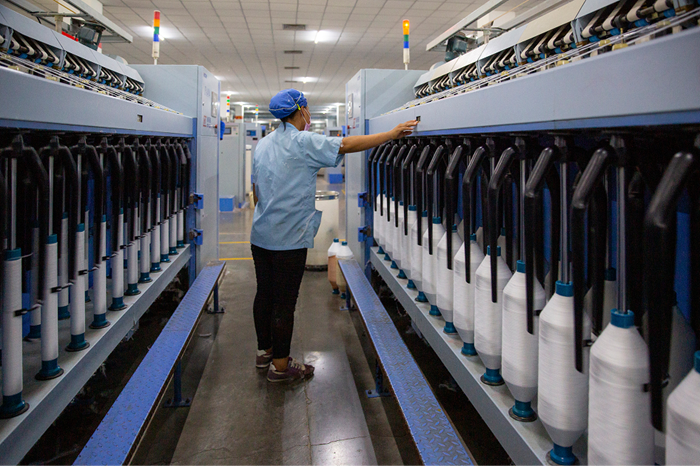
However, according to the five social media influencers, what they saw at the production hub belied the accusations Shein faces in the Western world. “I’m not going to lie, I really expected it to look like it does in the movies, like really dark and dingy, but I was really surprised to see each piece handled with care,” said Destene Sudduth, one of the five visitors, in her Instagram feed.
Surprising Glimpse
The perfectly executed PR campaign was ripped to shreds by many critics, particularly by authors Aja Barber and Cora Harrington who accused the five of being Shein’s spokesperson unwittingly.
Since the controversy started, the social media influencers have deleted some posts but continue upholding that what they heard about Shein in the US is far from what actually Shein is in China’s manufacturing hubs.
Also, Shein has been accused of exploiting trade loopholes to import goods into the US without paying duties or making shipments subject to human rights reviews, said a U.S. House committee report.
According to a report by Allied Market Research, the global women's activewear market is projected to reach $216,868 million by 2025, with a CAGR of 7.7% from 2018 to 2025. In 2017, the market was estimated to be $119,078 million, with North America accounting for 42.4% of the total revenue. Activewear, known for its utility and comfort during physical activities, is gaining popularity due to its benefits such as water resistance, bi-stretchable function, and anti-bacterial fabric. The rise in female participation in fitness activities and the adoption of athleisure wear for everyday use are major factors driving market growth.
Additionally, increased disposable income and fitness concerns contribute to market expansion. However, high costs of raw materials and counterfeit brands pose challenges to market growth. The dynamic fashion trends greatly influence consumers, leading to the purchase of the latest activewear designs, while counterfeit brands hinder the sales of genuine activewear brands. Expansion into plus-size activewear and innovative marketing strategies, such as motivational advertisements and sponsorship of athletes, are expected to drive market penetration.
Polyester fabric dominates the market due to its flexibility, quick-drying properties, and resistance to shrinkage and wrinkles. The active outerwear segment is projected to grow at a CAGR of 9.1% during the forecast period.
North America is expected to remain the dominant market, while Asia-Pacific is anticipated to exhibit exponential growth.
According to reports, there is a new arrangement that allows the use of Indian Rupees to cover import costs that are in line with Rupee-denominated export earnings. The necessary preparations for this arrangement have been completed.
However, it should be noted that officials have made it clear that banks and businessmen are not allowed to purchase Indian Rupees using US dollars or any other foreign currencies for import payments.
In addition to the existing US dollar transactions, this initiative introduces the use of INR for trade purposes.
India's government takes proactive steps to establish the nation as a global center for sustainable and circular textiles. The Ministry of Textiles aims to map India's textile waste value chain, creating recycling clusters and seeking consulting agencies through a request for proposal (RFP).
These efforts are crucial to secure India's future in textile exports as the country faces increasing demand for sustainable and recyclable products in major markets such as the EU.
Currently, less than 1% of textile waste is recycled, highlighting the need for circular textile strategies. By embracing circularity, India aims to meet future demands while targeting a substantial increase in textile exports, reaching $100 billion within 5-6 years.
The apparel export industry in Bangladesh has seen a significant decline in the first five months of 2023 due to various factors such as a global economic slowdown, inflation, and US interest rate hikes. These factors have dampened demand for Bangladeshi garments, resulting in a decrease in both export value and volume.
Several reasons contribute to this decline, including the lingering effects of the Covid-19 pandemic, the ongoing Russia-Ukraine war, and unsold inventory in the US and Europe.
According to data from Otexa, Bangladesh's ready-made garment exports to the United States, its largest export destination, amounted to $3.30 billion from January to May, a notable 19.16% decrease compared to the previous year. The shipment volume also experienced a negative growth of 30.91% during the same period. In contrast, the overall apparel imports of the United States declined by 22.92% to $31.51 billion.
While Bangladesh faced a decline in exports, it fared relatively better than China and Vietnam, which experienced contraction rates of 30.44% and 28.07% respectively. This can be attributed to US buyers shifting from China and the implementation of the China-plus policy.
However, the ongoing Russia-Ukraine war has affected demand, resulting in high inventory levels among buyers and reduced work orders. Data also reveals changes in the US apparel market, with China's share declining and Bangladesh's share increasing. During the January-May period of 2023, the US imported $5.76 billion worth of apparel from China, a decrease from the previous year.
Vietnam and India also experienced declines in apparel exports to the US. Despite the challenges, Bangladesh has maintained a relatively favorable position compared to its competitors. It is crucial to assess the changing dynamics and implement effective strategies to mitigate the impact of global economic factors on Bangladesh's apparel exports to the United States.
Guess, a renowned lifestyle brand operating in over 100 countries, has released its latest ESG Report titled "Our Best Today, Better Tomorrow." This comprehensive document highlights nine years of impressive sustainability accomplishments and sets the course for future commitments.
A notable feature of the report is GUESS' inaugural 'double materiality assessment,' a meticulous process that identifies, updates, and prioritizes sustainability topics, thereby rejuvenating the brand's ESG strategy.
The ESG assessment conducted by GUESS adopts a double materiality approach, carefully analyzing the significance and impact of various topics on both society and the environment, as well as their financial implications.
The report focuses on three impact pillars: respect nature, be a good teammate, and get things done. GUESS' ESG Report adheres to globally recognized frameworks such as the Global Reporting Initiative (GRI) Universal Standards, the Sustainability Accounting Standards Board (SASB), the GHG Protocol, and the United Nations Sustainable Development Goals (SDGs).
The company ensures strong accountability by seeking reasonable assurance from a third-party provider for key ESG metrics and disclosures during the FY 2022-2023 reporting periods.
The brand also aims to ensure that 75% of global apparel materials are environmentally preferred by 2030, thereby elevating its design portfolio. GUESS intends to promote a circular economy through partnerships that focus on repair, reselling, and upcycling in key markets, as well as prioritize positive change for women through training opportunities with suppliers.
The Europe India Centre for Business and Industry (EICBI) collaborated with Morten Lokkegaard, a Member of the European Parliament from Denmark, to invite leaders from Europe and India's textile industries.
Unlocking opportunities
They convened at the European Parliament in Brussels to discuss the pros and cons of an EU-India Free Trade Agreement (FTA) focused on the Textile & Clothing Industry. The conference emphasized the need for a strong partnership between the regions to transform the global textile market and drive progress in various sectors.
Highlights the potential of ‘Textile Collaboration’
Government representatives, industry heads, academics, and civil society from both Europe and India explored avenues of collaboration, particularly in textile cooperation and the proposed FTA. Key discussions addressed challenges faced by European companies in India, advocated for a zero-duty policy for textiles, focused on market access privileges, eliminated non-tariff barriers, and emphasized policy alignment.
Demonstrability
The event showcased the complementary strengths of the EU and India in the textile industry and discussed the possibility of an early harvest approach to expedite progress and foster confidence. This milestone event lays the foundation for an enhanced textile partnership, creating remarkable opportunities for a prosperous future.
H&M Group CEO Helena Helmersson's recent visit to Dhaka, where she met with Prime Minister Sheikh Hasina, was seen as a positive encounter.
However, the company now faces backlash for its decision to lay off 46 employees from its Dhaka office just before the Eid al-Adha festival, prompting concerns about compassion and violating sustainability principles. As one of the largest buyers in Bangladesh's apparel industry,
H&M sources from over 250 factories and purchases approximately $3 billion worth of products annually. While the company claims to follow local laws and regulations, critics view the terminations as brutal and part of a larger cost-cutting plan amid the global economic slowdown.
This move follows H&M's previous layoffs during the COVID-19 pandemic, further fueling discontent. Many individuals and organizations emphasize the need for H&M to take responsibility for its staff, considering its substantial profits earned through cheap labor in countries like Bangladesh.
They argue that companies should share their profits and establish emergency funds to support employees during crisis periods. Meanwhile, despite challenges such as energy shortages, inflation, and declining foreign exchange reserves, Bangladesh's apparel sector has shown progress, with a 10.3% year-on-year growth in apparel exports for the fiscal year ending June 30.
The industry's expansion has been fueled by higher-value items and increased market shares in nontraditional markets like Japan, Korea, and India.
Luxury fashion, characterized by its premium, exclusive, and high-price tag products, is experiencing remarkable growth in the global market. With the expanding fashion industry and the increasing demand for aesthetic products, the luxury fashion market reached a size of US$ 237.0 billion in 2022. Looking ahead, market analysis by IMARC Group projects a significant growth rate (CAGR) of 3.60% during the period of 2023-2028, with an expected market value of US$ 294.7 billion.
Luxury fashion encompasses various categories, including clothing and apparel, footwear, watches, jewelry, fashion accessories, designer handbags, perfumes, cosmetics, and more. These products are renowned for their elevated quality, exclusive nature, and high-value aesthetics.
Crafted with high-grade materials and superior craftsmanship, luxury fashion items often serve as a status symbol, driving their extensive demand among both male and female consumers worldwide. Several factors contribute to the growth of the luxury fashion industry.
Shifting consumer preferences towards high-quality and stylish clothing, featuring advanced technical fabrications and craftsmanship, are key drivers of market expansion.
The rise of social media promotions and celebrity endorsements has propelled the popularity of premium fashion brands, further establishing them as status symbols. Additionally, leading market players' adoption of sustainable production methods, such as utilizing ethically sourced, recycled, or eco-friendly materials, reflects the industry's heightened environmental concerns and positively impacts market growth.
The incorporation of augmented reality (AR) in the fashion industry has revolutionized the shopping experience, enabling customers to virtually explore and make purchases from the comfort of their homes. This technology-driven innovation has significantly stimulated the global luxury fashion market.
Moreover, the growing demand for customization, premiumization of superior quality and designer products, and the increasing brand loyalty among customers are expected to further propel the market's growth in the forecasted period. As the luxury fashion market continues to flourish, key players in the industry are actively driving its evolution.
In-depth profiles of these influential market players can be found in the comprehensive report, offering valuable insights into their strategies and contributions to the market's competitive landscape.
EU apparel imports from the world experienced a significant decline of 7.62% during January-April 2023, reaching a total of US$29.83 billion. The quantity of clothing imports also saw a steep downturn of 15.45%.
Winners and Losers in EU Apparel Imports
Among the top ten sourcing countries for EU apparel, Vietnam and India demonstrated positive growth, while imports from other countries declined notably.
Bangladesh: Decline in Imports
In terms of EU apparel imports from Bangladesh, there was a 6.25% decrease in dollar value, amounting to US$7.06 billion from January to April 2023, compared to US$7.53 billion during the corresponding period in 2022. The quantity of imports from Bangladesh also declined by 12.48% during this period.
China and Turkey:
Decrease in Imports EU imports from China witnessed a dip of 17.07% in dollar value and 21.05% in quantity. Similarly, during January-April 2023, the EU’s imports from Turkey, the third-largest apparel source, declined by 13.68% in value and 24.66% in quantity.
India and Vietnam:
In contrast, the EU’s imports from India and Vietnam experienced slight growth of 0.45% and 3.41%, respectively, in value terms. However, imports from both countries declined by 8.17% and 7.26% in quantity, respectively.
Decline in Imports from Other Sourcing Countries
Simultaneously, the EU’s imports from other top sourcing countries, such as Cambodia, Pakistan, Morocco, Sri Lanka, and Indonesia, decreased by 5.59%, 7.52%, 16.61%, 17.16%, and 7.99%, respectively, in value terms.
Unit Price Analysis
Analyzing the unit price (USD value/kg), the EU’s cumulative unit price of imports from Bangladesh increased by 7.12% (from US$16.98 to US$18.19).
This rise reflects higher raw material and production costs, ignalling progress towards the higher price segment. Average unit prices of imports from other countries also experienced an upward trend during the mentioned period.