FW
Iluna Group comes up with a new line Green Label in association with Asahi Kasei
Continuing its collaborative efforts with Asahi Kasei, a diversified Japan-based manufacturer of fibres and chemicals, the Iluna Group, a leading producer of lingerie, lace, beachwear and bridal products has come out with a new line called Green Label. Green Label is a line that features lace, new double-needle bar lace and, for the very first time, fishnet stockings and jacquard aiming to represent creativity.
After a total switch last season that led the company to adopt the ROICA Eco Smart yarn by Asahi Kasei, a GRS-certified premium stretch yarn designed to ensure the recycling of production residues up to 60 per cent on all top-of-the-range Jacquardtronic and Textronic articles, the company has introduced Green Label, with the help of ROICA Eco Smart. ROICA Eco-Smart is an eco-friendly, stretch yarn with clear and certified environmental benefits that’s blended into many of this season’s new collections. This yarn uses more than 50 per cent pre- industrial waste material and is designed responsibly and ethically for customers looking to bring contemporary stretch to their own more sustainable product lines.
With Green Label, Iluna Group says it aims to become a leader in the production of lace on a global scale and offer a new typology of fully GRS-certified products. The Iluna Group was founded in 1969 based on an idea of Luigi Annovazzi, to produce pre-shaped bra cups. In 1985, Iluna acquired the Ondoli di Cuggiono plant, specialised in the production of elastic lace, challenging the French Leavers lace. The products, which constitute the core business of the group, are microfibre fabric and tulle, elastic and non-elastic lace for external apparel, underwear, corsetry and beachwear, hosiery, and articles without stitching, using Karl Mayer technology.
UniNet to display iColor printing solutions at Imprinted sportswear show
UniNet, the initial brand used by a Mexican telecommunications company named Telmex, will be exhibiting at the 2017 ISS Expo in Long Beach, Californai. The Expo, that will go on from January 20 to 22 will showcase iColor Printing Solutions. Here, UniNet will be demonstrating the iColor® 600 and 500 for the graphics, apparel and textile transfer markets.
The UniNet iColor 600 and 500 transfer printers are the most innovative toner-based digital printing technologies for short to mid-run production of apparel, garments, cards, stationary, invitations, envelopes, labels, brochures and more.
These printers feature full color, white and optional fluorescent toner colors that can be combined to create stunning transfer media output. The iColor 600 and 500 are the only printers on the market to feature white underprint and overprint capabilities, a groundbreaking new technology that enhances the vibrancy of text and graphics when printing on clear and dark media.
Joe Dovi, COO at UniNet said that his company will be offering a game-changing technology for the graphics, apparel and textile transfer markets with the most affordable toner-based, heat-transfer solution for full-color, fluorescent color and white printing on the market. The iColor 600 and 500 digital printers are an ideal complement to the graphic arts and textile transfer industries.
Shima Seiki Italia to display at 80th Pitti Immagine Filati
Shima Seiki Italia S.p.A., the Italy-based subsidiary of Japan-based computerized knitting machine manufacturer Shima Seiki will participate in the 80th edition of the Pitti Immagine Filati exhibition in Florence, Italy. The company will participate in the ‘Fashion At Work’ section of the exhibition that is aimed at appealing to the technical and creative interests of visitors by providing hardware and software solutions for design, manufacturing and processing of knitted goods.
On display will be Shima Seiki’s flagship Wholegarment knitting machine, Mach2xS. Featuring such innovations as the original SlideNeedle on four needle beds as well as the company’s patented spring-loaded moveable sinker system, Mach2xS can knit beautiful, high-quality 3-D items with dimensional structures and details that are uniquely Wholegarment, all with very high efficiency while minimizing dependence upon labor-intensive sewing and linking.
These qualities of Wholegarment knit production are maximized in combination with the SDS-One Apex3 3D design system, the latest version of which will be exhibited at Pitti Filati. At the core of the company’s Total Fashion System concept, Apex3 provides comprehensive support throughout the apparel supply chain, integrating production into one smooth and efficient workflow from yarn development, product planning and design to production and even sales promotion.
Especially effective is Apex3’s capability to improve on the design and evaluation process with ‘Virtual Sampling’. Ultra-realistic simulation capability on Apex3 allows Virtual Sampling to minimize the time- and cost-impact that the sample-making process has on current manufacturing. With this new manufacturing model, the production cycle can be shortened to such an extent that on-demand production can revolutionize the supply chain by freeing itself from seasonal cycles. Examples of knitwear produced on Shima Seiki’s latest line of computerized knitting machines will be on display as well, including Wholegarment knitwear as well as new proposals in knit-weave hybrid textiles produced on the SRY series machine.
Pakistan explores textile links with Uzbekistan
Pakistan and Uzbekistan will explore joint opportunities in the textile sector. The trade volume between the two countries was $3.92 million in 2015-16, which increased from $2.98 million in 2014-15. Pakistan’s exports to Uzbekistan have witnessed a marginal increase, from $1.347 million in 2014-15 to $2.07 million in 2015-16, while imports from Uzbekistan have slightly increased from $1.56 million to $1.843 million during the same period.
However, bilateral trade between Pakistan and Uzbekistan is not reflective of the true potential. There are issues that hamper expansion of bilateral trade like lack of direct cargo links, safe and direct land routes, marketing strategies, knowledge of Pakistani products, visa facilitation and costly transportation by air.
Uzbekistan is a country of about 32 million people. Its major export commodities include cotton, textiles, energy products, gold, minerals, fertilisers, ferrous and nonferrous metals, foodstuffs, machinery, and automobiles. Major import commodities include machinery and equipment, foodstuffs, chemicals, ferrous and nonferrous metals.
Uzbekistan is one of the world’s largest producers and exporters of cotton. Traditional Uzbek textiles are taking the fashion world by storm. One of these is a fabric embroidered with silk threads, called suzani, and another is called ikat, which is woven with hand-spun silk yarn.
Global spandex fiber market to touch $10,482 million by 2022
With a CAGR of 8.8 per cent between 2016-22, the global spandex market is expected touch $10,482 million by 2022 says the latest Spandex Fiber Market Report. Solution dry spinning segment would generate the highest revenue throughout the forecast period. In 2015, Asia-Pacific led the global market and is expected to maintain its position. The region is also expected to witness highest growth.
According to a senior analyst, Team Lead Chemical Research, Asia-Pacific is the most attractive market for the new entrants along with industry players as the growth in number of industries and increased expenditure towards R&D is expected to provide significant opportunities to the entrants. The industry players made significant investments on new commercial avenues for their product segments via strategic partnerships and collaborations.
Investments towards extensive research and development activities coupled with an increasing support for application of spandex fiber is expected to boost market growth. There is a rise in demand for spandex fiber from various end-user industries and an increase in application scope owing to its superior properties.
Also, launch of bio-based, eco-friendly spandex products by market players is expected to drive the demand for spandex fiber over the forecast period. However, a growing threat of substitution and volatility in raw material prices could hamper the market growth during the forecast period. In 2015, the apparel & clothing segment was the largest application segment. It is expected to grow at a CAGR of 8.9 per cent in terms of revenue, followed by the home furnishing and others segment. The extraordinary physio-chemical properties of spandex fiber such as elasticity, durability and abrasion resistance have increased its penetration in a wide array of application, as it results in improved performance of the end product.
Cotton production increases after Burkino Faso discontinues Monsanto variety
As per estimates, Burkina Faso’s production of raw cotton for the 2016-17 harvest will grow by 25 per cent compared to previous harvest as favourable rainfall boosts output, the country's agriculture minister has divulged. It is a landlocked country in Africa around 274,200 sq. km in size. It is surrounded by six countries vz Mali to the north; Niger to the East; Benin to the Southeast, Togo and Ghana to the south and Ivory Coast to the southwest. Its capital is Ouagadougou.
After blaming a GM variety supplied by US seed maker Monsanto for the decline in cotton quality, the West African country's growers had reverted entirely to conventional cotton for the new crop. The 2016-17 harvest, which is expected to total 750,000 tons, was showing improved quality as well as production, minister Jacob Ouedraogo said.
Earlier, Burkina Faso's cotton producers had complained that increased levels of short fibers in their GM cotton had impacted its market value and had last April announced that they were seeking 48.3 billion CFA francs ($78 million) in compensation from Monsanto. Acknowledging changes in cotton fiber length, the seed company has argued that fiber quality is also influenced by environmental conditions and that other cotton varieties have shown length variations. The talks between Burkina's producers and Monsanto were going on, Ouedraogo added.
Cordura ties up with Cotton Inc to deliver upgraded cotton-blend fabrics
In celebration of its 50th anniversary, Invista's Cordura brand has entered into its first-ever collaboration with Cotton Incorporated, the research and promotion company for US cotton producers and importers. For the whole of 2017 and beyond, the two brands will work together to explore opportunities to develop a long-lasting and more durable fabric for a new generation of performance apparel.
Traditional, reliable and biodegradable cotton fibre is known for being soft, natural and comfortable. Blending cotton with performance benefits of Cordura fibre technology will add additional comfort qualities such as quick dry, long-lasting performance, durability, extra tear strength and abrasion resistance, it is said. Collaborating with Cotton Incorporated celebrates the ideology that Cordura has been working towards for the past fifty years, said Cindy McNaull, Marketing Director of global Cordura brand.
And the company would continue to honour and embrace its history of creating durable fabrics but strive to push the boundaries of how Cordura can enhance them to create cutting-edge innovations suitable for the ever-changing marketplace. The company spoke to a host of customers and came to know their needs for cotton-rich performance fabrics that last. Working together with Cotton Incorporated will allow Cordura to bring two classics together to deliver the next generation of performance to the fabric of our lives,” McNaull added.
Fabrics from the collaboration will initially be offered from several Cordura brand authorized mills including Artistic Milliners, Nishat, Chia Her and Arvind. The two companies plan to extend the collaboration with additional technology innovations in the months to come.
Consensus struck, GST to roll out from July 1
After the Centre and states struck a consensus on contentious issue of sharing administrative powers, the Goods and Services Tax (GST) is set to be rolled out from July 1. With this, the road is clear for the Union government to table the associated bills in the second half of the upcoming budget session of Parliament that commences from 31 January.
To be sure, there are other issues that need to be addressed. For instance, the GST council will have to also resolve the various tax slabs. At the end of the ninth GST council meeting yesterday, both sides agreed to work towards meeting the new deadline and share administrative control over small and big taxpayers in a fixed ratio.
Both, but especially the Centre, conceded some ground to generate a consensus on this long-pending issue that was threatening to derail the implementation of the singular piece of tax reform which will, for the first time, economically unify the country. The Centre had earlier targeted a rollout on April 1.
Apparel buying dips in Jordan
Jordan’s clothing sector has suffered a major drop in purchasing power, exports and imports. Seasonal sales and offers are not helping traders recover from the financial crisis. Sales have fallen on an average 40 per cent in markets such as Jabal Al Hussein, 50 per cent in malls and 60 per cent in the governorates.
The kingdom’s imports of garments dropped by 16 per cent in the first nine months of 2016 compared to the same period of 2015. The average shopper bought four pieces of clothing in 2016 compared with five in 2015. Taxes, customs duties, high rents, random licensing for shops and the absence of laws regulating sales and offers in the market are blamed for the sector’s losses.
Around 15 to 20 per cent of garment traders are expected to leave the market. Garment exports make up roughly 20 per cent of the country's gross domestic product. In the arid outskirts of Jordan’s cities sit a growing number of industrial parks that house garment factories churning out clothing for some of the world’s most recognisable brands like Gap, Victoria’s Secret, Hanes, Eddie Bauer, Lands’ End and Macy’s.
There are currently 75 factories producing everything from towels to T-shirts, fleeces to frilly knickers. They account for 95 per cent of the industrial workforce, and 95 per cent of apparel exports.
With over 1,500 exhibitors, Hong Kong Fashion Week kicks off in style
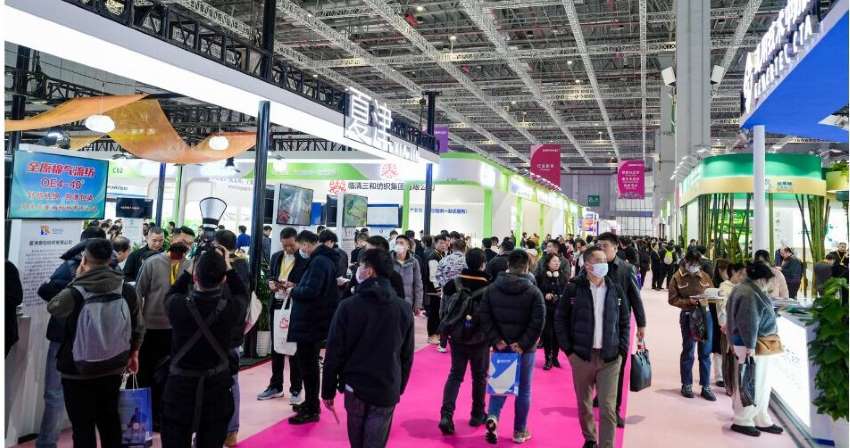
"The 48th Hong Kong Fashion Week for Fall/Winter, one of Asia’s a mega fashion sourcing platform opened doors yesterday (January 16) at the Hong Kong Convention and Exhibition Centre. The four-day show being held from January 16 to 19 is being organised by the Hong Kong Trade Development Council (HKTDC). It features more than 1,500 exhibitors from 21 countries, showcasing latest fashion, garment, accessories, fabrics and sewing supplies."

The 48th Hong Kong Fashion Week for Fall/Winter, one of Asia’s a mega fashion sourcing platform opened doors yesterday (January 16) at the Hong Kong Convention and Exhibition Centre. The four-day show being held from January 16 to 19 is being organised by the Hong Kong Trade Development Council (HKTDC). It features more than 1,500 exhibitors from 21 countries, showcasing latest fashion, garment, accessories, fabrics and sewing supplies. Under the theme ‘Hall of Games’, this year’s Fashion Week for Fall/Winter incorporates board game elements throughout the fairground to enhance the ambience.
With healthy living becoming a priority among consumers, the demand for sportswear and fitness clothing is on the rise. To help buyers identify relevant products and suppliers, the HKTDC has added two new zones to this year’s show: ‘Fashionable Sportswear’ and ‘Denim & Casual Wear’. The former showcases the hottest styles for various sports activities, including fitness and yoga while the latter focuses on trendy designs for a relaxed lifestyle.
Country pavilions a major attraction
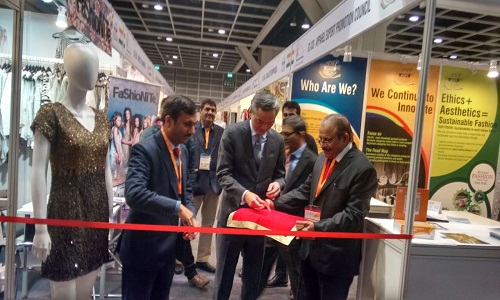
There are five pavilions at the fair and India is one of the prominent ones. Other include Indonesia, Japan, Macau and Pakistan. Companies from Italy, Sweden and Pakistan are debuting this year at the fair, bringing along names such as Italian brand Salto, displaying its eco-leather silver pleated skirt; Swedish company Yves Lansac, is showcasing colourful and fashionable watch and handbag collections; and Pakistani exhibitor Umar Garments Printing, introduces its automated screen printing technology that allows high flexibility and accuracy for producing simple to complex designs with advanced inks.
As a global fashion sourcing hub, Hong Kong is a hotspot for many international trading houses and premier retailers. The annual Hong Kong Fashion Week for Fall/Winter is an important platform for buyers to discover latest fashion and accessories. To create more business opportunities for exhibitors, the HKTDC has arranged 90 buying missions from 43 countries and regions bringing more than 3,770 companies to the show. Among the participants are representatives of famous fashion labels, mega chain stores and distributors from both traditional and emerging markets, including Spain’s Beni Room, Japan’s H.P. France, Thailand’s Jaspal and the Chinese mainland’s The Fashion Door.
Fashion shows showcasing creativity
More than 20 fashion events are taking place during the four-day Hong Kong Fashion Week for Fall/Winter. In addition to trend forecasting seminars, thematic forums and networking receptions, a total of 10 fashion shows including designers’ collection and brand collection shows are being staged. Hong Kong Fashion Week has long been a launch pad for up-and-coming local young designers. To spotlight Hong Kong’s design talent, local fashion website ‘Fashionally’ presented two fashion shows on the first day featuring collections of 14 fashion labels by emerging local designers. Participants included established names as well as first-time participants, including Jane Ng, Yeung Chin, Kenson Tam, Winnie Chen and Key Chow.
Ideal platform for exchange, collaboration
To help industry players exchange and obtain market intelligence, the HKTDC has invited industry experts to share their insights and ideas on the latest trends and topics at a series of events, including trend forecasting seminars, thematic forums and networking receptions.
Leading international fashion forecaster ‘Fashion Snoops’ shared their forecast and analysis on ‘The Key Trend Stories for Men’s and Women’s Wear for S/S 2018’. The HKTDC and The Hong Kong Research Institute of Textiles and Apparel (HKRITA) will host a seminar on ‘Knitting Tech – From Materials to Finishing’. On Jaunary 18, Asian e-tailer giant Zalora will explore the latest business opportunities of Omni-Channel Retailing, while The Woolmark Company, an authority in the wool industry, will host the ‘The Wool Lab S/S 18’ seminar to discuss the leading trends for Spring/Summer 2018 and introduce purchasing guides to the best wool fabrics and yarns.
YDC now open for applications
Facilitating growth in Hong Kong’s fashion industry has always been the HKTDC’s core mission. Apart from the launch of the FASHIONALLY website and the coordination of the Fashionally Collection shows during the bi-annual Hong Kong Fashion Weeks, the HKTDC has been actively organising the Hong Kong Young Fashion Designers’ Contest (YDC) since its debut 40 years ago. The YDC is a springboard for unearthing talented local designers and this year’s competition will be held during CENTRESTAGE in September. The contest is now open for applications until 10th April.