FW
Textile Ministry plans digital Textile India 2020 in November
The Ministry of Textiles plans to organize a mega virtual show – ‘Textile India 2020’ in November to bring the exporter and business community related to handicrafts and handloom sector on the global platform. The event will be promoted globally and organizations like India Brand Equity Foundation (IBEF) and Invest India will be involved for branding and promotion of the mega event across the globe.
The Directorate of Handicrafts & Handloom, Kashmir, has urged craft exporters and entrepreneurs from Jammu and Kashmir to participate in this virtual fair as it shall provide excellent marketing opportunities for sale of their famed product line.
The Directorate also urged exporters, consortia and craft entrepreneurs to come up with their respective company profiles, booth display, virtual showrooms and e-catalogues to make an impression on online buyers in future exhibitions being held in virtual mode.
COVID-19: Buyers, distributors shun Paris fashion events
With the virus still rampant, fashion weeks in Paris, are suffering. Buyers, distributors and other industry professionals have decided to stay away from the Paris Fashion Week scheduled from September 28 to October 06, 2020. International buyers, especially those from the UK and the US, have decided not to travel to Paris for any fashion events. The same is true for those from Asia and some h European countries.
Luxury giant LVMH, which usually books 1,250 nights for the Paris Fashion Week has cut the number to 250, because their American and Chinese guests have decided against leaving their countries because of the quarantine. Italian distributors also plan to give the Paris Fashion Week a miss. Mauro Callegari, Owner, Studio ZetaWe plans to stay in Milan to avoid unnecessary risks. Similarly, Riccardo Grassi, owner of the eponymous showroom, had planned to showcase 15 collections at its Paris offices, but has now deferred its plans.
A similar stance has been adopted in the UK. This season, the British Fashion Council will not present its customary selection of emerging designers in Paris. It won’t be organizing the London Show Rooms in Paris this season and plans instead to switch the concept to a digital format. International showrooms that plan to stage sales campaigns during the Paris Fashion Week will do so in a less emphatic way. For instance, AMF Showroom will open on a smaller scale during the Paris Fashion Week with most of its meetings taking place virtually, said Anthony Flamos, Managing Director.
Nilit sets up cogeneration power plant
Nylon producer Nilit has set up a cogeneration power plant on-site at its primary manufacturing facility in Migdal HaEmek. With natural gas as the fuel source, the plant produces cogeneration steam, which Nilit then uses to create compressed air and cold water.
The cogeneration steam has been specially engineered to allow Nilit to derive energy that fits its particular needs. Due to this, the Nilit plant can lower its natural gas use by up to 75 percent, while also reducing carbon dioxide emissions by 40 percent. This plant model also fully eliminates emissions of harmful gasses, including sulfur dioxide.
The plant also provides energy to other local businesses. It aims to reuse the water from the cogeneration energy creation process, further reducing its natural resource consumption.
Nilit has adopted a zero-waste strategy across its company to recycle materials used in the processing of its yarns, including packaging and byproducts of extrusion. The strategy includes ramping up capacity for its recycled nylon line Sensil EcoCare, researching and developing bio-based and biodegradable products and collaborating with sustainable apparel brands.
Global demand for Myanmar clothing wanes: MGMA
Myanmar Garment Manufacturers Association (MGMA) says, global demand for Myanmar's clothing has waned amid COVID-19 outbreak in recent months. The apparel industry has been impacted by supply chain disruption and cancellation of orders from clients, especially the cancellation of demand orders from EU and Western countries, which accounted for 30 per cent of Myanmar's exports.
Statistics by the Ministry of Commerce of Myanmar reveal, the export value of the first 11 months of 2019/20 fiscal reached $4 billion and that of 2018/19 fiscal was $4.6 billion. Therefore, the export value of the clothing industry in this fiscal year is expected to decline compared with the same period of last year, which may lead to the increase of unemployment, unfavorable to the stable development of social economy, and add gloom to clothing industry exports.
Four states included in State Reform Action Plan 2019
Only four Indian states, Uttar Pradesh, Rajasthan, West Bengal and Gujarat have been included in the list of Top 10 states under State Reform Action Plan 2019. While Tamil Nadu occupies the 14th spot, Karnataka is ranked on the 17th position. Haryana remains at the 16th position while Punjab takes the 19th spot. These state rankings will help attract investments, foster healthy competition and increase ease of doing business in each state.
The 4th edition of Business Reform Action Plan (BRAP) was issued by the Indian government recently. It includes 180 reform points covering 12 business regulatory areas such as access to information, single window system, labor and environment, etc.
The plan sought to achieve the larger objective of attracting investments and increasing ease of doing business in each state by introducing an element of healthy competition through a system of ranking states based on their performance in the implementation of BRAP.
Mexico’s Inova Textiles adopts digitization with FastreactPlan
Vertically integrated knitted garments manufacturer Inova Textiles is focusing on the digitization of best practice planning and control processes with the FastreactPlan from Coats Digital, which aims to deliver rapid and significant improvements in capacity utilization, speed to market and agility, while reducing excess costs.
The FastreactPlan will be implemented at Inova’s sewing and cutting facilities. It will deliver a fast, detailed and accurate order confirmation process and production plan, optimized for delivery, efficiency and speed. The FastStart project will include detailed planning of sewing lines using the highly visual tools of the FastReactPlan planning board, as well as the scheduling and visualization of load on secondary processes such as cutting and printing.
Material requirements (MRP) and pre-production product development activities critical for on-time start of production, are dynamically driven by the latest plan on a LEAN pull basis, ensuring clear visibility and alignment of priorities across departments and with suppliers.
Established in 2003, Inova Textile has three facilities in Estado de México, covering knitting, finishing, cutting, printing and sewing. The company’s passionate commitment to customer service excellence and fast turn-around, has been at the heart of its business’s success and underpinned a strong export business to the US and Canada, with customers including Target, Wal-Mart, and Disney.
Intertextile Shanghai Apparel Fabrics to use digital solutions to reconnect suppliers and buyers
The organizers of Intertextile Shanghai Apparel Fabrics will be using digital solutions to support for exhibitors and visitors who originally intended to participate in the Spring edition of Intertextile in Shanghai this March, as well as those unable to join the upcoming Autumn Edition from September 23-25. This month’s show expects about 3400 exhibitors from over 20 countries and regions.
Organizers have launched Intertextile mobile app, an online business matching platform that continues to utilize its diverse network in the textiles industry to help address sourcing needs and generate new business opportunities. They have been closely in touch with overseas exhibitors and visitors to prepare for the Autumn Edition of Intertextile.
The digitized solutions will cater for all scenarios – domestic and overseas suppliers and buyers -- who have been eager to connect with each other fter missing out the Spring Edition of Intertextile, while serving as pre-event promotion, business and networking opportunities for the Autumn edition. This will facilitate a seamless exchange of information for doing international business online and offline before, during and after the fair to truly support the industry’s recovery
Intertextile’s digitized solutions will allow exhibitors to gain access to its valuable database of over 100,000 buyers from over 100 countries and regions. Exhibitors will also have access to buyers’ contacts so that they can schedule online or onsite meetings in advance via the app’s built-in messenger function. Intertextile is also extending its offer for exhibitors and visitors to access its online business matching platform, Connect PLUS which allows exhibitors to check out overseas buyer profiles from Intertextile’s valuable database and proactively send out requests to connect.
China’s share of global PPE exports increases to 80 per cent
China’s share of global PPE exports has increased from 60 per cent in January to more than 80 per cent. The country accounts for 96 per cent of medical mask imports by Japan. The reason for increased dependence on China is that the country has expanded its exports to meet the surge in global demand. Major countries rely on China to ensure adequate personal protective equipment. The US government restricted PPE exports from April and exempted additional tariffs imposed on personal protective equipment made in China, which promoted imports.
Although Japan, the US and Europe are concerned about this overdependence on China for life-related medical supplies, and strive to achieve diversification of domestic production and procurement, the threshold is still high. United Nations trade statistics show, as of May, the world trade of the four main items including masks, medical covers, protective clothing, and protective glasses used by medical workers to prevent COVID-19 has increased sharply. Due to this, the dependence of global imports on China increased from 59 per cent in January to 83 per cent in May.
Japan plans FTA with Cambodia
Japan plans to sign a Free Trade Agreement (FTA) with Cambodia to maximize benefits from its regional trade framework and gain advantages from its regional trade with China, South Korea and other countries. Hun Sen, Prime Minister, Japan also called for speedy negotiation of RCEP which also covers South Korea, New Zealand markets, among others.
The Regional Comprehensive Economic Partnership (RCEP) is a proposed free trade agreement in the Asia-Pacific region between the ten member states of the Association of Southeast Asian Nations (ASEAN), namely Brunei, Cambodia, Indonesia, Laos, Malaysia, Myanmar, the Philippines, Singapore, Thailand, and Vietnam, and four of ASEAN’s FTA partners—Australia, China, Japan, New Zealand, and South Korea.
Negotiations for RCEP were formally launched in November 2012 at the ASEAN Summit in Cambodia. In 2018, the 16 negotiating parties accounted for about half of the world’s population and 39 per cent of the world’s GDP. Without India, the 15 negotiating parties account for 30 per cent of the world’s population and just under 30 per cent of the world’s GDP. Cambodia-Japan trade volume decreased slightly by 3.7 per cent to $1.01 billion in H1, 2020, figures from the Japan External Trade Organization (JETRO) indicate. From January-June, Cambodia exported $791.6 million worth of products to Japan, a year-on-year decrease 0.2 percent.
COVID-19 to inspire a different kind of creativity in fashion
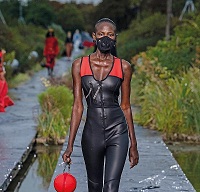 Like the phoenix rising from ashes, the fashion industry is slowly rising from the disruptions caused by the COVID-19 pandemic. Showing tremendous resilience, the industry put aside all its profitability goals and dedicated itself to relief, research and emergency efforts.
As Italy turned into an epicentre of the pandemic, fashion brands rolled up their sleeves to help affected population. The Armani Group donated €1.25 million to Italian hospitals, while Prada Group donated six intensive care and resuscitation units to three Milan-based hospitals. Donatella and Allegra Versace each pledged €100,000 to Milan's San Raffaele hospital. Moncler, Kering, Tod’s, Bvglari and Dolce & Gabbana also contributed to research efforts focused on finding cure.
Initiatives to contain virus impact on fashion
As the virus spread across Europe, some of the biggest fashion's brands stepped up to contain business losses. LVMH diverted its perfume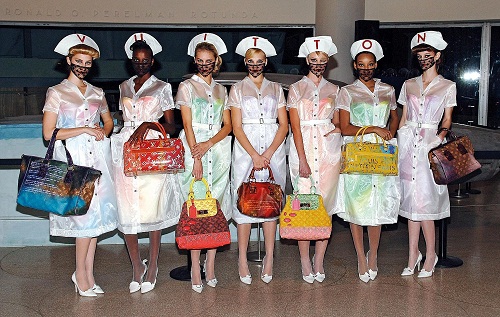 production to the making of hand sanitizers while Prada started manufacturing medical gowns and masks, as did the Zegna Group.
Similarly, British brand Burberry retooled its Yorkshire factory to make masks and gowns besides funding vaccine research and making donations to contain food poverty. The Yoox Net-a-Porter group donated its Premiere Delivery Service to Age UK outposts, for making essential deliveries to elderly and vulnerable. Not to be left behind, American brands Ralph Lauren and PVH Corp committed millions of dollars to support employees, healthcare workers and smaller American fashion businesses impacted by the pandemic.
Pandemic hits luxury industry hardest
Though admirable, these actions are not enough to fill the gaps that coronavirus has caused in global socioeconomic structure. As the joint report published by Business of Fashion and McKinsey & Company reveals, the global fashion industry - worth $2.5 trillion before the pandemic - is expected to shrink by 30 per cent in revenues in 2020.
Moreover, personal luxury goods sector will be hit harder with revenues shrinking by upto 39 per cent. This is evident from the anticipated 20 per cent sales dip by LVMH in the first quarter and 14 per cent sales drop projected by Kering during the period.
Burberry also predicted China sales to fall almost 30 per cent while Capri Holdings lost 58 per cent of market value in the first week of April. The shares of Tapestry, which owns Kate Spade and Coach also dipped 45 per cent and Ralph Lauren's by 37 per cent during the period. Fashion shows scheduled during the course of the year have either been cancelled or postpones.
Inspiring a different kind of creativity
Though these changes have made it difficult for brands to make any long-term plans, it has given them sufficient time to reconfigure their business strategies and create an innovative and engaging fashion world. As Jean Touitou, Founder, APC points out, this will inspire a different kind of creativity within the industry. Just like the end of World War II birthed a new kind of beauty and 2008 recession stripped away frivolity for philo-driven practicality and empowerment, COVID-19 will curtail overproduction and help the industry become more sustainable.