FW

The Hong Kong Research Institute of Textiles and Apparel (HKRITA) has found new technology to extract and reuse polyester fibers infinitely into new clothes. Each year only a fraction is recycled of the 80 billion pieces of clothing produced. The polyester fibers can be made into new garments straightaway with no loss in quality, which is why this new technology is being dubbed fiber-to-fiber recycling.
Compared to the production of virgin polyester, this method consumes 70 per cent less energy. HKRITA’s new methodology requires limited manpower, simple equipment that textile recycling companies may already own, and the water used in the process can be recycled. A HKRITA-patented chemical solution is used to break down cotton into cellulose particles in a process that combines heat and water and is separated from the fabric.
The goal is to have the technology ready for the market by 2020. Once ready, the technology will be made available to companies through licensing, the terms of which have yet to be decided by HKRITA, which will own the license.
HKRITA’s fiber-to-fiber method currently only works to repurpose polyester—a petroleum-based fiber found in most apparel—and further work is needed before it can recover other materials.
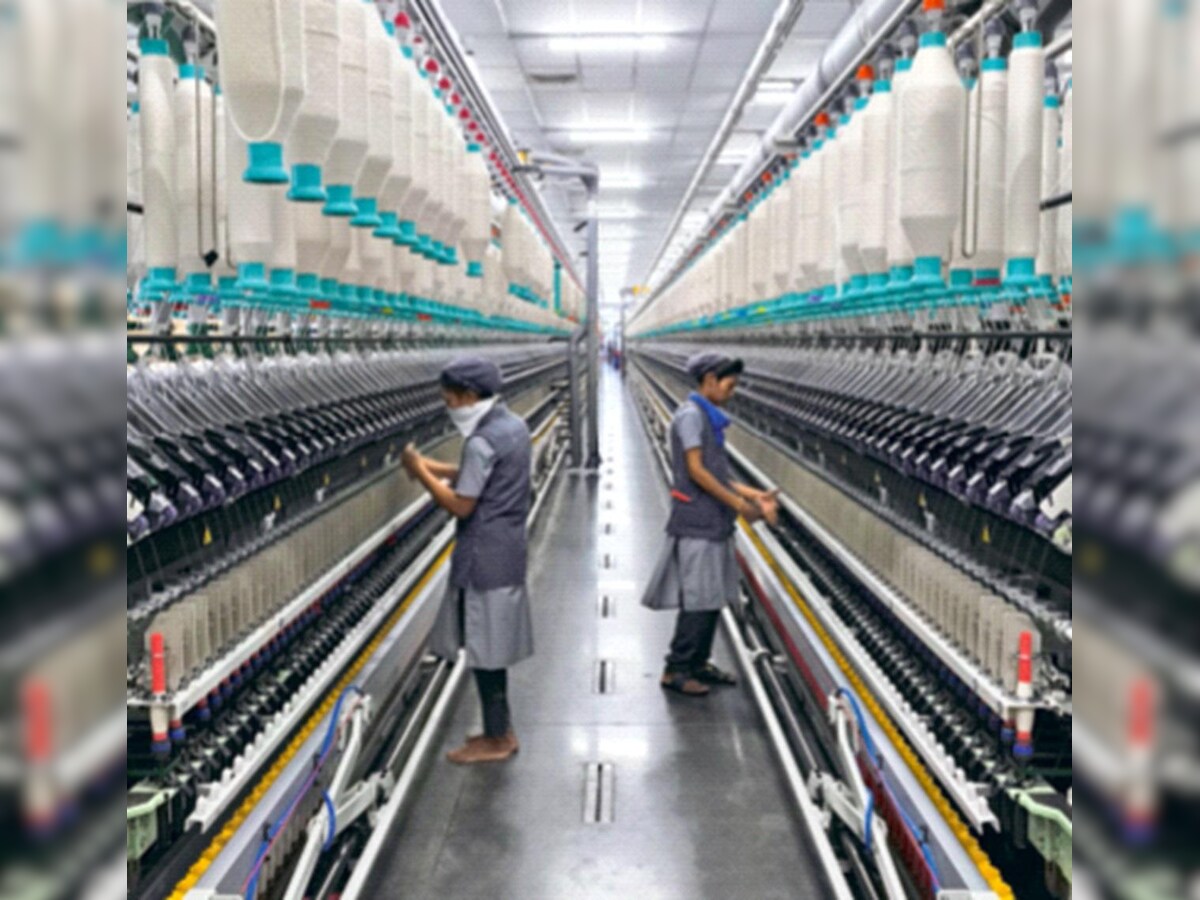
Indian spinners continue to face challenges. Exports are falling due to weak demand from China. Domestic demand has also slowed down amid inventory clearance prior to implementation of GST. However, a surplus cotton supply may offer Indian spinners respite during the second half of this fiscal. Global cotton production during this cotton year is estimated to exceed consumption after two consecutive years of shortfall. The resulting cotton surplus will create a downward bias in prices, which augurs well for the domestic cotton spinning industry.
The cotton crop output in the country is expected to grow by five per cent in cotton year 2018. There has been a 12 per cent rise in sown area, driven by firm cotton prices, which has made it remunerative for farmers to choose cotton against competing crops. While cotton yarn prices were holding firm till August 2017, despite demand side pressures, those have been corrected by five per cent in September 2017 due to sustained demand side pressures and in anticipation of softening cotton prices.
However, with further correction in cotton prices expected with the commencement of the harvest season in October 2017, spinners’ profitability is expected to improve during the second half of the current financial year.
Cultivation of sustainable cotton has never been higher, reaching 2.6 million tons in 2015-16 and representing around 12 per cent to 15 per cent of global cotton supply. Of the companies actively sourcing sustainable cotton, efforts are being driven by five frontrunners – IKEA, Tchibo, M&S, C&A, and H&M. The frontrunners are followed by eight companies which are well on the way to sourcing more sustainable cotton: Adidas, Otto, Nike, Levi Strauss, Woolworths, VF Corporation, Tesco and Kering.
IKEA, C&A and Adidas stand out for sourcing more than 50 per cent of the cotton they use as sustainable cotton. Eleven companies have a target for sourcing 100 per cent more sustainable cotton by 2020 or earlier: IKEA, C&A, M&S, Tchibo, H&M, Adidas, Otto, Nike, Levi Strauss, Woolworths and Decathlon.
Despite the positive uptake from international retailers and increasing supply of more sustainable cotton, and the fact that sustainable cotton accounts for 12 per cent to 15 per cent of total global cotton production, only around a fifth of this is actively sourced as sustainable. The remaining 79 per cent is traded as conventional cotton. The gap between available supply of sustainable cotton and uptake by companies presents a serious risk to the future of more sustainable cotton.
For the year through July, US imports of Vietnamese textiles and apparel increased by 5.36 per cent year over year. In 2016, US imports were a 2.27 per cent increase over 2015. However, worker’s wages and logistics costs have been rising, putting garment exporters in Vietnam under pressure, particularly in the face of fierce competition from regional rivals like Bangladesh, Myanmar and Cambodia.
Competitors have enjoyed preferential policies from their governments—including things like tax breaks to boost exports—where Vietnam hasn’t had as many perks. They’ve also enjoyed preferential trade status from major trade partners like the US and EU. Vietnam aims at exporting roughly $30 billion worth of textiles and garments in 2017, with the US taking 50 per cent of that total, followed by the EU with 20.5 per cent, Japan with 19.5 per cent and Korea with 7.5 per cent.
For the year through August, the country’s exports reached $19.8 billion but the target may not be reached since the bulk of the country’s big orders have likely already been placed. Legal amendments will be drafted to help domestic garment producers cut costs. Domestic textile and garment exporters will be supported with things like administrative procedures to help ease some of the other obstacles to competition.
Zimbabwe textile manufacturers are facing a liquidity crisis. They have appealed for the disbursal of foreign currency to ensure members meet their obligations and remain in business. People have resorted to buying foreign currency in the black market at exorbitant rates, thereby distorting prices on the market. Others are hoarding cash for speculative purposes.
The textile industry needs urgent intervention to avert a total collapse. The industry includes blanket and linen manufacturers and hosiery manufacturers. Manufacturers say once there is easy access to forex, the industry can start exporting and earn the much-needed foreign currency. They also want the export incentive to be raised from five per cent to 25 per cent.
The value of Zimbabwe’s clothing and textile exports has grown 165 per cent from 2012 to 2016. However, the apparel sector in Zimbabwe currently operates at less than 30 per cent of its capacity. The industry that once used to employ over 40,000 people now employs only 8000 workers.
Zimbabwe’s textile and clothing sub-sector consists of three components: production and ginning of cotton, transformation of lint into yarn and fabric, and the conversion of fabric and yarn into garments. There are also those companies that are in protective clothing that have been doing well because of the mines that are opening up.
In the first eight months of 2017 Germany was the EU’s largest foreign investor in Vietnam. German companies see Vietnam as a first-class investment destination. World-famous German textile companies investing in Vietnam intend to expand their investments, creating highly qualified jobs, a transfer of technology, and state-of-the-art labor conditions.
Although Vietnam has a good set of legal provisions, the competency of the staff working in the administration, particularly on the provincial and local levels, is weak. Decisions are often discretionary or made without profound knowledge of the legal rules. Rules and procedures are changed fast, sometimes without taking into account existing rules which contradict the new ones. Pharmacy and agriculture are the most recent examples, the automotive sector another.
Another problem is the lack of flexibility to meet the requirements of German companies. The EU and Vietnam are conducting final procedures for the signing of the EU-Vietnam Free Trade Agreement next summer. This agreement opens new opportunities for both Vietnam and Germany. Both want to create beneficial conditions in order to increase the bilateral trade volume to 20 billion dollars by 2020. Reduction of duties will further enable the import of high-tech solutions, both in machinery and services.
Over 200 manufacturers and exporters from 26 countries, including Turkey, are exhibiting their products and services at Africa Sourcing and Fashion Week, Ethiopia, October 3 to 6, 2017. Africa Sourcing and Fashion Week is the continent’s main trade show for the textile, apparel and technology industry.
With sustainability in fashion as its theme, the week has brought together over 70 Asian manufacturers of textiles and fabrics and a further 60 exhibitors in the apparel sector.
A conference running parallel to the trade fair will discuss the themes that are currently dominating the textile industry. It will focus on becoming particularly relevant to more and more fashion buyers and present new approaches to eco fashion and sustainable solutions. There will be a spotlight on various issues, including that of sustainability, with a particular focus on production, the environment and certifications. A fashion show, trend area and matchmaking platform are just some of the highlights.
International manufacturers of textile machines will also be showcasing new technologies for the African market. Italian textile machine makers will present a range of product innovations. Among the countries participating are Turkey, Bangladesh, Belgium, China, Germany, India, South Africa, Switzerland, Taiwan, UAE, the UK and the US.
Better Cotton Initiative, DuPont, Hyosung, Invista and Lenzing will be present at Intertextile Shanghai Apparel Fabrics, China, October 11 to 13, 2017. Better Cotton Initiative (BCI) is a global not-for-profit organisation with more than 1,000 members from the entire cotton sector. At Intertextile Shanghai, its pavilion will feature spinners, weavers and more.
DuPont will focus on stretch – particularly as it applies to performance sportswear, work wear and athleisure clothing. While a number of polyurethane fibers exist to meet the stretch requirements of garments such as these, DuPont’s Sorona stretch fiber offers a superior solution in terms of production time and cost, stretch recovery and color fastness.
Hyosung will display the Creora Fresh odor neutralising elastane. Creora Fresh has been demonstrated with nylon and polyester fibers to perform better than traditional antimicrobial finishes.
Invista will feature latest possibilities offered by Lycra Moves bras, leggings and hosiery. A special session outlining the latest woven bottom trends will also be hosted by Invista experts.
Lenzing’s partner mills will showcase a wide range of their innovative products but a particular highlight this edition will be their Lenzing EcoVero branded viscose fibers – a new standard in eco-responsible viscose offering the lowest environmental impact in the industry.
Archroma has announced solid progress on phases 3 and 4 of REACH (Registration, Evaluation, Authorization and restriction of Chemicals) with more than 60 per cent commercial products active in EU complying already with the June 2018 requirements. In total, 369 different chemical substances are within the scope of the REACH phases 3 and 4. These include 135 dossiers where Archroma has a lead registrant position in the EU.
In the first two phases – completed, respectively, in November 2010 and May 2013 – the company recorded a total of 60 chemical substances that are produced in or imported to the countries of the European Union with volumes greater than 100 tons per year. In the third and fourth phase of REACH that is currently under way, all the remaining chemical substances of more than a ton per year must be registered by June 1, 2018. Archroma is a global leader in color and specialty chemicals.
With its expert chemical management system, Archroma, unlike many EU importers of textile and paper chemicals, controls the composition of its formulations and can therefore ensure full REACH compliance of each ingredient in its products. With its broad product portfolio, Archroma is one major registrant of substances relevant to the textile and paper industries at the European Chemicals Agency. The company expects the total investment needed to be REACH ready to amount to 14.5 million dollars.
As per the World Economic Forum’s Global Competitiveness Report 2017-2018 even a decade after the global financial crisis, economies are still at risk and are ill-prepared to face the next wave of innovation and automation. There has been a failure by leaders and policymakers to put in place reforms needed to fortify competitiveness and raise productivity.
The financial system is yet to recover from the shock of 2007 and is declining further in some parts of the world. This is worrying as it plays a key role in facilitating investment in innovation related to the fourth industrial revolution.
Moreover, there is a need to create conditions to withstand economic shock and support workers through transition periods with vast numbers of jobs set to be disrupted due to automation and robotics. Third, the imbalance between investments in technology and efforts to promote its adoption throughout the wider economy needs to be addressed as those lead to failure of innovation to ignite productivity. Switzerland is the most competitive economy, narrowly ahead of the United States and Singapore, for the ninth consecutive year. Other G20 economies in the top ten list are Germany, the United Kingdom and Japan. China tops among the BRICS group of large emerging markets. These are the findings of the Global Competitiveness Report 2017-2018.